How to Carrier Train a Cat: A Calm Step-by-Step Plan
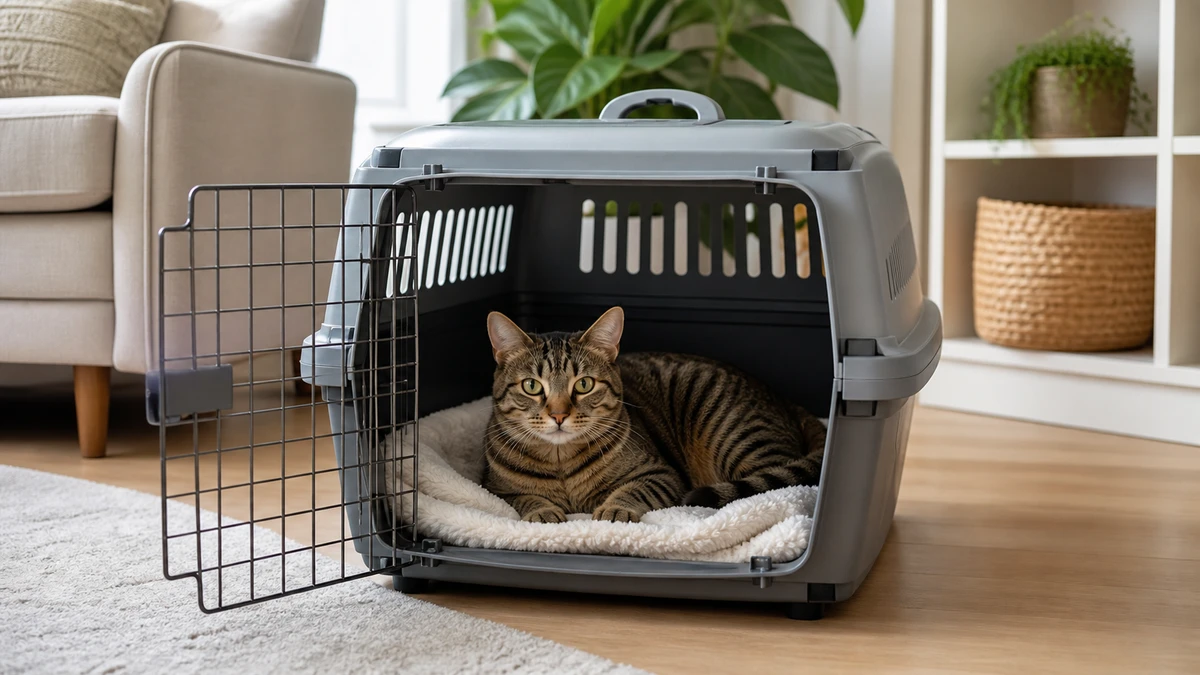
A cat can stop treating the carrier as a warning by meeting it every day as a safe, open resting place, then learning one tiny travel skill at a time. Start far enough away that the cat can still choose, explore, and relax. Move from approaching the carrier to entering, closing the door, lifting, walking indoors, sitting in a parked car, and taking a very short drive. Advance only while the current step looks easy; retreat at the first sustained tension. Never chase, shove, shake, starve, or secretly trap the cat to finish a practice session.
Why the carrier became frightening
Carriers often disappear into storage between trips. When one suddenly appears, it predicts several unfamiliar events at once: being caught, confined, moved, placed in a noisy vehicle, and taken somewhere strange. A cat can learn that sequence even if nobody intended to frighten them. The solution is not to prove that the carrier is harmless through one long exposure. It is to change what the carrier predicts through many short, safe experiences.
International Cat Care and the Feline Veterinary Medical Association both recommend making the carrier a familiar part of the home. Familiar bedding, voluntary entry, rewards, and enough time at each step allow the cat to form a different association. Training may take days for an inexperienced relaxed cat or much longer for a cat with a strong fear history. The calendar is not the measure of success; the cat’s behavior is.
Fear can also be connected to pain, nausea, breathing difficulty, or a previous medical event. If a cat that once travelled comfortably suddenly resists the carrier, appears painful when lifted, or becomes ill in the car, ask a veterinarian to assess the change instead of assuming it is stubbornness.
Choose a carrier that supports the training
A workable carrier is sturdy, stable, secure, well ventilated, and easy to clean. It should let the cat stand, turn, change position, and lie down comfortably without being so oversized that the cat slides around during movement. Check every fastener, hinge, and latch before relying on it.
Hard-sided carriers with a front door plus a top opening or removable upper half are especially practical. The wide access helps during training, and a veterinary professional may be able to examine a worried cat while the cat remains in the familiar lower half. A removable top should attach securely for travel; it is not safe if its clips are worn or easy to release. Cats Protection cautions that many backpack carriers are too small to permit comfortable repositioning and can feel unstable as they bounce.
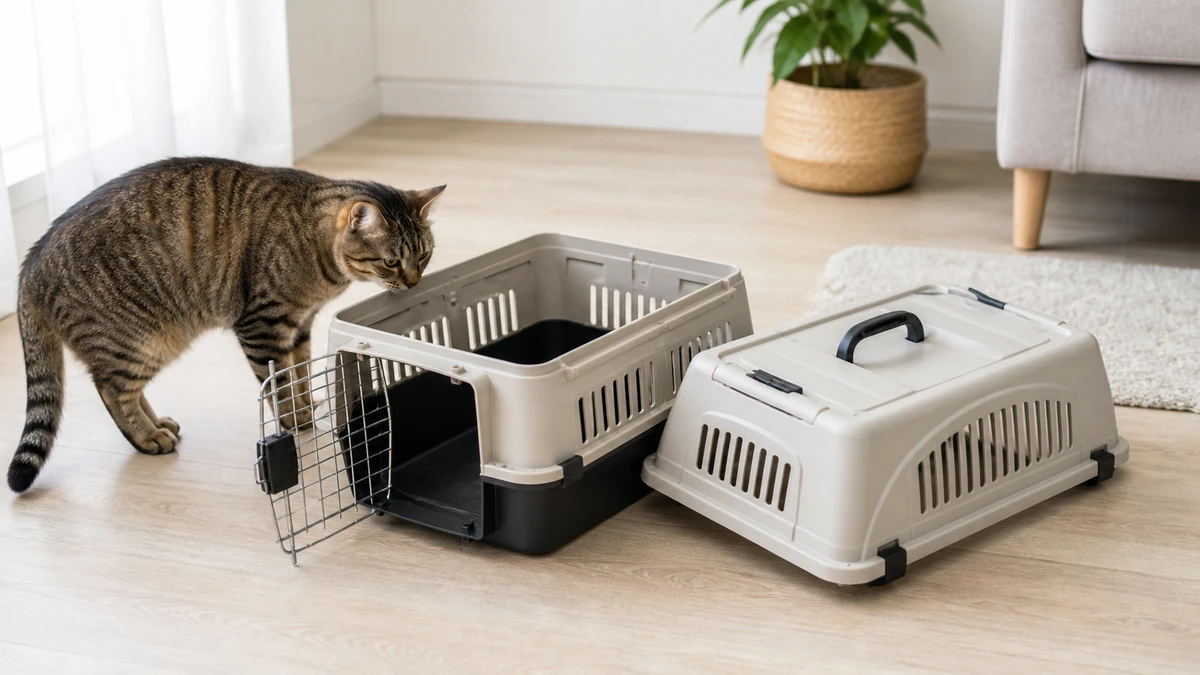
Use a thin washable pad or blanket that carries a familiar home scent. The floor should give traction without taking away too much headroom. Keep a spare absorbent liner for real trips. If a previous accident left a strong odor, wash the carrier with mild, non-toxic soap, rinse it thoroughly, and let it dry fully; avoid replacing one alarming smell with heavy perfume.
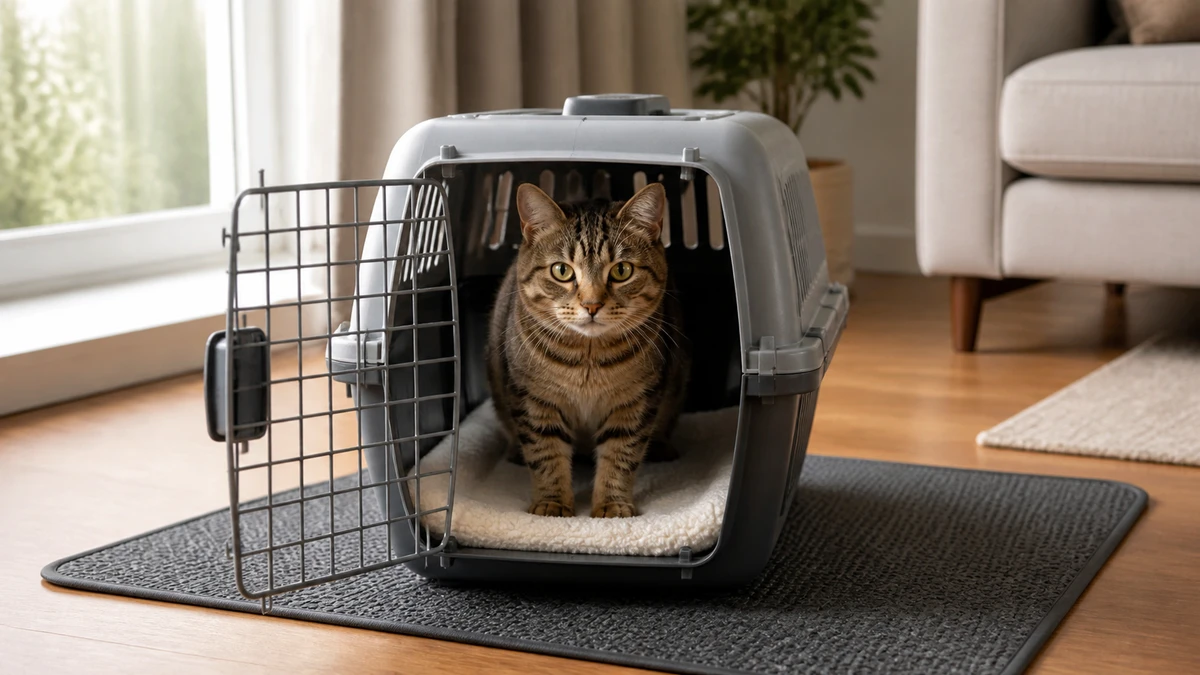
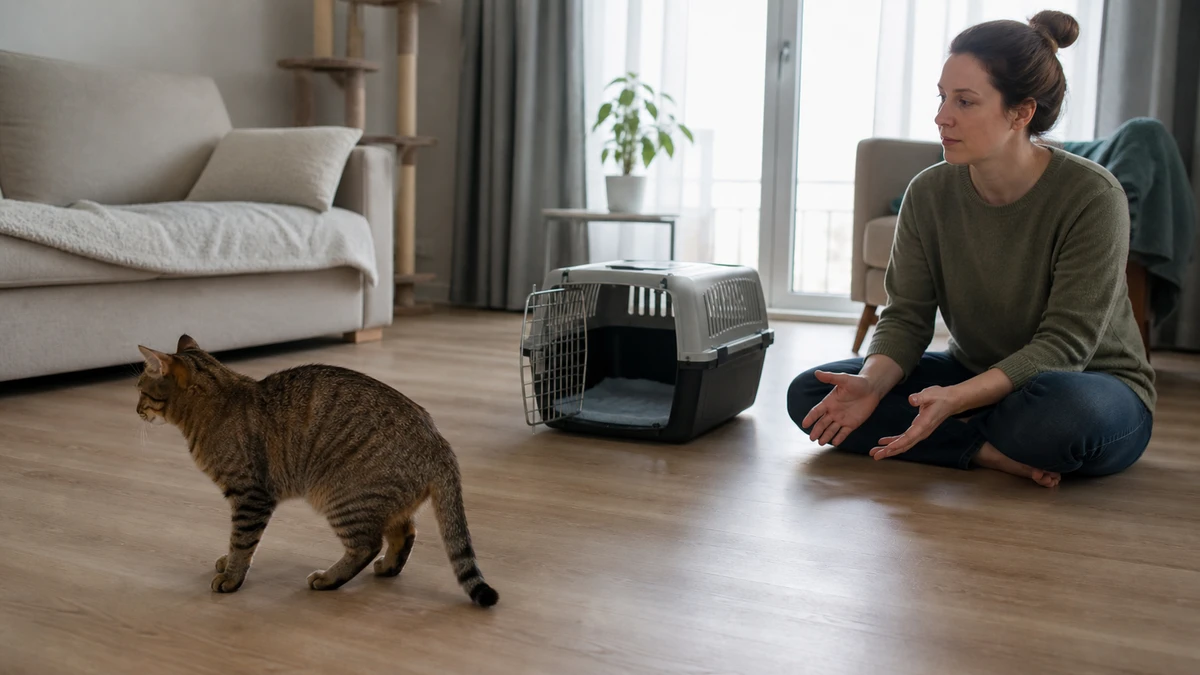
Set the carrier on a stable floor in a quiet room the cat already uses. Fix or remove the open door so it cannot swing against the cat. For a very frightened cat, begin with the upper half and door removed, or place the familiar blanket at a comfortable distance and move it closer gradually. The cat must always have a clear exit during open-door stages.
Set a pace the cat can actually learn from
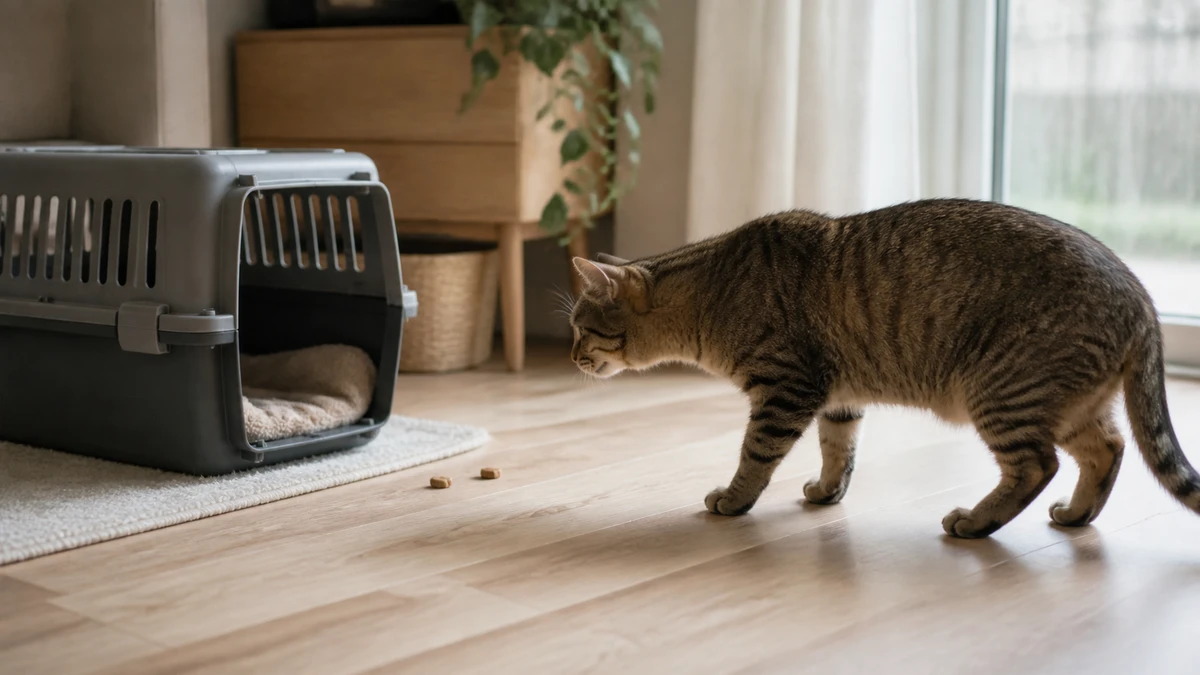
Keep sessions brief enough to finish while they are still easy. One or two calm repetitions may be more useful than a long session that ends in escape. Use what that individual values: tiny treats, part of the normal food ration, a toy, gentle social attention, or access to a preferred resting spot. Rewards appear after the chosen behavior; they are not bait for slamming the door.
Do not withhold or delay necessary meals to make the cat comply. If the cat already fears the carrier, moving an entire meal inside immediately can make the food location itself uncomfortable. Begin with a valued reward outside the carrier, then near the entrance, and only move farther in as the cat remains relaxed. Cats with a prescribed diet, appetite change, diabetes, nausea, or another feeding concern need a veterinarian-approved reward plan.
Before every repetition, ask three questions:
- Can the cat choose to approach or leave? Choice is present when the route away is open and no hand, wall, or second person blocks it.
- Is the body at or near baseline? Look for ordinary breathing, a loose rather than flattened body, neutral ears, normal movement, and willingness to investigate.
- Did the cat recover immediately? A small orienting response to a latch sound is different from hiding for the rest of the day. If recovery is slow, make the next repetition easier.
Do not interpret one sign alone. A cat may decline food because they are full, and pupils change with light. A sudden combination—lower posture, ears rotating sideways, repeated exits, fixed staring, fast tail movement, or refusing a normally irresistible reward—has more meaning.
Ten stages from seeing the carrier to a short drive
The following stages are a sequence, not a ten-day schedule. A cat may move through two easy stages in one session, spend weeks on another, or return to an earlier stage after a difficult veterinary trip. “Advance” means the behavior has stayed easy across several brief repetitions on more than one occasion, not that the cat endured it once.
| Stage | What to practise | Ready to advance when | Step back or stop when |
|---|---|---|---|
| 1. Carrier in the room | Leave the carrier open and still at a distance the cat accepts. Put familiar bedding nearby, then closer. Reward looking toward it or calmly remaining in the room. | The cat follows normal routines near the carrier, approaches by choice, and can disengage without rushing away. | The cat leaves whenever the carrier appears, hides, freezes, scans constantly, or will not resume normal activity. Increase distance or simplify to the lower tray alone. |
| 2. Approach and inspect | Place a reward outside the entrance. Let the cat sniff the doorway, side, and bedding without anyone reaching toward them. | The cat repeatedly approaches with a loose body and remains comfortable after collecting the reward. | The body lowers, ears stay sideways or back, the cat stretches forward while keeping the feet planted far away, or retreats quickly. Move the reward outward. |
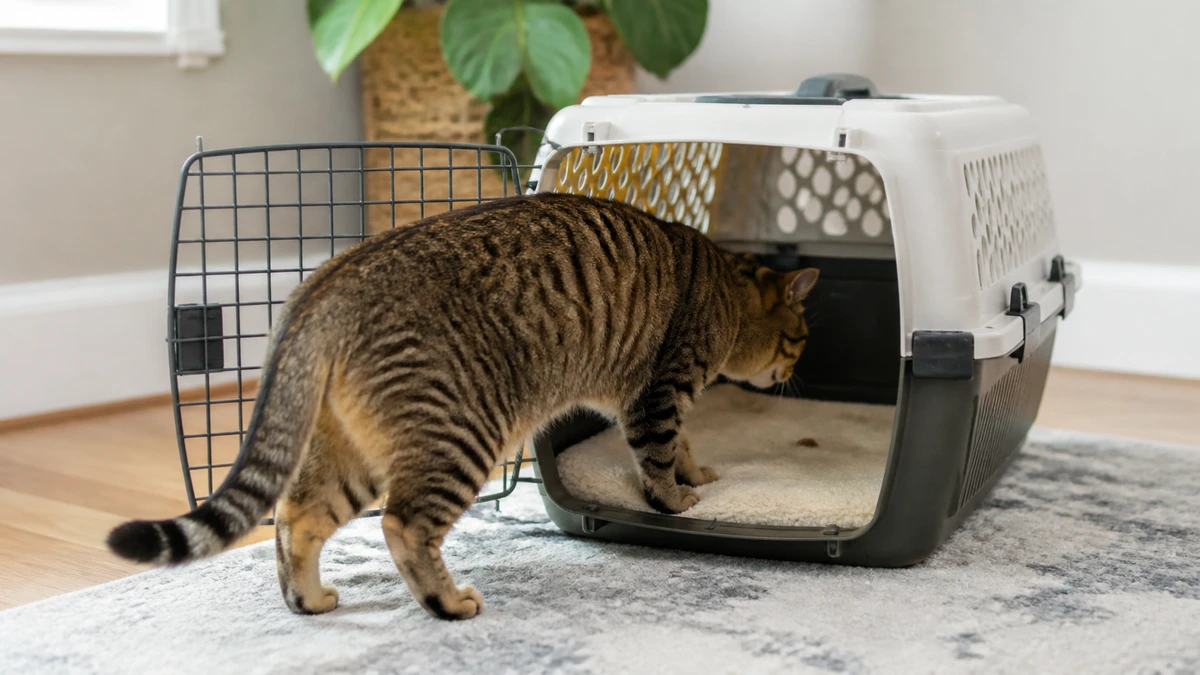
| 3. Head and front paws inside | Place the reward just inside, then gradually deeper. Keep the door fixed open and the exit clear. | The cat puts the head and front paws inside voluntarily, pauses to investigate, and backs out calmly. | The cat startles at contact with the doorway, scrambles backward, or refuses to approach after one partial entry. Return to rewarding at the threshold. |
| 4. Whole body inside | Reward deeper entry. Allow the cat to turn, stand, sit, or leave; do not touch the door. | All four paws enter willingly and the cat can remain for a few relaxed seconds, change position, and exit without rushing. | The cat keeps the hind feet braced outside, spins out immediately, flattens, or watches the door continuously. Go back to partial entries. |
| 5. Door movement | While the cat is relaxed inside, move the door a few centimetres, reward, and reopen it fully. Build toward touching the frame without latching. | The cat stays loose while the door moves and returns attention to the bedding, reward, or room. | The cat whips around, rushes out, paws at the door, startles repeatedly, or stops accepting a normally valued reward. Reduce the movement or practise the sound with no cat inside. |
| 6. Brief closed door | Latch and immediately reopen. Increase closed time by seconds, staying beside the carrier at first. Release before the cat asks. | The cat remains settled through closure, ordinary room sounds, and a slowly increasing short duration. | Persistent vocalizing, pawing, biting bars, tense crouching, rapid breathing, or repeated attempts to force the door mean the duration increased too quickly. |
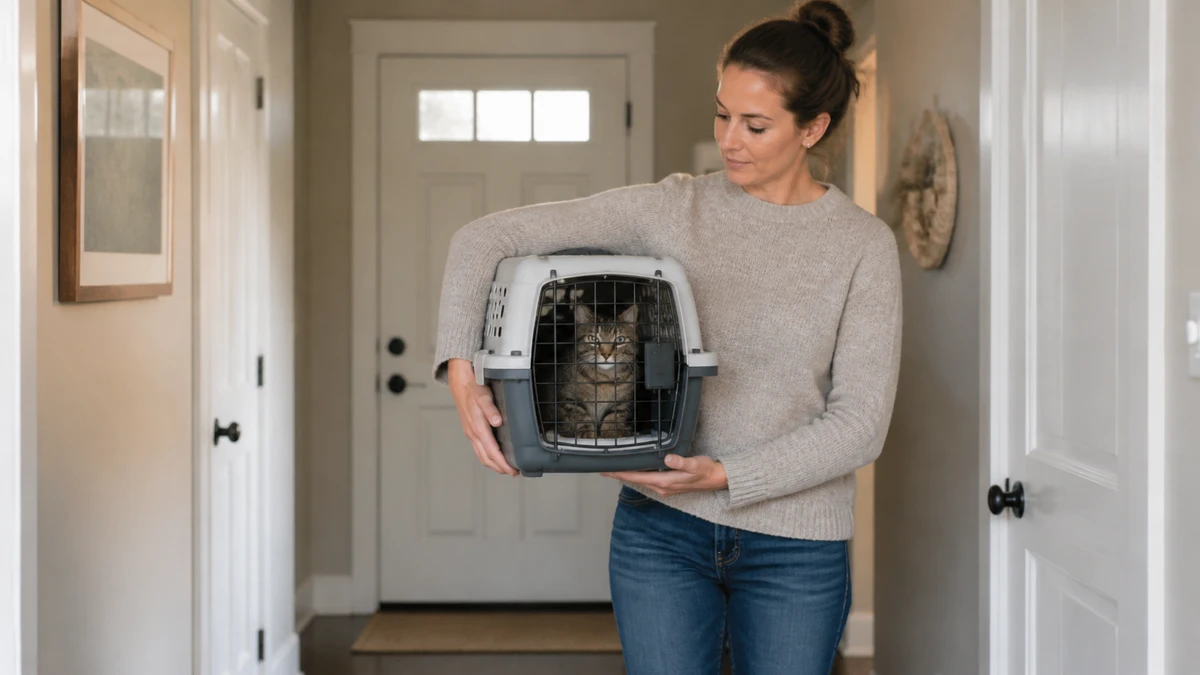
| 7. Lift and set down | Close the door, support the base with both hands and forearms, lift only a few centimetres, set it down level, reward, and open. Never rely on the handle alone. | The cat keeps balance, posture, and breathing near baseline through several smooth lifts. | Bracing wide, sliding, crouching, gripping the floor, sudden vocalizing, or delayed hiding afterward means the movement was too large or unstable. |
| 8. Walk indoors | Carry the level carrier one or two steps, then gradually move across a room and through the home. Keep turns slow and the path clear. | The cat tolerates ordinary indoor distance while the carrier stays stable and settles promptly when set down. | Swaying, panting, drooling, frantic turning, repeated loud calls, or prolonged recovery require a shorter, smoother movement and possibly veterinary advice. |
| 9. Parked car | With the car parked, engine off, and cabin cool, place the closed carrier securely in its travel position. Sit quietly for a few seconds, return home, and reward. Later add closed doors, then engine sound as separate steps. | The cat can enter the parked car, remain near baseline through the planned sound or vibration, and recover normally at home. | Drooling, repeated lip licking, rapid breathing, vomiting, frantic escape attempts, or escalating vocalization may indicate distress or motion-related nausea. End and contact the veterinarian before driving practice. |
| 10. Very short drive | Begin with a smooth trip that ends back at home. Increase only one variable at a time—duration, turns, traffic, or destination—and keep occasional practice trips neutral rather than making every ride end at a clinic. | The cat remains physically well, shows manageable or decreasing tension, and returns to normal behavior promptly after the ride. | Vomiting, diarrhea, drooling, panting, weakness, abnormal breathing, or distress that grows instead of settles needs veterinary guidance. Shorten future practice only after medical concerns are addressed. |
The table deliberately separates door movement, closed duration, lifting, indoor travel, car sounds, and road motion. Combining them creates a much larger surprise: the door shuts, the floor moves, the environment changes, and the engine starts before the cat has learned any part. Splitting the experience lets you identify the exact point that needs easier practice.
Closing the door should not become a trick
If a cat enters for a treat and the door slams every time, voluntary entry will disappear. Most entries during training should end with the door staying open. When door practice begins, touch or move it by a tiny amount, reward, and release. Mix easier repetitions among harder ones.
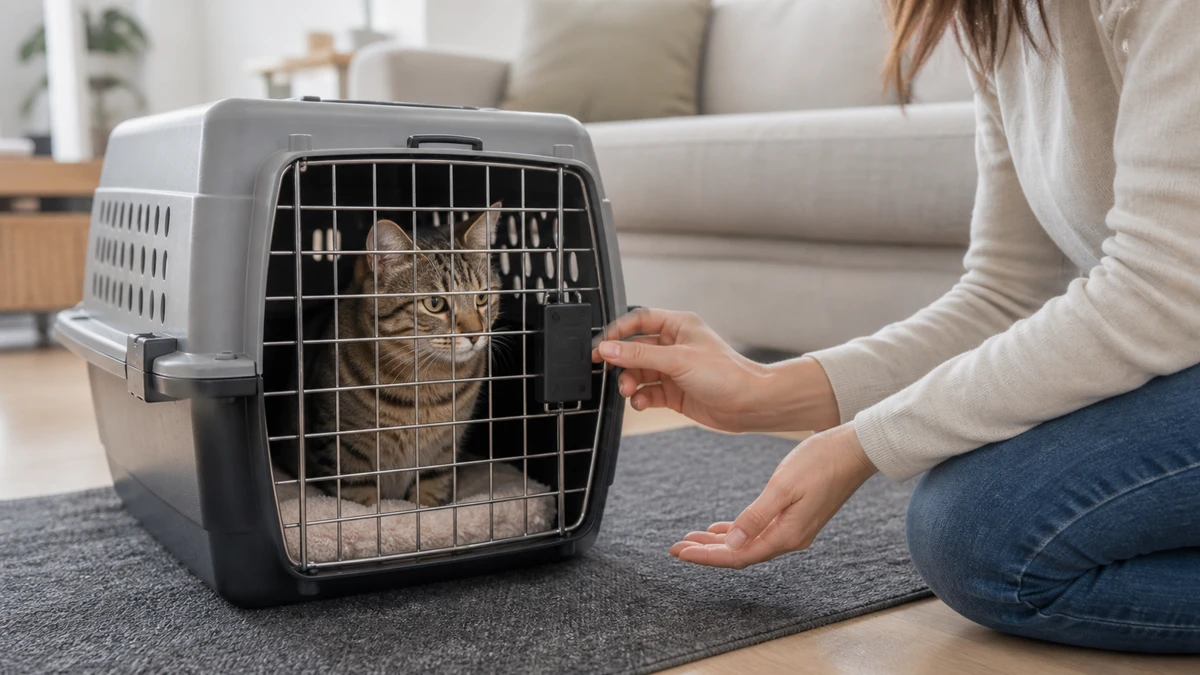
Keep your body out of the exit path. Do not crowd the opening, push the hips, grab through ventilation holes, or recruit another person to block retreat. Never shake the carrier to make the cat move farther inside. Do not scold, spray water, or punish vocalization. Those methods may get the door shut once while making the next necessary trip harder.
Lift from underneath and keep the ride level
International Cat Care advises supporting the carrier from below rather than carrying it only by the top handle. A handle can be useful for control, but the base support reduces tilt and swing. Before adding the cat, practise carrying the empty carrier to check whether the clips flex, the door rattles, or the bedding slides.
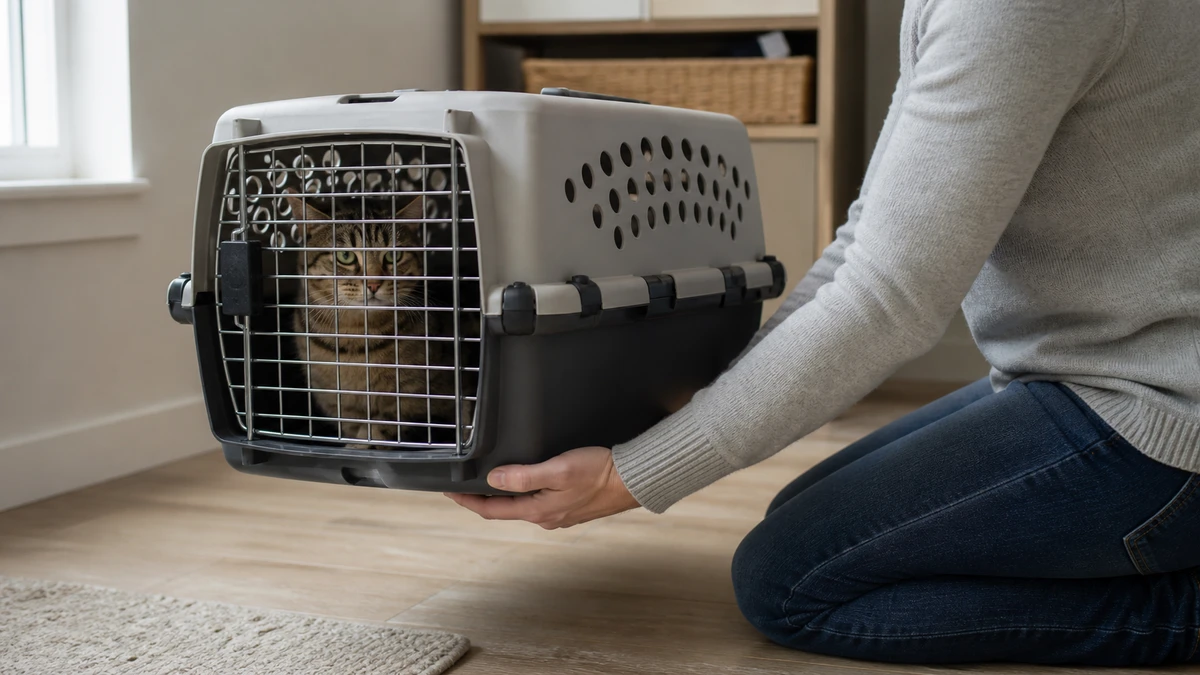
During indoor practice, accelerate, stop, and turn gradually. Set the carrier down before opening it. Check that an exterior door is closed so a startled cat cannot run outside at release. A light towel over part of the carrier can reduce visual stimulation for some cats, but others prefer to see out; follow the individual response and never block ventilation.
Secure the carrier before the car moves
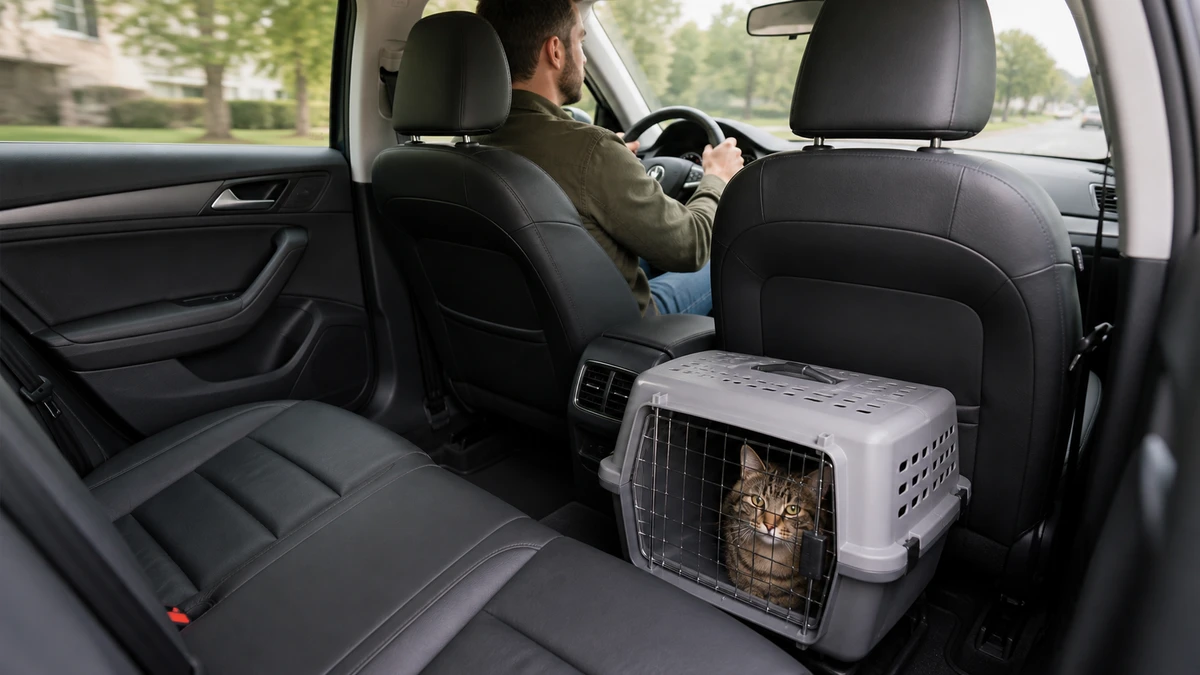
A cat must remain inside a closed carrier whenever the vehicle is moving. A loose cat can distract the driver, reach the pedals, escape when a door opens, or be injured by sudden braking. A harness and leash do not replace a carrier inside the car.
Use the placement and belt path specified by the carrier or vehicle manufacturer when the carrier is designed and tested for that installation. International Cat Care identifies the footwell behind a front seat as a stable option for many ordinary carriers. Whichever approved setup you use, the carrier must stay upright and must not slide, tip, or sit where luggage can strike it. Test the empty setup first.
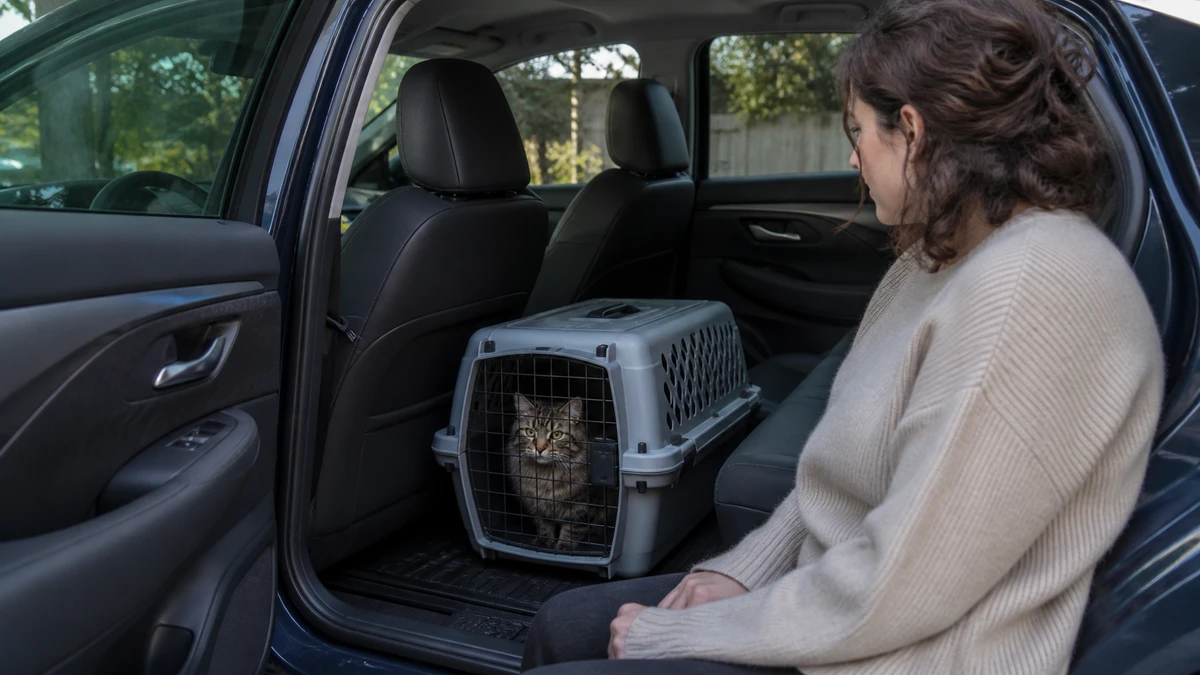
Keep the cabin comfortably cool and ventilated. Do not aim a strong heater or air conditioner directly through the vents. Drive smoothly and keep sound low. Never open the carrier while parked at a roadside stop unless the cat is inside a fully enclosed, escape-proof room; a closed car door on one side does not prevent escape through another door or window. Never leave a cat unattended in a parked vehicle.
Read “not ready” before it becomes panic
Early tension is useful information, not disobedience. Pause when the cat repeatedly turns away, lowers the body, rotates ears sideways or back, flicks the tail sharply, freezes, scans for escape, or suddenly refuses a reward they normally value. Increase distance, reopen the door, shorten the duration, reduce movement, or return to the last comfortable step.
End the session for frantic escape, biting at bars, uncontrolled thrashing, open-mouth breathing, collapse, or suspected pain. Panting or abnormal breathing in a cat can require urgent veterinary assessment; it is not a training challenge to work through. Drooling, repeated lip licking, vomiting, diarrhea, or marked inactivity during car work can accompany travel sickness or distress. Record when the signs begin—carrier, lift, engine, or motion—and tell the veterinarian.
For a broader body-language checklist, see the guide to stress signs in cats. Context matters: one brief meow is different from escalating vocalization paired with crouching, drooling, and escape attempts.
When a trip cannot wait for training
Carrier training is preparation, not a condition for receiving necessary care. If a cat has breathing difficulty, severe weakness, collapse, major injury, uncontrolled bleeding, repeated vomiting, suspected poisoning, or another urgent problem, call the veterinary clinic or emergency service immediately and follow its transport instructions. Do not postpone care to complete the stages.
For a scheduled but unavoidable visit, call the clinic before the appointment and describe exactly what happens at the carrier, during lifting, and in the car. Ask about a quieter arrival plan and immediate handling guidance. A top-opening or removable-top carrier may let the clinical team work with less removal. Do not spend the appointment morning chasing the cat through the whole home; prepare a calm closed room and the carrier well in advance according to the clinic’s advice.
Some cats remain severely fearful despite careful training, and some become nauseated only after vehicle movement begins. A veterinarian can assess health, pain, motion sickness, and anxiety, then decide whether a prescribed plan is appropriate. Do not give a sedative, anti-nausea product, supplement, leftover prescription, or another animal’s medicine on your own. Do not guess a dose or use medication to overpower a training step.
Keep the safe-space association after success
Once the cat can travel, leave the carrier available at home instead of returning it to long-term storage. Continue occasional open-door rewards and easy indoor lifts. Clean soiling promptly, but retain a familiar washable bed once the carrier is dry. Inspect latches and clips before each real journey.
Not every practice should predict the veterinarian. A walk across the room, a minute in the parked car, or a very short loop home can preserve the skills when the cat is physically comfortable. The goal is not a cat who loves every road trip. It is a cat who can enter, remain contained, and recover with the least fear compatible with safe necessary travel.
FAQ
How long does carrier training take? There is no reliable universal timetable. A relaxed cat with little negative history may progress quickly; a cat that has repeatedly been chased or becomes sick in the car may need much longer. Use behavior, not days, as the criterion. Several easy repetitions on different occasions are stronger evidence than one tolerated attempt.
Should every meal go inside the carrier? Not automatically. A comfortable cat may enjoy food there, but a cat already afraid of the carrier can begin with tiny rewards outside and work inward. Never withhold food to force entry, and ask a veterinarian before changing feeding for a cat with appetite, diet, metabolic, or nausea concerns.
What if a cat goes in but runs out when the door is touched? Return to an easier door stage. Practise a small movement or latch sound while the cat remains outside, then pair that sound with a reward. With the cat inside, move the door only a few centimetres and reopen it. Do not rush from voluntary entry to a long confinement.
Where should the carrier go in the car? Use a stable, level location and the installation instructions for that carrier and vehicle. Many ordinary carriers are most stable on the rear footwell behind a front seat; a carrier specifically designed and tested for belt installation should use its designated belt path. It must not slide, tip, or be struck by luggage, and the cat must never ride loose.
Can a cat be given something calming before travel? Only after speaking with the cat’s veterinarian. Severe fear, drooling, vomiting, panting, or other travel signs can have different causes, and a veterinarian must decide whether a prescribed anxiety or anti-nausea plan is suitable. Do not use leftover medication, human products, another pet’s prescription, or a guessed dose.