How to Choose Cat Litter: Clay, Tofu, and Wood Pellets Compared
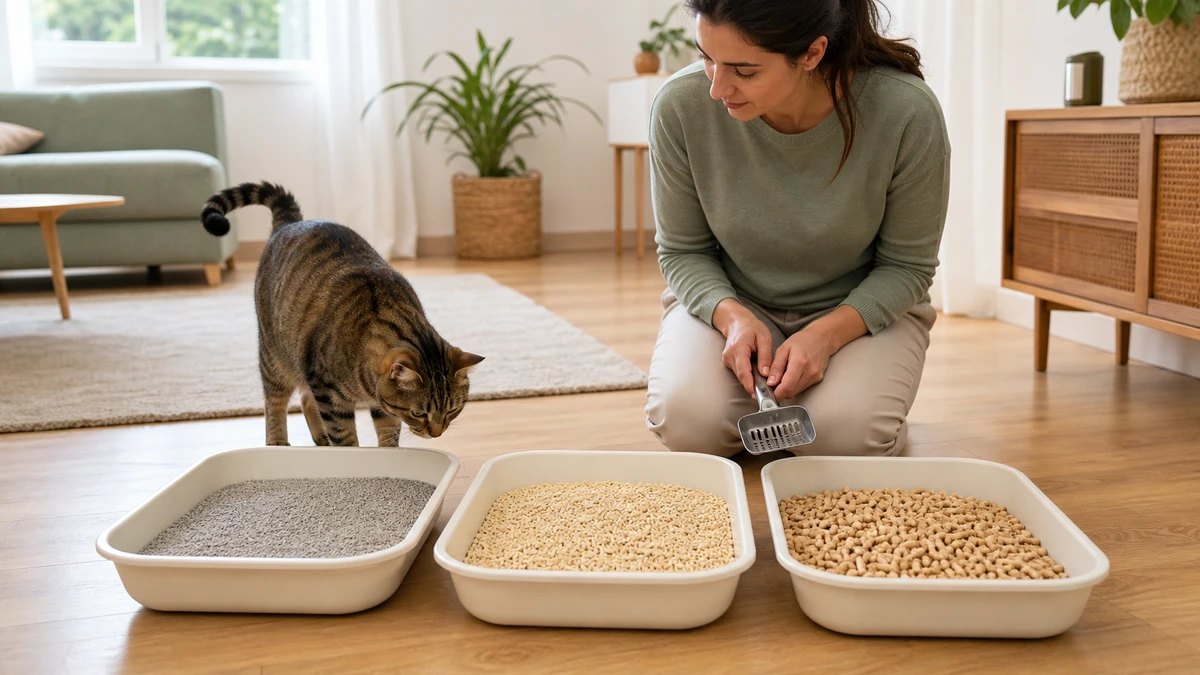
Choose cat litter by starting with what your cat will reliably use, then compare cleaning, dust, tracking, lifting, cost, and disposal. Fine, unscented clumping litter is a sensible baseline because many cats prefer a soft, sand-like substrate and clumps are easy to remove. Tofu litter can be lighter and commonly clumps, but pellet size and formulas vary. Wood pellets can track less and absorb liquid well, but their coarse texture and non-clumping cleaning system do not suit every cat. There is no universal winner: keep the current litter if it works, or run a gradual side-by-side trial.
The quick comparison
“Clay,” “tofu,” and “wood” describe materials, not guaranteed performance. A fine clay product can be dusty or carefully screened; tofu may be a short pellet, a fine crumble, or a blend containing clay; wood may be a whole pellet or a finer fiber. Read the actual ingredient list and directions, then test the product with your cat.
| Question | Mineral clay litter | Tofu litter | Wood-pellet litter |
|---|---|---|---|
| How it handles liquid | Clumping bentonite formulas bind wet granules; non-clumping clay absorbs without forming a scoopable mass | Most products sold as tofu litter use plant fiber plus a binder to form scoopable clumps, but firmness varies | Pellets usually absorb liquid and break into sawdust; many need a sifting tray rather than clump scooping |
| Odor control | Can be effective when firm clumps are removed promptly; perfume is not a substitute for cleaning | Often relies on absorption, clumping, and optional additives; compare unscented formulas | Fresh wood scent may mask some odor for people, but cats may dislike a strong material scent |
| Dust | Fine mineral products can release visible dust; “low dust” is a product claim, not a guarantee | Larger pellets often release less visible airborne material, but broken pellets and blended formulas can still create fines | Intact pellets make little fine scatter; disintegrated sawdust must be sifted and handled gently |
| Tracking | Fine grains cling to paws more easily | Short pellets are often easier to see and sweep, although crumbs still travel | Large pellets usually travel less far, while sawdust can escape during sifting |
| Weight | Usually the heaviest bag and tray of the three | Commonly lighter to lift and store | Often light for its volume, although large bags are still awkward |
| Daily cleaning | Scoop stool and clumps at least daily; top up to the chosen depth | Scoop stool and clumps daily; weak clumps may need a wider scoop and patient drying time | Remove stool, sift wet sawdust, and replenish pellets; the tray system changes the workload |
| Use and cost | Widely sold, but cheap price per bag does not reveal how much is discarded | Purchase price is often higher in the August 2026 retail snapshot; lighter shipping and usable life vary | Local pet-grade pellet prices vary widely; a sifting box may be an extra initial cost |
| Disposal | Used litter normally goes in household trash under local rules; it is not biodegradable | Plant ingredients do not automatically make used litter safe to flush or compost | Wood is plant-based, but used litter and feces still require local waste guidance |
What each litter is actually doing
Mineral clay: familiar texture and easy clump removal
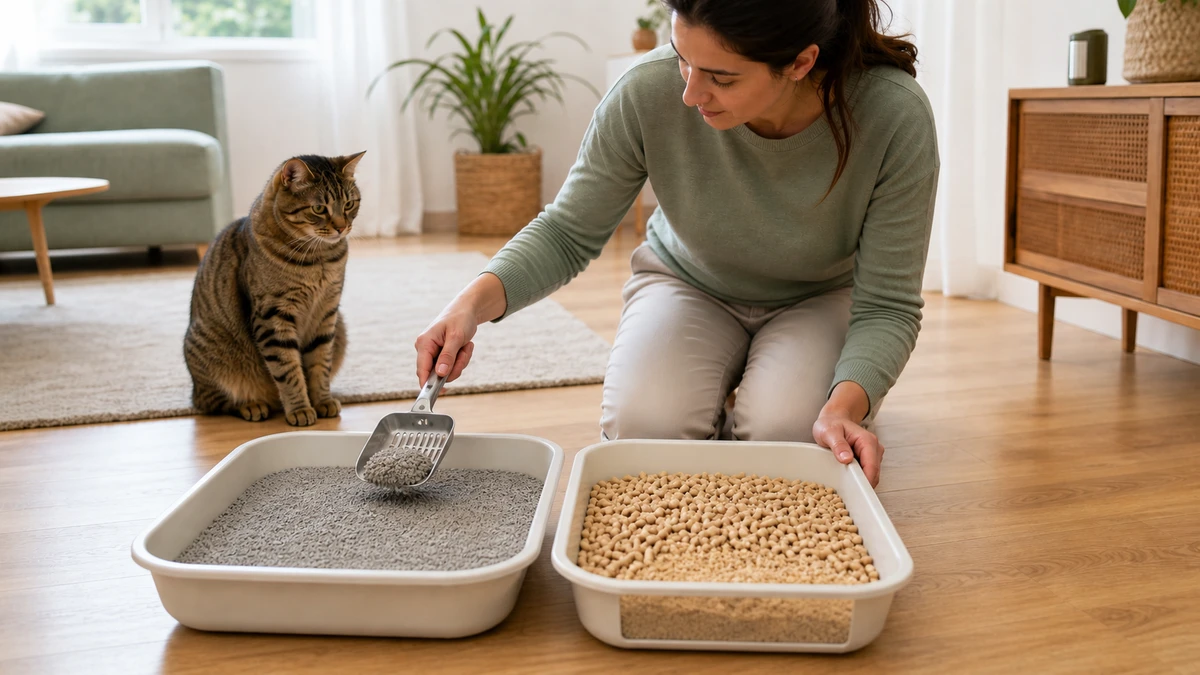
Clay litter comes in clumping and non-clumping forms. In a clumping formula, bentonite-rich granules swell and bind around liquid, allowing the wet portion to be removed while clean litter stays in the tray. That makes daily spot cleaning and monitoring of urine clumps straightforward. Non-clumping clay absorbs liquid across a broader area, so more of the tray may need replacement.
The tradeoffs are physical. A deep tray and a large bag are heavy. Small particles can leave the box on paws, and dust differs considerably by product and by how roughly the bag is poured. Avoid claiming that every clay litter is dangerous or that a “99% dust-free” label proves zero exposure. If a cat or person has a respiratory condition, ask the relevant veterinarian or physician what matters for that individual and choose the least dusty product and cleaning method you can verify.
Tofu: plant-fiber clumps in a lighter package
“Tofu litter” is a retail category rather than one fixed recipe. Current product listings include soy or bean fiber, pea fiber, corn starch, guar gum, activated carbon, deodorizing particles, and sometimes bentonite. Many are compressed into short pellets that absorb liquid and bind into a scoopable mass. That shape can reduce fine tracking and make a bag easier to carry, but a cat accustomed to sand may object to the larger texture.
Clump strength, odor control, dust, and storage stability vary by formula. Plant pellets can soften when exposed to humidity, so keep the bag dry and sealed. Check whether the product is unscented; green tea, milk, fruit, or other added scents may appeal to people but conflict with the feline preference for an unscented toilet area.
Wood pellets: absorb, crumble, then sift
Pet-grade wood pellets usually take up liquid and break down into damp sawdust instead of creating a firm clump. A two-layer sifting tray lets the smaller used material fall into a lower pan while intact pellets stay above. This can mean little tracking and efficient use when the system is maintained correctly, but it is a different routine from ordinary clump scooping.
Coarse pellets are not automatically comfortable. The ISFM/AAFP veterinary-environment guidelines note that wood or paper pellets may have a strong scent and can be uncomfortable for some cats to stand on, especially cats with degenerative joint disease. Never use treated, fragranced, fuel-grade, or otherwise unspecified pellets simply because they are cheap; choose a product intended for pet litter and check its ingredients.
Let the cat’s feet cast the deciding vote
The Ohio State University and Cornell guidance both report that most cats prefer fine-grained, unscented litter. Cats Protection similarly describes a common preference for fine, heavy, sand-like material that is soft under the paws and easy to dig in. “Most” is not “all”: a cat already comfortable with tofu or wood may have no reason to change.
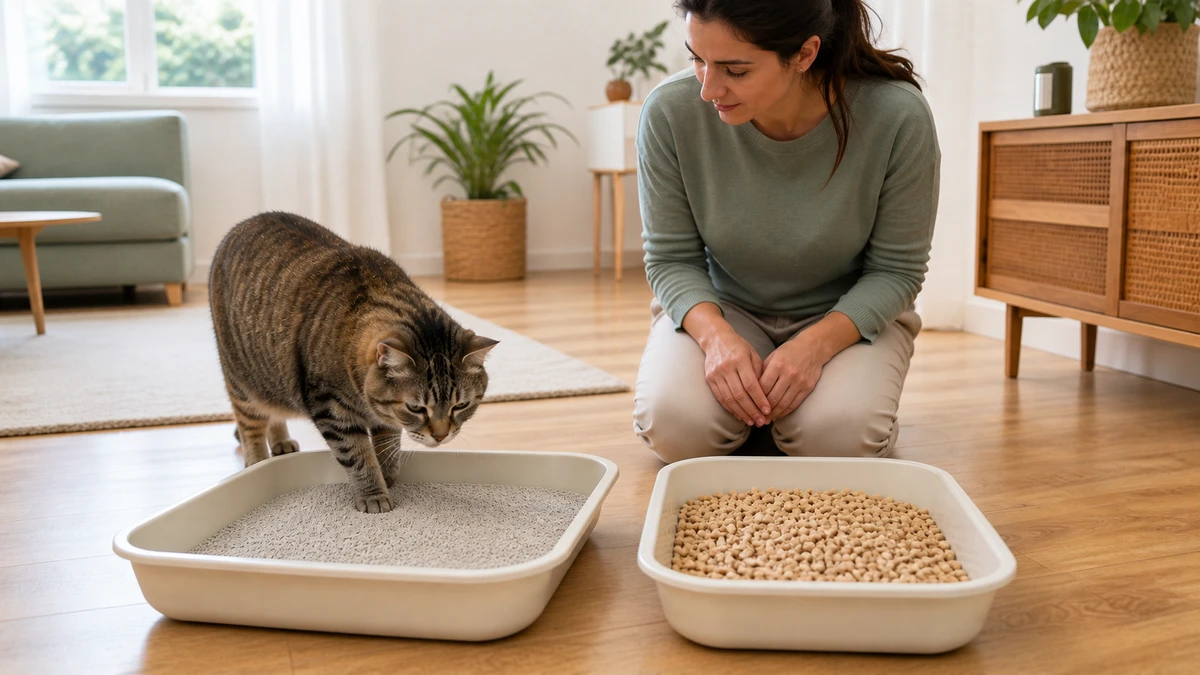
Watch behavior, not advertising. Does the cat enter without hesitation, place all four paws in the tray, dig normally, cover waste, and leave without balancing on the rim? Perching at the edge, touching as little litter as possible, darting away, or toileting beside the box can signal that texture, cleanliness, box design, location, or a medical issue needs attention.
For a kitten, senior, large cat, or cat with limited mobility, the tray matters as much as the substrate. Use a large box with an entry the cat can cross comfortably. Fine litter may feel easier under sore feet than coarse pellets, but do not diagnose pain from litter preference alone. A sudden change in toilet habits, straining, crying, repeated trips, blood, or little to no urine needs veterinary attention. Our guide to peeing outside the litter box explains why health comes before a home experiment.
Odor, dust, and tracking are management questions
No substrate makes a dirty box clean. Scoop stool and wet material at least daily, remove it more often when several cats share the facilities, and wash the box with mild soap as needed. Strong fragrance can make a room smell “clean” to a person while making the tray less acceptable to the cat. An unscented product plus prompt removal is the safer starting strategy.
For dust, pour slowly from a low height, ventilate the room without aiming a fan at the tray, and avoid shaking a scoop full of fines in the cat’s face. Judge the material at the bottom of a newly opened bag and again after two weeks; pellets that begin intact can crumble during transport and use.
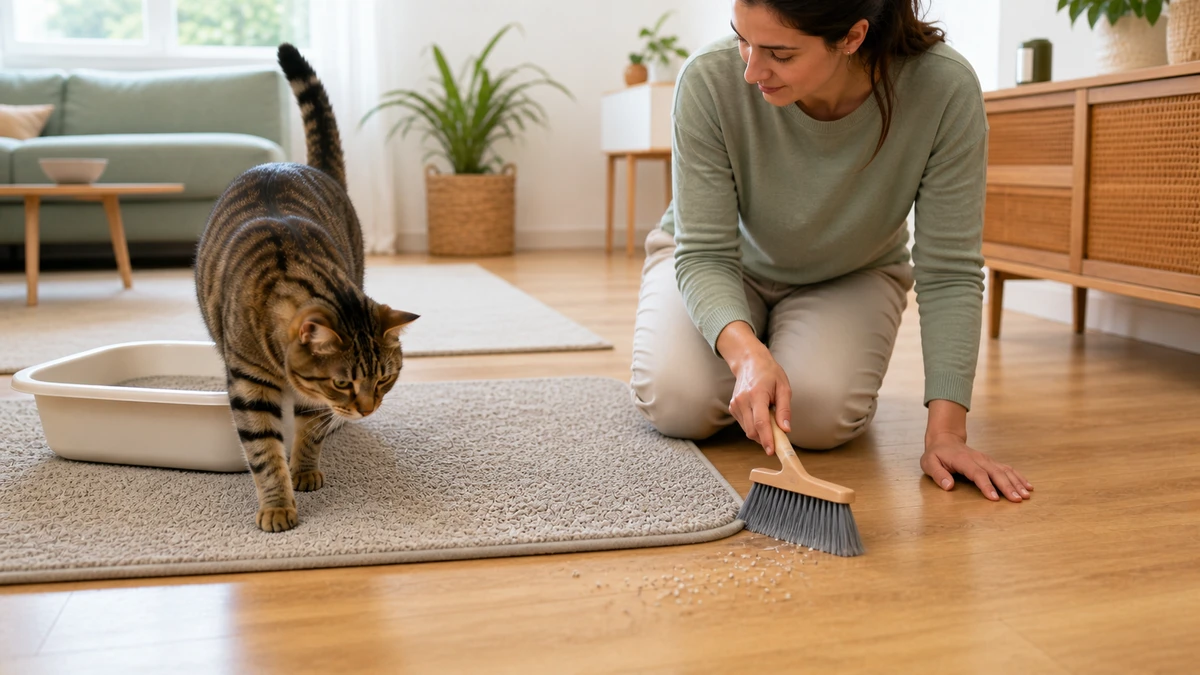
Tracking depends on particle size, paw fur, digging style, box height, and the path out. A large textured mat can catch material without trapping the cat. High sides may contain enthusiastic digging, but always preserve an accessible entry. Covered boxes can hide scatter from people while concentrating odor for the cat, so they are not a universal solution.
Compare cost by a four-week trial, not by bag price
Prices and pack sizes change too quickly for a permanent ranking. In a U.S. online-retail snapshot accessed on August 16, 2026, tofu products ranged widely in price and formulation; some were pure tofu-style fiber, while others mixed bean or pea fiber with starch, charcoal, deodorizer, or bentonite. Other countries can have the opposite availability and shipping costs.
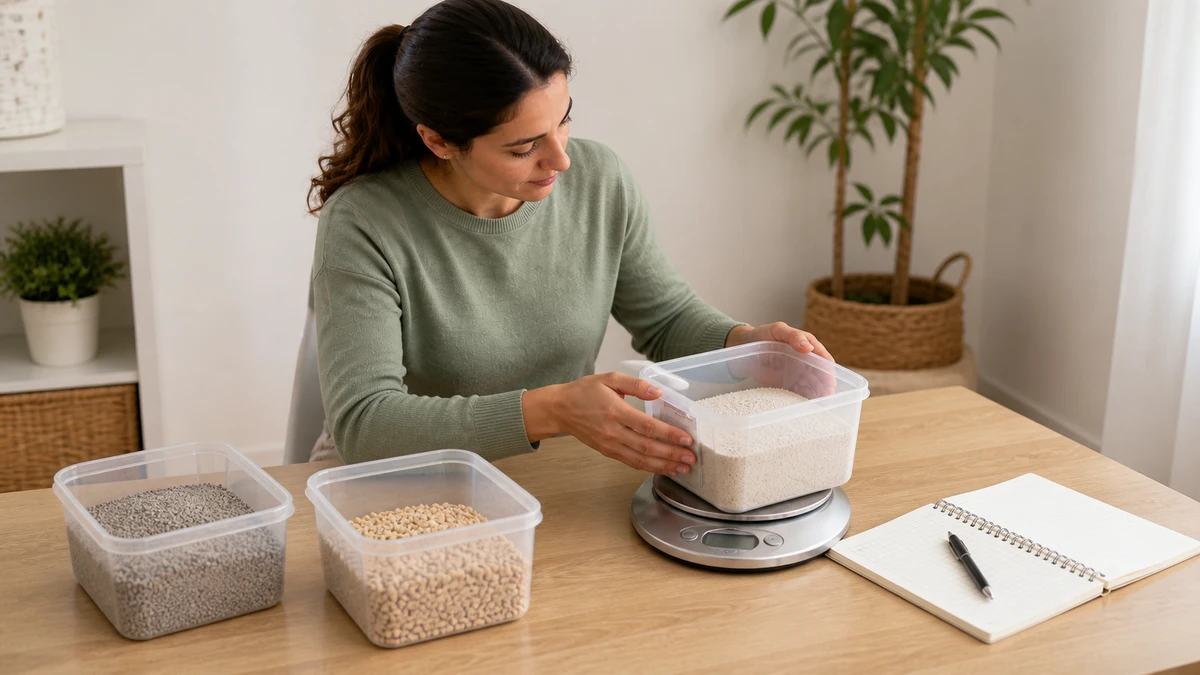
Record the delivered price, bag weight or volume, starting tray fill, top-ups, and how much clean material is thrown away for four weeks. Also count the time and equipment: a weak clump that breaks can increase waste, while wood pellets may require a sifting tray. The cheapest bag may not be the cheapest month, and a modestly dearer litter may still be worthwhile if the cat uses it reliably and the caregiver can maintain it.
“Plant-based” does not settle the environmental question
Clay is mined and does not biodegrade. Tofu and wood use renewable or byproduct feedstocks in many formulas, but the full impact also includes processing, additives, packaging, transport, how quickly the litter is consumed, and where used waste goes. Without a product-specific life-cycle assessment, “eco-friendly” is a direction or marketing claim, not a proven universal result.
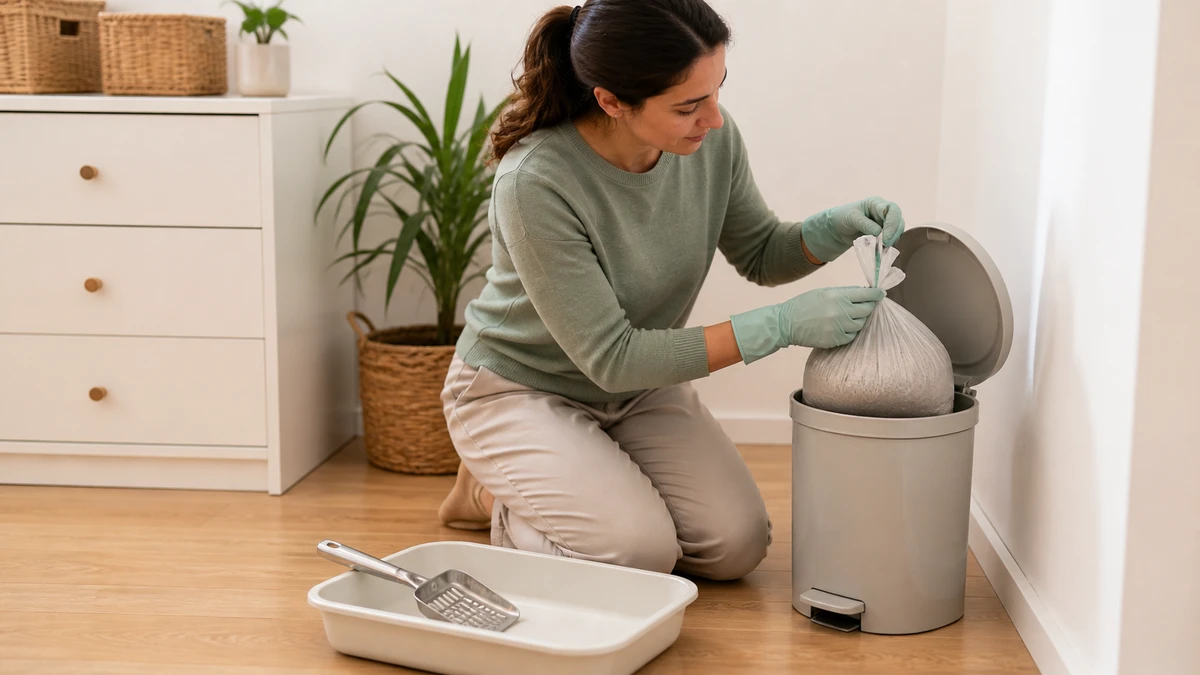
Do not treat “flushable” as permission by itself. Plumbing limits and local law vary, and cat feces can carry organisms that wastewater systems do not necessarily remove. NOAA advises putting cat litter in the trash rather than the toilet to reduce the movement of Toxoplasma gondii into the environment. The practical default is to bag used litter, place it in household waste, wash your hands, and follow local waste rules. Do not add feces or used litter to food-growing compost.
A low-stress way to change litter
If the current litter works and causes no practical problem, switching is optional. When change is necessary, protect the cat’s toilet access throughout the trial.
- Change one variable. Keep the box style, location, depth, and cleaning schedule stable while testing the substrate.
- Add a choice. Put an identical box with the new litter beside a box of the familiar litter. This preference test is clearer than forcing a mixture immediately.
- Start small. If the cat explores and uses the new option, make a second trial box with roughly one-quarter new litter and three-quarters familiar litter.
- Advance only after normal use. Move toward half, then three-quarters new litter over days or longer. A nervous cat may need more time; the calendar does not outrank behavior.
- Keep one accepted toilet available. In a multi-cat home, provide enough boxes in separate locations. Do not convert every box at once.
- Step back after hesitation. If the cat avoids the tray, perches on the rim, or eliminates elsewhere, restore the last accepted setup and reassess texture, scent, depth, cleanliness, and location.
- Call the veterinarian for a sudden change. Do not assume new house-soiling is stubbornness or a review of the litter. Pain, urgency, mobility, stress, and other causes require assessment.
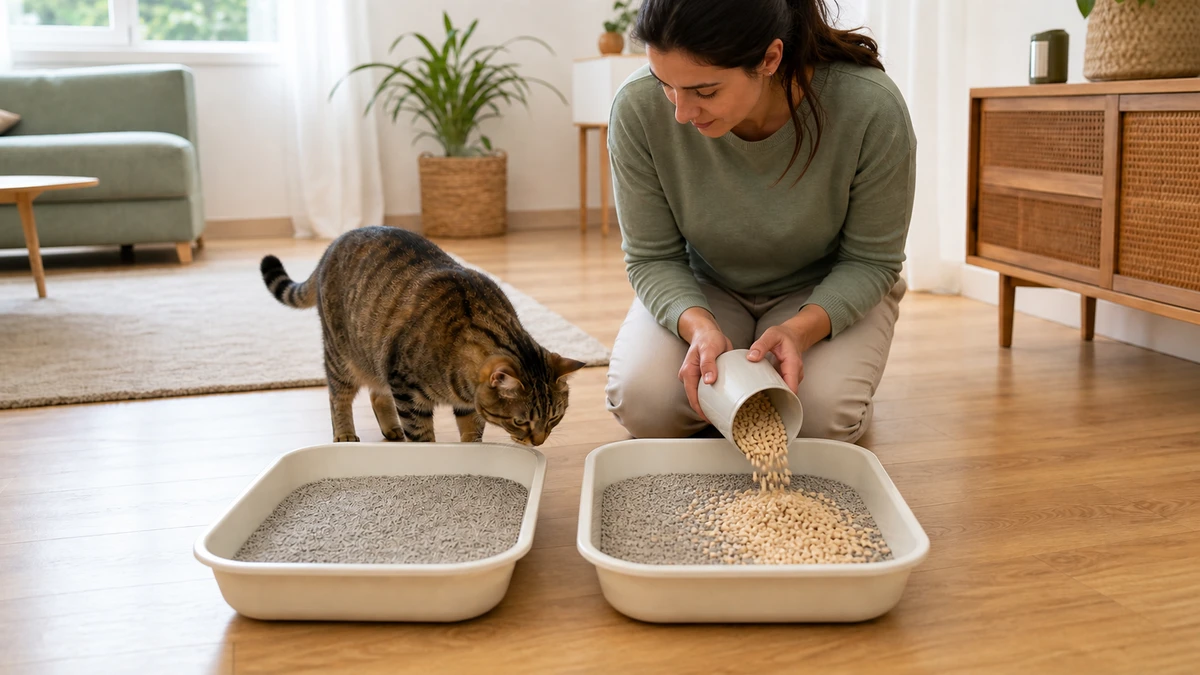
The winning litter is the one that balances feline acceptance with a routine the household can sustain. Start with unscented, easy-to-dig material; observe the individual cat; measure real monthly use; and treat environmental claims with the same care as health claims. A clean, accessible box used every day is more valuable than the most impressive promise on a bag.
Frequently asked questions
Is tofu litter always safer than clay litter? No. “Tofu” covers different formulas, and safety cannot be reduced to one ingredient label. Compare dust, scent, pellet size, additives, clump behavior, and whether your cat tries to eat it. Contact a veterinarian if a cat persistently eats litter or develops respiratory, digestive, or toileting signs.
Which litter controls odor best? There is no material-only winner. Fast removal of stool and wet material, enough boxes, an appropriate fill depth, and regular washing matter more than perfume. Test unscented products and judge odor at the end of a normal cleaning interval.
Are wood pellets suitable for senior cats? Sometimes, but coarse pellets may be uncomfortable for a cat with sensitive paws or joint disease. Offer a low-entry box with a softer alternative beside it and let the cat show a preference. A new mobility or toileting change deserves veterinary assessment.
Can I flush tofu or wood litter if the package says flushable? Do not rely on the package claim alone. Local wastewater rules, plumbing, septic systems, and wildlife protections vary. NOAA recommends trash disposal for cat litter; bagging it for household waste is the sensible default unless your local authority explicitly directs otherwise.
How long should a litter change take? There is no fixed deadline. Offer the old and new options side by side, increase the new material only after normal use, and step back if the cat hesitates. Some cats adapt in days; others need weeks or reject the new texture entirely.