Why Is My Cat Peeing Outside the Litter Box? Spraying, Stress, and Neutering

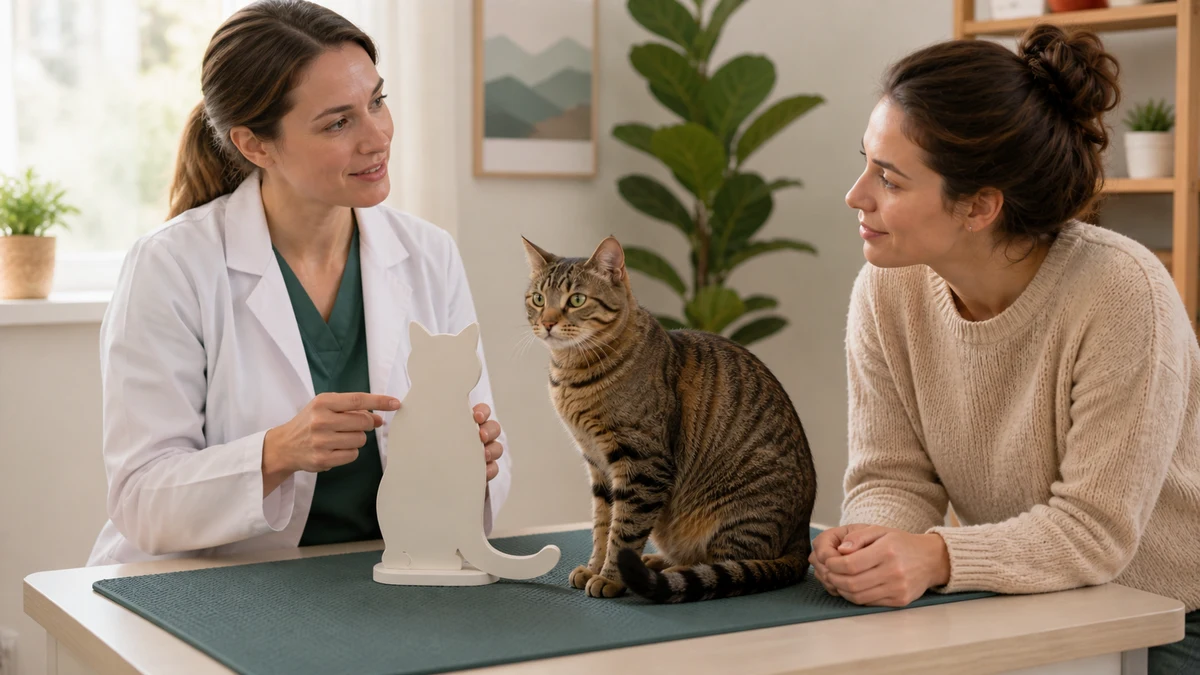
A cat peeing outside the litter box is not being spiteful. The first step is to contact a veterinarian and rule out a physical problem, even when the mess looks behavioral. Cats can feel unwell without looking obviously sick, and a litter-box change may be the first visible clue. If the cat repeatedly strains, produces only drops or no urine, cries while trying, seems weak, or suddenly deteriorates, seek urgent veterinary care instead of experimenting with a new box at home.
After medical causes have been assessed, the pattern usually falls into two broad categories: the cat is toileting outside the box, or the cat is urine marking. The distinction matters because the solutions overlap only partly. Neutering can greatly reduce marking driven by reproductive hormones and prevents unplanned litters, but it cannot fix an inaccessible box, social conflict, fear, or a learned preference for the carpet. A successful plan identifies which problem is happening and removes more than one source of pressure.
Is it spraying or ordinary urination?
Spraying is a form of scent communication. A typical spraying cat stands rather than squats, backs toward a wall or furniture, raises the tail, and may quiver or tread with the hind feet. The deposit is usually a relatively small amount on a vertical surface. Doors, windows, new objects, hallways, and socially important boundaries are common targets.
Ordinary toileting usually looks different. The cat squats and releases a larger puddle on a horizontal surface such as a rug, bed, bath mat, or floor. The cat may scratch before or after. This pattern can point toward discomfort, difficulty reaching or entering the box, dislike of its litter or location, competition around the box, or a preference the cat has developed for another surface.
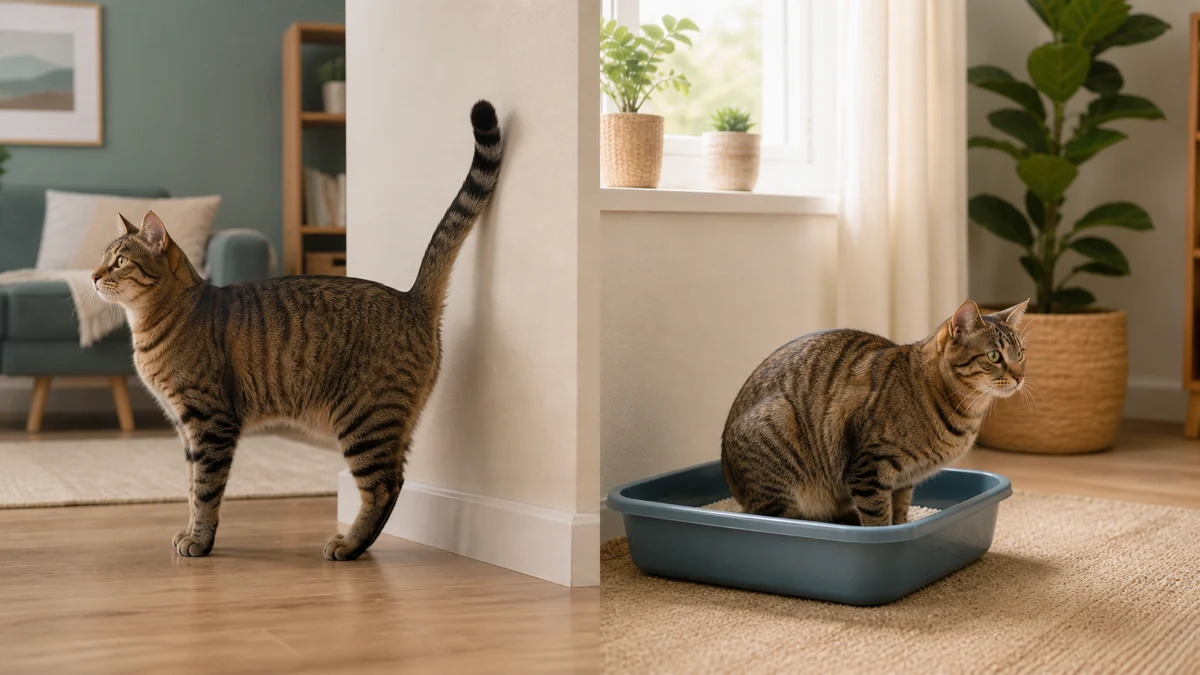
These are clues, not a home diagnosis. Some cats mark small horizontal areas, and a cat can spray while still using the litter box for normal urination. A household may also have both marking and toileting problems at once. Record the posture, surface, volume, location, time, nearby people or animals, and any change in the home. A short video from a safely placed camera can be more informative than guessing from the puddle later.
Why neutering is important — and what it cannot do
Urine carries scent information, and an intact cat may use it to advertise reproductive availability. This is why urine marking is especially common in unneutered males, although females and neutered cats can mark too. The Feline Veterinary Medical Association describes spaying and neutering as dramatically reducing sexually related marking. It also notes that cats not intended for breeding can become reproductively active as early as four to five months, sometimes without obvious outward signs.
Neutering matters for two connected reasons. It removes the reproductive-hormone drive behind mating-related marking, and it prevents unintended reproduction. Waiting for a first spray, escape, pregnancy, or litter is not a necessary milestone. Ask the cat’s veterinarian when sterilization is appropriate for that individual; health, age, and the clinician’s assessment belong in that decision.
The limit is equally important: neutering is not an all-purpose reset button. A neutered cat can still mark in response to an unfamiliar cat outside, tension with a housemate, a new smell, renovation, schedule changes, or frustration. A habit learned before surgery may also persist. And a cat that squats to empty a full bladder on the bed is not necessarily showing hormone-driven marking at all. If the only plan is surgery while every environmental trigger remains, the behavior may continue.
Four common pressures after medical causes are addressed
1. The box is difficult or unpleasant to use
Cats need a box they can enter, turn around in, and leave without feeling trapped. A small covered box may hold odor or block the cat’s view. High sides can be a barrier for a cat with limited mobility. Strongly scented litter, a sudden litter change, accumulated waste, a loud appliance, or heavy foot traffic can make another surface feel safer.
The current FelineVMA caregiver guidance recommends a box about one and a half times the cat’s length from nose to the base of the tail, while recognizing that many commercial boxes are too small. It also recommends scooping at least daily and using soft, unscented litter as a useful starting point. Preference varies, so a side-by-side trial of box or litter options is more informative than forcing one abrupt replacement.
2. There are too few safe routes to a box
The familiar starting rule is one litter box per cat, plus one extra, placed in different locations. Three boxes lined up in one room may function like one resource because another cat can guard the route to all three. Boxes should be separated, quiet, accessible, and positioned so a cat has more than one way to approach or leave. A box on each level can help in a multi-story home.

Watch for subtle blocking. Conflict does not always look like a fight. A cat staring from a doorway, following another cat, or resting beside the only route can make the box unsafe for the other animal. Separate food, water, resting places, scratching areas, play, perches, and litter boxes so no cat must negotiate every essential resource with a housemate.
3. The social or physical environment changed
Marking can appear after a person or animal arrives or leaves, furniture moves, work hours change, building work begins, or unfamiliar belongings enter the home. An outdoor cat visible through a window may be enough to trigger marks near doors or glass. The cat is not writing a revenge note; it is leaving familiar scent in a place that feels socially uncertain.
Build a timeline instead of changing everything at once. Note when and where each event occurs, then compare it with deliveries, visitors, outdoor-cat sightings, noise, feeding, and interactions between resident cats. If the trigger is outside, an opaque lower window film or rearranged access may reduce the visual pressure while preserving other safe viewing spots. If tension is indoors, more separated resources and help from a qualified veterinary behavior professional may be needed.
4. Odor keeps the location meaningful
Cats can detect residual scent that people no longer notice. Clean a sufficiently wide area with a pet-urine odor remover suitable for the surface, following its directions and testing it in an inconspicuous spot. FelineVMA guidance advises against ammonia-based cleaners because their smell can resemble urine to a cat. Cleaning removes a cue; it does not solve the original medical, litter-box, or social cause by itself.

Do not rub the cat’s nose in the mess, shout, spray the cat with water, or drag it to the box. Punishment adds fear and may push the behavior into harder-to-see places without teaching a safer alternative. Our guide to why you should never hit your cat explains how punishment damages trust and interferes with learning.
A practical order of action
1. Book the veterinary assessment first. Share when the change began, the cat’s posture, how much urine appears, how often it happens, and any other change in appetite, activity, drinking, mobility, or behavior. Do not start leftover medication or a supplement based on an online guess.
2. Identify the cat and the pattern. In a multi-cat home, a camera can help without creating new conflict. Keep a brief log of locations and triggers. Do not assume the cat found nearest to the puddle made it.
3. Improve the litter-box system. Add enough large boxes, spread them across quiet locations, keep routes open, scoop daily, and test preferences gradually. Preserve any box the cat still uses while offering alternatives.
4. Discuss neutering if the cat is intact. This is especially relevant when the posture and locations fit reproductive marking. Neutering also prevents unintended litters, but timing and individual suitability should be decided with the veterinarian.
5. Reduce triggers and distribute resources. Block a stressful outdoor view if needed. Give resident cats separate paths to food, water, rest, height, play, scratching, and toileting. Predictable routines can make changes easier to absorb.
6. Clean thoroughly without punishment. Remove odor from the full affected area and prevent unsupervised access while the underlying plan takes effect. Reward calm use of an appropriate box; do not frighten the cat near it.
7. Reassess rather than escalating at random. If the behavior continues after veterinary and environmental steps, return to the veterinarian. A referral to a board-certified veterinary behaviorist or another appropriately qualified feline behavior professional can turn the log and home layout into an individualized plan.
The useful question is “what need is unmet?”
“Peeing everywhere” describes the human problem, not the cat’s motive. For the cat, the act may be ordinary toileting in a place that feels easier, scent communication during social pressure, a reproductive signal, or the first outward sign that veterinary assessment is needed. That is why cleaning alone, adding one attractive gadget, or scheduling neutering without looking at the whole pattern can disappoint.
Start with health, then distinguish spraying from squatting, make essential resources genuinely accessible, and discuss neutering before an intact cat reproduces or rehearses hormone-driven marking. The approach is less dramatic than punishment, but it answers the behavior with information and care — which is far more likely to restore reliable litter-box use.
Frequently asked questions
Does a cat peeing outside the litter box always have a behavior problem? No. A physical problem can change where or how a cat urinates, and cats may not otherwise appear sick. Arrange a veterinary assessment first. Repeated straining, little or no urine, crying, weakness, or sudden deterioration needs urgent care.
How can I tell spraying from regular urination? Spraying usually involves standing with the tail raised and depositing a small amount on a vertical surface. Regular urination more often involves a squat and a larger puddle on a horizontal surface. Exceptions occur, so posture, location, volume, and a video are useful clues for the veterinarian.
Will neutering definitely stop urine spraying? It often greatly reduces marking driven by reproductive hormones, and it prevents unintended reproduction. It cannot guarantee an end to marking caused by stress, cat-to-cat tension, outside cats, or an established habit, and it does not correct a litter-box setup the cat cannot comfortably use.
How many litter boxes should I have? A strong starting point is one box per cat plus one extra, distributed in separate locations. The layout matters as much as the count: boxes placed side by side or behind a single guardable doorway may not offer truly separate access.
Should I punish my cat so it understands where to go? No. Punishment can increase fear, damage trust, and move the behavior out of sight. Veterinary assessment, observation, better litter-box access, trigger reduction, careful cleaning, and positive reinforcement address the reasons the behavior continues.