How to Get a Cat to Drink More Water: A Practical, Low-Stress Plan
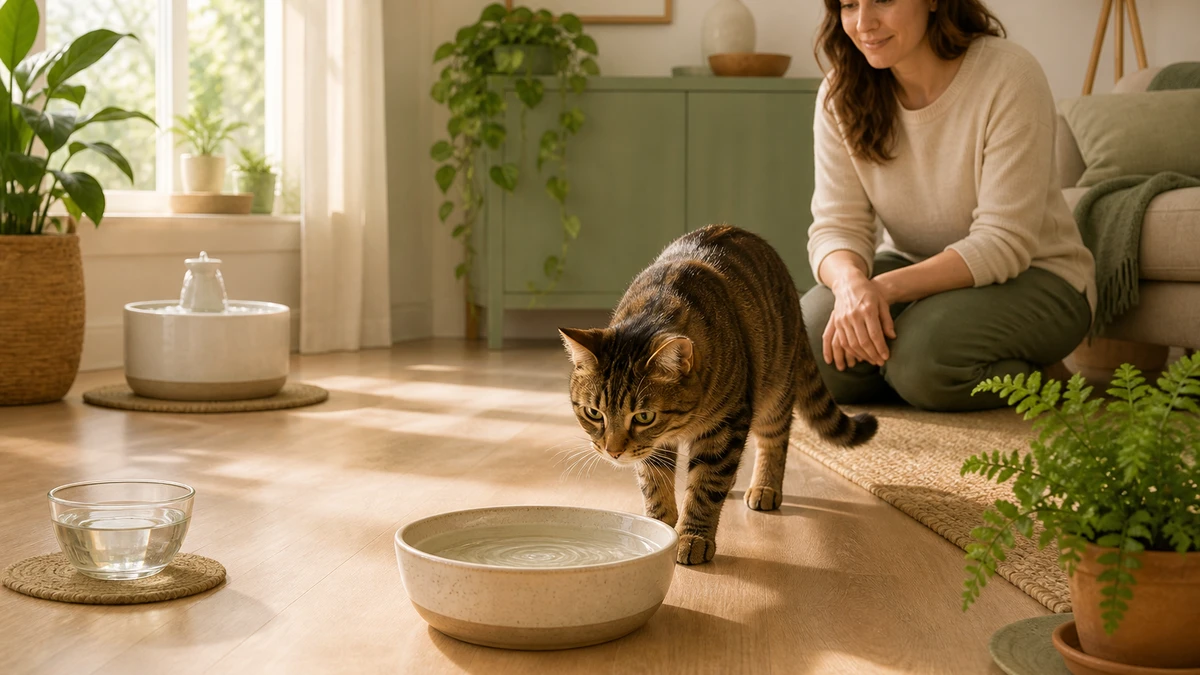
If your cat barely touches the water bowl, do not force water or start with a universal daily target. First consider total water from both drinking and food, compare today with your cat’s usual pattern, and check for changes in appetite, energy, weight, vomiting, stool, and urination. If the cat otherwise seems well, make water easier to choose: offer several clean bowls in quiet, accessible places, test a wide bowl and a fountain as separate options, and discuss moisture-rich food with your veterinarian. A sudden drinking or urination change, especially with other symptoms, belongs on a veterinary track rather than a home hydration experiment.
First ask: is the cat taking in too little total water?
A bowl is only one route. Cornell’s Feline Health Center explains that water enters the body through drinking and food. Canned food contains at least about 75% moisture, while dry food contains far less. A healthy cat eating mostly wet food may therefore visit the bowl less often than one eating dry food. That difference is not proof that either cat is adequately hydrated, but it shows why a falling water line cannot answer the question alone.
Start with the pattern, not a generic number. Weather, activity, diet, body size, age, illness, medication, and fluid loss can change an individual’s needs. Population estimates can help veterinarians plan care, but they should not become a volume that every cat is made to drink. The guide to why cats may not drink much water covers the physiology and dehydration signs in more depth; this article focuses on what to change at home when the cat is stable.
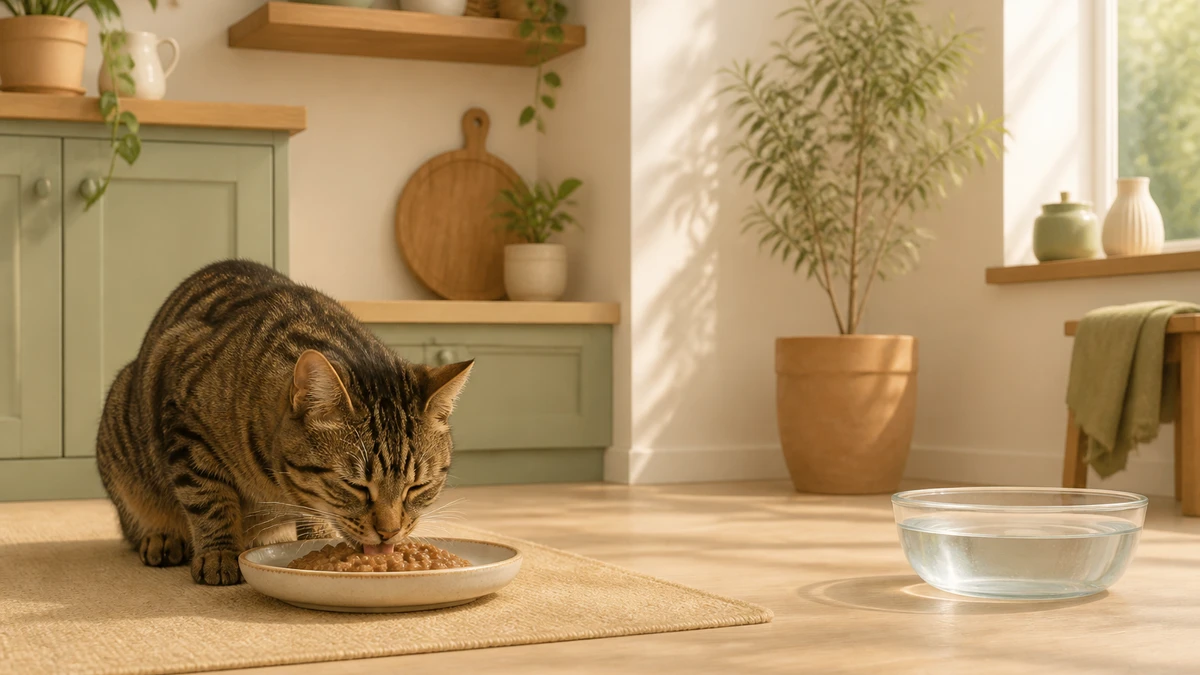
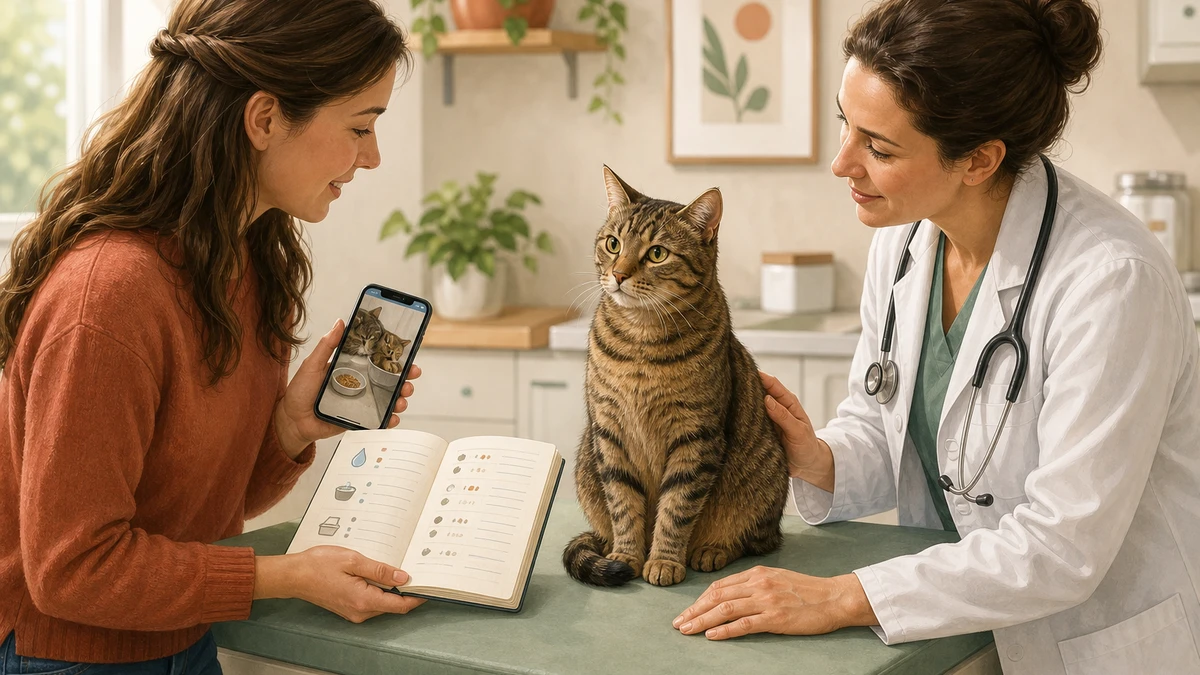
For two or three ordinary days, note what food was offered, how much was eaten, when bowls were refilled, and whether urine clumps look broadly similar in number and size to the cat’s normal. A measuring cup can show how much went into a bowl and remained later, but spills, evaporation, fountains, and other pets make that an estimate. In a multi-cat home, shared bowls cannot identify who drank. Do not postpone a veterinary call just to finish the log if the cat seems unwell.
Build better water stations before buying more products
The most useful first change is often not a gadget. It is more clean water in better places. International Cat Care recommends at least one bowl per cat plus one extra, spread through the home rather than lined up as one station. A multi-level home should have water on each floor. Separation matters because one confident animal can block a doorway or watch another cat without an obvious fight.
Choose quiet locations away from litter trays, noisy appliances, busy passages, and doors that may close. Do not place every bowl tight against a wall; some cats drink more comfortably when they can see the room and leave in more than one direction. Keep water separate from food instead of relying on a connected double feeder. Easy access is especially important for kittens, senior cats, and cats with limited mobility; a stable nonslip mat and a modestly raised option may help some individuals.
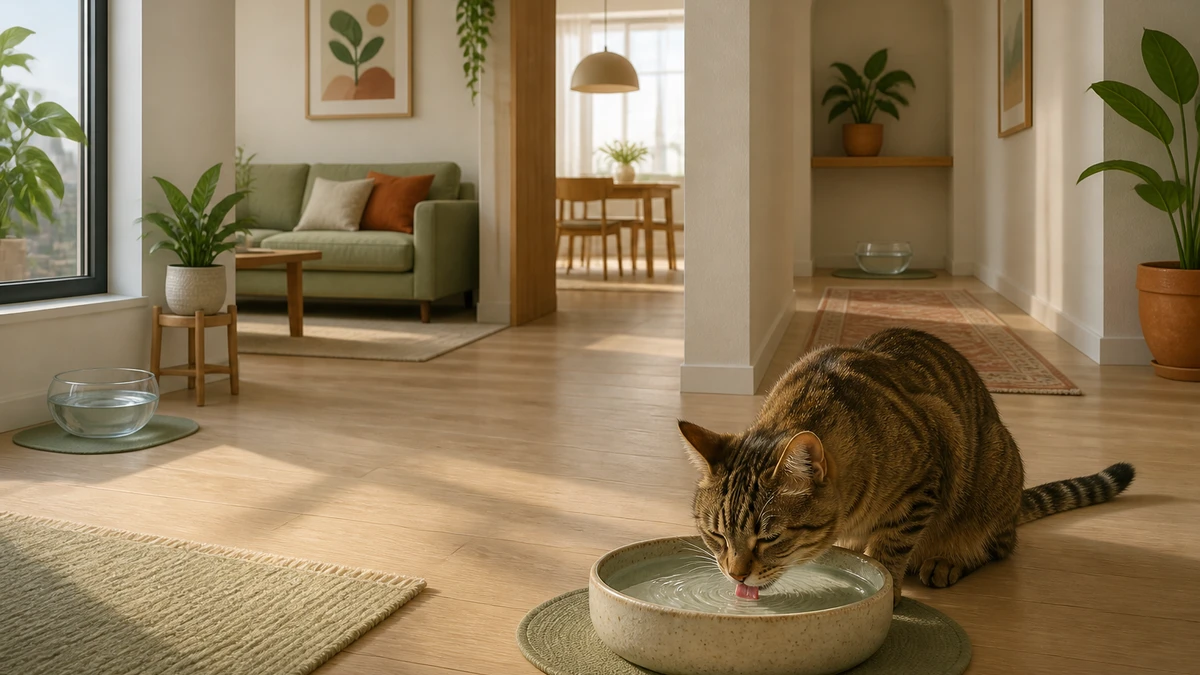
Refresh water every day and wash the containers regularly—ideally daily—with hot water and ordinary dish detergent, then rinse thoroughly. Cleanliness affects taste and limits the buildup of bacteria and mold. Top up a fountain as needed, but do not treat added water as a substitute for dismantling and cleaning its reservoir, pump, and drinking surfaces.
Let the cat choose the bowl
Offer a small, controlled comparison while keeping the familiar bowl available. Many cats readily use a wide, shallow ceramic, glass, or stainless-steel container, but no material or shape wins for every cat. A broad rim can reduce contact with whiskers and a shallower profile can improve visibility. The important result is the cat’s repeated choice, not a product claim.
Test one variable at a time for several days:
| Test | Keep constant | What to observe |
|---|---|---|
| Wide bowl versus current bowl | Water and location | Which one receives repeat visits |
| Quiet location versus busy location | Same bowl type | Whether the cat approaches more readily |
| Room-temperature versus slightly cool water | Bowl and location | Preference without withholding either option |
| Familiar bowl versus fountain | Other stations | Whether moving water attracts or worries the cat |
Fill bowls with potable water you would consider safe for the household. If local tap water has a strong odor or the cat avoids it, a safe filtered option may be worth comparing. Avoid essential oils, supplements, sweeteners, milk, salty broth, or flavored human drinks. Even seemingly simple flavor additions can conflict with a medical diet or contain unsuitable ingredients; ask the veterinarian before adding anything.
Introduce a fountain as an option, not a cure
Some cats are drawn to moving water; others dislike motor noise, splashing, or a new object. A fountain is therefore a trial, not a requirement. Set it beside—but not in place of—a familiar water source. Let the cat investigate it while unplugged, then run it gently for short periods. Reward voluntary approach with calm attention or a suitable treat if that fits the cat’s diet. Never carry the cat to the fountain or hold its face near the stream.
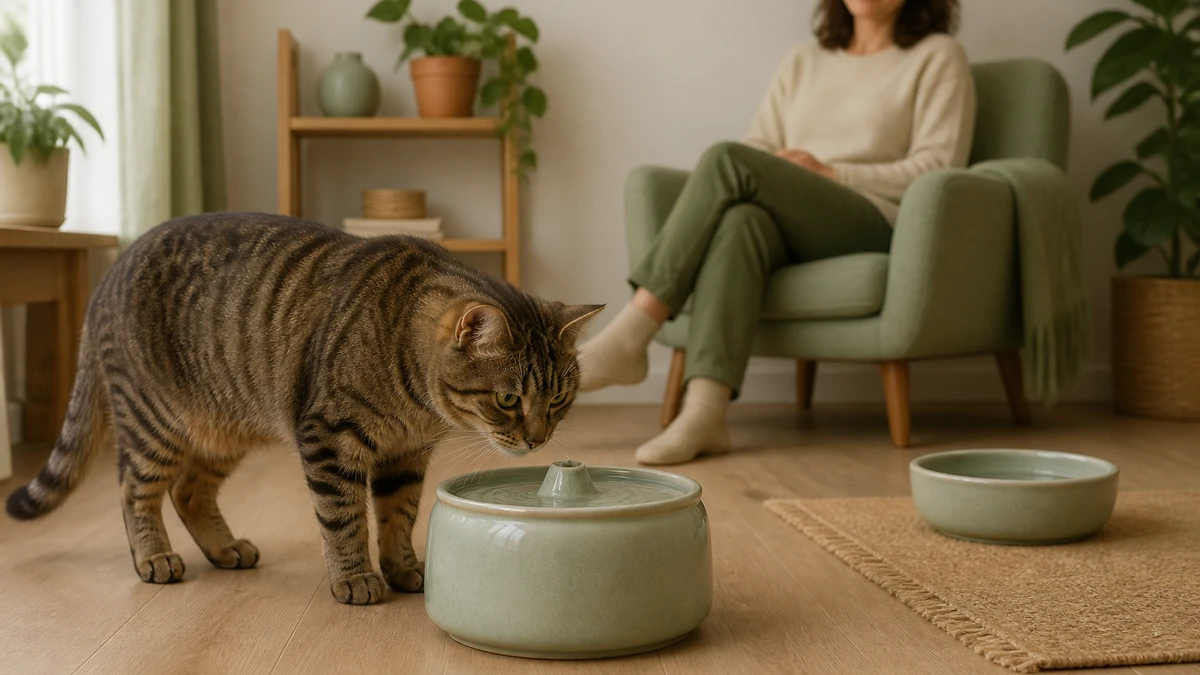
Choose a design that can be fully taken apart. Follow the manufacturer’s cleaning and filter schedule, and clean sooner if slime or debris appears. Hide or protect the power cord and keep the unit stable. A recirculating fountain does not make old water permanently fresh; it still needs routine water changes and washing.
Use food moisture only when the feeding plan still works
Moisture-rich food can raise total water intake because the water is consumed with the meal. Cornell notes that canned food contains at least 75% moisture. That does not mean every cat should switch abruptly or that any canned product is appropriate. The food still needs to be complete and balanced for the cat’s life stage, portions still matter, and a prescribed diet should not be changed without the veterinary team that recommended it.
If a veterinarian agrees, transition gradually. Some cats accept a spoonful of warm water mixed into familiar wet food; others reject the altered texture or smell. Start small, serve it fresh, and return to an accepted meal if intake drops. A strategy that adds water but causes the cat to eat too little is not a success. Cats with health conditions may need an individualized diet and fluid plan rather than a general internet tip.
A seven-day, low-pressure trial
For a well cat with no sudden change, this sequence keeps the experiment understandable:
- Day 0: record the baseline. Note food type, appetite, usual bowl locations, bowl refill, activity, and urine-clump pattern.
- Days 1–2: fix access and cleanliness. Wash bowls, refresh water, and add quiet stations without removing familiar ones.
- Days 3–4: test one container. Add one wide bowl in the best new location. Keep water type and other variables stable.
- Days 5–6: test movement. Introduce a clean fountain gradually while retaining still water.
- Day 7: review the whole cat. Look for a stable or improved pattern in drinking opportunities, appetite, energy, and litter-box output—not merely a favorite new object.
Continue the changes the cat actually uses. Remove a station only after you know it is unnecessary and every cat still has reliable access. If nothing changes but the cat remains bright, eating normally, and urinating normally, share the record at the next veterinary discussion rather than escalating to force or unapproved additives.
Know when the experiment should stop
Call a veterinary clinic promptly for a sudden or persistent increase or decrease in drinking, a clear increase or decrease in urine, loss of appetite, repeated vomiting or diarrhea, weight change, dry or tacky gums, lethargy, weakness, or an abrupt behavior change. Merck lists increased thirst and frequent urination among common signs of illness; the direction of change matters less than the fact that the cat has departed from its own baseline.
Repeated trips to the litter box, straining, crying, or producing only drops or no urine is different from “not drinking enough.” Cornell describes urethral obstruction as a true medical emergency requiring immediate veterinary attention. Do not wait for the cat to drink, do not press the abdomen, and do not try a home remedy.
Do not syringe water into an unwilling cat. Forced oral water is stressful and can enter the airway. A veterinarian can assess hydration, identify why intake or loss changed, and decide whether any fluid treatment is needed. Bring the short log, food information, medication list, and a video of unusual drinking or litter-box behavior when it can be recorded without delaying care.
FAQ
How can I tell whether my cat drinks enough if it eats wet food?
Consider the whole pattern: food moisture, bowl or fountain use, appetite, energy, body weight, and urination. Wet food can provide much of total water, so bowl intake alone is incomplete. Ask a veterinarian for an individual target when health, diet, or intake is changing.
How many water bowls should I provide?
International Cat Care recommends at least one per cat plus one extra, distributed in separate locations. In a multi-floor home, provide a source on each floor. The goal is genuine access, not several bowls lined up where one animal can guard them all.
Is ceramic, glass, or stainless steel best?
All can work when intact and cleaned well. Many cats like wide, shallow containers, but preference is individual. Offer a controlled choice and look for repeat use rather than assuming one material is universally superior.
Will a fountain make every cat drink more?
No. Some cats prefer moving water and some avoid the sound or motion. Introduce it gradually, keep a still bowl available, and maintain the fountain carefully.
Should I add water to food?
Only if the cat accepts it and the veterinary feeding plan allows it. Begin with a small amount in familiar wet food, monitor appetite, and never dilute a prescribed diet or replace needed calories without professional guidance.
When is a litter-box change an emergency?
Frequent straining with little or no urine, distress, or crying can signal blocked urine flow. Seek emergency veterinary care immediately; do not wait for a hydration experiment to work.