Why Cats Don't Drink Much Water: Dehydration Signs and Safe Ways to Help
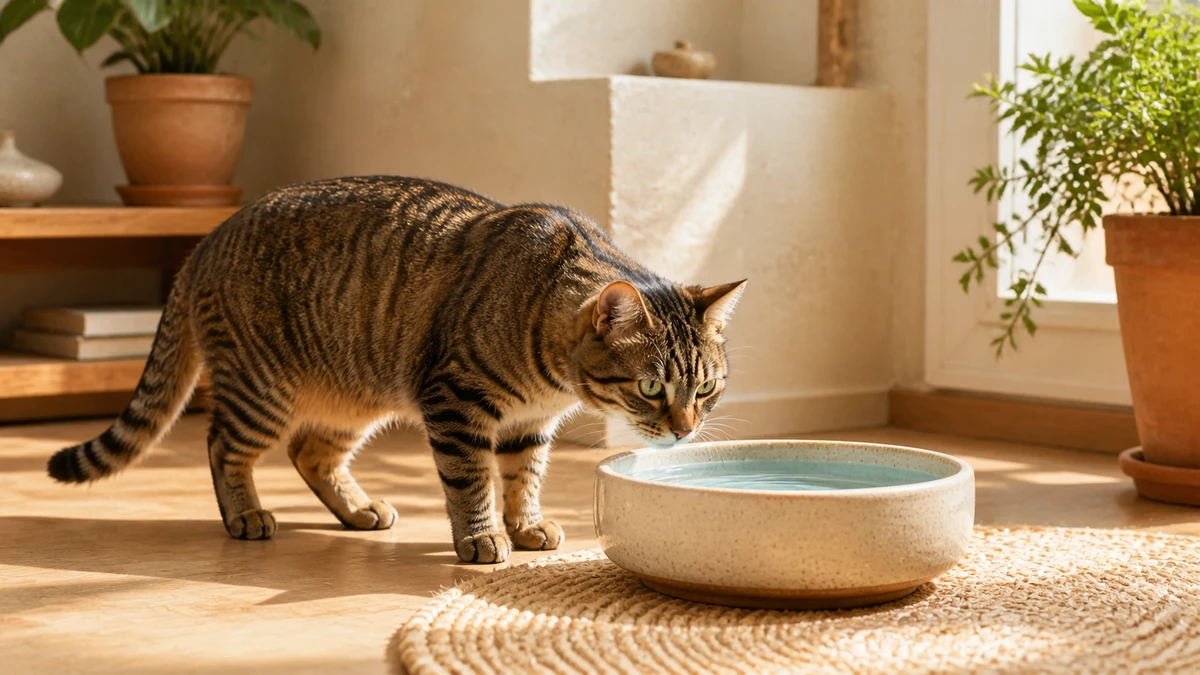
Cats often seem uninterested in water because the bowl is only one part of their water supply. Food supplies water too, and a cat eating moisture-rich wet food may visit a bowl less often than a cat eating dry food. Cats may also drink in private and can be selective about freshness, bowl shape, location, noise, and nearby animals. The important question is not “Did I see my cat drink today?” but “Is my cat taking in enough total water, and has anything changed?” Too little intake, excessive fluid loss, or both can cause dehydration. That can impair circulation, temperature control, electrolyte balance, and organ function, so suspected dehydration deserves prompt veterinary advice.
Low bowl use does not always mean low water intake
Water reaches a cat in two main ways: drinking and food. Cornell’s Feline Health Center gives a rough baseline of about four ounces of total water per five pounds of lean body weight each day. That would be around eight ounces, or one cup, for a ten-pound cat. It is an estimate rather than a home prescription. Temperature, activity, health, body size, and food type all change the need, and a veterinarian is the right person to set a target for an individual cat.
International Cat Care reports that wet cat food is typically 70–80% water. A cat eating it can obtain a substantial share of daily water with each meal and may leave a bowl looking almost untouched. Dry food contributes much less moisture, so a dry-fed cat generally has to make up more of the difference by drinking. Counting bowl visits without considering the diet can therefore be misleading.
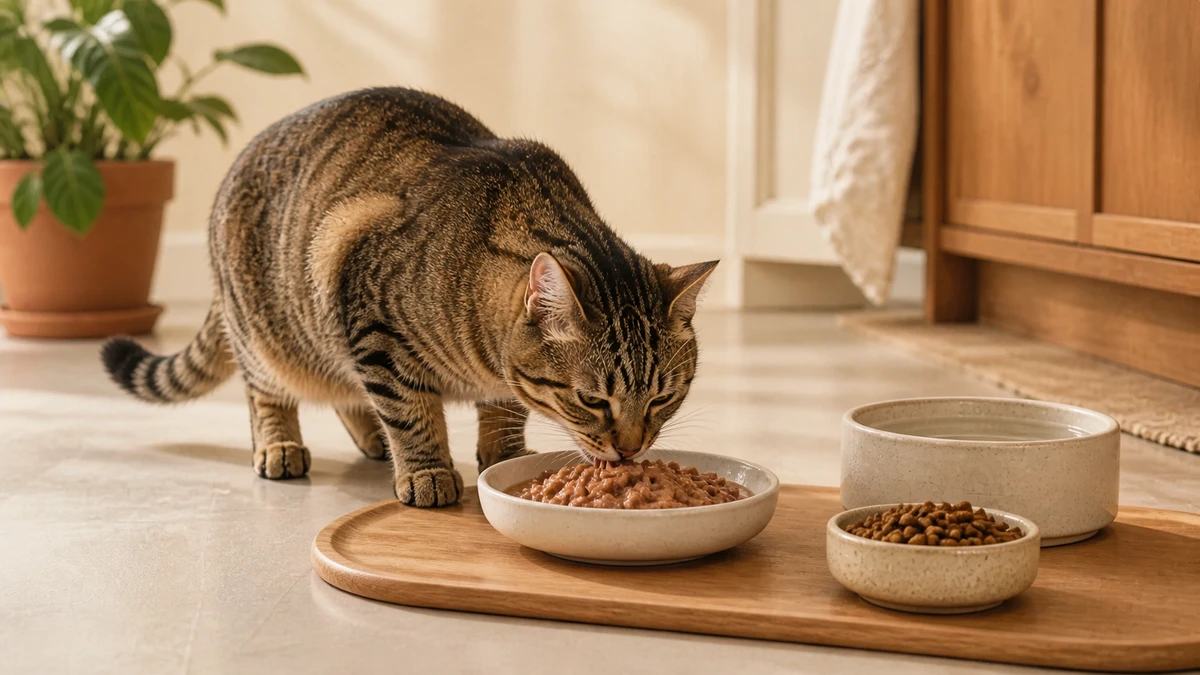
Look for change from the cat’s own normal pattern. A well cat on wet food who has always been a private drinker is a different situation from a cat who suddenly stops approaching water, eats less, vomits, has diarrhea, or becomes quiet and weak. A sudden increase in thirst also matters: International Cat Care notes that drinking much more than usual can accompany medical problems and should be discussed with a veterinary team.
Why a cat may walk past the water bowl
“Cats do not like water” is too simple. A cat may be meeting much of the need through food, avoiding one particular setup, losing access to a guarded resource, or feeling unwell. Common explanations include:
- The water no longer smells or tastes fresh. Food crumbs, saliva, dust, detergent residue, and microbial buildup can make a bowl less appealing. International Cat Care recommends fresh water daily and regular cleaning, ideally every day.
- The bowl feels awkward. Many cats prefer wide, shallow glass or ceramic bowls filled near the rim. A narrow or deep bowl can wet the whiskers or force the head into a position that feels exposed. This is a preference, not a universal rule, so offer choices rather than assuming one product suits every cat.
- The location feels unsafe or unpleasant. A bowl beside a litter tray, noisy appliance, busy doorway, or wall that blocks the cat’s view may receive little use. A “double feeder” that fixes food and water side by side also removes the option to drink elsewhere.
- Another animal controls access. Conflict can be subtle. One cat does not have to hiss or attack; resting in a doorway, staring, or arriving whenever another cat drinks may be enough to suppress access.
- Bending is uncomfortable. An older cat or a cat with reduced mobility may find a low bowl difficult. A stable, modestly raised bowl can make access easier, but new pain or movement changes still warrant veterinary assessment.
- The cat feels sick. Weakness, poor appetite, dental discomfort, nausea, vomiting, diarrhea, and illnesses that increase urine loss can all disturb normal intake. Moving the bowl cannot correct an underlying medical cause.
What dehydration can do to the body
Hydration is not only about the urinary tract. Water helps maintain normal electrolyte concentrations, circulate oxygen and nutrients, support digestion, regulate temperature, and lubricate joints. The body continually loses it in urine, feces, exhaled air, and other routes. Intake has to keep pace with those losses.
Cornell warns that dehydration can reduce circulation and contribute to multi-organ dysfunction. As the imbalance becomes more severe, temperature control, heart rhythm, and neurologic function may also be affected. This is why lethargy caused by dehydration is not simply a cat “having a sleepy day,” and why severe weakness or altered awareness should not be managed by changing bowls at home.
Water intake also influences urine volume and concentration, but low drinking does not prove that a cat has a urinary disease, and more water is not a cure for every urinary sign. Cornell lists lower water intake among factors associated with feline lower urinary tract signs. Dilute urine can be helpful in some urinary conditions, while the cause and appropriate diet or treatment differ from cat to cat. Painful urination, blood in the urine, or toileting outside the box belongs on a veterinary track; our guide to why cats pee outside the litter box explains why health is checked before behavior.
Warning signs — and the limits of home checks
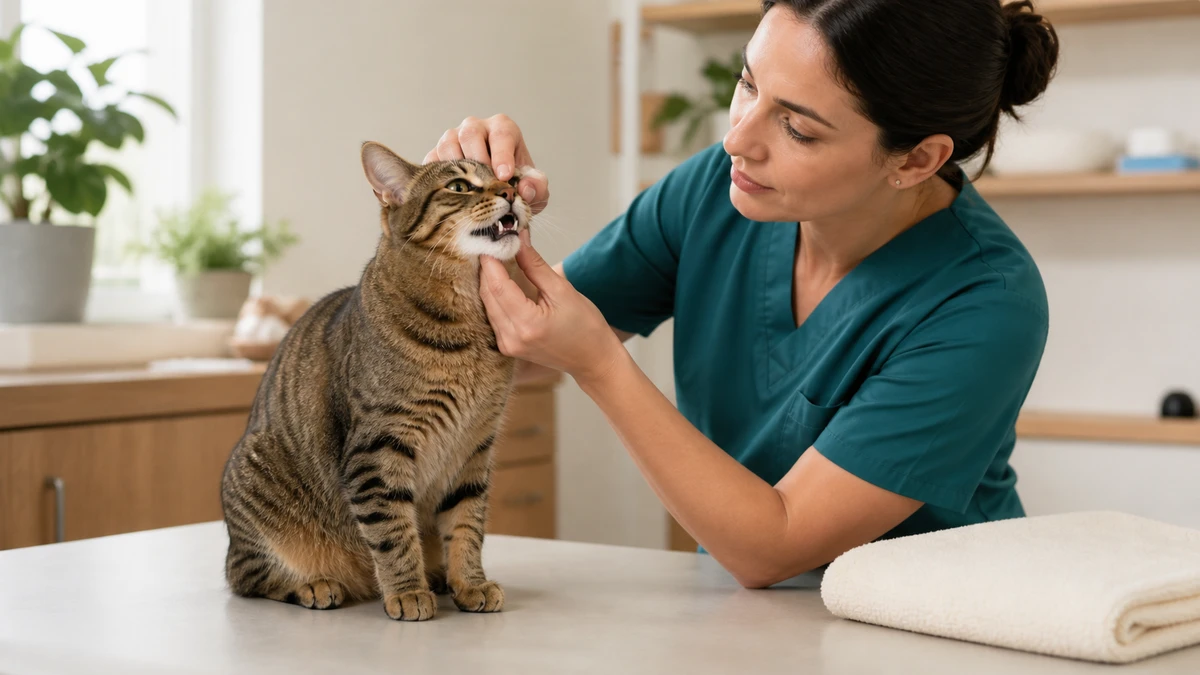
Possible dehydration signs include lethargy, weakness, reduced appetite, dry or tacky gums, reduced skin elasticity, and, in more serious cases, sunken-looking eyes. A cat losing fluid through repeated vomiting or diarrhea can deteriorate faster than a cat whose only issue is an unpopular bowl.
Veterinary sources sometimes describe a skin-tent check: gently lifting skin over the shoulders and observing how quickly it returns. That clue is imperfect. Cornell notes that older cats can have reduced skin elasticity even when normally hydrated; body condition and other illnesses can also change the result. Dry gums, skin return, and eye position cannot tell you the cause or safely calculate a fluid deficit. Treat them as reasons to call a veterinarian, not as a pass/fail home diagnosis.
Track a cluster of ordinary observations instead: appetite, energy, vomiting or diarrhea, water and food intake, body weight if available, and the number and size of urine clumps. In a multi-cat home, a shared bowl or litter box cannot reveal which cat used it. Separate observation for a short period may help, provided isolation itself is not stressful and every cat retains full access to food, water, rest, and toileting.
When to call a veterinarian — and when it is an emergency
Contact a veterinary clinic promptly if you suspect dehydration, especially when reduced drinking occurs with poor appetite, repeated vomiting or diarrhea, dry or tacky gums, marked lethargy, weakness, or sunken eyes. Kittens, older cats, and cats with known illness have less room for delay. If a cat cannot keep water down, do not keep testing flavors and fountains while the cat worsens.
Seek emergency care now for collapse, altered responsiveness, extreme weakness, or other rapid deterioration. One litter-box pattern deserves its own clear warning: repeated straining or frequent attempts that produce little or no urine is a urinary emergency, not proof of simple dehydration. Cornell describes urethral obstruction as life-threatening and requiring immediate veterinary treatment. It is seen more often in male cats, but any cat with those signs needs urgent assessment.
Do not force water into a cat’s mouth with a syringe. International Cat Care warns that this is highly stressful and can cause illness if water enters the lungs. Veterinary teams can assess the cause and choose an appropriate route and composition of fluids when treatment is needed.
Eight safe ways to make water easier to choose
The best home plan offers options and measures the response. It does not force a fixed volume or replace veterinary care.
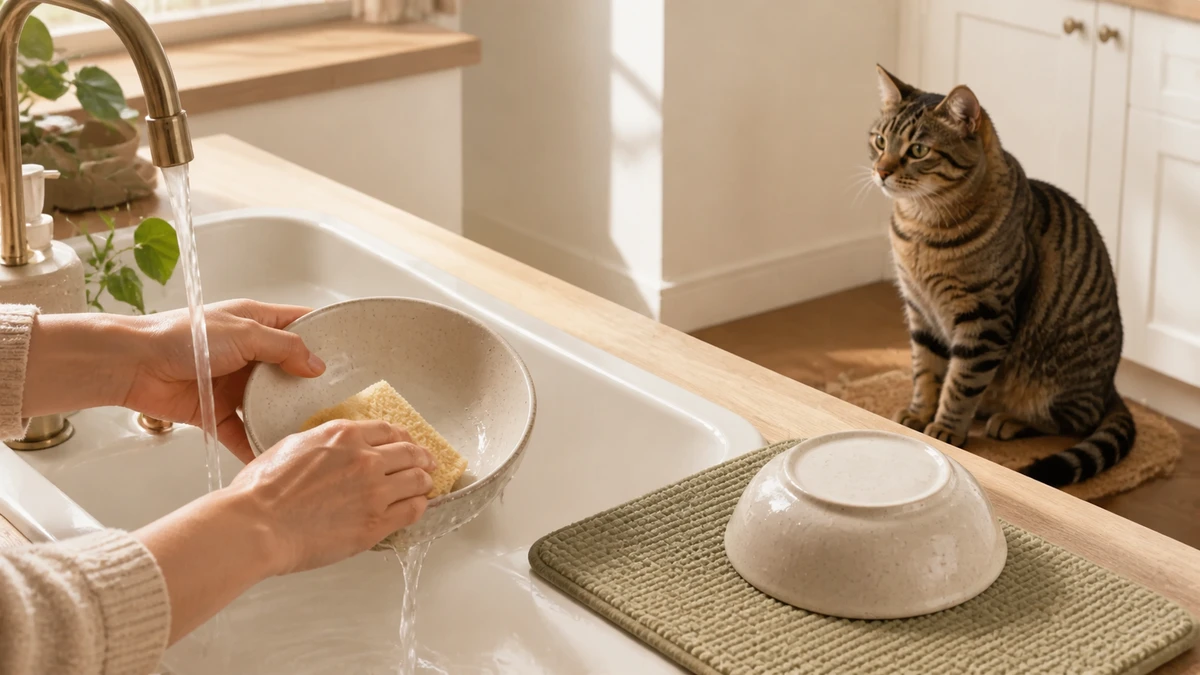
- Refresh water and wash bowls daily. Rinse cleaning product away thoroughly. Note how much you add at roughly the same time each day so a major change becomes easier to notice.
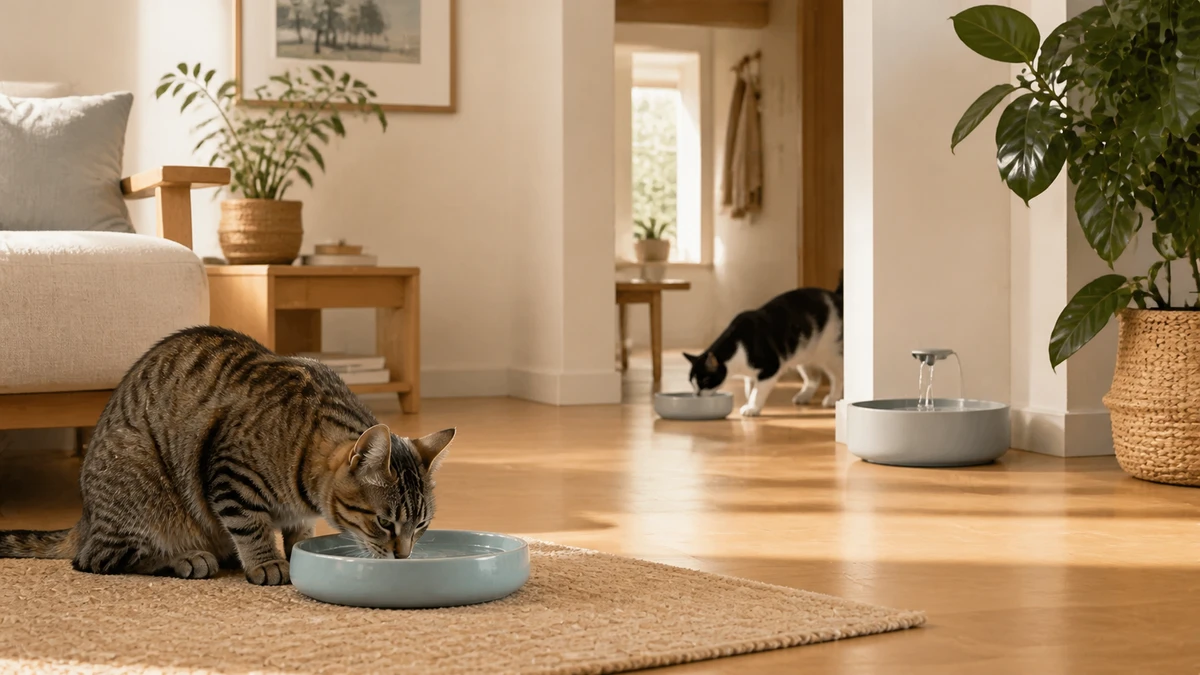
- Offer more than one station. International Cat Care recommends at least one water bowl per cat plus one extra, with a source on each floor. Spread them out so one animal cannot control every route.
- Choose quiet, visible locations. Keep water away from litter trays, noisy appliances, and heavy foot traffic. Leave open space around a bowl so the cat does not have to turn its back on the room.
- Test bowl shapes and materials. Start with a wide, shallow ceramic or glass bowl filled near the rim. Keep the original station while introducing a second option, then observe which one the cat actually uses.
- Make access comfortable. Put water close to favored resting routes. For reduced mobility, try a stable low stand and a nonslip surface; do not make a cat climb for its only water source.
- Use food moisture when appropriate. Wet food can raise total water intake. Ask the veterinarian before changing a prescribed diet, and transition food gradually. Small additions of water to familiar food may be accepted, but if the cat refuses, restore food it will eat rather than allowing a prolonged fast.
- Treat a fountain as an option, not a cure. Some cats like moving water and others do not. Introduce a fountain in stages, keep another bowl available, clean the pump and reservoir as directed, and place cords safely.
- Ask before flavoring water. Broth, tuna water, milk, and human drinks can contain excessive salt, fat, onion, garlic, sweeteners, or other unsuitable ingredients. A veterinary team can advise whether any flavor is safe for a particular cat and diet.
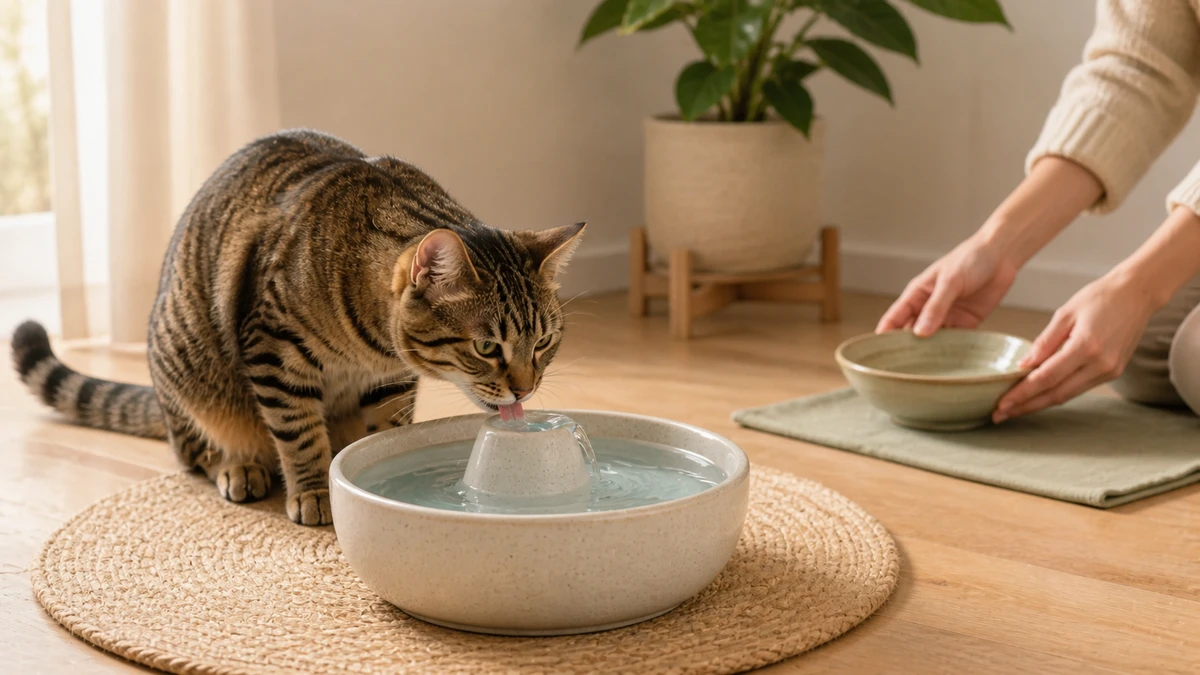
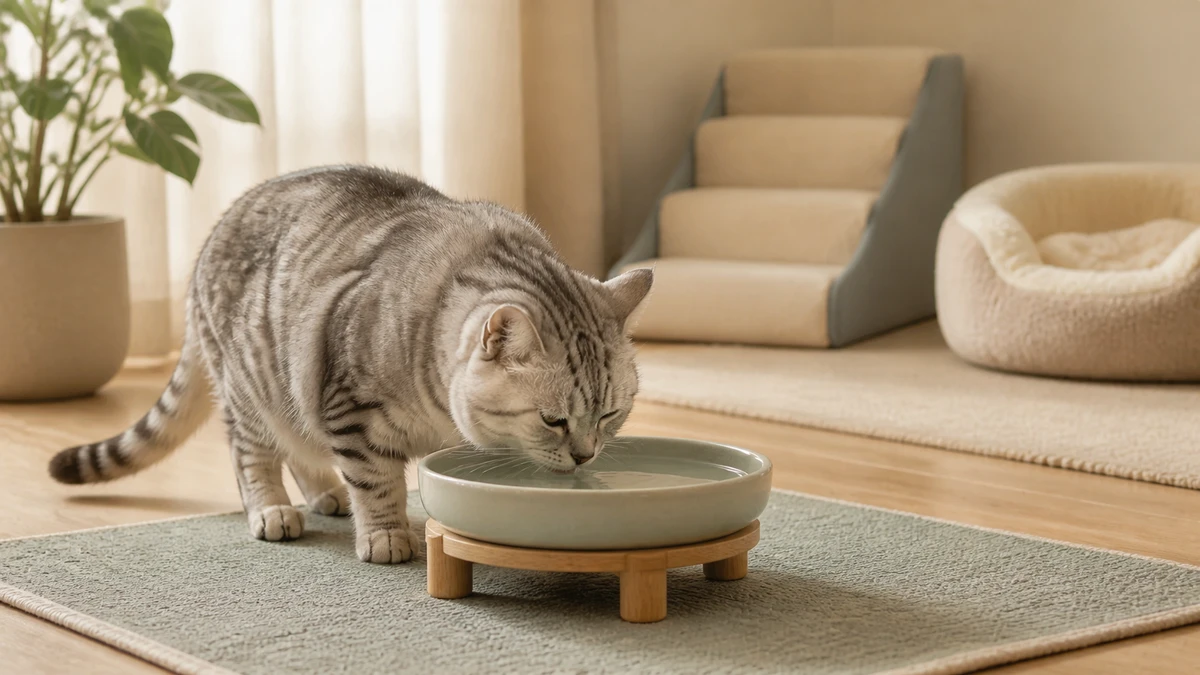
Change one or two variables at a time. If every bowl, location, food, and fountain changes on the same day, you will not know what helped, and a cautious cat may simply avoid all the novelty. Keep a short record for several days: what was offered, what the cat ate, whether water use changed, and whether appetite, activity, urine, or stool changed. The useful outcome is not an impressive fountain purchase; it is stable hydration and a cat who can reach acceptable water without pressure.
FAQ
How much water should a cat have each day?
Cornell and VCA give a rough healthy-cat baseline of about four ounces per five pounds of body weight daily — around one cup for a ten-pound cat. That is total water, including moisture in food, and needs vary. Do not force a cat to meet a generic number; ask a veterinarian for an individual target when health or intake is a concern.
Is it normal for a cat on wet food to drink very little?
It can be. Wet food is commonly 70–80% water, so a healthy cat may obtain much of its intake at meals. A stable personal pattern is more reassuring than bowl visits alone. Reduced appetite, a sudden drinking change, vomiting, diarrhea, weakness, or abnormal urination still deserves attention.
Does every cat need a water fountain?
No. Some cats prefer moving water; others prefer a still, wide bowl. Freshness, location, access, and cleanliness often matter as much as the product. Keep a regular bowl available while testing a fountain.
Can I syringe water if my cat refuses to drink?
No. Forcing water by syringe can be stressful and risks fluid entering the lungs. Call a veterinary clinic if a cat is not drinking and appears unwell; the cause and safest fluid support need professional assessment.
Why is my cat suddenly drinking much more?
Hot weather or a diet change can affect intake, but a persistent increase can also accompany medical problems. Record the change, including urine output, appetite, and weight if possible, and arrange veterinary advice rather than trying to restrict water.