Wet vs. Dry Cat Food: Nutrition, Hydration, Dental Myths, and Cost
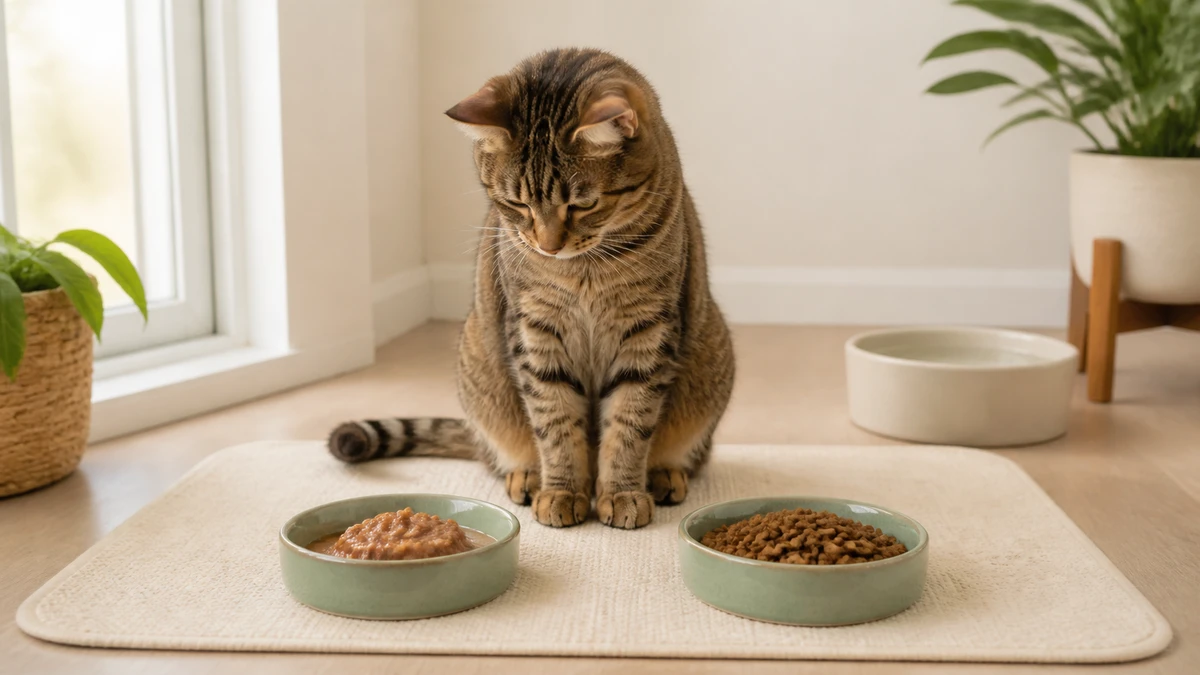
Neither wet nor dry cat food is universally better. Both formats can provide complete and balanced nutrition when the label says the food is suitable for the cat’s life stage. Wet food usually supplies much more water per bite; dry food is often easier to portion, store, and afford. The useful choice is the one that combines nutritional adequacy, appropriate calories, safe handling, the cat’s willingness to eat, the household’s ability to measure meals, and any advice from the cat’s veterinary team.
Do not decide from the front of the package, the first ingredient, moisture alone, or price per container. Start with the nutritional adequacy statement and calorie content, then compare the practical tradeoffs. A wet diet is not a disease-prevention guarantee, and an ordinary dry diet is not a toothbrush or an inevitable cause of disease.
Start with the label, not the food’s appearance
For products sold in the United States, as checked in August 2026, the nutritional adequacy statement identifies whether a food is “complete and balanced,” the species, and the life stage it is intended to support. The FDA explains that this claim is supported by meeting an AAFCO nutrient profile or by an AAFCO feeding-trial procedure. A product labeled for intermittent or supplemental feeding is not a sole diet unless a veterinarian has built it into a specific plan.
Look for these items before comparing format:
- Species: it must be food for cats, not dogs.
- Nutritional purpose: complete and balanced, or clearly identified as supplemental.
- Life stage: growth, adult maintenance, gestation/lactation, or all life stages, as applicable.
- Calorie content: usually stated as kilocalories per kilogram and per familiar unit such as a can, pouch, cup, or piece.
- Feeding directions and lot details: useful for a starting portion and essential if a safety problem or recall occurs.
Readers outside the United States should find the equivalent adequacy, intended-use, life-stage, calorie, and manufacturer information required in their market. The exact regulatory wording can differ by region.
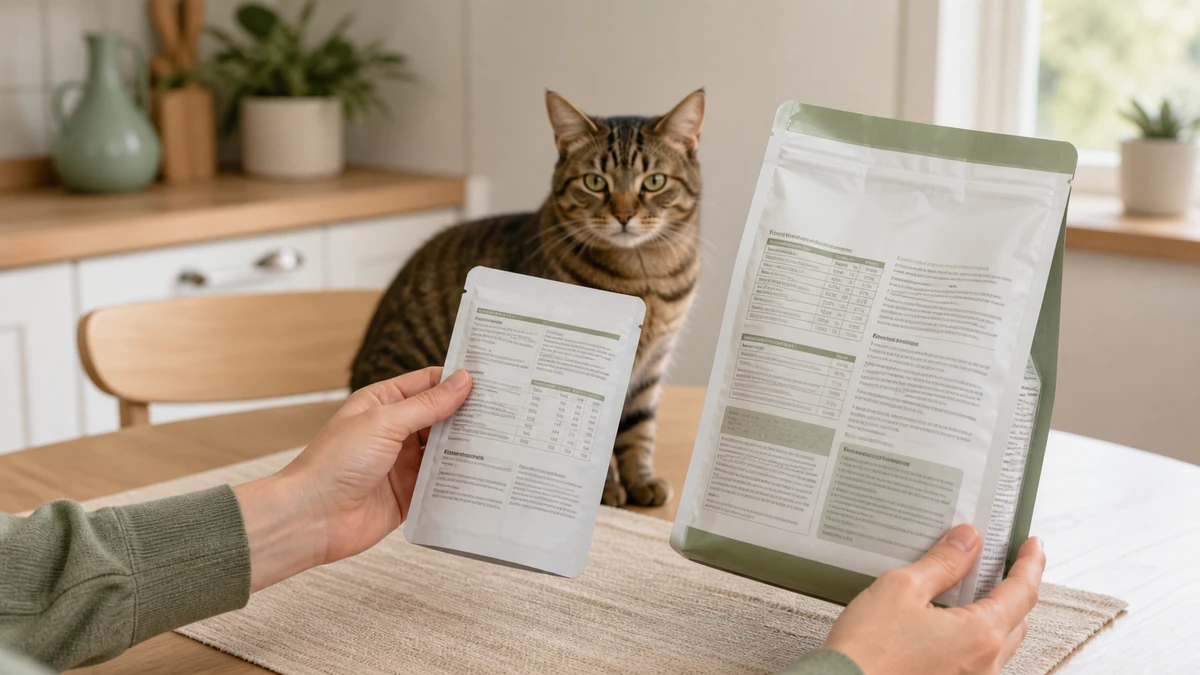
The ingredient list is not a product score. Ingredients are listed by weight, including their water, so a moisture-rich ingredient can move higher on the list without proving that the finished food is more nutritious. Similarly, the guaranteed analysis is printed “as fed.” Comparing protein or fat percentages between a high-moisture food and a low-moisture food without correcting for moisture can be misleading. For a meaningful nutrient comparison, ask the manufacturer or veterinary nutrition professional for values on a dry-matter basis or, preferably, per 100 or 1,000 kilocalories.
Wet and dry cat food compared across ten practical dimensions
| Dimension | Wet food | Dry food | What actually decides the choice |
|---|---|---|---|
| Complete nutrition | Can be complete and balanced; some toppers and specialty products are supplemental only | Can be complete and balanced; treats and some specialty products may not be | Read the adequacy statement and match the life stage |
| Water | Commonly around 70–80% moisture | Commonly around 6–12% moisture | Count water from food plus drinking; keep fresh water available either way |
| Calories by volume | Often fewer calories per cup or bowl because water occupies volume | Often more calorie-dense by volume | Use kcal per can, pouch, cup, or gram—not bowl size |
| Portion accuracy | A whole can or pouch may be convenient, but container sizes vary | Scoops are convenient but can be inconsistent; weighing is more repeatable | Measure the planned calories and monitor body condition |
| Opened storage | Leftovers need prompt refrigeration or disposal according to the label | Reseal in the original bag; protect from heat, moisture, pests, and overeating | Choose a routine the household can follow every meal |
| Convenience | More opening, serving, dish washing, and leftover management | Easy to use in measured feeders and to transport | Convenience matters only if portions remain controlled |
| Cost | Often costs more for the same daily calories, but not always | Often costs less for the same daily calories, but not always | Compare cost per day at the actual ration, including waste |
| Palatability and texture | Aroma and soft textures suit many cats; preferences vary | Crunch, shape, aroma coating, and familiarity suit some cats | A nutritionally ideal food does not help if the cat will not eat it |
| Dental care | Soft food is not a toothbrush | Ordinary kibble is not a toothbrush; specific tested dental diets are different | Use veterinary dental care and evidence-backed home care |
| Multi-cat management | Individual containers can simplify known portions; leftovers cannot sit out | Food left available can make individual intake hard to see | Feed separately when one cat steals, guards, or needs a special diet |
No row makes one format the universal winner. A household may reasonably use all wet, all dry, or a measured combination if the complete diet, calories, safety, and individual cat all fit.
Moisture matters, but total water intake is the target
Cornell notes that cats take in water both by drinking and through food. A cat eating wet food may drink visibly less because the meal already contains substantial water; a cat eating dry food has to obtain more of the total from the water bowl. That makes wet food a useful way to raise food-borne water intake, but it does not prove that every wet food prevents urinary or kidney disease.
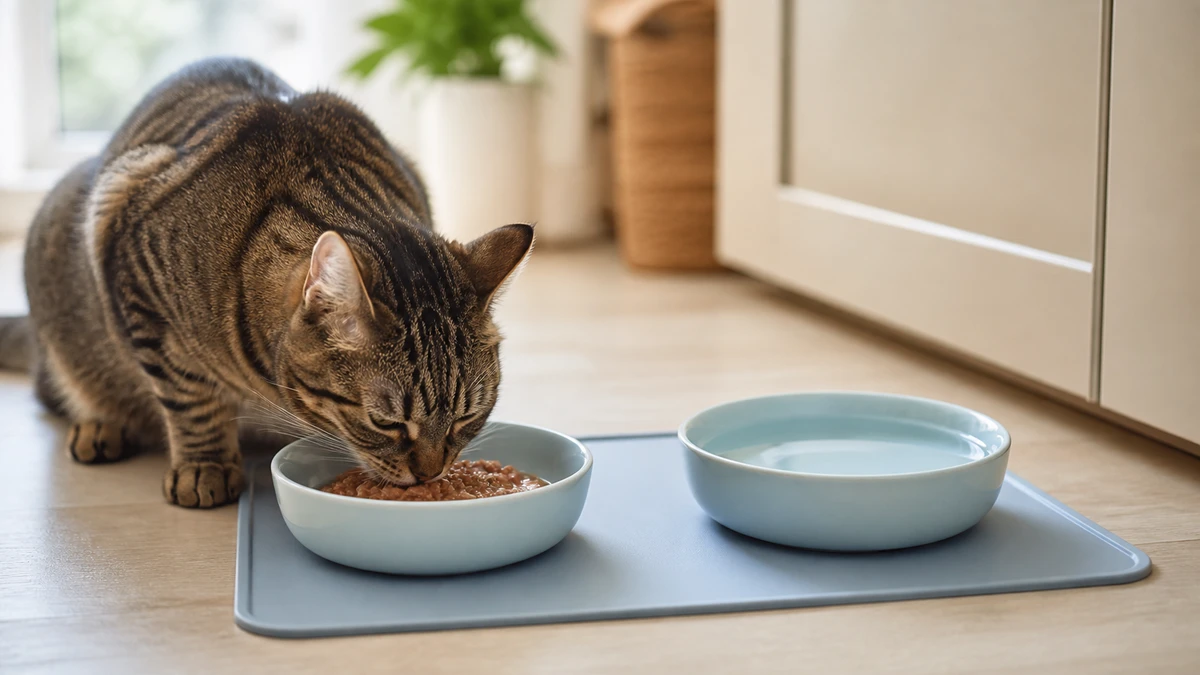
Keep fresh water accessible regardless of format. If the goal is to change water intake for a cat with a medical condition, ask the veterinary team what outcome matters and which diet is compatible with treatment. Do not replace a prescribed diet simply because another food is wetter. For practical bowl placement and preference ideas, see the separate guide to helping a cat drink more water.
Three claims are too broad:
- “Wet food always prevents urinary or kidney disease.” It can add water, but disease risk, diagnosis, and treatment are not determined by moisture alone.
- “Dry food inevitably causes urinary disease, kidney disease, diabetes, or obesity.” Format alone does not establish that conclusion. Calories, formulation, health, intake, and feeding management matter.
- “A cat drinking little must be dehydrated.” Wet-fed cats may drink less from a bowl. A new or concerning change in drinking, urination, appetite, or behavior needs veterinary assessment rather than a format guess.
Ordinary kibble is not dental care
The fact that food is dry does not demonstrate a dental effect. Cornell identifies plaque removal through tooth brushing as the main preventive home measure, while the Veterinary Oral Health Council lists specific products that have met its standards for stated plaque or tartar claims. That product-specific review is very different from assuming that an entire food format cleans teeth.
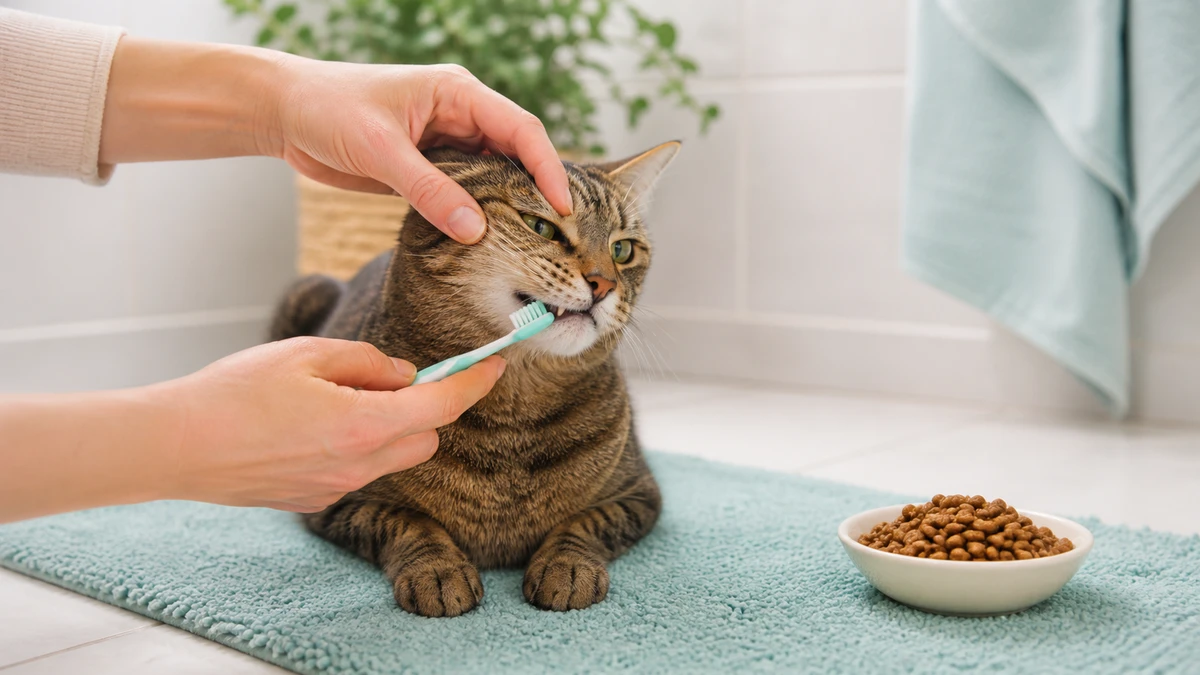
That distinction matters: a specifically designed, tested dental diet may contribute to an oral-care plan, but the benefit cannot be generalized to every dry food. It also does not replace a veterinary oral examination or treatment. If the mouth is painful, the gums are inflamed, the cat drops food, drools, develops persistent bad breath, or resists chewing, do not force brushing or simply swap textures—arrange a veterinary examination.
Wet food is not automatically “bad for teeth,” and dry food is not equivalent to brushing. Those are two versions of the same shortcut.
Mixed feeding: subtract calories instead of serving two full portions
The most common arithmetic error in mixed feeding is to give the label’s full wet portion and the label’s full dry portion. Each set of directions generally assumes that product is supplying the diet by itself. Combining both full amounts can duplicate calories.
Use a calorie budget:
- Let C be the planned daily calories established from the cat’s current plan, body condition, and veterinary guidance.
- Let W be the calories in the wet portion actually served.
- The remaining allowance for dry food is C − W.
- Divide that remainder by the dry food’s kcal per cup, or by its kcal per gram if weighing it.
For a math example only, not a feeding recommendation: if C = 200 kcal, a wet portion supplies W = 80 kcal, and the dry food contains 400 kcal per cup, the dry portion is (200 − 80) ÷ 400 = 0.30 cup. Use the numbers on the actual packages. If measuring by weight, use the food’s kcal per gram and a kitchen scale.
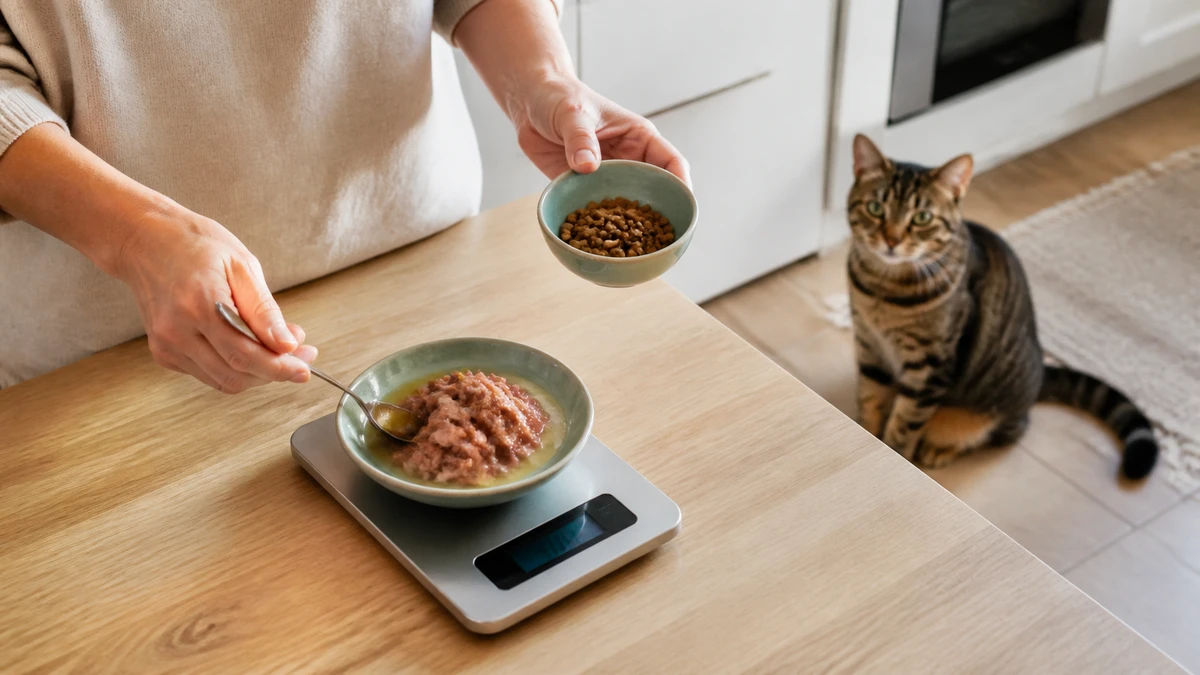
Treats, toppers, and food used for medication also belong in the total. The label’s feeding amount is a starting point, not a promise that every cat needs the same amount. Track weight and body condition, then discuss meaningful adjustments with the veterinarian rather than repeatedly changing food in response to one day’s appetite.
Compare cost per day, not price per bag or can
A dry bag can look expensive at checkout yet feed more days; a wet container can look inexpensive per unit yet supply only part of a day. Package size, water weight, calorie density, the cat’s actual portion, subscription pricing, and discarded leftovers all change the result.
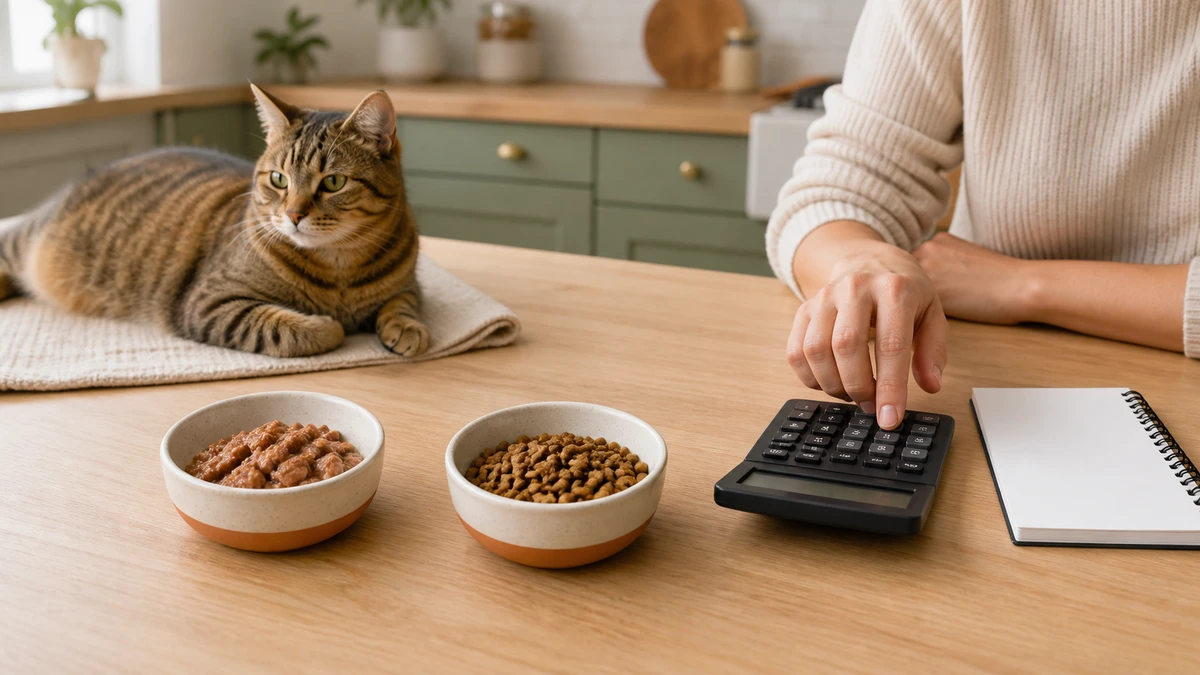
For each food, calculate:
cost per kcal = package price ÷ total kcal in the package
Then:
daily cost = cost per kcal × kcal of that food served per day
For mixed feeding, add the wet and dry daily costs. Use the actual local price and label calories as of the day you compare them; do not assume that every wet food is more expensive or that the cheapest calories are the best nutritional fit. Include realistic waste—such as part of a container the cat consistently refuses—rather than comparing perfect laboratory use.
Storage and feeding management change the answer
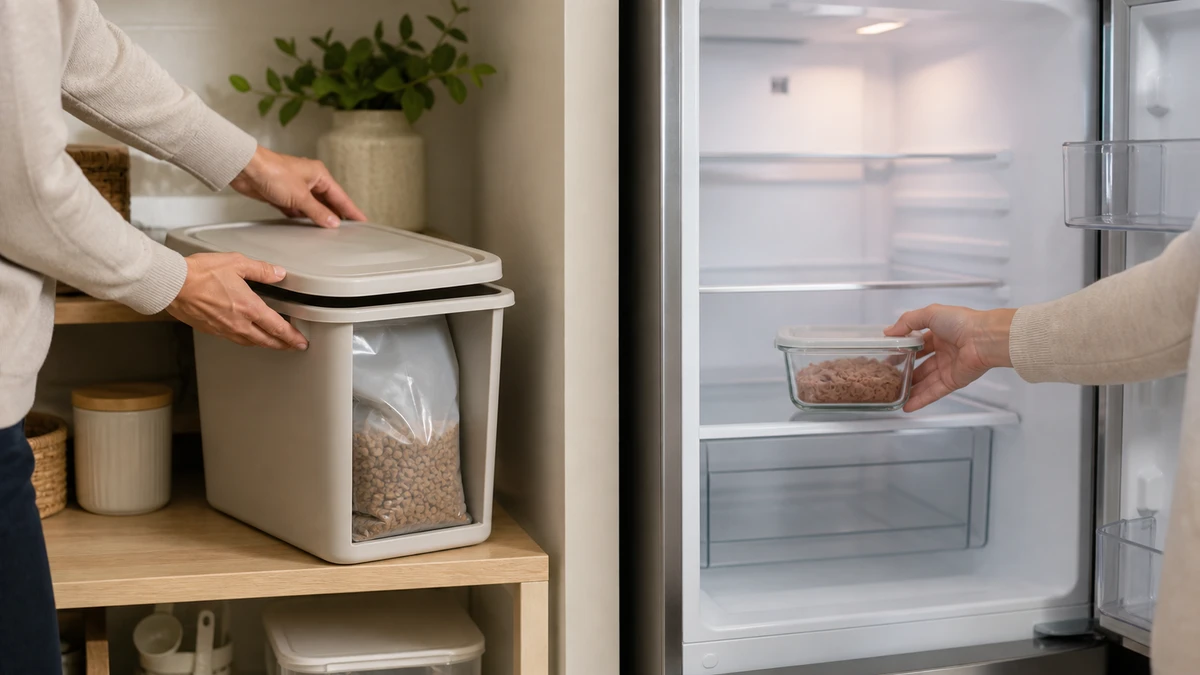
The FDA advises keeping dry food in its original bag; if using a bin, place the whole bag inside so the lot number, best-by date, and protective packaging stay available. Keep it cool and dry, reseal it, and clean and dry the bin between bags. Do not continually top up old crumbs with a new batch.
Unused wet food should be promptly refrigerated or discarded. Follow the product’s instructions for how long refrigerated leftovers remain usable; container size, formulation, refrigerator temperature, and handling differ. Wash and dry bowls and measuring tools after use.
Dry food’s shelf stability can help with measured automatic feeders, travel preparation, or households that cannot open multiple containers daily. It does not make unlimited free-feeding appropriate for every cat. Wet food’s individual containers can make portions visible, but leaving a perishable meal out indefinitely defeats that advantage. Convenience should support controlled, safe feeding—not replace it.
Life stage, health, and willingness to eat come first
A kitten needs a food appropriate for growth. An adult food should match adult maintenance unless another life-stage statement applies. “Senior” is not itself one of the AAFCO nutrient-profile life stages, so an older cat’s plan should respond to body condition, appetite, examination findings, and diagnosed needs rather than age wording alone.
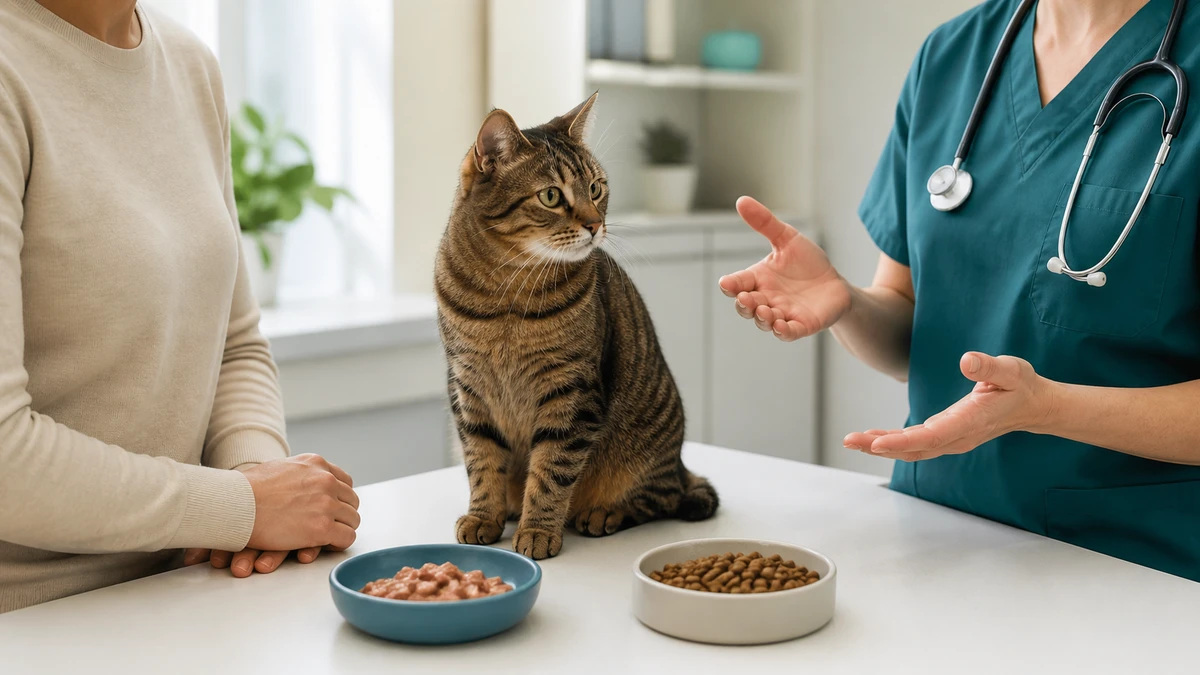
Veterinary therapeutic diets are formulated for specific health needs and may not suit other cats. The FDA emphasizes veterinary direction for diets intended to manage disease. Do not replace, dilute, or combine a prescribed diet with an over-the-counter food without checking with the prescribing team. A wet and dry version of a therapeutic line may both exist; the diagnosis and treatment goal, not the generic format debate, decide whether either is appropriate.
Food refusal can become more urgent than format preference. Contact a veterinarian promptly when a cat stops eating or eats markedly less, especially if the cat is ill, very young, older, or already receiving treatment. Do not try to “win” a wet-versus-dry argument by withholding the familiar food until the cat gives in.
Multi-cat homes need individual data
One bowl that is empty tells you the household ate; it does not tell you which cat ate. Separate meals by room, distance, or a barrier when one cat steals food, blocks access, needs a therapeutic diet, or requires close intake monitoring. Pick up leftovers and record each cat’s amount.
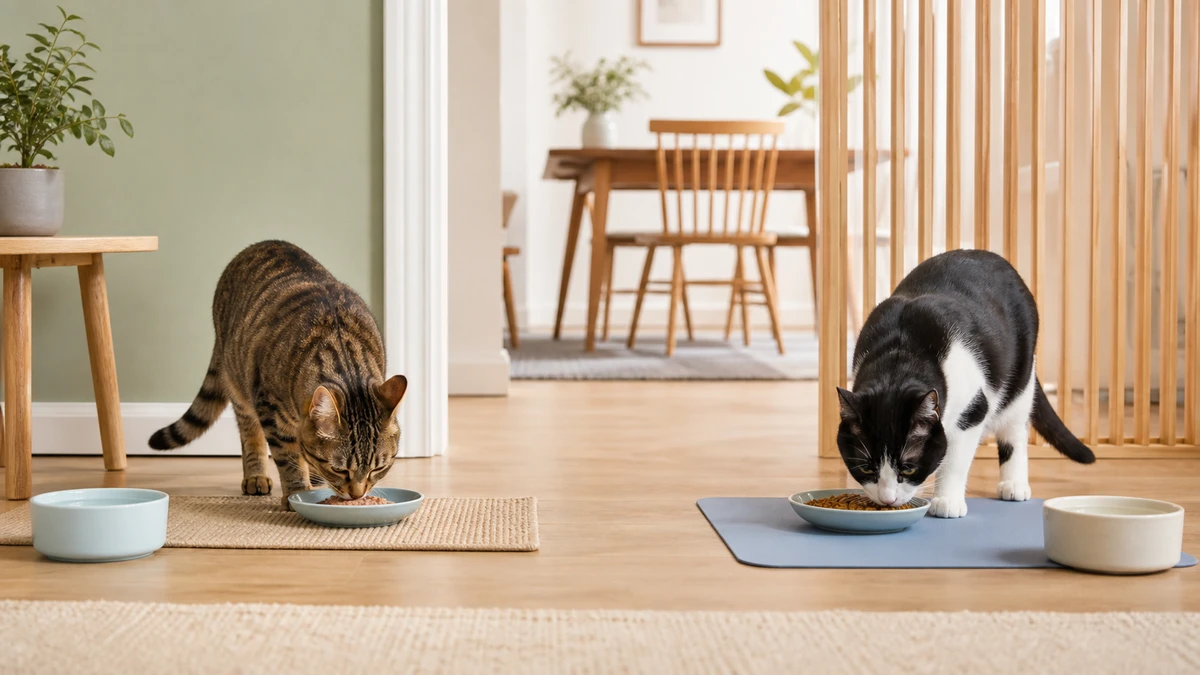
Dry food left out all day can hide appetite loss and make calorie division uncertain. Wet food can be easier to assign by container but may be stolen just as quickly. The management setup, not the moisture level, determines whether you can see individual intake.
A practical way to choose
Use this order:
- Protect medical requirements. Keep a prescribed plan unchanged until the veterinary team approves an alternative.
- Confirm complete-and-balanced status and life stage. Exclude supplemental-only products as the sole diet.
- Set the total calorie plan. Use label calories and an individualized starting amount.
- Decide whether more food-borne water is useful. Wet food or a measured mix may help, while fresh drinking water remains essential.
- Test the household routine. Can people measure it, store it safely, clean up, and stop food theft every day?
- Respect the cat’s acceptance. Texture and aroma preferences are real; refusal is not proof that a format is unhealthy.
- Monitor the result. Weight, body condition, appetite, stool, vomiting, drinking, urination, and food waste are more informative than a slogan.
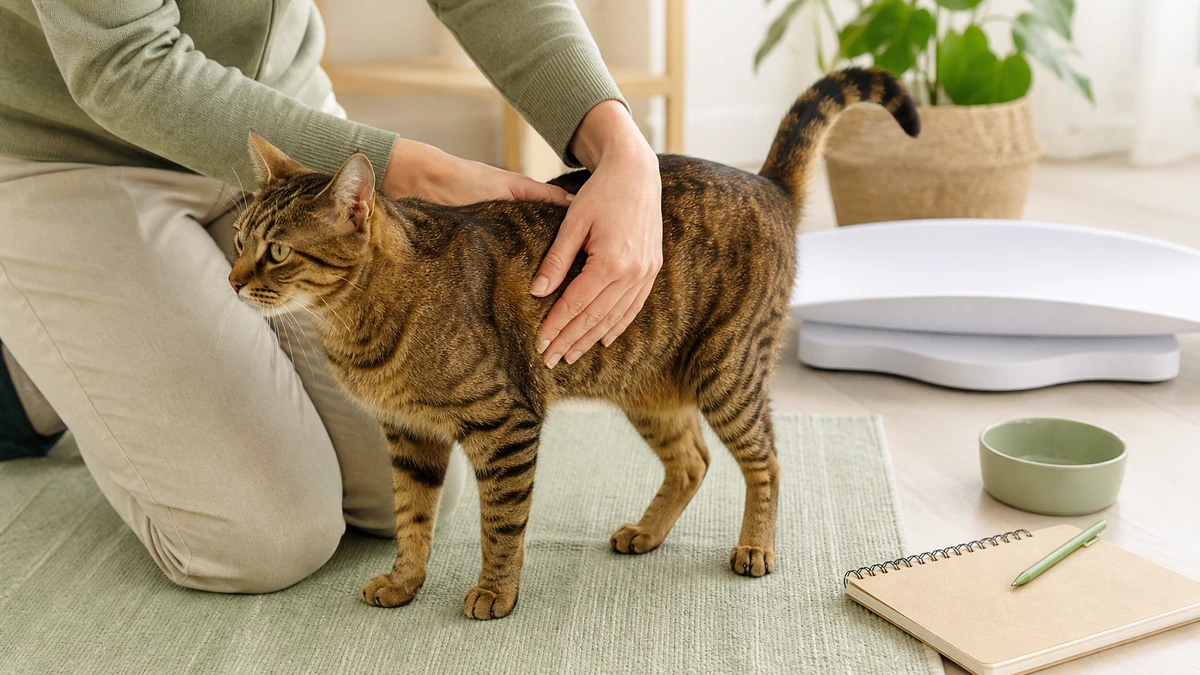
Recheck the plan if weight or body condition trends away from the target, food intake changes, vomiting or diarrhea persists, drinking or urination changes, or the cat develops difficulty chewing. These signs do not diagnose a nutrition problem by themselves. Bring the food names, label photos, measured amounts, treats, and a short feeding record to the veterinary appointment.
The best answer may be wet, dry, or both. What makes it a good answer is not the sound of the food or the amount of water in the package; it is complete nutrition, suitable calories, safe management, reliable intake, and a plan that fits the individual cat.
FAQ
Can I feed wet and dry cat food together?
Yes, if the foods fit the cat’s nutritional and medical needs and the combined calories are measured. Do not serve the full stand-alone portion of each. Subtract the wet calories from the daily plan, then calculate the dry remainder.
Is wet food always better for a cat’s kidneys or urinary tract?
No. Wet food increases food-borne water, which may be useful, but it does not guarantee prevention or treatment of a disease. Cats with diagnosed conditions need a plan from their veterinary team, and a prescribed diet should not be changed based on moisture alone.
Does dry cat food clean teeth?
Ordinary dry food should not be treated as a toothbrush. Some specifically designed products have evidence for defined plaque or tartar claims; look for independent evidence such as a VOHC acceptance claim and ask the veterinarian how the product fits with brushing, examinations, and professional care.
Which format is cheaper?
Dry food is often cheaper per daily calorie, but that is not universal. Compare current package price, total package calories, the cat’s actual ration, and waste. For mixed feeding, add both daily costs.
What if my cat will eat only one format?
First confirm that the accepted food is complete and balanced for the cat’s life stage and compatible with any medical plan. Do not force a switch or let the cat go without food. If intake falls, chewing seems painful, or a health condition makes another texture desirable, ask the veterinary team for a safe transition strategy.