What Human Foods Can Cats Eat? A Safety and Toxicity Guide
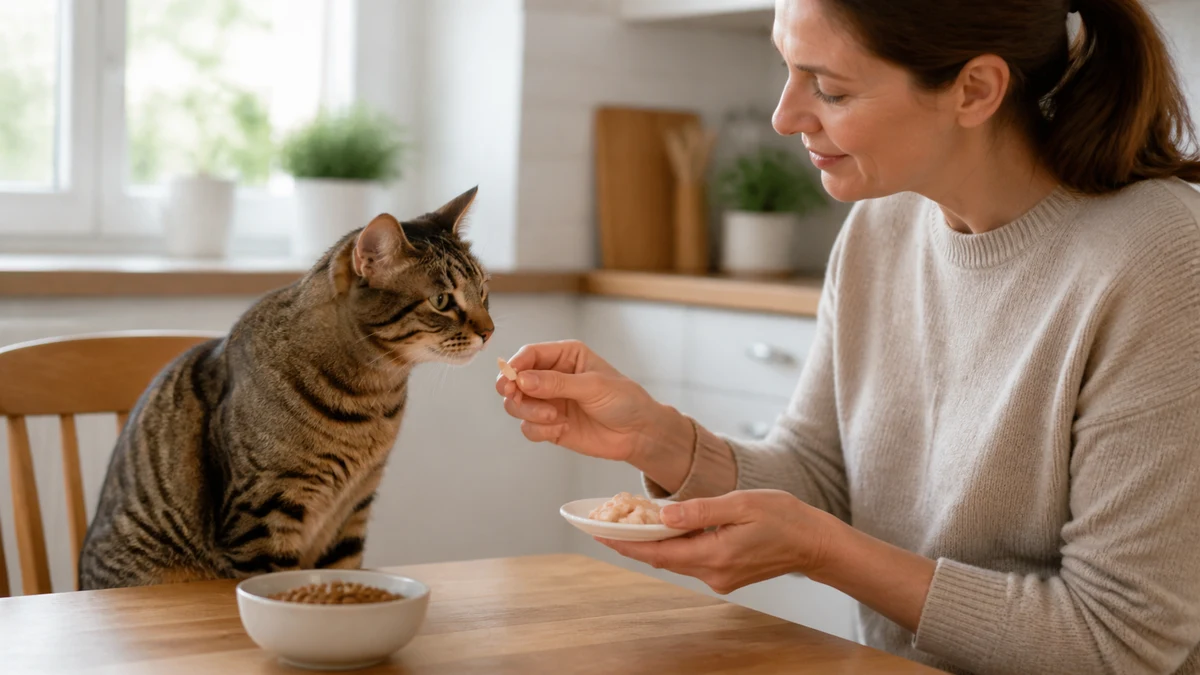
Cats can occasionally eat a few human foods, but the safe version is plain, fully cooked, boneless, unseasoned, and tiny. Suitable examples include a pea-sized piece of lean meat, cooked egg, or cooked fish, and some cats enjoy a little plain zucchini, green bean, blueberry, or seedless apple flesh. These are treats, not meals. A complete and balanced cat food should provide at least 90% of daily calories. Never offer onions or garlic, chocolate or caffeine, alcohol or raw yeast dough, grapes or raisins, bones, raw animal foods, heavily salted food, or an unidentified mixed dish.
The answer depends on the ingredient, preparation, and portion
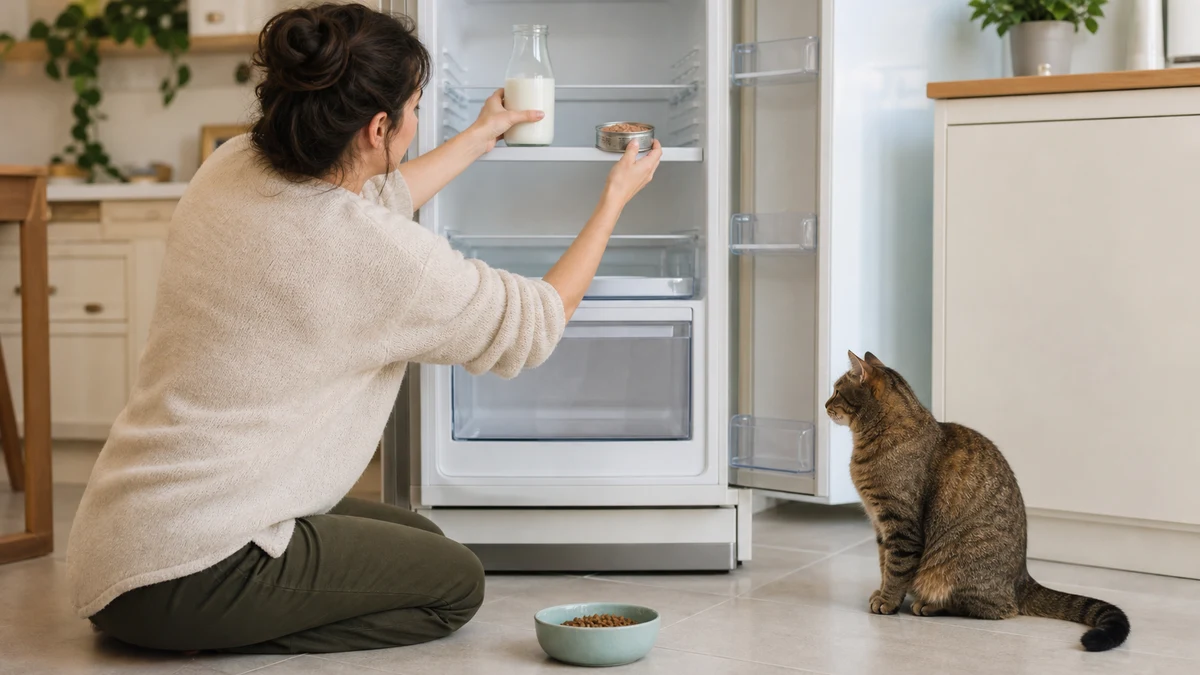
“Human food” is not one category. Plain cooked chicken and chicken curry share an animal protein, but the curry may also contain onion, garlic, salt, cream, and a rich sauce. A bite that is not a classic poison can still cause choking, gastrointestinal upset, excess calories, or an unbalanced diet.
Use three questions before sharing anything:
- Is every ingredient identified and appropriate for cats? If the label or recipe is unavailable, do not guess.
- Was it cooked and prepared safely? Remove bones, skin, pits, seeds, skewers, wrappers, and seasoning.
- Is the portion truly a treat? The World Small Animal Veterinary Association (WSAVA) recommends keeping all treats below 10% of a cat’s daily calories. A cat with a medical condition, food sensitivity, or veterinary diet needs individual advice before receiving extras.
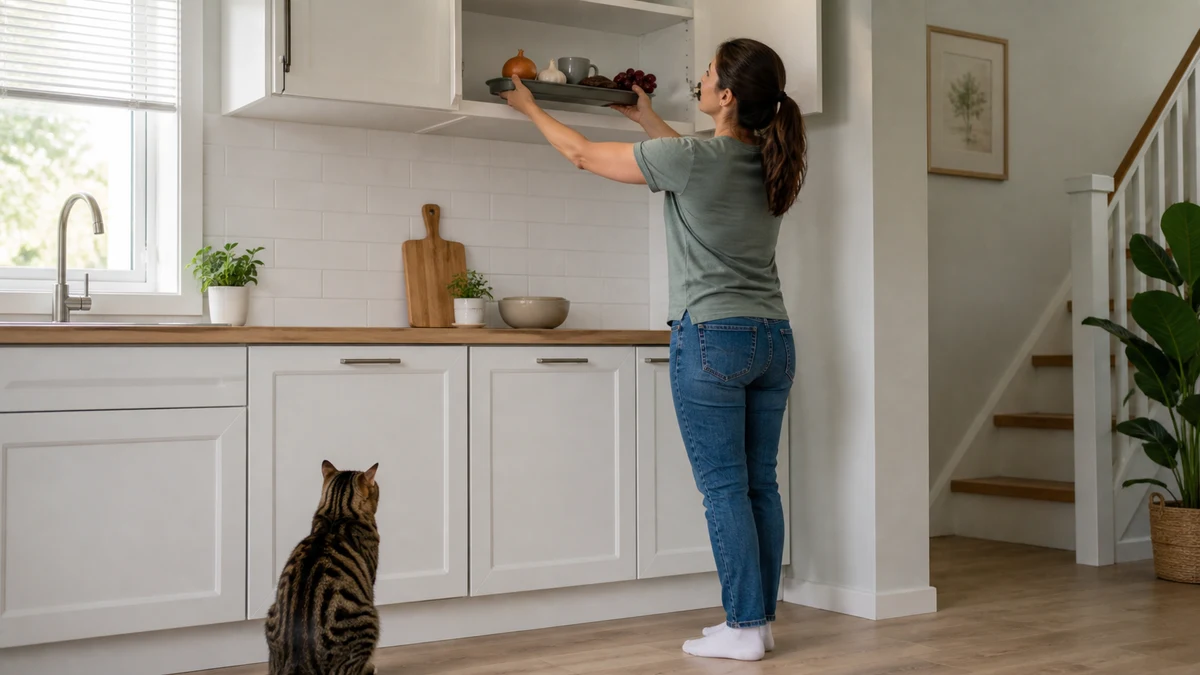
Quick human-food risk guide for cats
| Risk level | Examples | Practical rule |
|---|---|---|
| Do not offer; call promptly after ingestion | Onion, garlic, leeks, chives; chocolate, cocoa, coffee, tea, energy drinks; alcohol; raw yeast dough; grapes, raisins, currants, sultanas | Remove access, keep the package or recipe, and call a veterinarian or animal poison service. Do not wait for signs. |
| Do not deliberately offer; get product-specific advice | Sugar-free gum, candy, baked goods, toothpaste, or nut butter containing xylitol | Severe xylitol poisoning is well established in dogs, while published feline sensitivity is not established. The product may contain other hazards, so do not apply a dog dose or assume it is harmless. |
| High physical, infectious, or nutritional risk | Raw meat or eggs, cooked or raw bones, moldy food, salty snacks, cured meats, gravy, fatty trimmings, heavily seasoned leftovers | “Not a proven toxin” does not mean suitable food. Prevent access rather than testing tolerance. |
| Sometimes suitable in tiny amounts | Plain cooked boneless lean meat, fully cooked egg, plain cooked seafood, selected plain vegetables or fruit | Offer one small piece, count its calories, and stop if it causes digestive upset. It must not replace complete cat food. |
| Usually skip | Milk, cream, cheese, human canned tuna, deli meat, soup, sauces, fried food | Lactose, salt, fat, calorie density, hidden ingredients, or nutritional imbalance outweigh the value of sharing. |
Foods that are toxic or high risk
1. Onion, garlic, leeks, shallots, and chives
Allium vegetables can damage feline red blood cells and cause hemolytic anemia. Cats are particularly susceptible. Raw, cooked, dehydrated, granulated, and powdered forms all matter; cooking does not neutralize the risk. Concentrated onion or garlic powder can hide in soup mix, broth, gravy, seasoning blends, baby food, sauces, marinades, stuffing, and flavored meat.
Weakness, pale gums, rapid breathing, dark urine, jaundice, or collapse can appear only after substantial red-cell damage, sometimes several days after exposure. That delay is a reason to call promptly rather than waiting for the cat to look ill. Do not use an online “safe dose” to decide that a powdered seasoning is acceptable.
2. Chocolate, cocoa, coffee, tea, and other caffeine
Chocolate and caffeine contain methylxanthines, principally theobromine and caffeine. These compounds can stimulate the heart and central nervous system, causing vomiting, restlessness, rapid or abnormal heart rhythm, tremors, seizures, and potentially death. Cocoa powder and baking chocolate are more concentrated than milk chocolate, but lower concentration does not turn a chocolate product into a cat treat.
Check brownies, cakes, tiramisu, chocolate-coated snacks, coffee grounds, tea bags, energy drinks, caffeine tablets, and pre-workout powders. The exact product, cocoa percentage, amount, cat’s weight, and time since exposure affect triage, so save the wrapper for the veterinarian.
3. Alcohol and raw yeast dough
Alcohol may be present in drinks, desserts, sauces, extracts, fermenting fruit, and uncooked yeast dough. Ethanol can cause vomiting, loss of coordination, depression, breathing problems, tremors, metabolic abnormalities, coma, or death. Raw dough adds a second hazard: it can expand in the warm stomach while yeast produces ethanol.
Do not assume that a small animal can safely “sleep it off.” Keep unbaked dough covered and inaccessible while it rises, and treat a suspected exposure as time-sensitive.
4. Grapes, raisins, currants, and sultanas
Grape and raisin kidney injury is well documented in dogs; Merck reports one feline case. The feline evidence is therefore much thinner than the canine evidence, and no dependable safe dose for cats can be derived from it. The responsible conclusion is not to label every grape exposure a proven feline poisoning, but also not to run an experiment at home.
Avoid fresh grapes, raisins, trail mix, fruit bread, cookies, cereal, and sauces containing dried grapes. Call for case-specific advice after an ingestion and state clearly that the patient is a cat.
5. Xylitol-containing products: avoid, but keep the species distinction
Xylitol can cause rapid hypoglycemia and liver injury in dogs. Pet Poison Helpline notes that published data have not established the same sensitivity in cats. That distinction prevents a common error: copying a canine toxic dose into feline guidance.
It still makes no sense to offer a cat sugar-free gum, candy, baked goods, toothpaste, or sweetened nut butter. These products may contain chocolate, caffeine, raisins, macadamia nuts, excessive fat, wrappers, or other hazards. If a cat eats one, read the complete ingredient list and call a veterinarian or poison service for product-specific guidance rather than declaring it either fatal or safe.
6. Excessively salty foods
Chips, salted nuts, cured meat, ham, bacon, instant noodles, soup, gravy, stock cubes, brine, and seasoning packets can deliver far more sodium than a small cat needs. Large sodium exposure, especially when water access is limited, can disturb fluid and electrolyte balance and cause vomiting, diarrhea, weakness, tremors, incoordination, or seizures.
Most cats that steal a crumb will not develop salt toxicosis, but that is not a reason to make salty food a treat. Do not use salt to induce vomiting. Keep fresh water available every day; for safer hydration ideas, see the guide to helping a cat drink more water.
7. Raw meat, raw eggs, and all bones
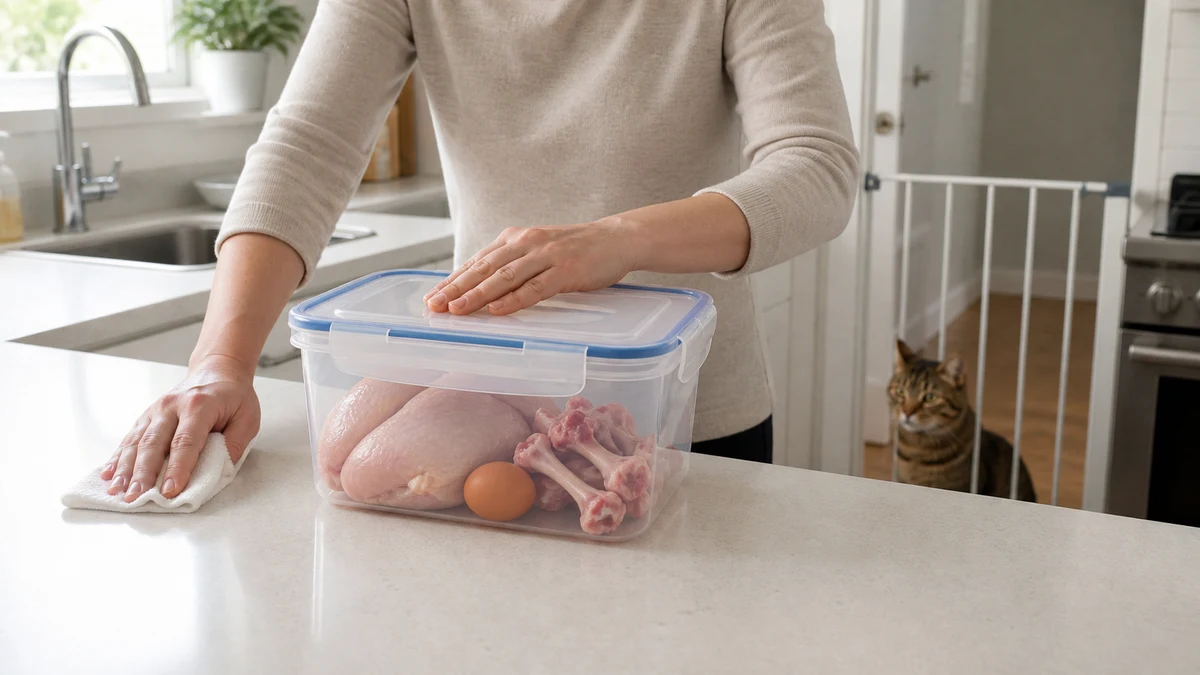
Raw animal foods can carry pathogens such as Salmonella and Listeria. The risk extends beyond the cat because organisms can contaminate hands, bowls, counters, saliva, or feces. In an FDA sampling project, raw pet food was more likely than the other tested categories to contain disease-causing bacteria. Freezing does not reliably make raw food pathogen-free.
Both raw and cooked bones can lodge in the mouth or esophagus, break teeth, cause choking or obstruction, or injure the gastrointestinal tract. Cooked bones can become brittle and splinter. Fish bones, poultry bones, meat skewers, shells, and food wrappers belong in a secure bin, not in a cat bowl.
8. Moldy, spoiled, and composted food
Visible mold is not the only problem with spoiled food. Some molds can produce tremorgenic mycotoxins associated with agitation, unsteadiness, tremors, high body temperature, and seizures in animals. Compost, old dairy products, nuts, bread, pasta, and discarded leftovers can be sources. A garbage bin or compost pail should close securely.
Do not scrape mold from one edge and feed the rest to a cat. When in doubt, discard the food where the cat cannot retrieve it.
9. Rich, fatty, seasoned, or unidentified mixed dishes
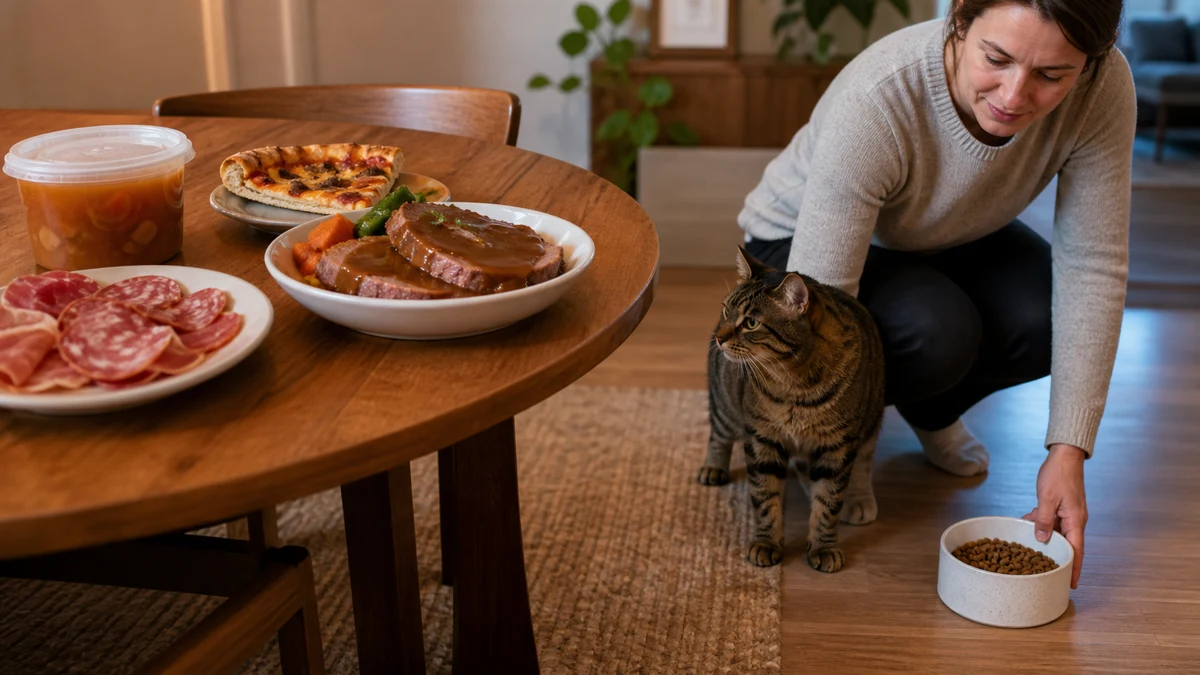
Pizza, curry, gravy, stuffing, sausages, deli meat, fried food, butter-rich sauces, and restaurant leftovers combine several problems: hidden Alliums, salt, fat, dairy, bones, skewers, and excessive calories. High-fat foods can cause digestive upset and may contribute to pancreatitis in susceptible animals. A dish being safe for a person says nothing about its suitability for a cat.
10. Milk and human canned tuna are poor routine treats
Milk is not a necessary cat food. Many adult cats digest lactose poorly, so milk or cream can cause diarrhea and stomach upset. Cheese is lower in lactose than milk but is calorie-dense and often salty; it is not a useful default treat.
Human canned tuna is also not a complete cat diet. It may supply a large share of a small cat’s daily calories while failing to provide balanced feline nutrition, and oil- or brine-packed products add fat or sodium. A tiny amount of plain cooked fish may fit the occasional-treat category, but a bowl of human tuna should not replace cat food.
Five human-food groups that may be tiny treats
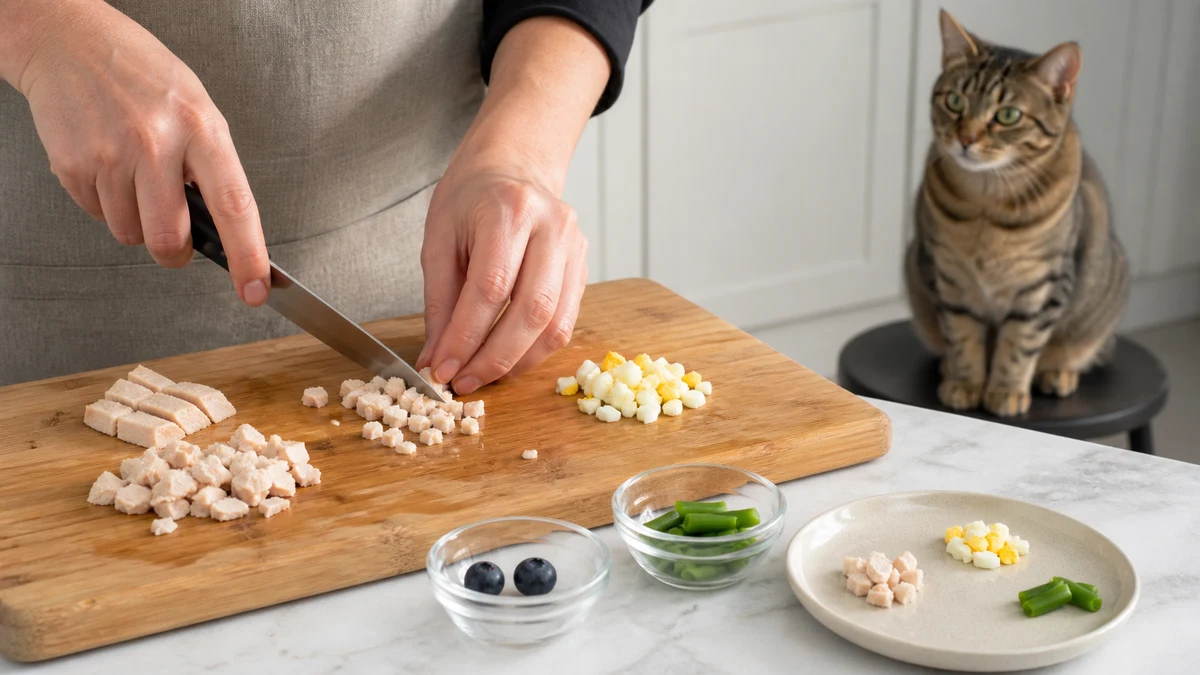
These options are for a generally healthy cat that is already eating a complete diet. Introduce only one unfamiliar food at a time. A “small amount” means a pea-sized piece or a few licks—not a human spoonful, slice, or handful.
1. Plain, fully cooked lean meat
Chicken, turkey, or lean beef can be offered after removing skin, visible fat, bones, sauce, salt, onion, garlic, and seasoning. Cook it thoroughly and cut across any tough fibers into a soft, swallowable piece. Processed meat such as ham, salami, bacon, sausage, or deli slices is not an equivalent substitute.
2. Fully cooked egg
Offer a crumb of boiled or scrambled egg only when it is fully cooked and plain. Do not add butter, oil, milk, cheese, salt, onion, or garlic. Egg is nutrient-dense and caloric, so a little goes a long way.
3. Plain cooked, boneless seafood
A tiny flake of cooked salmon, white fish, or prawn can be an occasional treat if it is plain, fully cooked, and carefully checked for bones or shell. Avoid smoked, cured, brined, battered, fried, raw, or heavily seasoned seafood. Human canned fish should not become a routine meal.
4. Selected plain vegetables
Some cats accept a small piece of plain cooked zucchini, green bean, carrot, or cauliflower. These foods are optional; cats do not need vegetables added to a complete diet. Cook hard pieces until soft, cut them small, and never mix them with butter, salt, sauce, onion, or garlic.
5. Selected fruit flesh
One blueberry, a tiny piece of strawberry, seedless watermelon, banana, or apple flesh may be suitable for some cats. Remove pits, cores, stems, leaves, rinds, and seeds, and never substitute grapes or raisins. Fruit contains sugar and many cats have no interest in it, so there is no benefit in persuading a cat to eat it.
How much is “a little”?
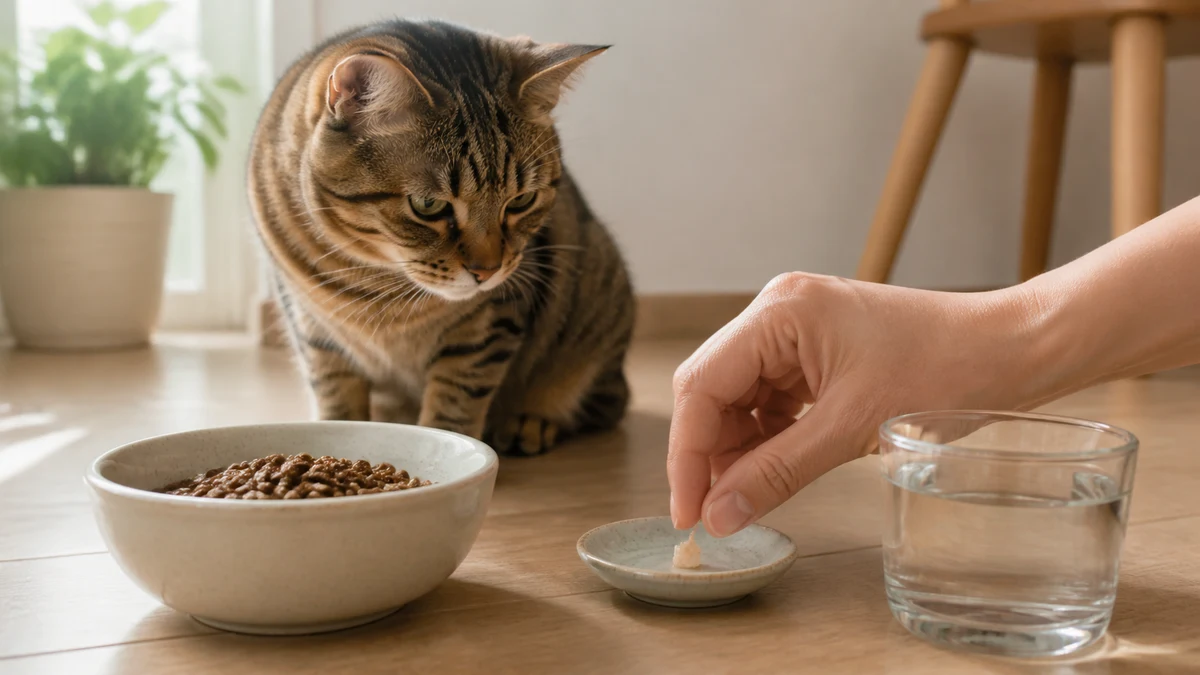
WSAVA advises that treats stay below 10% of daily calories and never replace a complete, balanced meal. That ceiling includes commercial treats, dental treats, training rewards, table food, and extras used to hide medication. It is a limit, not a target.
Calorie needs vary with body size, age, neuter status, body condition, activity, and health. For perspective, WSAVA lists one ounce (28 g) of cooked chicken breast at about 47 kcal and one ounce of cooked salmon at about 39 kcal—already more than the entire example treat allowance for many average adult cats. That is why “just one slice” is often too much.
Measure the day’s treats in advance or use pieces of the cat’s regular complete food for training. Stop sharing if a new food triggers vomiting, diarrhea, itching, or appetite change, and consult the veterinary team if signs persist. Cats with kidney, heart, urinary, gastrointestinal, endocrine, or food-allergy conditions may need stricter limits or no human food at all.
What to do if your cat ate a risky food
- Prevent another bite. Move the cat away and secure the food without putting yourself at risk.
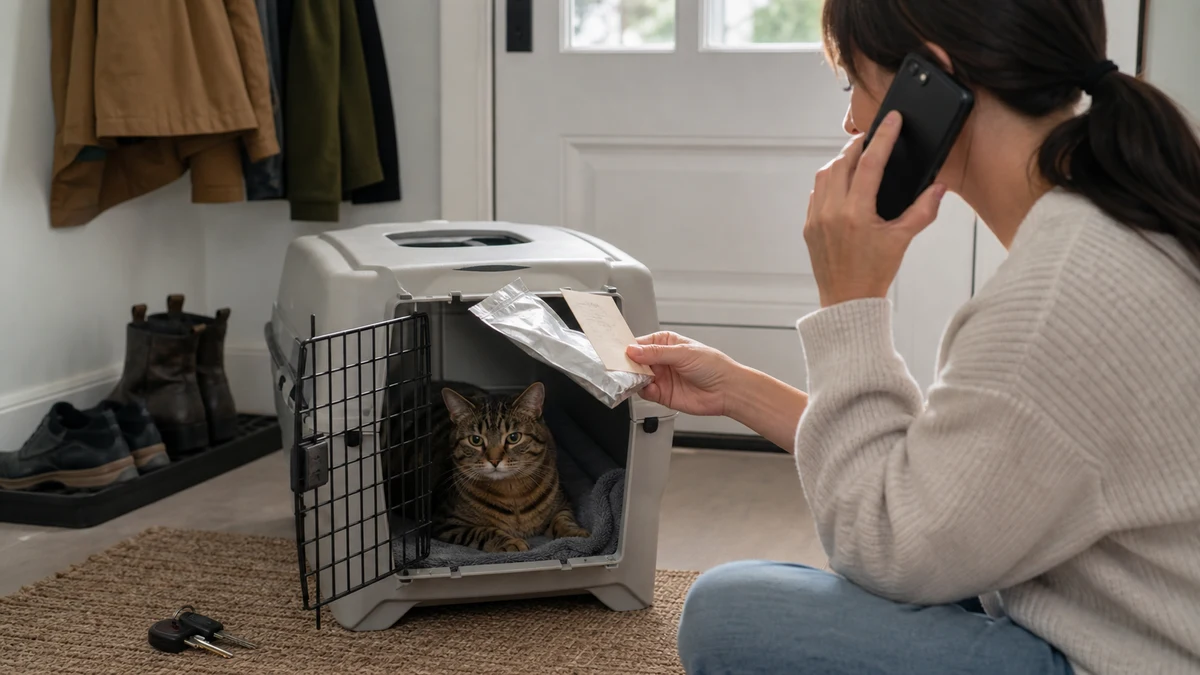
- Collect facts. Keep the package, ingredient list, recipe, or a photo. Note the product, estimated amount, time, cat’s weight, and any signs.
- Call immediately. Contact your veterinarian or an emergency veterinary hospital. In the United States, ASPCA Animal Poison Control lists (888) 426-4435; Pet Poison Helpline lists (855) 764-7661. Fees may apply. Elsewhere, use your local veterinary or animal poison service. These details were checked on August 19, 2026.
- Do not improvise treatment. Do not induce vomiting or give hydrogen peroxide, salt, oil, milk, activated charcoal, medicine, food, or forced water unless the veterinarian handling the case specifically directs it. There is no safe at-home method for making a cat vomit.
- Follow transport instructions. Keep the cat calm and use a secure carrier if asked to attend a clinic.
Do not wait for vomiting or collapse. Some effects can be delayed, and early decisions depend on the substance and time since ingestion rather than on visible symptoms alone.
The safest everyday rule is simple: feed a complete cat food as the diet, use the cat’s own food for most rewards, and share human food only when every ingredient and preparation step is known. Plain and tiny can be an occasional treat. Toxic, raw, bony, salty, fatty, seasoned, spoiled, or uncertain food stays out of reach.
Frequently asked questions
Can cats eat plain cooked chicken every day? Plain boneless cooked chicken can be a small treat, but chicken alone is not a complete feline diet. Count it within the day’s treat calories and keep at least 90% of calories from a complete and balanced food unless a veterinary nutritionist has formulated another diet.
Can cats eat cheese or drink milk? Milk commonly causes digestive upset because many adult cats digest lactose poorly. Cheese may contain less lactose, but it is calorie-dense and often salty. Neither is a necessary treat; use a small portion of the cat’s regular food instead.
Is tuna safe for cats? A tiny flake of plain, fully cooked, boneless fish can be an occasional treat. Human canned tuna is not complete cat food and can deliver too many calories, sodium, or oil, so it should not become a meal or routine reward.
What if my cat only licked onion sauce or chocolate? Do not decide risk from the word “lick.” Concentration, product, amount, timing, and the cat’s weight matter. Save the ingredients and call a veterinarian or animal poison service for case-specific triage; do not induce vomiting at home.
Are xylitol and grapes proven cat toxins? The evidence is not equal across species. Xylitol’s severe effects are established in dogs but not established in published feline data; grape-associated kidney injury is documented mainly in dogs, with Merck noting one feline report. Do not offer either product, and call for cat-specific advice after an exposure rather than applying dog dose charts.