Are Cat Hairballs Normal? How to Tell Hairballs, Vomiting, and Warning Signs Apart
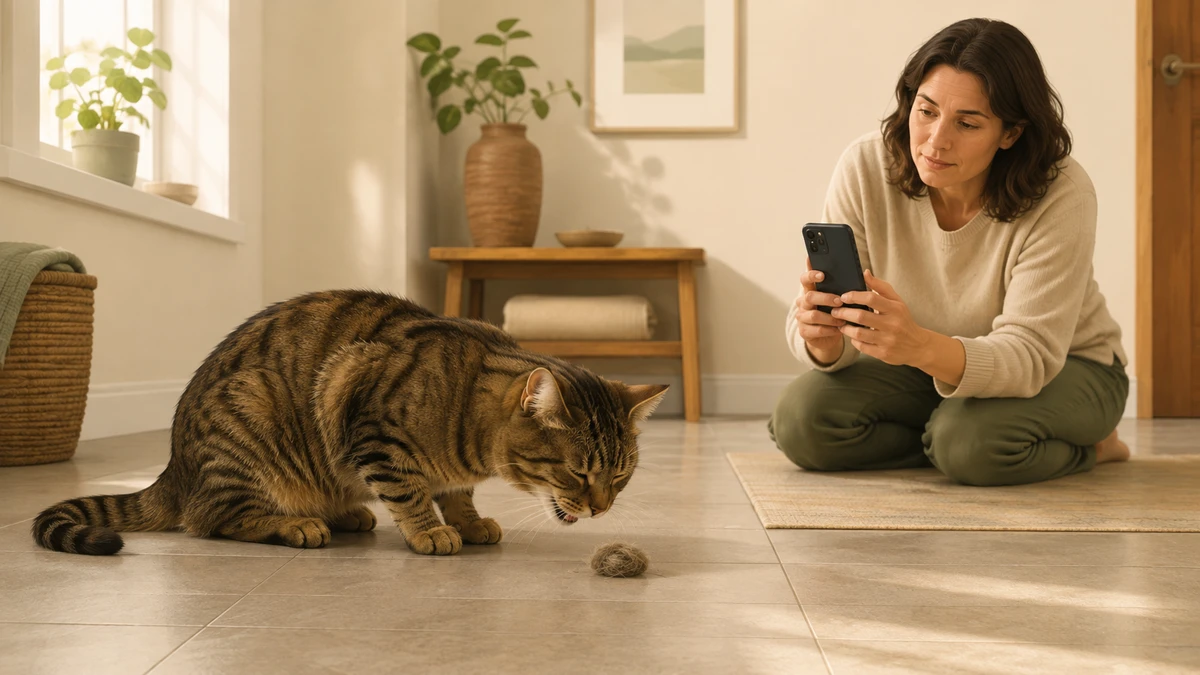
An occasional episode that produces a small, hair-filled mass can happen in a cat that otherwise eats, drinks, toilets, and behaves normally. It does not mean that repeated vomiting, frequent hairballs, or unproductive retching should be accepted as normal. A hairball describes what came out; it does not prove why the episode happened. Watch the whole event, record changes from your cat’s usual pattern, and contact a veterinarian when episodes recur or occur with another sign. Breathing difficulty, collapse, repeated dry retching, blood, or suspected string, object, or toxin exposure needs urgent veterinary guidance.
First ask: is breathing affected?
Before studying the material on the floor, look at the cat. Open-mouth breathing, obvious struggle to breathe, blue, purple, grey, or very pale gums, collapse, or rapidly worsening weakness is an emergency. Move the cat as little as practical, keep the environment quiet, and call the nearest emergency veterinary service while preparing to leave. Do not delay because the posture resembles a familiar “hairball cough.”
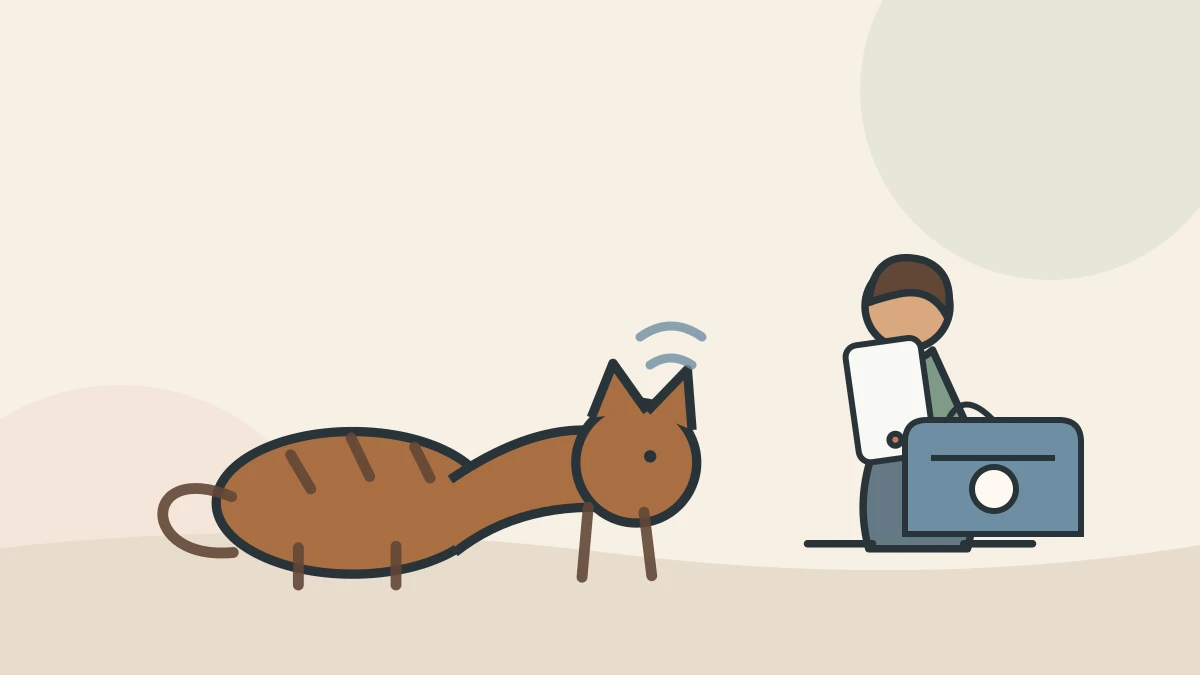
Cats can crouch low and extend the neck during a cough, and people often mistake that posture for an attempt to bring up a hairball. Coughing belongs to the respiratory system; hairballs come through the digestive tract. The AAHA/AAFP feline life-stage guidance explicitly notes that coughing is not caused by hairballs. Cornell also explains that airway problems can produce coughing, hacking, wheezing, rapid breathing, or increased breathing effort. A video can show a veterinarian the motion and sound, but neither a video nor an online chart can identify the cause on its own.
Compare the event, not just the mess
Veterinarians use the history before, during, and after an event because several actions can look similar from across a room. Vomiting is an active process that commonly includes nausea signs, retching, and forceful abdominal contractions. Regurgitation is generally more passive: food or fluid comes back from the esophagus with little warning and little abdominal effort. A hairball is a clump of swallowed hair, often elongated after passing through the esophagus, that may be brought up during a vomiting or retching episode. A cough moves air from the respiratory tract and may end with swallowing or a little foam rather than a digestive mass.
| Observable feature | Hair-filled episode | Vomiting | Regurgitation / bringing up food | Cough or other respiratory action |
|---|---|---|---|---|
| Before it starts | May follow grooming; gagging or retching may be noticed | Lip licking, drooling, repeated swallowing, restlessness, or nausea-like behavior may occur | Often little warning; may be close to eating or drinking | May start suddenly or after activity or airway irritation; the trigger is not always visible |
| Body position | Often crouched with the head and neck forward | Crouched or standing, with the body braced | The head may lower as material comes out, without a prolonged heaving sequence | Often crouched on all four feet with the neck extended; posture alone is not diagnostic |
| Abdominal effort | Retching may be obvious before hair appears | Repeated, forceful abdominal contractions are typical | Usually little or no abdominal contraction | Chest and abdomen may move with the cough, which can be mistaken for vomiting |
| What appears | A moist, compact, often cylindrical mass dominated by hair; fluid or food may also be present | Food, fluid, foam, bile-like material, hair, or another substance | Often undigested food or fluid; it may retain a tubular shape | Often nothing; a small amount of foam may be swallowed or appear |
| Relation to meals | Not reliably tied to the most recent meal | Can occur at different times; timing alone does not identify a cause | Often soon after eating or drinking, but “soon after” is still only a clue | Usually not defined by food coming from the stomach |
| Sound | Gagging or retching may precede the material | Retching and wet digestive sounds may occur | May be quiet and sudden | Repeated dry, harsh, or wheezy sounds may occur; audio is useful to record |
| Immediately afterward | Some cats return to normal; persistent retching is concerning | Observe recovery, hydration, appetite, comfort, and whether another episode follows | Note swallowing trouble, coughing, or another episode | Note breathing rate and effort once calm; any ongoing difficulty is urgent |
| What the clue cannot prove | Visible hair does not prove that every repeated episode is “just hairballs” | Appearance cannot reveal the underlying cause | Undigested food does not prove that eating fast is the only explanation | A low crouch cannot distinguish one airway problem from another |
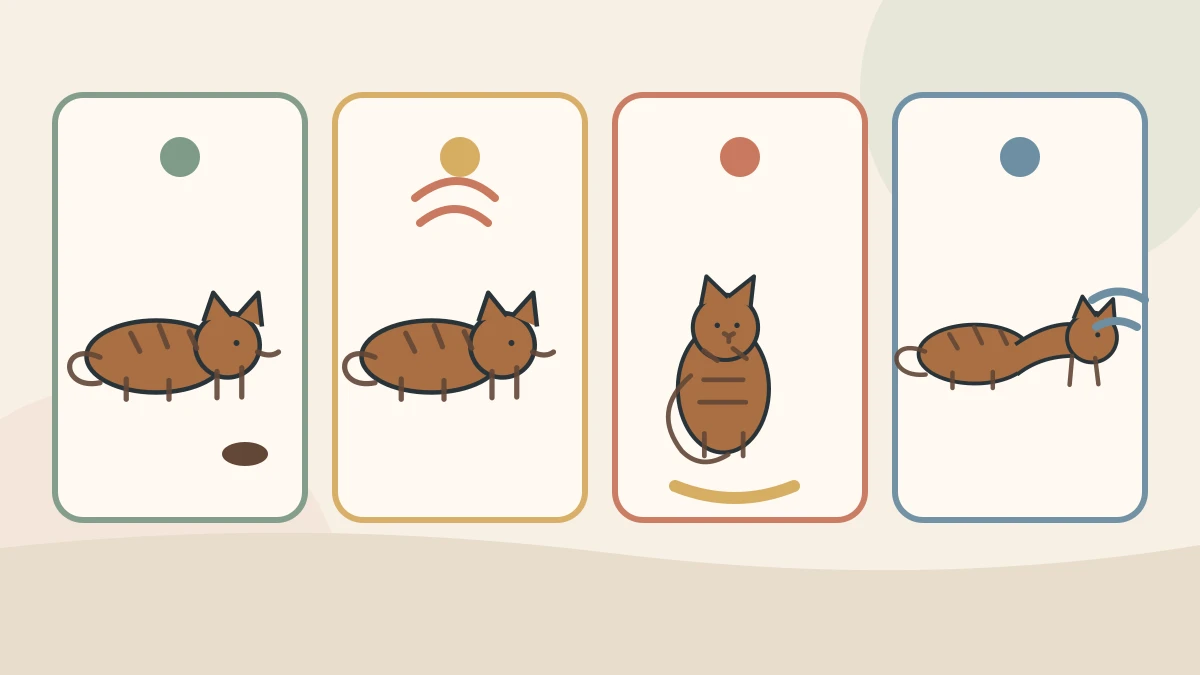
Do not force the event into one column. A cat may vomit and produce hair, cough and then swallow foam, or have more than one problem. The useful result of observation is not a home diagnosis; it is a clearer account for the clinic.
Why visible hair does not settle the question
Cats swallow loose hair during normal grooming. Most swallowed hair moves through the digestive tract and leaves in the stool; some can collect in the stomach and be brought up. Longer coats, seasonal shedding, and more grooming can increase the amount swallowed. A compact hair mass can occasionally become too large to pass normally and contribute to an obstruction, although this is not what happens in every ordinary hair-filled episode.
The word “hairball” can become a shortcut that hides a changing pattern. More frequent episodes may reflect more loose coat, increased self-grooming, or a digestive problem, but those possibilities cannot be separated by the owner from the floor sample. AAHA/AAFP guidance recommends asking specifically about vomiting, hairballs, diarrhea, frequency, weight, and other gastrointestinal changes because caregivers may have come to regard a recurring pattern as normal.
Look for change: a cat that used to bring up hair rarely now does so repeatedly; the event no longer produces hair; appetite or stool has changed; grooming has become intense; or weight is trending down. Those observations justify a veterinary conversation even if the cat looks comfortable between episodes.

Warning signs: when to seek help
Triage depends on the whole cat, not a single color or shape. If you are uncertain, call a veterinary clinic and describe what is happening in real time. Use a lower threshold for a kitten, an older cat, a cat with a known health condition, or any cat that is deteriorating.
Seek emergency veterinary care now when you observe any of these:
- difficulty breathing, open-mouth breathing, pronounced breathing effort, abnormal gum color, or collapse;
- repeated unproductive retching, especially when no hair, food, or fluid comes out;
- several episodes in a short period, severe or continuing vomiting, or rapid deterioration;
- blood in the expelled material or other substantial bleeding;
- a swollen, tense, or painful-looking abdomen, marked distress, or inability to settle;
- known or suspected access to string, yarn, ribbon, tinsel, a toy fragment, medication, toxic plant, chemical, or other foreign or toxic material;
- inability to keep water down, severe weakness, or signs that the cat cannot remain hydrated; or
- a string visible from the mouth—do not pull it, because a linear object may be anchored internally.
Contact your regular veterinarian promptly for recurring episodes, a clear increase from baseline, reduced appetite or refusal to eat, lethargy, hiding, diarrhea, constipation or reduced stool, repeated swallowing, apparent trouble swallowing, ongoing cough, increased grooming, or weight loss. The clinic can tell you whether the timing should be same-day, next available, or emergency based on the cat’s age, history, and current condition.

Make a record the veterinarian can use
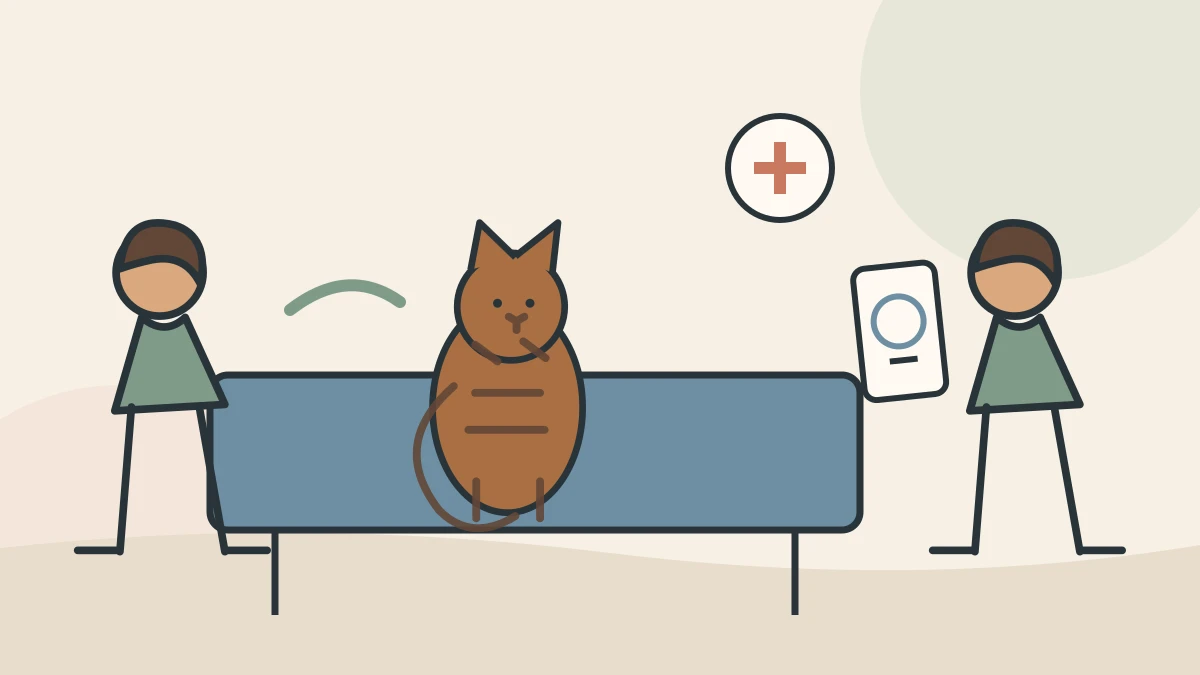
If it is safe and does not delay urgent care, record the event from the side so the abdomen, chest, head, and full posture remain visible. Keep some distance; do not restrain the cat or place a phone close to the face. Capture the sound. Photograph the material beside a familiar size reference without touching it, and keep the cat away from it. Ask the clinic whether it wants a sample and how to handle one safely.
Use one row for every event. “Three times” should mean three separately timed events, not three heaves within one event.
| Date and time | Event count and duration | Before / trigger | Posture and effort | Sound | Material and amount | Meal timing | Food and water | Stool / urine | Energy, comfort, weight, possible exposure |
|---|---|---|---|---|---|---|---|---|---|
| Example: Sep 7, 7:10 a.m. | One event, about 25 seconds | Woke, groomed, then crouched | Three abdominal heaves; neck forward | Wet retch; no wheeze heard | Small compact tuft of fur with a little clear fluid; photo taken | About 3 hours after food | Ate breakfast later; water intake looked usual | Stool seen yesterday; urine clump usual | Returned to normal; weekly weight unchanged; no known object access |
Add the cat’s current food, supplements, prescribed treatments, recent diet changes, access to plants or small objects, and any previous episodes when you contact the clinic. Do not stop or restart a prescribed treatment without asking the prescribing veterinarian. A clean timeline is more reliable than trying to remember an upsetting event days later.

Safe support while you arrange advice
For a cat that is currently stable, low-risk support means reducing avoidable exposure and collecting information—not treating an assumed hairball.
- Keep fresh water available unless a veterinarian caring for this cat gives different instructions. Do not syringe water or force food into a retching or nauseated cat.
- Continue the cat’s familiar complete and balanced food unless the veterinarian advises a change. Do not improvise a fast, a new “hairball diet,” or a home recipe from a generic article.
- Gently brush a cat that comfortably accepts grooming, using a tool suited to the coat. Stop if the cat resists or the skin seems painful. Our cat-brushing guide explains a gradual, coat-aware approach.
- Put string, yarn, ribbon, elastic bands, tinsel, thread, and breakable toy pieces out of reach. Supervise play and replace damaged toys. Use our cat-proofing checklist to inspect the rest of the home.
- Keep the cat indoors, quiet, and observable while waiting for the clinic’s direction, without blocking access to water or the litter box.
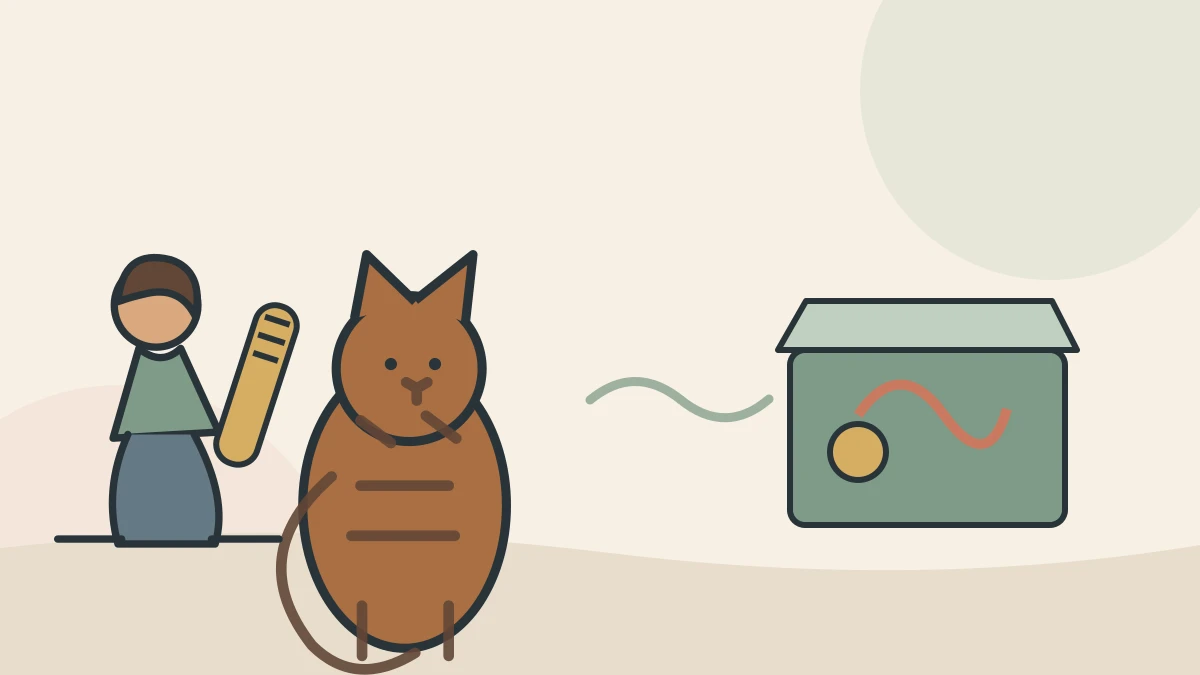
Brushing can reduce loose hair available to swallow, but it cannot explain or cure recurrent vomiting. A complete and balanced diet supports ordinary nutrition; it is not a diagnosis-specific treatment. If increased grooming is driving more hair ingestion, the reason for that grooming may also need veterinary assessment.
What not to try at home
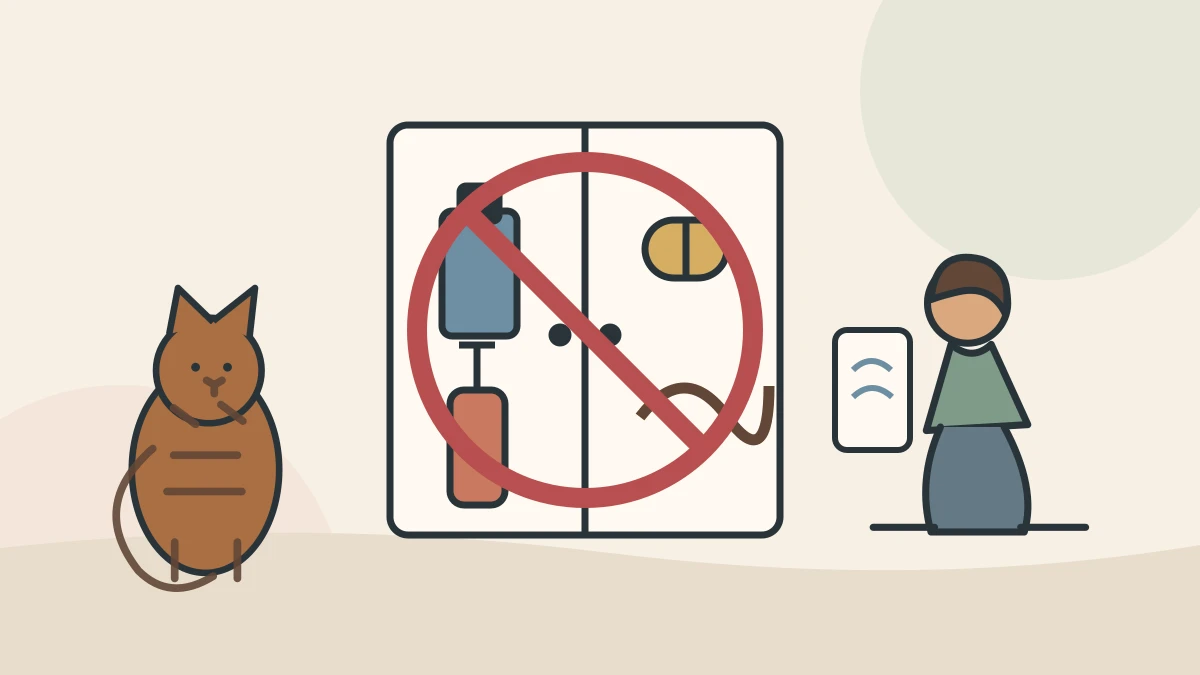
Do not give a human anti-nausea medicine, pain reliever, antacid, oil, butter, petroleum product, laxative, herbal preparation, or leftover veterinary medicine. Do not copy a dose from another cat. Even a product sold for hairballs may be inappropriate when the event is not a hairball or when obstruction, swallowing difficulty, dehydration, or another problem is possible. Cornell specifically advises that laxatives should not be given without veterinary approval and supervision.
Do not induce vomiting unless a veterinarian or animal poison service gives case-specific directions. Do not push food, water, paste, or a pill into the mouth of a cat that is actively retching, struggling to breathe, unable to swallow normally, or becoming weak. Never pull visible string. Finally, do not wait for a hair mass to appear while the cat repeatedly retches without producing anything.
What a veterinary visit may clarify
The veterinarian will combine the timeline and video with a physical examination. Depending on the pattern and findings, the clinician may discuss laboratory testing or imaging. Those steps matter because vomiting is a sign with many possible sources, regurgitation directs attention differently from vomiting, and respiratory actions require a different assessment again. Even feline asthma cannot be diagnosed from a crouching posture alone; Cornell describes diagnosis as information gathering plus appropriate testing rather than a single definitive observation.
Bring the log, videos, photographs, food and product details, medication list, weight history, and any known exposure. State what you saw rather than what you think it “must be”: “three forceful abdominal contractions followed by undigested food ten minutes after eating” is more useful than “another hairball.”
An occasional hair-filled event in a cat that immediately returns to its normal routine may be something to record and discuss at routine care. Repetition, change, or another symptom changes that calculation. Treat breathing trouble and other emergency signs first, preserve evidence when safe, and let a veterinarian determine what the event means for this individual cat.
Frequently asked questions
Is one hairball automatically an emergency?
Not usually when a small hair-filled mass appears once and the cat promptly returns to normal eating, drinking, activity, and toileting. Record it and watch for recurrence or other changes. Breathing difficulty, repeated unproductive retching, blood, suspected foreign material or toxin exposure, pain, weakness, or inability to keep water down makes the situation urgent.
Can I tell vomiting from regurgitation by looking at the material?
Material provides clues, but the motion is often more useful. Vomiting is active and usually includes abdominal effort; regurgitation is typically passive and may occur soon after food or water. A video of the full body and sound can help the veterinarian, but neither appearance nor timing confirms a cause.
Is my cat coughing up a hairball?
Hair does not come from the airways, and AAHA/AAFP guidance states that coughing is not caused by hairballs. A coughing cat may crouch and extend the neck, which makes the action easy to mislabel. Record the event if safe; any breathing difficulty, open-mouth breathing, abnormal gum color, or collapse requires emergency care.
Should I give oil or a laxative for a suspected hairball?
No, not without veterinary direction for this cat. The event may not be a hairball, and some problems require prompt examination rather than a home remedy. Avoid human medicines, oils, laxatives, leftover treatments, forced feeding, and forced water.
What should I write in a vomiting log?
Record the date and time, number and duration of events, what happened beforehand, posture and abdominal effort, sound, material, relation to eating, food and water intake, stool and urine, energy, comfort, weight trend, and possible access to string, objects, plants, chemicals, or medicines. Add a safely filmed video when possible.