Do Cats Need Brushing? A Low-Stress Guide for Short, Long, and Shedding Coats
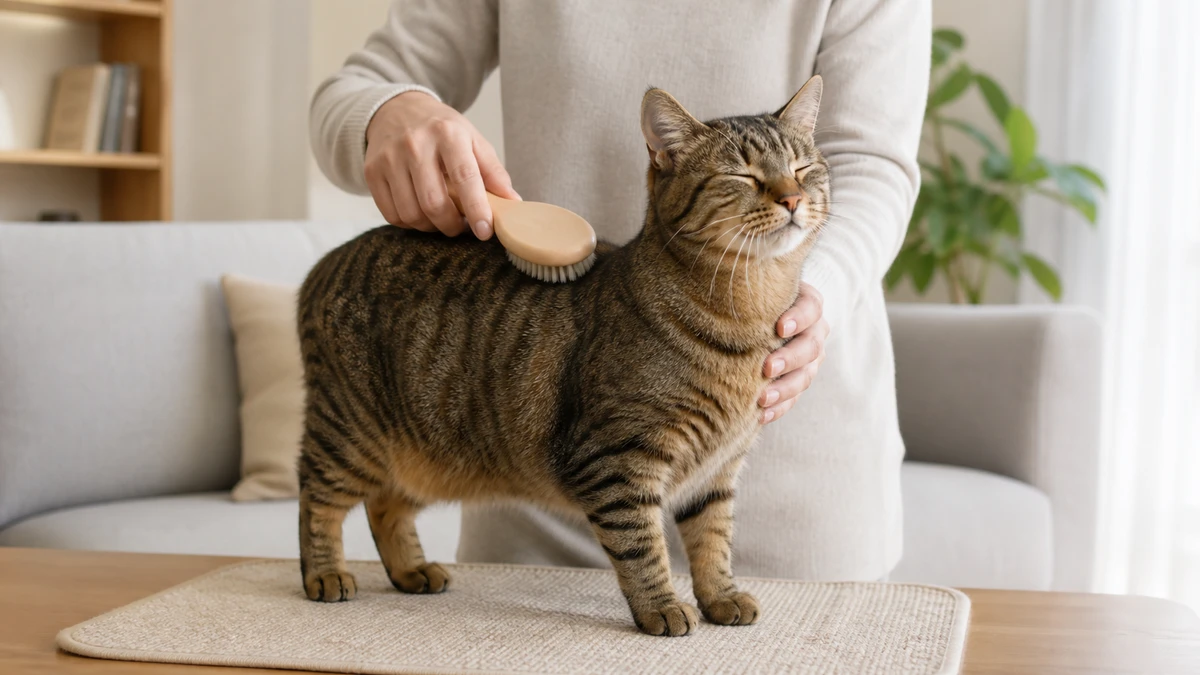
Yes—most cats benefit from some brushing, even though healthy cats do much of their own coat care. Brushing can lift loose hair, prevent some tangles from tightening, and give you a regular chance to notice changes in the skin or coat. It does not guarantee a hairball-free cat, and “three times a week” is not a universal prescription. Start with coat length and density, then adjust for shedding, friction areas, age, body condition, mobility, and what the individual cat can comfortably do for itself.
The useful question is not simply “How often should I brush?” It is “What does this coat need today, and can I meet that need without pulling, chasing, or holding the cat down?”
What brushing can—and cannot—do
Veterinary-authored VCA guidance describes brushing as a way to remove loose hair and dead skin cells, keep debris from accumulating, and inspect for tangles, parasites, lumps, or tender areas. Cornell also recommends combing as one measure that can reduce the amount of loose hair swallowed during self-grooming.
That makes brushing useful, but not magical. A hairball can still occur because cats swallow hair while grooming, and risk varies with coat, shedding, and the individual. Repeated unproductive retching, appetite loss, lethargy, constipation, or other illness signs should not be treated as a signal to brush harder. They belong in a veterinary conversation.
Brushing is also not a substitute for investigating a sudden coat change. A cat that abruptly stops grooming, licks one area until it is bare, or develops painful, red, broken, greasy, flaky, or thickened skin needs assessment—not a more aggressive tool.
Match the plan to the coat in front of you
Frequency is a starting hypothesis, not a quota. Cats Protection offers weekly brushing for many short-haired cats and daily attention for many long-haired cats as practical baselines, while noting that the individual situation matters. Check the result after each session: is loose hair coming away easily, can a comb pass through without snagging, and is the cat still comfortable?
| Coat or situation | Useful starting tool | Technique and checkpoints |
|---|---|---|
| Short, smooth coat with little undercoat | Soft bristle brush or flexible grooming mitt | Use light strokes with the hair growth. Increase attention when loose hair rises, but stop before the skin becomes irritated. |
| Medium or long coat | Long-toothed metal comb with smooth, rounded tips | Work in small sections. Hold the fur near the skin and comb the free ends first so a snag does not pull the skin. Check behind ears and legs. |
| Dense undercoat or a heavy shedding period | Rounded-tooth undercoat comb chosen for the coat | Keep the pass shallow and controlled. The goal is loose undercoat, not scraping the skin or stripping a coat to an arbitrary amount. |
| Friction areas: armpits, groin, chest, behind ears, back of legs | Fingers plus a smooth comb for a loose, minor tangle | Part the coat and inspect before combing. Do not repeatedly rake a sensitive fold. A tight mat near skin is a professional task. |
| Senior, overweight, painful, disabled, or temporarily restricted cat | Soft brush or comb selected with the veterinary team | Help the areas the cat cannot reach. Treat a new decline in self-grooming as information about health or mobility, not laziness. |
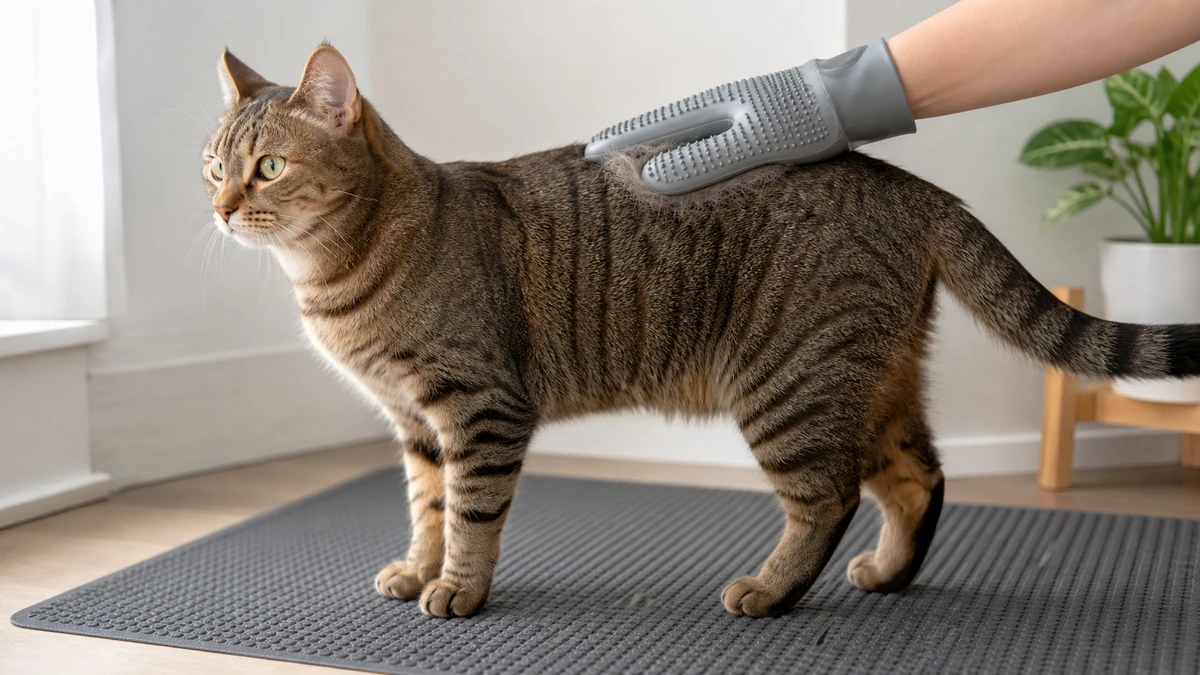
No table can identify the perfect brush from breed name alone. Two short-haired cats may have very different undercoats, and two long-haired cats may differ in silkiness, density, mat risk, and tolerance. Look for rounded, intact teeth and a tool you can control with a light hand. If the tool scratches your inner forearm with gentle pressure, it is a poor candidate for delicate feline skin.
A low-pressure introduction in eight steps
Cats Protection recommends using as little restraint as possible and introducing grooming in small pieces rather than trying to finish everything at once. Turn that principle into a routine:
- Choose the right moment. Start when the cat is awake but settled, not eating, playing intensely, hiding, or already irritated.
- Prepare a stable exit-friendly place. Use a nonslip mat on the floor or a broad low surface. Keep the path away open; do not corner the cat.
- Let the cat investigate the tool. Place the brush down or hold it still. A sniff, look, or voluntary approach is enough for the first exposure.
- Pair the tool with something the cat values. Offer calm praise, cheek or chin contact if the cat solicits it, or a tiny treat that fits the normal diet. The reward follows calm contact; it does not lure the cat into restraint.
- Start at a preferred, easy area. Many cats accept the cheek, shoulder, or upper back more readily than the belly, armpit, tail, or rear legs. Individual preference wins.
- Make one or two light strokes with the hair. Lift the brush, pause, and watch the response instead of making a long automatic series.
- Continue only while the cat opts in. A loose body, leaning back toward the brush, or calmly remaining can support another short set. Tail lashing, skin twitching, ears rotating back, a hard stare, crouching, moving away, swatting, growling, or biting means pause or end.
- Finish before resistance. End while the cat is still composed, then put the tool away. Several very short successes can teach more than one prolonged struggle.
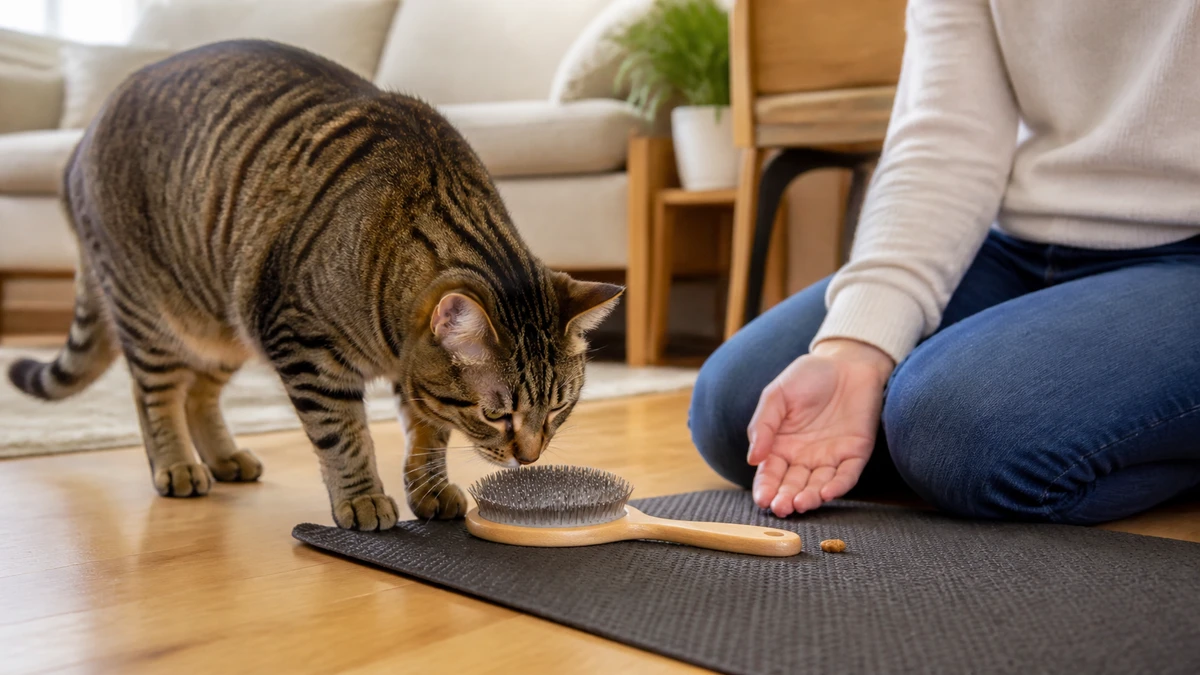
If a cat has a history of fear, do not test how much handling it will tolerate. A qualified behavior professional and veterinary team can help build a desensitization and counterconditioning plan. The aim is cooperative care, not endurance.
How to brush without turning a small snag into a painful pull
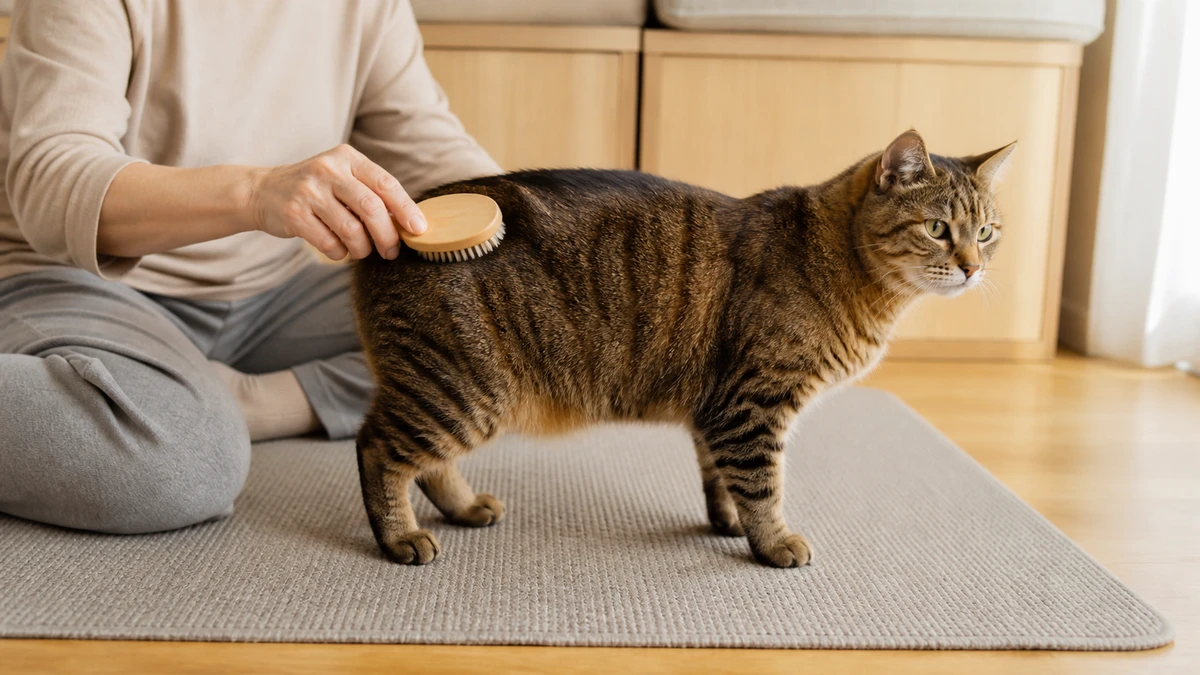
For a short coat, use gentle passes from shoulders toward the tail, then check the chest and sides only if the cat remains comfortable. Avoid pressing a brush repeatedly over the spine, bony hips, nipples, or a skin lesion. Clean accumulated fur from the tool so you can see what the next pass removes.
For medium and long coats, use your free hand to support the section near the skin. Begin at the ends and progress toward the body only when the comb moves freely. Work through one small zone rather than dragging a comb from neck to tail. Around the armpits, groin, belly, behind the ears, and back of the legs, first separate the hair with your fingers and look at the skin.
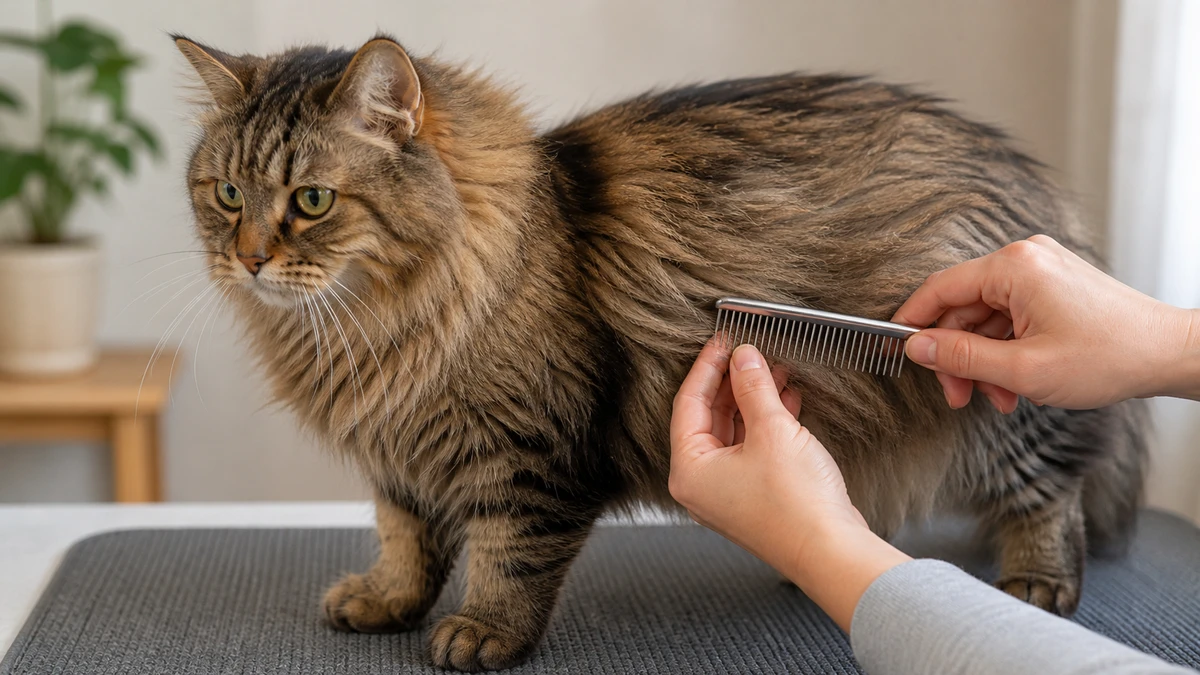
A dense undercoat often releases more hair during a shedding phase. VCA notes that outdoor exposure and climate can influence seasonal shedding, while indoor cats may shed at lower levels throughout the year. Let the coat tell you when extra sessions are useful. Use shallow passes and recheck the same spot with your fingers; repeated hard strokes can irritate skin even when more fur keeps appearing.
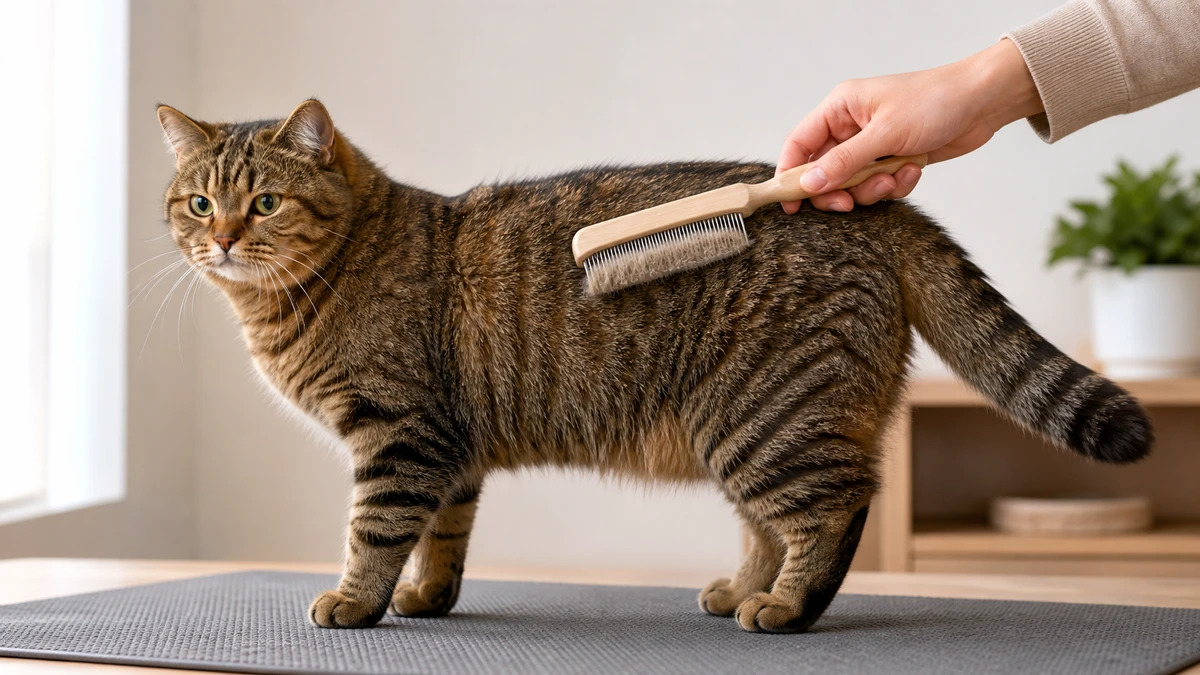
Do not brush against resistance just to meet a schedule. Stop if the comb catches, the skin tents upward, the cat flinches, or you cannot see where fur ends and skin begins.
Loose tangle, tight mat, or felted coat?
A small, recent tangle that sits away from the skin may loosen with fingers and a smooth comb. Support the base, start at the outer ends, and stop if it does not yield with very light work. Wetting or bathing a tangled coat before it is assessed can make some tangles harder to remove.
Never slide scissors under a mat close to the skin. Cat skin is thin and may be pulled up invisibly into the mat, so the apparent gap may contain skin. VCA specifically warns against scissors and recommends professional care for severe or extensive tangles. Although trained people may use clippers in an appropriate setting, that is not permission to experiment at home: blade placement, restraint, pain, and the cat’s medical needs all require judgment.
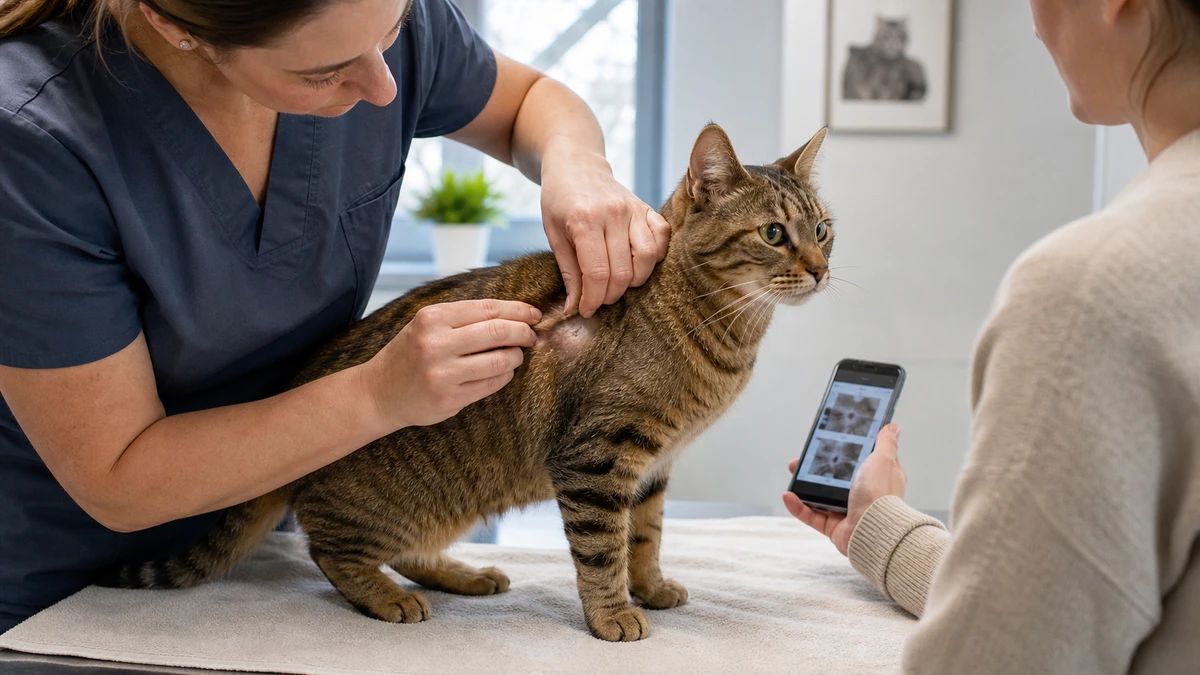
Seek a veterinarian or a suitably trained, cat-experienced groomer when a mat is tight to the skin, covers more than a small area, pulls when the cat moves, hides moisture or debris, or cannot be examined without distress. Skin irritation, odor, discharge, heat, swelling, or pain puts the case on the veterinary track.
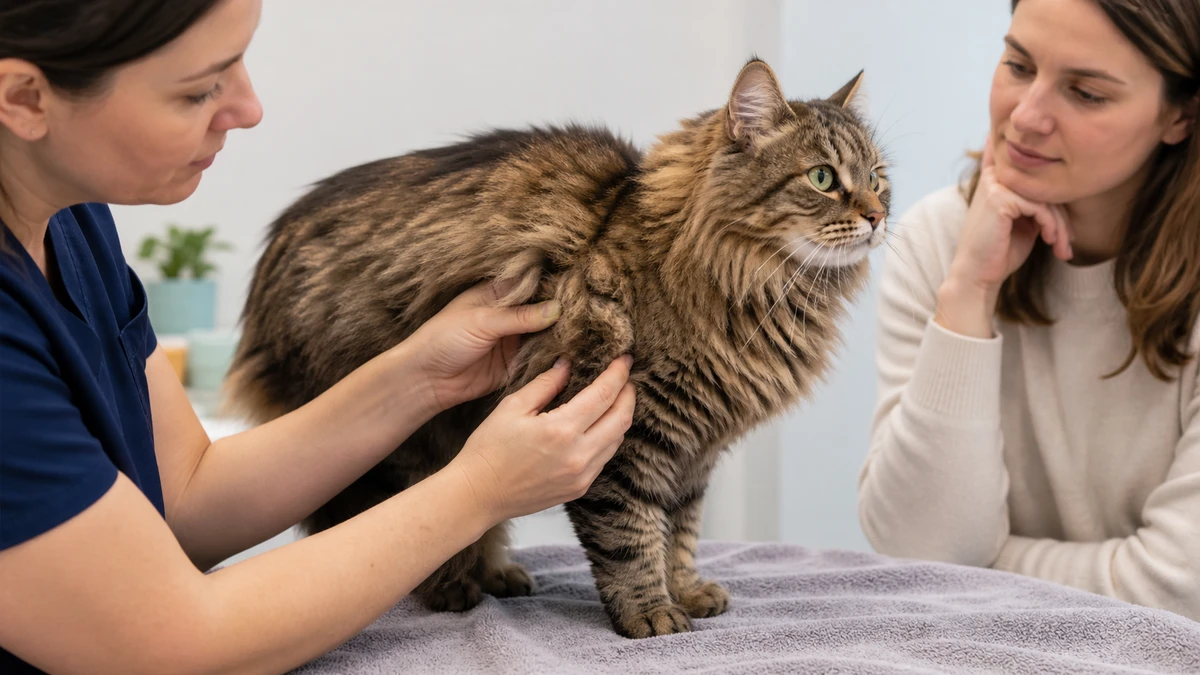
Use each session as a skin-and-coat check
Part the coat under good light as you go. Compare what you see with this cat’s normal skin color, coat density, smell, and tolerance. Do not diagnose the cause from appearance alone; different skin problems can look similar.
Arrange veterinary advice when you notice any of these changes:
- red, hot, swollen, crusted, moist, bleeding, or otherwise broken skin;
- a new bald patch, thinning area, or coat that is suddenly greasy, flaky, thickened, dull, or unusually odorous;
- persistent scratching, chewing, licking, or rubbing;
- a flinch, cry, guarded posture, aggression, or other pain response to ordinary touch;
- a new lump, bump, attached parasite, or debris you cannot identify safely;
- sudden reduction or stopping of self-grooming;
- overgrooming that removes hair or creates sores;
- rapid mat formation, widespread felting, or any marked change from the cat’s usual coat.
Cornell notes that older cats may groom less effectively and can develop matting, odor, or inflammation. Age itself is not a diagnosis. Pain, limited mobility, body condition, dental discomfort, systemic illness, or another change may affect self-care, so a sudden decline should not be dismissed as “just getting old.”
Cornell also explains that excessive licking may reflect itch or pain, and that medical contributors should be assessed before assuming stress. If medical causes have been ruled out and stress remains relevant, pair professional guidance with a calmer environment rather than trying to physically stop every lick. Our guide to signs of stress in cats can help you record context without making a diagnosis.
Skip mystery sprays, essential oils, and human products
Routine brushing usually needs no fragrance, detangler, powder, or oil. A cat will lick its coat after grooming, so something applied to fur can become an oral exposure. Cats Protection warns that human skin creams and ointments may be toxic to cats and advises against unapproved home remedies. The ASPCA notes that cats are especially sensitive to essential oils and that risk varies by oil, concentration, and exposure route.
Do not apply an essential oil, human hair product, human skin cream, or an unknown-ingredient grooming product to make brushing easier. If a coat is contaminated, sticky, painful, or thought to need a medicated product, call a veterinarian for product-specific instructions. “Natural” does not establish feline safety.
Build a schedule from observations, not guilt
Begin with a conservative baseline: perhaps a brief weekly check for an easy short coat and more frequent, often daily, attention for a long or mat-prone coat. Then adjust. During shedding, an extra short session may remove loose undercoat before it tangles or is swallowed. A senior cat or one that cannot reach the lower back may need targeted help even with short hair.
Record four things for two weeks: areas checked, tool used, loose hair or snags found, and the cat’s earliest stop signal. The goal is not to maximize minutes. It is to keep the coat passable, the skin observable, and grooming predictable enough that the cat does not need to escalate communication.
Handle nail care as a separate cooperative-care skill; safe cat nail trimming has its own setup and stop rules. Trying to brush, detangle, clean ears, and trim every claw in one session can turn several manageable tasks into one long restraint event.
FAQ
Do short-haired cats really need brushing? Many benefit from it, especially during shedding or when age, weight, pain, or mobility limits self-grooming. A soft brush or mitt and a brief weekly check may be enough for one cat; another may need more. Judge by loose hair, tangles, skin condition, reach, and tolerance.
Should I brush my long-haired cat every day? Daily attention is a useful starting baseline for many long or mat-prone coats, but it can be divided into very short zones. “Daily” does not mean forcing a full-body comb-out. Check high-risk friction areas and stop while the cat remains comfortable.
Does brushing stop hairballs? It can remove loose hair before the cat swallows it and may reduce hairball formation, but it cannot promise zero hairballs. Frequent vomiting, repeated unproductive retching, appetite change, lethargy, or constipation needs veterinary advice rather than more brushing.
Can I cut out one mat with scissors if I can see the edges? No. Skin can be drawn into a mat and hidden from view. A close, tight, painful, extensive, damp, or irritated mat should be assessed by a veterinarian or suitably trained cat groomer.
What if my cat purrs but also lashes the tail? Do not use purring as the only vote. Read the whole cat. Tail lashing, skin rippling, ears turning back, freezing, shifting away, or a sudden stare are reasons to pause even if purring continues.
My cat suddenly stopped grooming. Should I just brush more? Offer only gentle help that the cat accepts and arrange veterinary advice. A new loss of self-grooming can accompany pain, reduced mobility, body-condition changes, or other health problems; brushing alone does not identify or fix the cause.