Cat-Proofing Checklist: Windows, Balconies, Cords, Plants, and Every Room
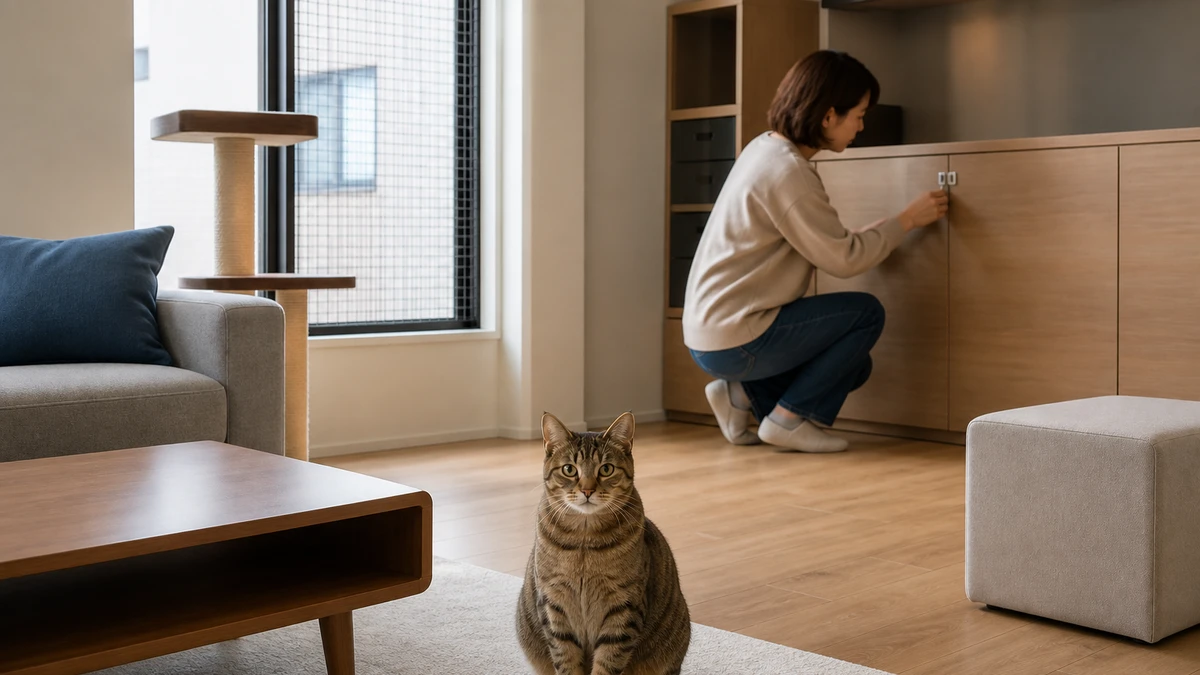
A cat-safe home has secured exits and screens, no unsupervised balcony access, contained cords and string-like objects, closed storage for medicines and chemicals, guarded heat and appliances, stable furniture, and only positively identified plants. Inspect every room from floor level, then from the highest surface your cat can reach. Fix the high-consequence hazards first, and repeat a short door, window, appliance, and surface check every day.
This checklist reduces preventable risk; it cannot make any room perfectly accident-proof. A kitten, an athletic climber, a cat with limited mobility, or a cat newly introduced to the home may reveal different gaps. Recheck after moving furniture, accepting a bouquet, starting a repair, or bringing in a new product.
If exposure or injury may already have happened
Do not spend time finishing the checklist. Move the cat away from the immediate hazard without putting yourself at risk, prevent further licking when you can do so safely, and call a veterinarian, emergency veterinary clinic, or the animal poison service for your location. Keep the package, plant label, photo, or remaining material available. Report what the item is, how contact may have occurred, the time, and the cat’s approximate weight.
Do not wait for symptoms after suspected lily, medicine, pesticide, cleaner, or other toxin exposure. Do not induce vomiting or give salt, hydrogen peroxide, oil, milk, charcoal, food, medicine, or a home remedy unless a veterinary professional handling that specific exposure instructs you. ASPCA Poison Control states that there is no safe substance to give a cat at home to make the cat vomit.
Start with three passes
Pass 1: stop falls, escape, electrocution, crushing, fire, and poisoning. Test exterior doors, screens, balcony barriers, live cords, recliners, major appliances, flames, medicines, cleaners, pesticides, and every plant. These are not “later” projects.
Pass 2: remove swallowable and entangling objects. Search under furniture and along work surfaces for thread, needles, ribbon, hair ties, rubber bands, dental floss, earplugs, batteries, toy fragments, and plastic film. Cats Protection warns that swallowed thread or toy material can lodge in the intestine and cause serious harm.
Pass 3: add safe choices. A stable perch away from a dangerous window opening, solid toys instead of loose string, an approved scratching surface, and a quiet retreat make unsafe areas less attractive. Cat-proofing should preserve normal climbing, hiding, scratching, looking, and play rather than turning the home into an empty box.
1. Entrance, hallway, and exterior doors
- Everyone closes the exterior door before putting down bags, sorting mail, or greeting the cat.
- Deliveries and repairs have a plan: the cat waits behind a closed interior door or a secure, properly fitted barrier before the outer door opens.
- Door sweeps, damaged frames, pet flaps, and gaps around screens are checked for an escape route.
- Shoes, shopping bags, umbrellas, keys, medications, and dropped small objects go into closed storage.
- The carrier is accessible and functional, and the cat’s microchip contact details are current.
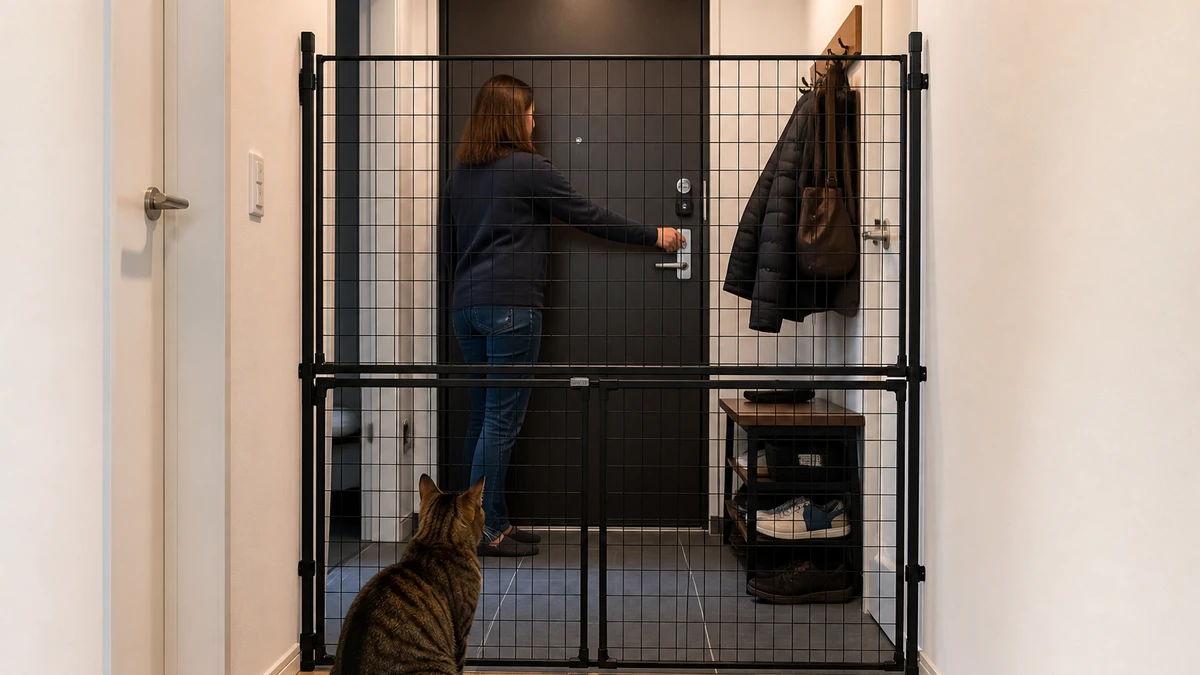
A low gate alone may not stop a healthy jumping cat; treat it as one layer, not a promise. During a move, party, service visit, or emergency, a closed room with water, litter, a hide, and clear instructions on the door is usually more dependable. Never wedge an exterior door open because the cat “usually stays back.”
If a new cat has just arrived, keep the world small until the household knows where the cat hides and how the cat responds to doors. Our new-cat supplies checklist explains how to set up a secure transition room.
2. Living room and shared spaces
- Live electrical cords are blocked or enclosed in sturdy cord covers; damaged cords are unplugged and replaced.
- Blind and curtain cords are shortened, secured high, and kept taut rather than left as loops.
- Thread, ribbon, hair ties, rubber bands, floss, earplugs, batteries, and toy pieces are in closed containers.
- Wand toys and toys that can shred are put away after supervised play; solid toys are checked for damage.
- Recliners, sofa beds, rocking chairs, folding furniture, and drawers are checked before closing or moving them.
- Tall shelves, televisions, speakers, and unstable decor are anchored or relocated; heavy objects cannot be pulled down.
- Candles, open flames, hot wax, incense, and portable heaters are inaccessible, stable, and never left with the cat.
- Plastic and snack bags are emptied, folded or cut open, and stored in a closed bin.
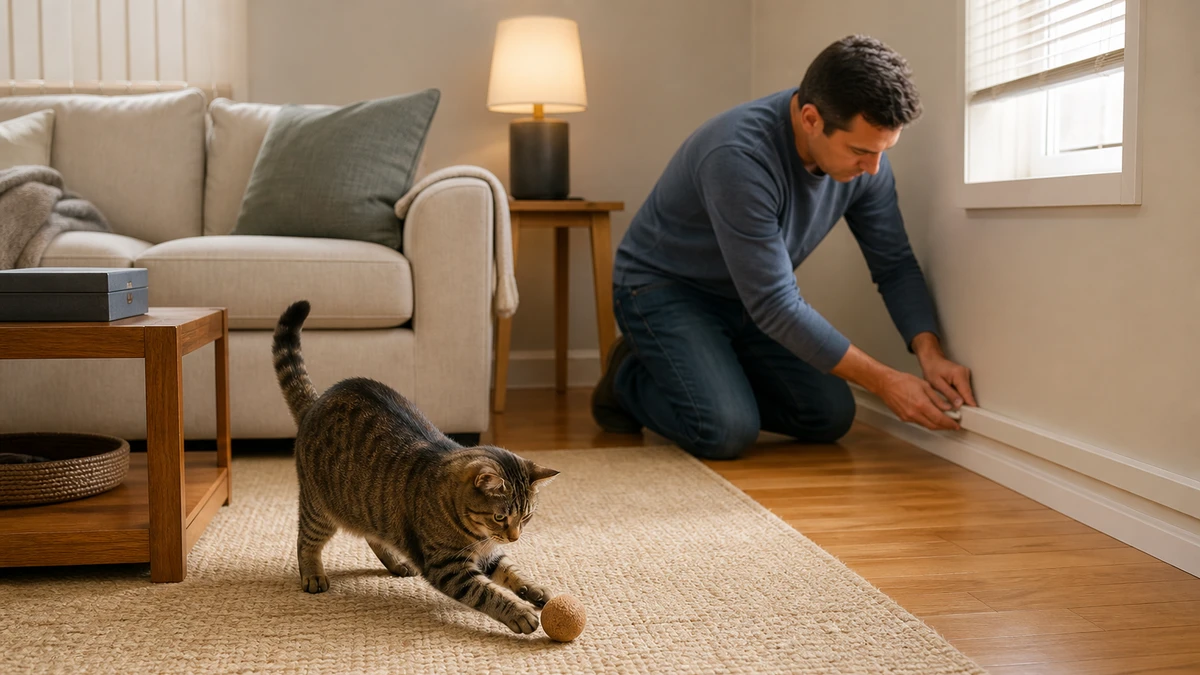
Cord covers reduce access; they do not make a damaged energized cable safe. If a cat chews a live cord, disconnect power only when it is safe for you to do so and seek emergency veterinary advice. Do not touch a cat that is still in contact with electricity.
Look before operating any mechanism that closes, folds, rocks, or slides. Cats can settle inside a recliner base, under a sofa bed, behind a drawer, or beside a moving chair. Ask everyone in the home to pause, locate the cat, and move the mechanism slowly.
3. Kitchen and dining area
- Knives, skewers, food processor blades, broken glass, and sharp lids are cleaned promptly and stored closed.
- Stove controls cannot be turned accidentally; flames, hot pans, boiling liquids, and cooling cooktops are supervised or blocked.
- Food scraps and trash go into a lidded bin the cat cannot open; counters are cleared after cooking.
- Medicines, vitamins, nicotine products, caffeinated products, alcohol, cleaners, dishwasher products, and pest control are behind secure doors.
- Cleaning products are used exactly as labeled; wet residue is removed as directed, the area is ventilated when required, and the cat returns only when the label says it is safe.
- Open dishwashers, ovens, cabinets, refrigerators, and gaps behind appliances are checked before closing or operating.
- Grocery bags, cling film, foil, string, bones, and food packaging do not remain within reach.
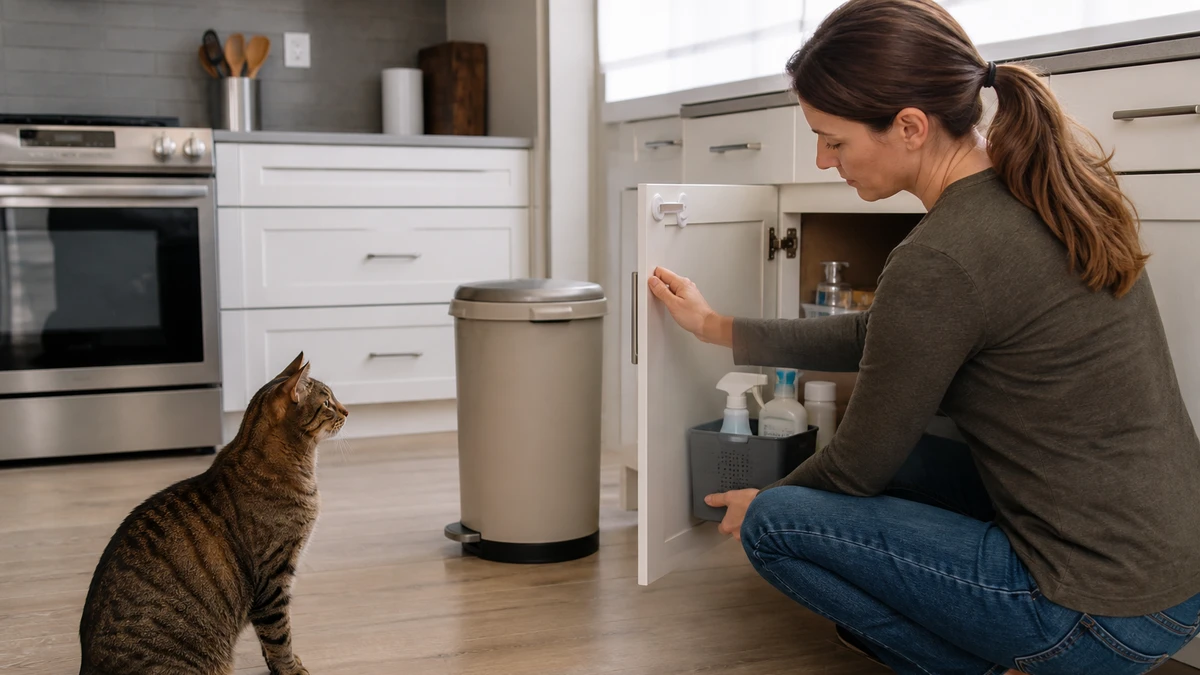
“Human food” is not one risk category: some foods are toxic, while bones, pits, wrappers, or corn cobs can cause physical obstruction. The FDA lists medicines, cleaners, insecticides, pesticides, nicotine products, chocolate, onions, garlic, alcohol, caffeine, and other household items as potential dangers. Store by hazard, not by whether a container looks interesting to the cat. See our human-food guide before sharing anything from the table.
Do not rely on a high counter. Cats climb, cupboards can be opened, pills bounce, and powder transfers to paws. A closed, secure cabinet is the useful control.
4. Bathroom and medicine storage
- Human and veterinary medicines, supplements, topical creams, and dosing tools are inside a closed cabinet, not on a counter or bedside table.
- Dropped pills are found immediately; the floor is checked under cabinets and mats.
- Toilet cleaner, drain opener, bleach, disinfectant, cosmetics, essential oils, and dental products are closed and stored separately from cat supplies.
- The toilet lid is down, and baths or deep containers of water are not left accessible without supervision.
- Razors, floss, cotton swabs, hair ties, and small caps are put away.
- Hot styling tools are unplugged and cooled where the cat cannot touch or pull them down.
- The cat cannot enter a recently treated surface until all label ventilation, rinsing, and drying directions are complete.
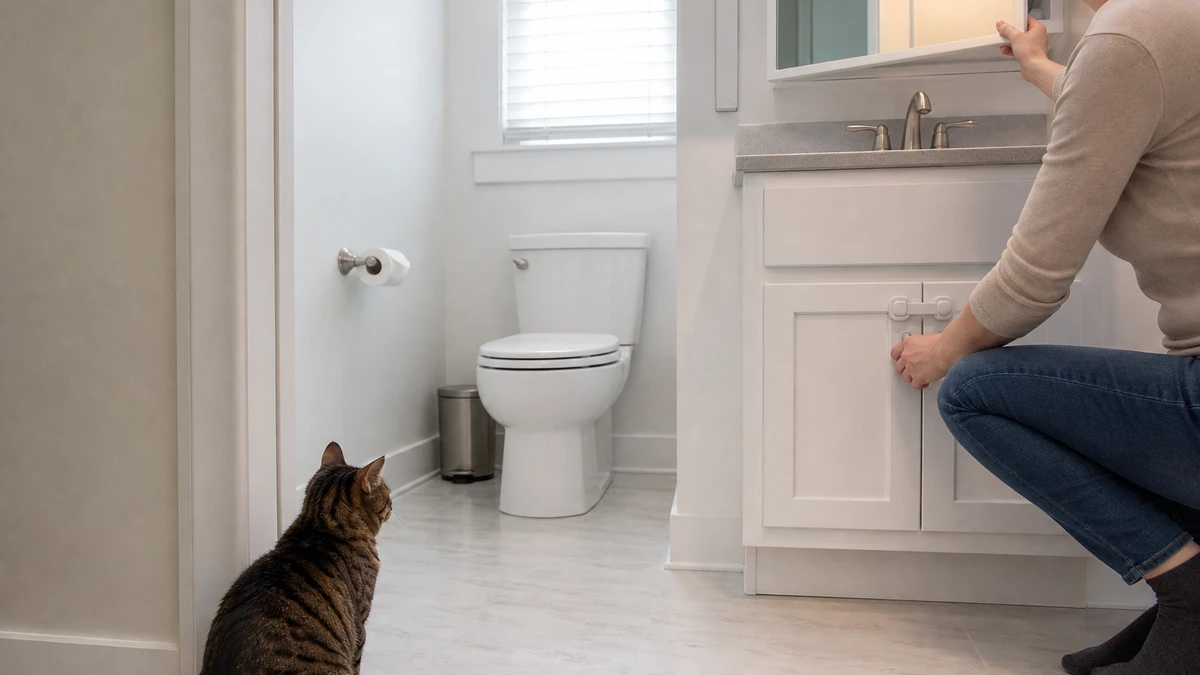
Never give a cat human pain relief or another animal’s medicine unless the cat’s veterinarian has directed it for that individual. “Only one tablet” is not a safety test. If a pill is missing or a topical product may be on the coat, paws, or another household member, call for case-specific advice and preserve the packaging.
5. Bedroom, office, craft area, and children’s rooms
- Sewing needles, pins, thread, yarn, ribbon, elastic, glue, paint, and craft wire are counted back into closed containers after use.
- Chargers and computer cables are routed through covers or blocked channels; damaged insulation is replaced.
- Earbuds, earplugs, jewelry, coins, batteries, magnets, medication, and hair accessories are not left on desks or nightstands.
- Window blind cords and hanging decorations cannot form a loop around the neck or limbs.
- Office chairs, adjustable desks, drawers, Murphy beds, and folding furniture are checked before movement.
- Children’s small toys and sensory materials are stored according to the smallest piece, not the age printed on the box.
- The cat has a legal alternative: a stable perch, scratcher, hide, and safe play away from the work surface.
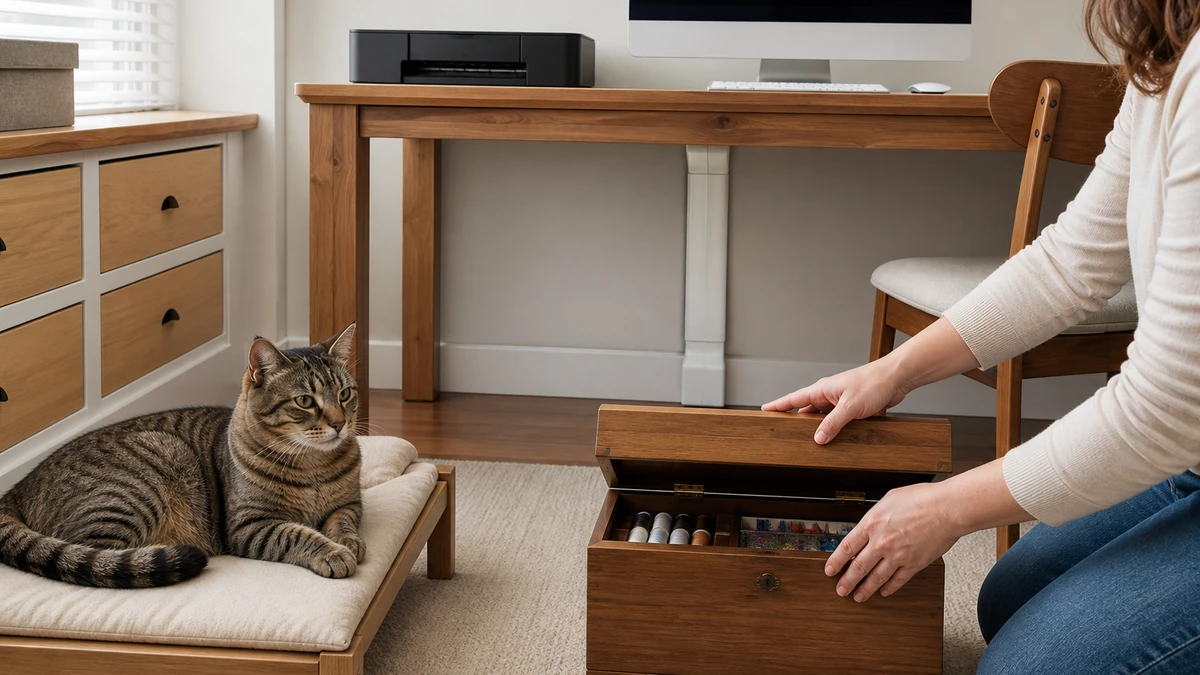
A needle attached to thread is a combined sharp-object and linear-foreign-body hazard. If thread is visible from the mouth or anus, do not pull it; prevent further chewing and contact a veterinarian promptly. Pulling can injure tissue around material that may be anchored internally.
Sweep under furniture at the end of a craft session. The missing rubber band that seems too small to matter is exactly the kind of object a quick floor-level scan can find.
6. Laundry and utility area
- Washer and dryer doors remain closed between uses.
- The drum is checked by sight and hand, laundry is moved piece by piece, and the cat is located before either appliance starts.
- Detergent, pods, stain removers, dryer sheets, bleach, and cleaning concentrates are in a secure cabinet.
- Hampers have lids or are checked before loading; warm laundry piles are not treated as empty.
- Iron, steamer, drying rack, cords, and clips are stable, unplugged when not in use, and inaccessible while hot.
- Utility closets, water heaters, pipes, floor drains, and gaps behind appliances are blocked if a cat could become trapped or burned.
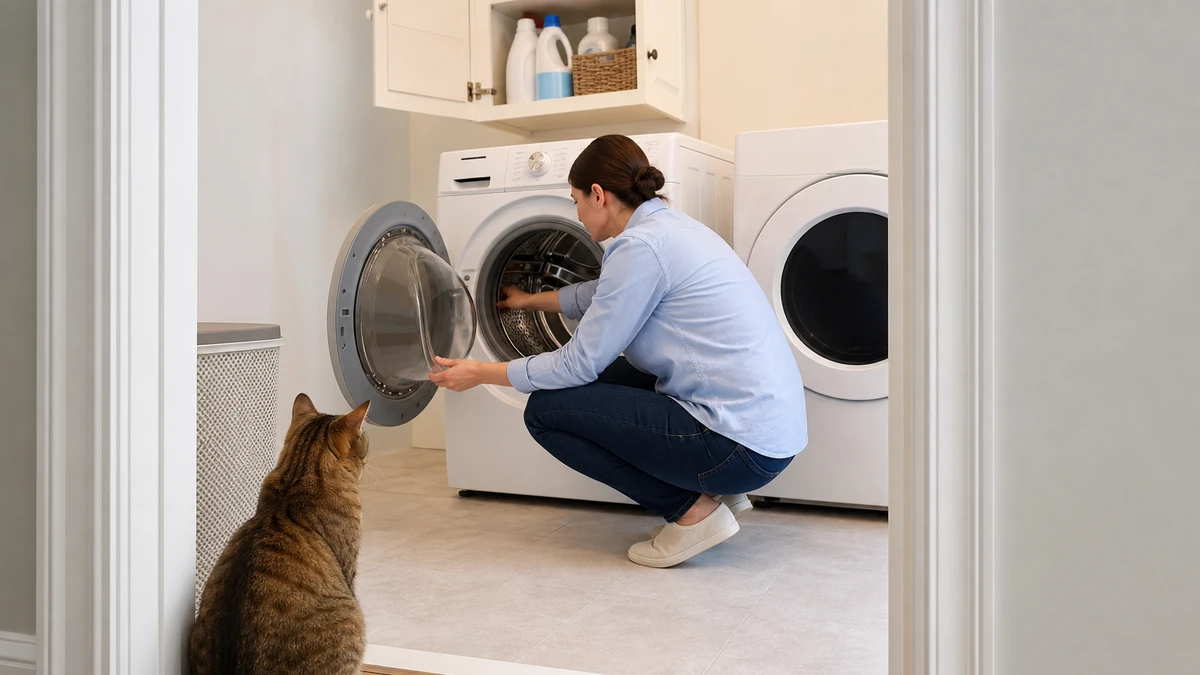
Cats Protection specifically recommends keeping washer and tumble-dryer doors firmly shut. A sticky note on the machine is weaker than a habit: close every door immediately, then locate the cat before pressing start. Every household member and guest who uses the machines needs the same routine.
7. Windows, screens, balconies, and catios
- Every openable window has a firmly attached, cat-resistant screen or remains closed when the cat has access.
- The screen frame, mesh, fasteners, and surrounding gaps resist a firm push; ordinary insect mesh is not assumed to hold a climbing cat.
- Tilt-and-turn or partially tilted windows are not left in a position where a cat can become wedged.
- Balcony access stays closed unless the space has a complete, maintained barrier and the cat is supervised.
- Balcony mesh extends from floor to ceiling, has no climb-through gaps, cannot unravel, and is checked for entanglement points.
- Furniture, planters, rails, and air-conditioning units do not create a launch point around the barrier.
- The cat can retreat indoors freely; balcony time ends if the cat is climbing, chewing mesh, or trying to escape.
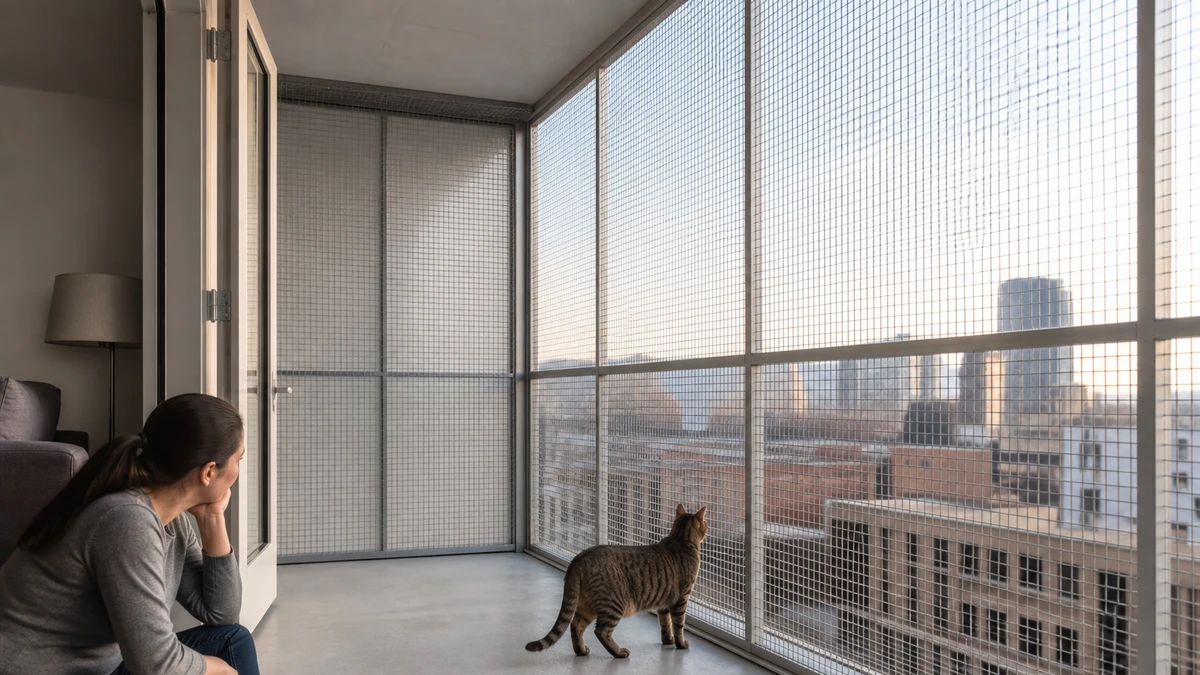
Cats Protection warns that cats can fall from open windows and balconies and recommends robust screening; it also notes that poorly secured netting can create entanglement or escape risks. A screen is safe only as a complete installed system. Test the frame and every edge, not just the center of the mesh, and recheck after weather, repairs, or a move.
“Cats land on their feet” is not a fall-prevention plan. Any cat can be injured. Do not test a cat’s judgment at an open window, and do not hold a cat over a balcony rail.
8. Storage, garage, repair zone, and seldom-used spaces
- Antifreeze, fuels, paint, solvents, adhesives, fertilizers, pesticides, rodent bait, tools, and car products are sealed and locked away.
- Nails, screws, blades, insulation, foam, zip ties, and packaging are removed after every job.
- The cat is placed in a separate closed room before drilling, painting, pest treatment, furniture delivery, or repeated door opening begins.
- Ventilation and re-entry follow the product label; “odor is gone” is not substituted for instructions.
- Car engines, garage doors, storage beds, boxes, and reclosing cabinets are checked before movement.
- Gaps behind refrigerators, ovens, built-ins, floorboards, and access panels are blocked without trapping a cat inside.
- An emergency carrier, veterinary contacts, and a recent photo of the cat are easy to reach.
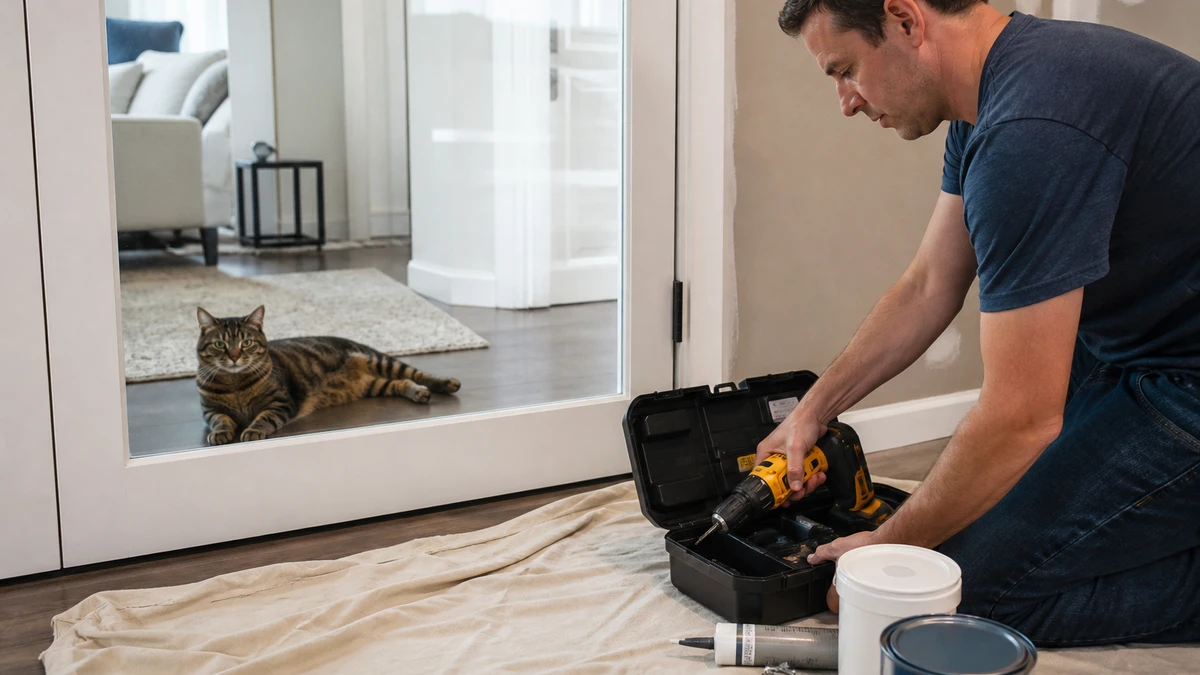
Renovation changes several controls at once: doors stay open, barriers move, fumes appear, and unfamiliar people cross the home. Treat the cat’s separate room as part of the worksite plan, not an optional comfort. Count the cat before workers leave and before reopening the room.
Plants and bouquets: identify first, then decide
Do not rely on a photo app, a common name, a “pet friendly” shelf sign, or the idea that cats avoid dangerous plants. Record the scientific name from a reliable source and compare it with a veterinary toxicology database for cats. Check the cut flowers, greenery, bulbs, fertilizer, pesticide, vase water, and decorative picks—not only the obvious leaves.
True lilies (Lilium species) and daylilies (Hemerocallis species) should not enter a home with cats. FDA and Cornell veterinary sources warn that the plant is extremely dangerous; FDA specifically includes leaves, petals, stems, pollen, and vase water and says that licking a small amount of pollen from fur can create an emergency. If exposure is possible, contact a veterinarian or animal poison service immediately and take the plant, label, or clear photos if it is safe to do so.
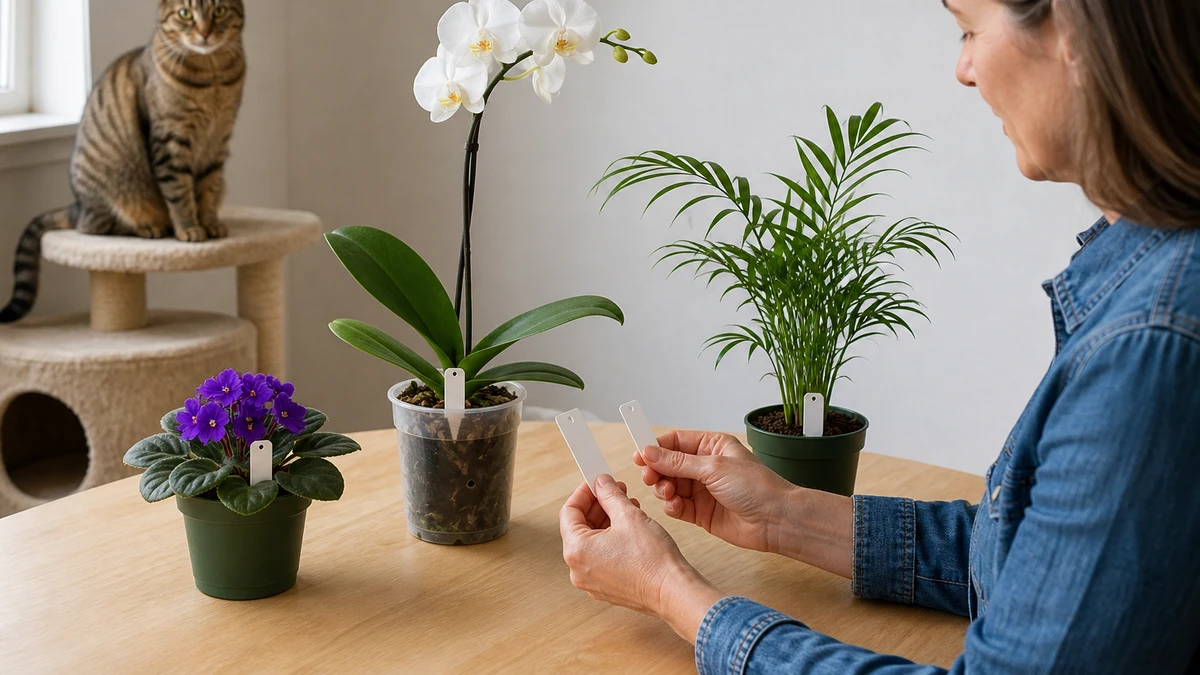
The word “lily” is not a diagnosis. Peace lily and calla lily are not true lilies and do not cause the same kidney failure, but they can still cause serious irritation; lily-of-the-valley has different dangerous toxins. This is why an exact identity matters and why an unknown bouquet should be kept completely away while you obtain expert advice.
ASPCA lists African violet (Saintpaulia species), Phalaenopsis orchid (Phalaenopsis species), and parlor palm (Chamaedorea elegans) as non-toxic to cats. Buy only when the exact plant identity matches, avoid systemic pesticides or unsafe soil additives, keep tags, and remember that chewing even non-toxic plant material can still cause stomach upset or create a physical hazard. No houseplant is required; an empty shelf is a valid safe alternative.
Turn the checklist into a routine
| When | Check | Action if it fails |
|---|---|---|
| Every exit | Cat located; inner barrier or room ready; outer door controlled | Stop and reset before opening |
| Every appliance cycle | Drum, oven, dishwasher, recliner, or folding mechanism checked | Remove the cat and inspect fully |
| Every evening | Windows, balcony door, cords, heat, surfaces, toys, pills, and trash | Close, unplug, clear, or store |
| Every delivery or bouquet | Package pieces removed; plants positively identified | Isolate the item until verified |
| Weekly | Screens, barriers, cord covers, toy seams, anchors, and cabinet latches | Repair or block access immediately |
| After any change | Re-scan from floor level and reachable height | Update the room before cat access |
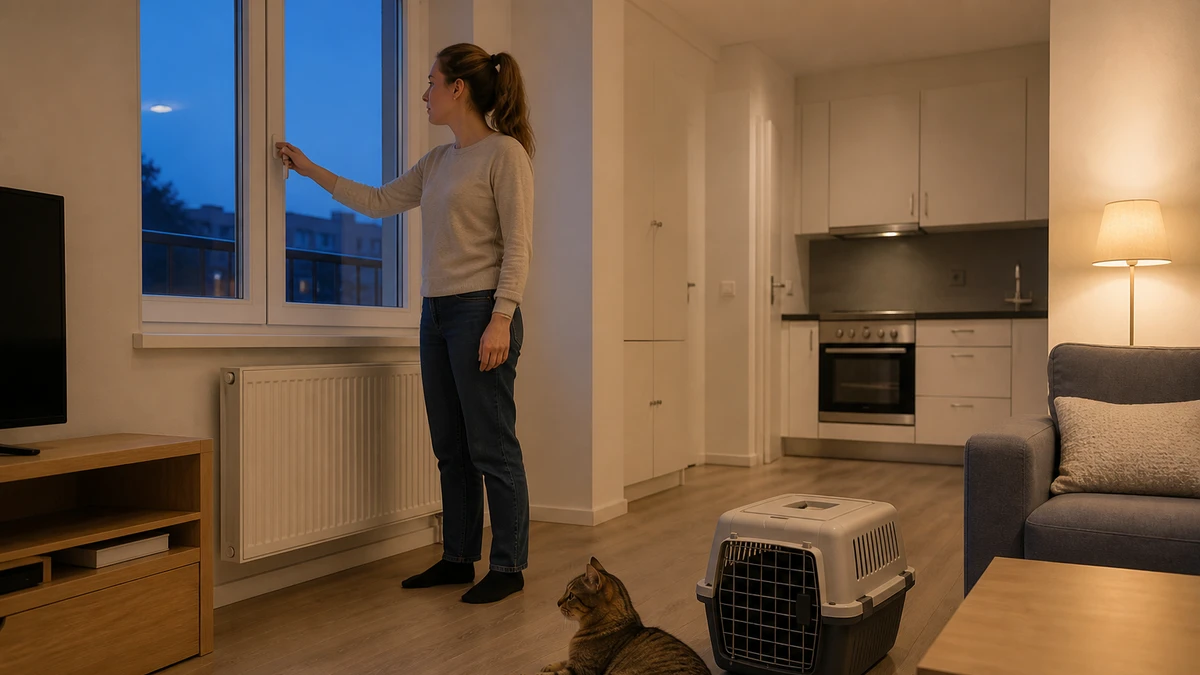
Keep the routine short enough to use. A one-minute evening sweep is better than a perfect checklist forgotten in a drawer. Assign specific actions—one person checks appliances, another clears string-like items—rather than saying that everyone is responsible.
Renters can use pressure-fit barriers only where the product, wall, cat, and opening make that appropriate; removable cord channels, closed storage boxes, and restricted rooms are useful low-damage layers. Window and balcony barriers carry high consequences, so obtain landlord approval and qualified installation when needed. A temporary net attached with hope is not an acceptable substitute.
Frequently asked questions
Is an ordinary insect screen strong enough for a cat?
Do not assume so. Inspect the mesh, frame, fasteners, and gaps as one system and choose a solution designed and installed to resist the cat’s pushing and climbing. If the screen flexes, detaches, tears, or leaves a gap, keep the window closed until it is corrected.
Can my cat use a balcony if I supervise?
Supervision does not replace a complete barrier. Use a secure floor-to-ceiling system without escape or entanglement gaps, give the cat an easy route indoors, and remain close enough to intervene before climbing or chewing begins. Restrict access if a safe installation is not possible.
Which houseplants are safe for cats?
Safety depends on the exact species and what products have been applied. ASPCA lists African violet, Phalaenopsis orchid, and parlor palm as non-toxic to cats, but verify the scientific name and keep the label. Any chewed plant may still cause stomach upset. Unknown plants and bouquets stay out.
What should I do if lily pollen gets on my cat?
Prevent grooming if you can do so safely and immediately call a veterinarian or animal poison service. Pollen exposure can be an emergency. Do not delay the call to watch for symptoms or attempt a full bath; follow the professional’s case-specific decontamination instructions, and bring the flower or clear identification photos when possible.
Should I make my cat vomit after swallowing something dangerous?
No home method is safe for making a cat vomit. Call a veterinarian, emergency clinic, or animal poison service immediately and follow instructions for that exact substance. Do not give hydrogen peroxide, salt, oil, milk, medicine, or another remedy.
How often should I repeat the whole safety check?
Do a short door, appliance, surface, and window scan every day; inspect barriers, screens, cords, toys, anchors, and latches weekly; and repeat the complete room-by-room audit after moving, renovations, visitors, new plants, new appliances, or a change in the cat’s age, mobility, or behavior.