Are Midnight Zoomies Normal? Why Cats Race Around at Night
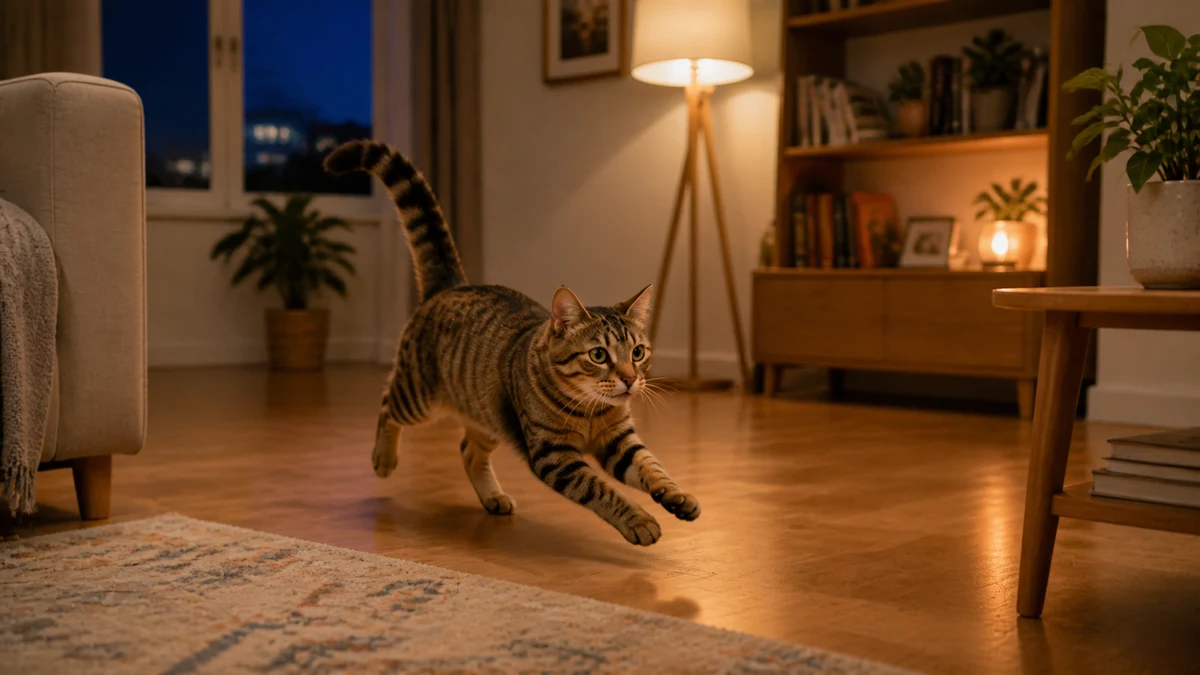
Yes—brief midnight “zoomies” can be normal, especially when a cat races, pounces, or changes direction for a few minutes and then returns to its usual behavior. Cats often concentrate activity around dawn and dusk, but they are not locked into one universal schedule. Age, daylight, indoor or outdoor access, daytime rest, opportunities to play, feeding routines, household activity, and the individual cat can all shape when a burst happens. A sudden new pattern, repeated inability to settle, pain, disorientation, weakness, or abnormal breathing deserves veterinary attention rather than a behavior-only fix.
“Zoomies” is a useful everyday label, not a diagnosis. The goal is not to stop every fast lap. It is to distinguish a playful, self-limited burst from distress, give normal movement a safe outlet, and gradually move disruptive activity toward times that work better for the household.
Cats are not simply miniature nocturnal animals
Calling every cat “nocturnal” is too simple. Veterinary behavior guidance often describes domestic cats as crepuscular, meaning that hunting and exploration commonly intensify around dawn and dusk. Research that continuously measured locomotion and feeding also found two daily peaks and an effect of twilight. But the same research showed that housing conditions and human activity influenced the pattern. Indoor cats, outdoor cats, free-roaming cats, kittens, adults, and seniors should not be expected to follow an identical clock.
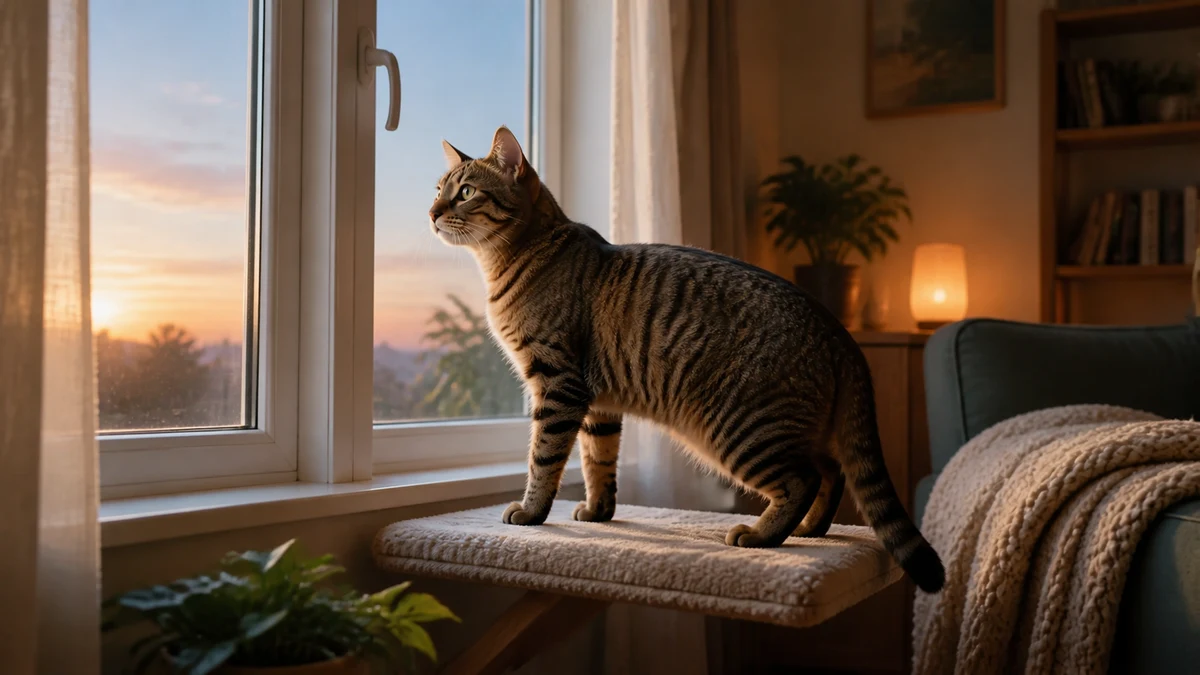
A cat may rest through much of a quiet workday, then find that people, food, toys, doors, and interesting sounds all become available in the evening. That does not prove the cat has stored a measurable tank of “extra energy.” It does make the timing understandable: the home has become more rewarding at the same time that an evening activity peak may occur.
Think of dawn-and-dusk activity as a tendency, not a rule. Some cats remain active later at night. Some adapt closely to their caregivers. Weather, season, age, another animal, outdoor sights, and a changed work schedule may all alter what you see. This flexibility is why one rigid explanation cannot fit every household.
What a more reassuring burst looks like
A typical playful episode is short and self-limited. The cat may sprint down a familiar route, skid around a corner, jump onto a stable perch, chase a toy, or invite another willing cat to play. Before and after the burst, movement looks coordinated and the cat returns to grooming, eating, resting, or ordinary exploration. The body is generally loose rather than guarded; the ears are neutral or forward; and breathing remains comfortable.
Normal object play often resembles parts of hunting. FelineVMA guidance lists chasing, pouncing, biting, and clawing at toy “prey” as normal behaviors, while emphasizing that play drive varies with life stage and the individual. A kitten or young adult may produce a much more dramatic lap than a senior cat. Intensity alone therefore tells only part of the story.
The context matters too. A two-minute race after a quiet evening is different from hours of pacing with repeated vocalizing. Play between cats should have pauses, role changes, and a way for either cat to leave. If one cat consistently hides, hisses, blocks access, or is chased without re-engaging, treat it as a relationship or safety concern rather than calling the whole interaction zoomies.
Six factors that can move the action into the night
More than one factor can apply at once, and these are possibilities to investigate—not a way to diagnose a cat from the clock.
1. The cat’s daily activity rhythm
Dawn and dusk are common activity windows. In a darkened home, an early-morning peak can feel like “the middle of the night” to a sleeping person. Individual variation and the flexibility documented in activity studies mean that a household cat may also shift later.
2. A quiet or sleepy daytime
If very little changes while the household is away, a cat may spend more time resting. Evening then brings movement, voices, meals, and access to social play. The useful response is not to prevent all daytime sleep, but to add several voluntary opportunities to explore, forage, climb, scratch, and interact.
3. Too few outlets for play and predatory behavior
Cats retain patterns such as searching, stalking, chasing, pouncing, and capturing. When the home offers few appropriate outlets, those normal behaviors can appear in inconvenient places or at inconvenient times. Fast feet under a blanket, ankles in a hallway, and another cat may become moving targets if toys never provide a safer option.
4. A learned household routine
Consequences shape repetition. If a 4 a.m. sprint reliably makes someone get up, talk, serve food, or begin a game, the whole sequence can become effective from the cat’s perspective. This does not make the cat spiteful or manipulative. It means a behavior has repeatedly produced something valuable.
5. Feeding time and food-seeking opportunities
Meals are strong daily events. A cat expecting breakfast may become active before the person who serves it wakes. A predictable meal after an evening play session may help shift the routine; a timed feeder can separate early food delivery from waking a person. Any feeding change still needs to fit the cat’s daily ration and veterinary nutrition plan.
6. Environmental and social triggers
Outdoor cats at a window, insects, a new appliance sound, moving furniture, a visiting animal, or tension between household cats can increase nighttime arousal. Look at where the run begins, what the cat faces, and whether the body shows playful interest, vigilance, or fear. Remove or buffer the trigger when it threatens safety; do not punish the response.
A practical routine that does not depend on punishment
Start with a seven-day baseline
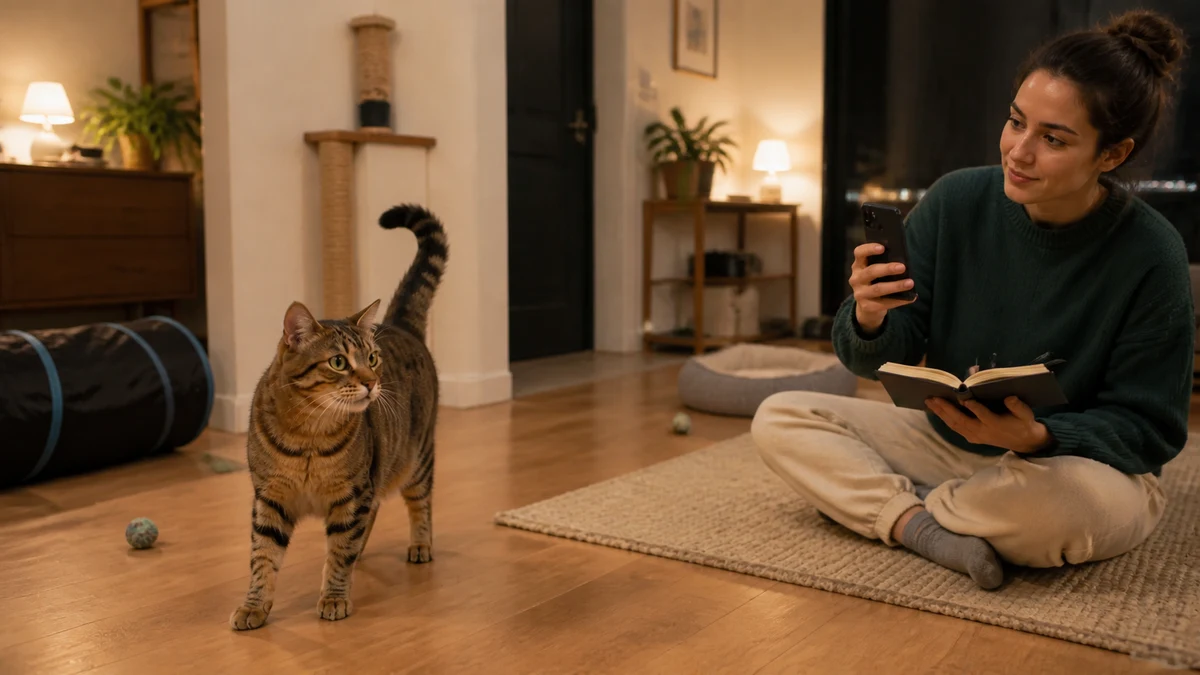
For one week, note the start time, duration, route, what happened in the previous 15 minutes, and what followed. Record meals, play, household arrivals, outdoor-animal sightings, litter-box use, and any vocalizing or physical signs. A simple log can reveal whether the burst follows a long quiet period, a predictable sound, an evening nap, or the first movement toward the kitchen.
Change one non-urgent variable at a time. If play, meals, curtains, furniture, and bedroom access all change on the same night, you will not know which adjustment mattered. Health warning signs are the exception: do not delay veterinary care to finish a home experiment.
Schedule short interactive play before the usual burst
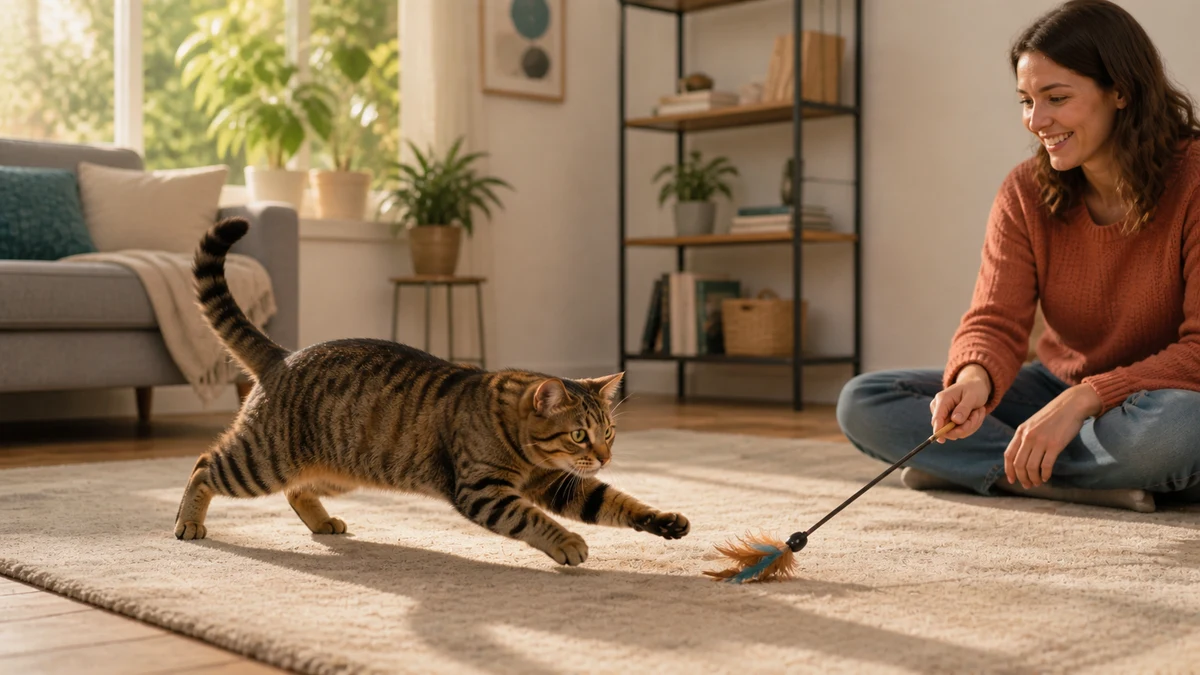
FelineVMA caregiver guidance recommends interactive object play at least twice daily and notes that sessions can be short. Use a wand or tossable toy that keeps teeth and claws away from hands and feet. Let the toy hide, pause, dart, and occasionally be caught. Stop before the cat becomes exhausted or frustrated, and store string-like toys safely after supervised use.
Place one session earlier in the day and another before the usual nighttime activity window. If the cat normally runs at midnight, starting at 11:50 p.m. may be too late; move the session earlier in small steps. The objective is a repeatable outlet, not one marathon workout.
Make daytime choices more interesting
Environmental enrichment is more than leaving a basket of toys on the floor. Rotate a few safe objects, offer a food puzzle using part of the normal ration, provide stable vertical space and hiding places, and position an indoor perch at a secure window. Separate resting, scratching, food, water, and litter resources so that another cat cannot easily block all of them.
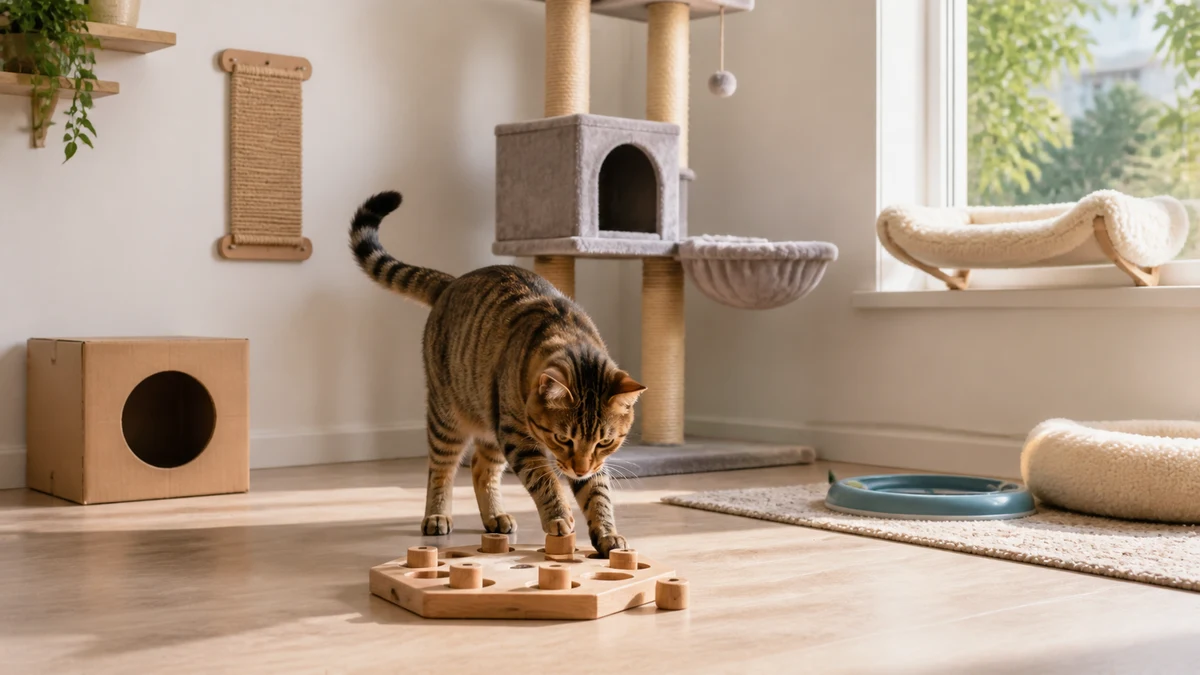
Novelty should remain optional. A cardboard box may delight one cat and worry another. Introduce changes gradually and preserve familiar refuges. The Feline Environmental Needs Guidelines center safety, choice, separated resources, play, predictable positive interaction, and respect for the cat’s senses—not constant stimulation.
Pair the evening sequence with the existing feeding plan
A short play session followed by a measured meal can create a clear evening sequence. It is not a guaranteed biological “hunt-eat-sleep switch,” and it should not add calories. Use food already included in the daily amount, and ask the veterinarian before changing meal timing for a kitten or a cat with a medical or dietary requirement.

If early food-seeking is the trigger, a timed feeder set just before the usual waking episode may help break the link between human movement and breakfast. Shift the device gradually if the long-term goal is a later time. Do not respond to every overnight burst with an extra snack.
Build a safe route for movement
Even normal zoomies can cause an accident in a cluttered home. Secure tall furniture and cat trees, close or screen windows, tuck away electrical cords and string toys, remove glass and unstable objects from common routes, and give the cat traction on slippery corners. Keep water, litter, and a resting place available if the bedroom is closed.
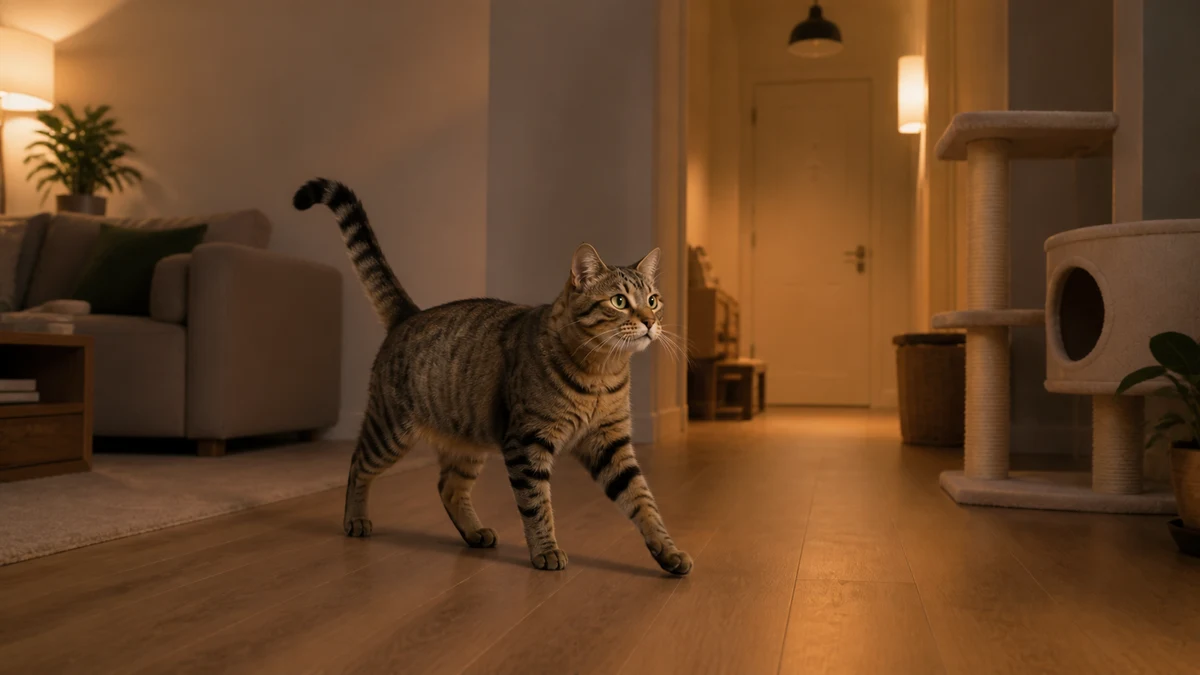
Never chase a running cat to “wear it out.” Do not yell, spray water, hit, or suddenly grab it. Aversives can add fear and arousal without teaching an alternative. Our guide to why you should never hit a cat explains why redirection and reinforcement are safer learning tools.
Reinforce the routine you want
Offer play before the predictable burst, then reward calm use of a perch, puzzle, bed, or quiet approach. Keep the response consistent across household members. If you have checked safety and health and the cat begins a familiar attention-seeking lap, avoid turning that lap into the only reliable way to start a game. Give plenty of planned interaction at other times.
Expect gradual change. A schedule learned over months may not move in one night. Track frequency and duration rather than demanding perfect silence, and keep the plan realistic enough to repeat.
When nighttime running needs a veterinary check
Contact a veterinarian when the pattern is new, markedly more frequent, lasts much longer, or looks different from that cat’s usual play—especially with limping, stiffness, pain on touch, hiding, appetite or thirst changes, weight change, vomiting, litter-box changes, weakness, collapse, or inability to settle. A behavior change is information, not a home diagnosis.
In an older cat, pay attention to altered sleep–wake cycles, staring, getting stuck in corners, seeming lost in familiar rooms, reduced interest in play, or new nighttime vocalizing. Cornell lists these among signs that can occur with cognitive dysfunction while also explaining that physical and neurologic causes must be considered. If calling is a major part of the change, use the observation approach in our guide to repeated meowing and bring a short video to the appointment.
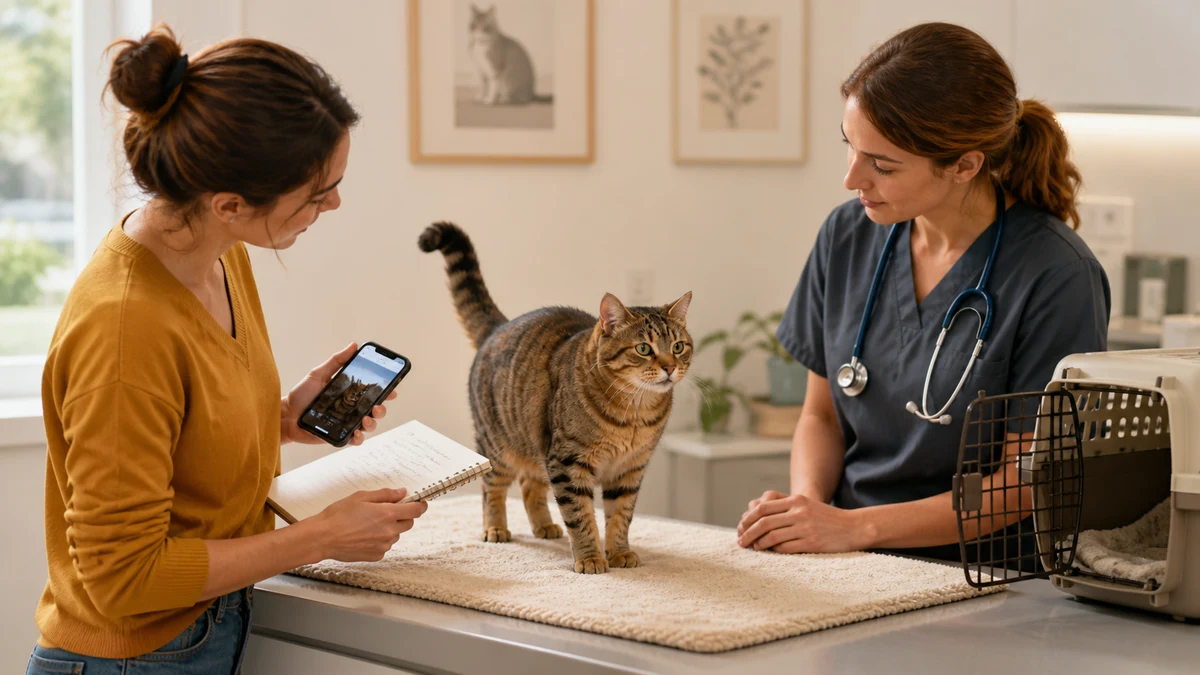
Breathing difficulty is urgent. Open-mouth breathing, visibly labored breaths, an extended neck, noisy panting, blue or very pale gums, collapse, or failure to recover comfortably after activity is not a normal zoomie. Cornell’s Feline Health Center advises immediate veterinary care whenever a cat may be unable to breathe comfortably. Stop the activity, minimize handling and stress, and contact a veterinarian or emergency clinic right away.
Let the cat move, then shape the timing
Short, coordinated nighttime races can be part of ordinary feline activity. The useful question is not “How do I ban zoomies?” but “Is this cat comfortable, is the route safe, what predicts the burst, and where can the same need be met earlier?”
Observe the pattern, add short interactive play and daytime choices, fit food timing to the cat’s existing plan, remove hazards, and reinforce calmer alternatives. Make changes gradually and without punishment. When the pattern suddenly changes or arrives with pain, confusion, weakness, or abnormal breathing, move from routine adjustment to veterinary assessment.
Frequently asked questions
Why does my cat get zoomies right after I go to bed? The household may have just become quiet after an evening of food and interaction, while the cat is entering a natural or learned activity window. Daytime rest, evening attention, play opportunities, and feeding expectations can all contribute. Log the timing for a week before choosing one adjustment.
Should I keep my cat awake all day so it sleeps at night? No. Cats need voluntary rest. Offer several appealing daytime activities and predictable interaction instead of repeatedly waking or forcing the cat to move. Shift play and feeding routines gradually.
Is it okay to feed my cat after evening play? It can be a useful routine if the food comes from the cat’s normal daily ration and fits its veterinary nutrition plan. It is not a reason to add an extra meal every time the cat runs at night.
Do zoomies mean my indoor cat is bored? Not automatically. Brief running can be normal even in a well-enriched home. Boredom or unmet play needs are possibilities when the cat has few outlets, but activity rhythm, learned routines, social triggers, and individual temperament also matter.
When are cat zoomies an emergency? Seek urgent veterinary help for breathing difficulty, open-mouth breathing that is not immediately resolving, collapse, profound weakness, severe pain, or another acute sign. Arrange a non-emergency assessment for a sudden persistent pattern change, disorientation, altered sleep, or other health and behavior changes.