New Cat Supplies Checklist: What to Prepare Before Bringing a Cat Home
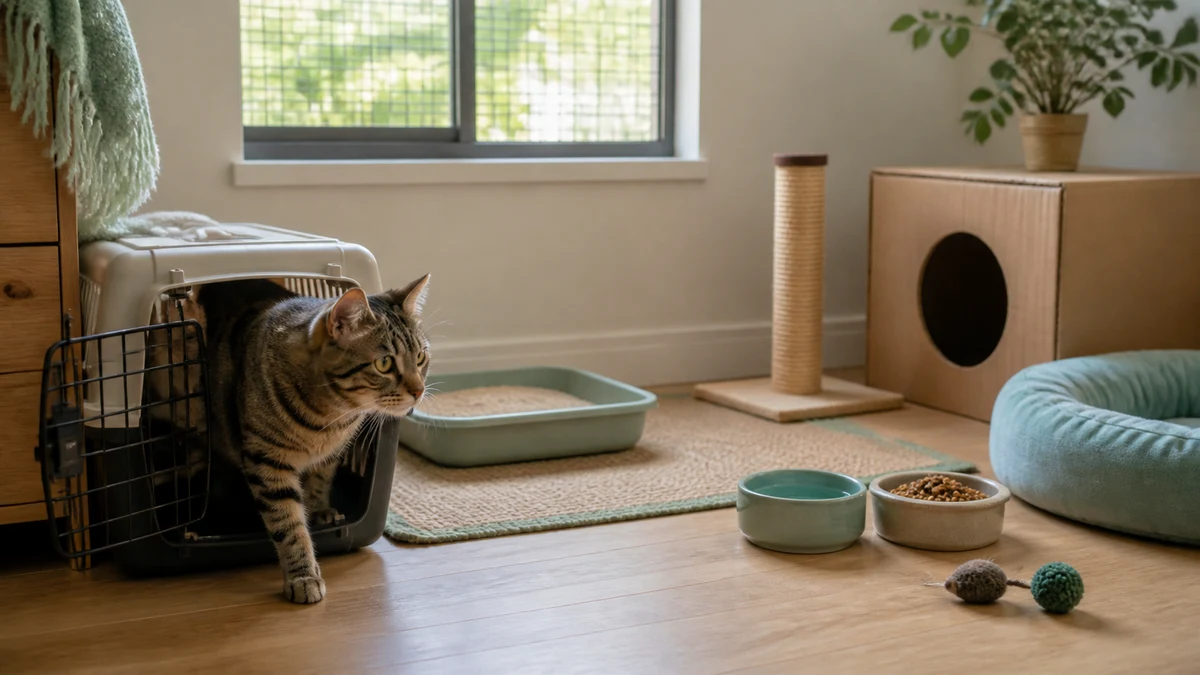
Before bringing a cat home, prepare one secure transition room, a sturdy carrier, the cat’s familiar food and litter, separate food and water bowls, at least one large litter box, places to hide and scratch, a resting spot, a few safe toys, basic cleaning and grooming supplies, identification details, and a veterinary plan. Buy for safety and daily function first. Wait to see the individual cat’s size, mobility, habits, and preferences before ordering fountains, automatic feeders, elaborate beds, or a large cat tree.
The practical checklist
| Buy or arrange before pickup | Choose after you know the cat | Do not buy without a clear need |
|---|---|---|
| Secure carrier; familiar food; food and water bowls; litter and litter box; cardboard hide; stable scratching surface; washable bedding; a few solid toys; brush suited to the coat; waste bags and cat-safe cleaner | Extra bed styles; water fountain; puzzle feeder; more scratcher textures; steps or ramps; larger climbing furniture; additional grooming tools | Bulk food or litter the cat has never used; supplements or medicines; fragranced products; complicated self-cleaning toilet; a wardrobe of collars or clothes; dozens of identical toys |
This is a starting kit, not a shopping contest. A cardboard box can be an excellent hide, a folded washable blanket can be a bed, and a plain bowl can provide water while the caregiver learns what the cat actually uses.
Ask five questions before shopping
Get the answers from the shelter, foster caregiver, breeder, previous home, or veterinary records when possible:
- What food, portion routine, litter, and box style does the cat use now? Keeping these familiar at first removes avoidable changes. If a food change becomes necessary, ask the veterinarian how to make it gradually.
- What are the cat’s age, adult size, mobility, coat, and known health needs? A kitten, a large adult, and a senior with limited movement do not need the same box entrance, perch, brush, or carrier.
- What veterinary care has already been recorded? Request medical and surgical history, vaccination and parasite-control records, current medicines or supplements, and the clinic’s contact details. Do not guess or repeat treatment.
- Is the cat microchipped, and who has the registration details? Obtain the number and transfer or update the contact information. A chip helps only when the record leads to the current caregiver.
- Who and what already live in the home? Children, dogs, resident cats, open balconies, tilted windows, and busy doorways change the room plan. Introductions to other animals require their own gradual process, not a face-to-face meeting on arrival.
First priority: build a safe transition room
Cats Protection and the AAFP intercat-tension guidelines both support preparing a quiet transition room with all essential resources before the carrier opens. It gives the newcomer a smaller, predictable area to learn before the whole home. A spare bedroom, study, or low-traffic section can work if doors and exits are controllable.
The room should contain food, water, a litter box, a hiding place, a bed or washable blanket, a scratching surface, a perch, and a few toys. These items should not be clustered into one tight “cat station.” Put the litter box in a private, accessible place as far as practical from food and water. Separate food from water too. Leave clear routes between resources so the cat does not have to squeeze past a doorway, appliance, child, dog, or resident cat.
Cat-proof the room at floor level and above
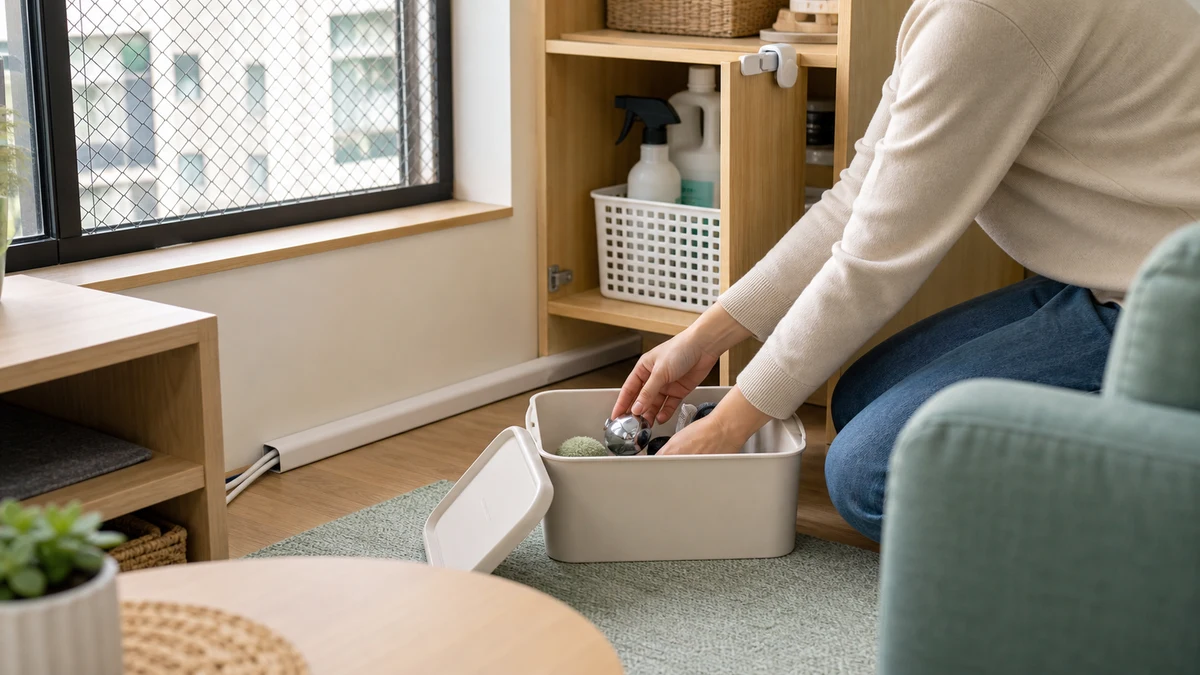
Inspect from a cat’s height, then look up. Secure windows, balcony access, exterior doors, and gaps behind appliances or cabinets. Tie up blind cords and contain electrical cables. Store string, thread, rubber bands, hair ties, batteries, human medicine, cleaning products, pest control, and small objects in closed storage. Keep washer and dryer doors closed and check them before every use.
Identify every plant rather than assuming “natural” means safe. The ASPCA maintains a searchable cat plant list, and Cats Protection warns that lilies are especially dangerous. If exposure to a suspicious plant, medicine, chemical, or swallowed object may have occurred, contact a veterinarian or the appropriate local animal-poison service promptly; this checklist cannot diagnose or treat poisoning.
Essential item 1: a carrier that works every time
The carrier is transport equipment, an emergency tool, and the route to routine veterinary care. Choose a sturdy, secure, well-ventilated model that is easy to clean. It must be large enough for the cat to stand and reposition, but not so oversized that the cat slides around. A removable top or top door can give a veterinary team another low-stress access option.
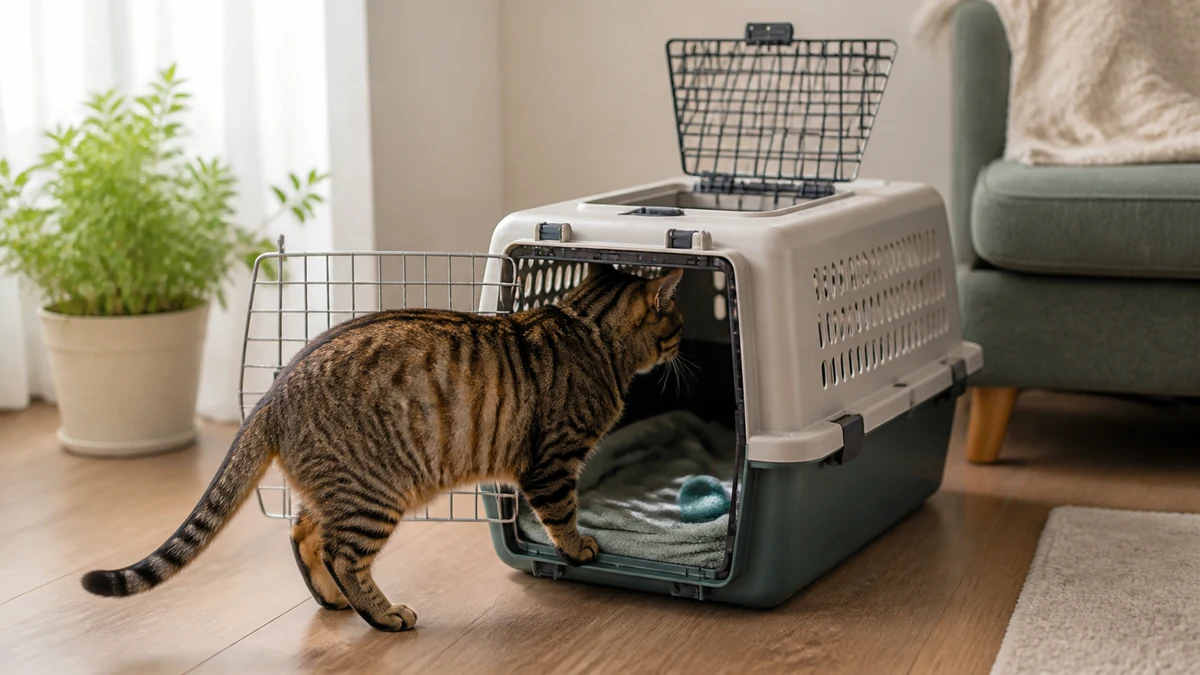
Before pickup, test every latch and check that the base and handle stay attached under the cat’s expected weight. Line the carrier with an absorbent pad under a familiar-smelling towel or blanket. In the car, keep the cat inside the closed carrier and secure it so it cannot move. Never transport a loose cat in the vehicle.
After arrival, clean the carrier if needed and leave it open in the living space as a hide. Adding familiar bedding and occasional treats can make it part of the room instead of an object that appears only before a stressful trip.
Essential items 2 and 3: food, water, litter, and toilets
Food and water: continue before optimizing
Bring enough of the cat’s current complete, age-appropriate food for the transition. A sudden switch adds a new variable at exactly the wrong time. Use stable, easy-to-wash bowls. A wide water bowl is a practical baseline; a fountain is optional, not a requirement. Place water separately from food and both away from toileting.
Ask the veterinarian to review the diet for the individual cat rather than choosing supplements or a prescription-style product from marketing claims. The AAHA/AAFP guidelines make current diet, amount, frequency, and feeding method part of a new-patient history. Record what the cat is actually offered and consumes; do not force-feed or improvise medication when appetite changes.
Litter boxes: size and location beat gadgets
Start with familiar litter whenever possible. Choose a box large enough for the cat to enter, turn, dig, and eliminate without being cramped. An uncovered plastic box is easy to inspect and clean; a low entrance can help kittens, seniors, and cats with limited mobility. Put at least one box in the transition room before arrival.
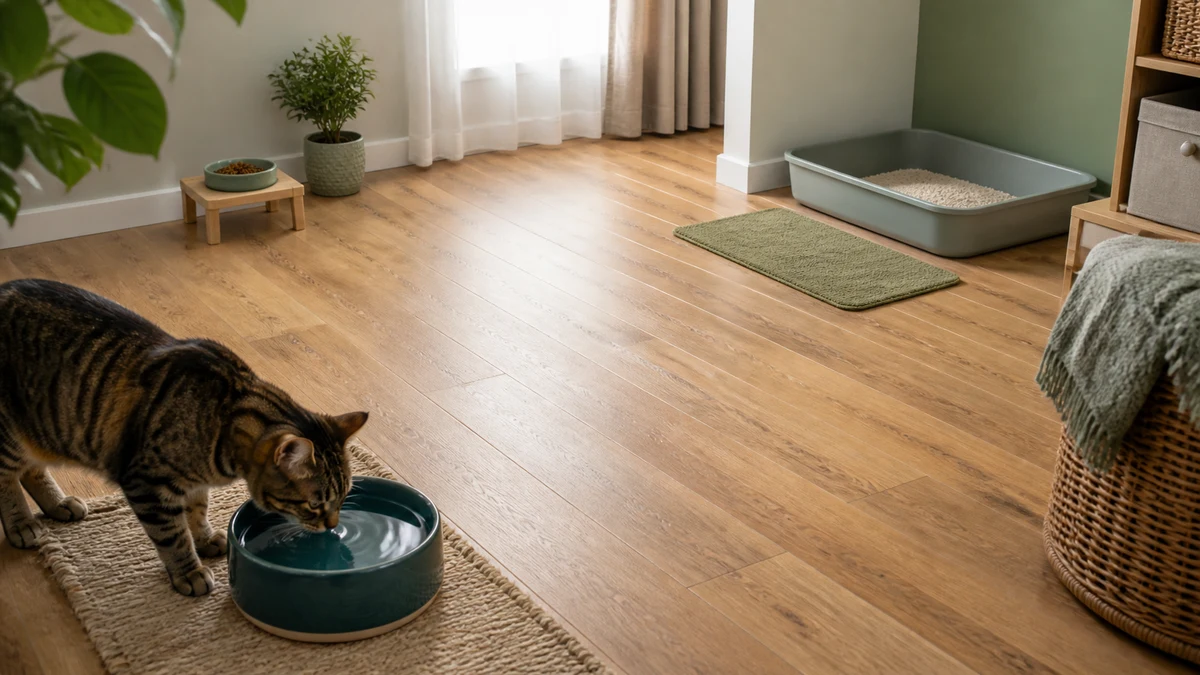
For the wider home, a useful baseline is one litter box per cat plus one extra, placed in separate, usable locations rather than lined up as one toilet area. Multi-cat homes also need separated food, water, resting, hiding, and scratching options so one cat cannot control access. Our cat litter comparison explains texture and cleaning tradeoffs; during the first days, familiarity is usually more valuable than testing a fashionable substrate.
Scoop at least daily and keep a waste container, scoop, bags, and cat-safe cleaner nearby but inaccessible to the cat. Avoid strong fragrance. If the cat suddenly strains, cries, makes repeated unproductive trips, passes little or no urine, or stops using a previously accepted box, contact a veterinarian rather than treating it as stubbornness.
Essential items 4 and 5: scratching, hiding, resting, and play
Scratching is normal maintenance and communication, not damage plotted against the furniture. Offer one tall, stable vertical surface that allows a full stretch and one simple horizontal option if space permits. Put a scratcher near the sleeping area and another near a route the cat uses. Stability and location matter more than decorative design.
Provide at least one hide with an easy exit—a cardboard box on its side works—and a separate quiet resting place. Add a secure elevated option only if the cat can get up and down comfortably. A senior or mobility-limited cat may use a low shelf, step, or ramp instead of a tall tree.
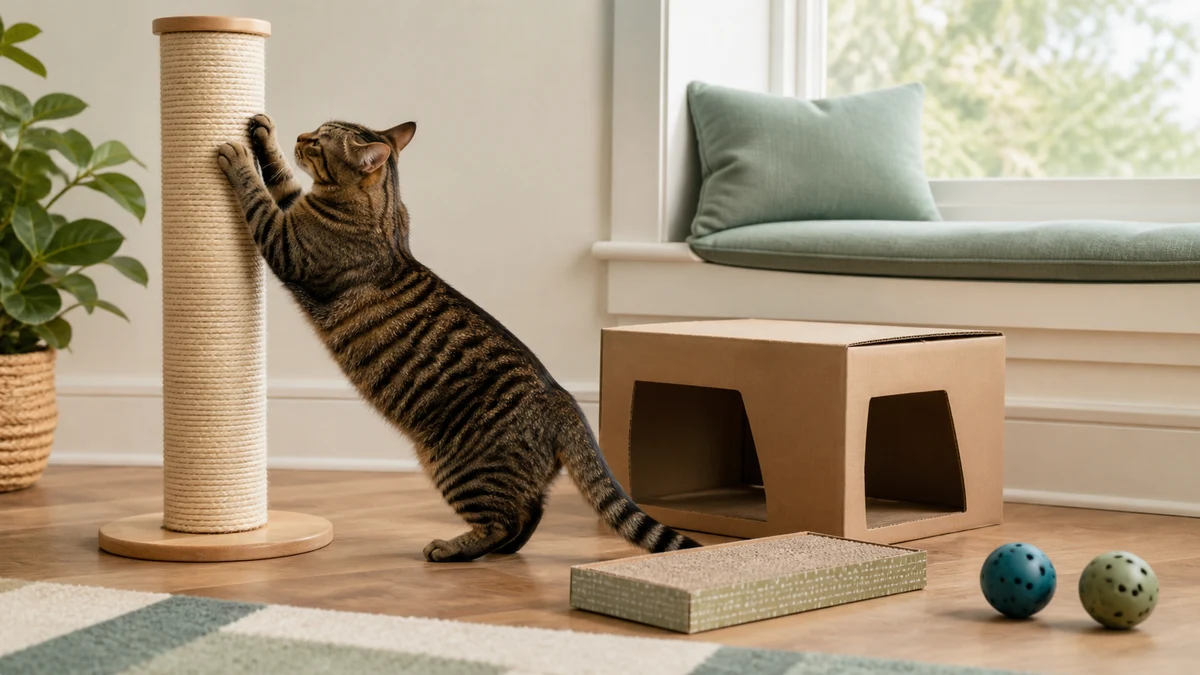
Start play with a few different actions, not a basket of near-identical objects: a solid rolling ball, a kick toy with intact seams, and a wand used only during supervised sessions are enough to observe preferences. Put wands, string, ribbon, and toys with loose parts away after play. Rotate toys instead of leaving everything out. Food puzzles can be introduced later, after normal eating is established and the design is safe for that cat.
Essential item 6: modest cleaning and grooming supplies
Prepare washable bedding, spare towels, waste bags, paper towels, and an unscented cleaner labeled for homes with cats. Secure every chemical after use. An enzyme cleaner intended for pet accidents can be useful, but follow its label, ventilate as directed, and never mix cleaners.
For grooming, start with a brush or comb appropriate to coat length. Let the cat sniff it, use one or two gentle strokes, and stop before the cat has to escape. Nail clippers are useful only when the caregiver knows safe technique and the cat can participate without force; a veterinarian or veterinary nurse can demonstrate. Shampoo, ear products, dental products, and specialized tools are not universal first-day purchases.
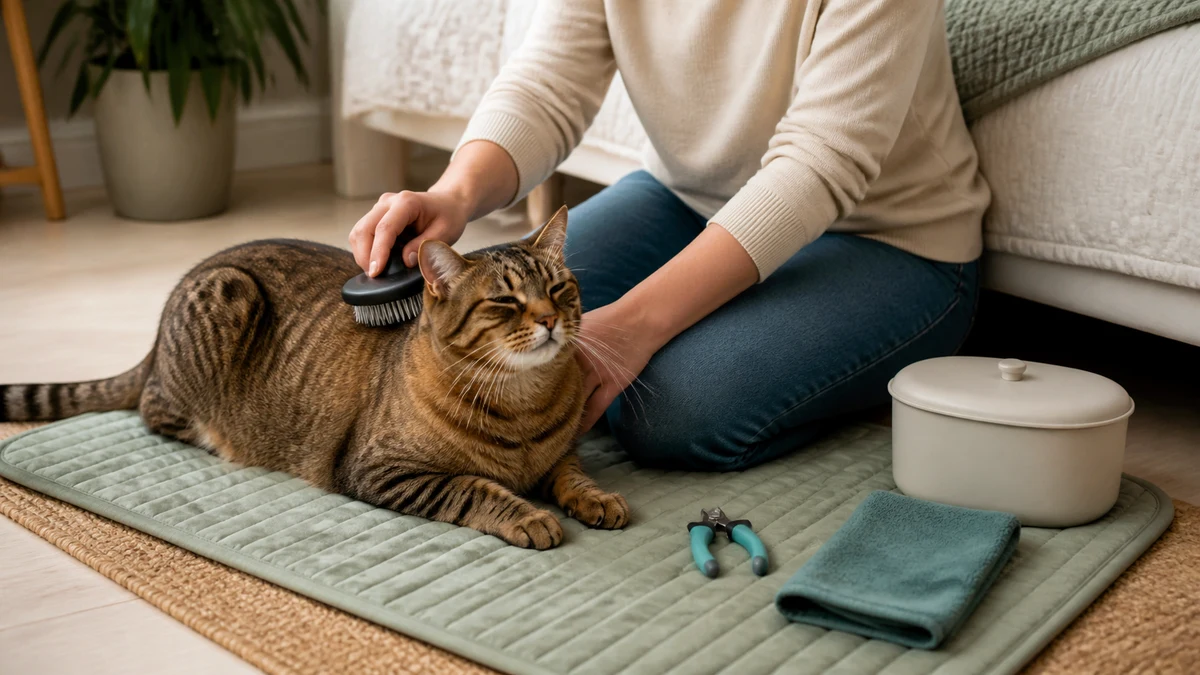
Handle paws, ears, mouth, and body only in brief, positive steps. Grooming time also helps a caregiver notice changes, but a lump, wound, painful response, skin problem, or sudden loss of grooming needs veterinary assessment rather than home diagnosis.
Essential item 7: identification and a veterinary plan
Choose a veterinary practice before pickup and save its routine and out-of-hours numbers. Ask when the new cat should be examined based on origin, age, records, symptoms, and resident animals. Cornell advises that a newly adopted cat be checked by a veterinarian as soon as possible; timing and tests should still be individualized by the clinic.
Bring the cat’s prior medical and surgical history, vaccination and parasite-control documents, food details, current medicines or supplements, microchip information, and observations about eating, drinking, urination, stool, mobility, and behavior. AAHA/AAFP guidance calls for a detailed history in new patients and at least annual examinations for most adult life stages, with at least every six months for seniors. The veterinarian should set the actual schedule.
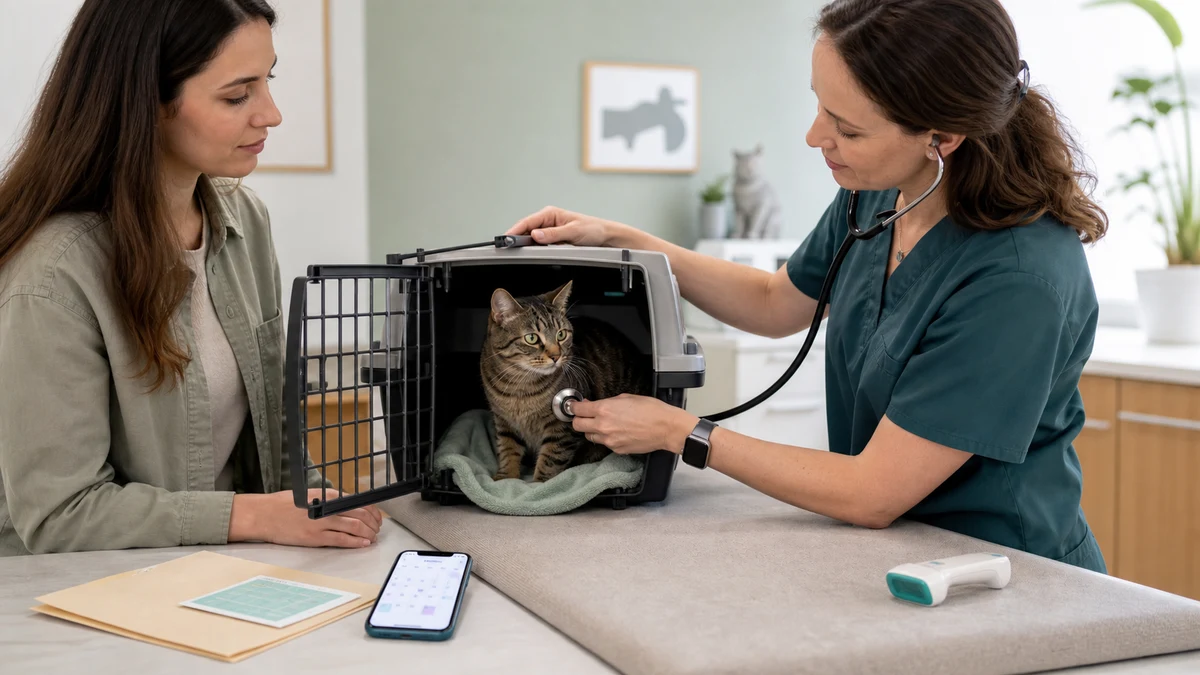
Verify the microchip by scanning when appropriate and update its registry details after adoption or a move. A breakaway collar and visible tag may add identification for some cats, but fit and household risks vary; neither replaces an up-to-date chip record. Also plan a realistic care budget, transport to urgent care, and who can make decisions if the main caregiver is unavailable.
Quantities for one cat
| Resource | Sensible starting quantity | Placement note |
|---|---|---|
| Carrier | 1 | Keep accessible, not buried in storage |
| Food bowl | 1 in use, 1 spare if practical | Quiet feeding area, away from litter |
| Water bowl | At least 1; a second location is useful | Separate from food and litter |
| Litter boxes | 2 across the home when space permits | Separate quiet locations; one in the transition room |
| Hides/resting choices | At least 2 simple choices | One low and enclosed; one quiet or elevated if accessible |
| Scratching surfaces | 1 vertical plus 1 horizontal trial | Near rest and travel routes |
| Toys | 3–5 different safe actions | Rotate; supervise interactive toys |
| Brush/comb | 1 appropriate tool | Store with nail clipper and towels in a closed box |
These are planning baselines, not rigid medical rules. Increase separated resources in multi-cat homes, and adapt height, entrance, texture, and access for the individual.
What can wait until after arrival
Do not stock months of food or litter before confirming acceptance. Delay a fountain, automatic feeder, self-cleaning litter box, tall cat tree, elaborate bed, stroller, harness, or specialty grooming system until a real need and safe fit are clear. Never buy supplements, parasite treatments, sedatives, or other medicines simply because they appear on a generic new-cat list; discuss the individual cat with a veterinarian.
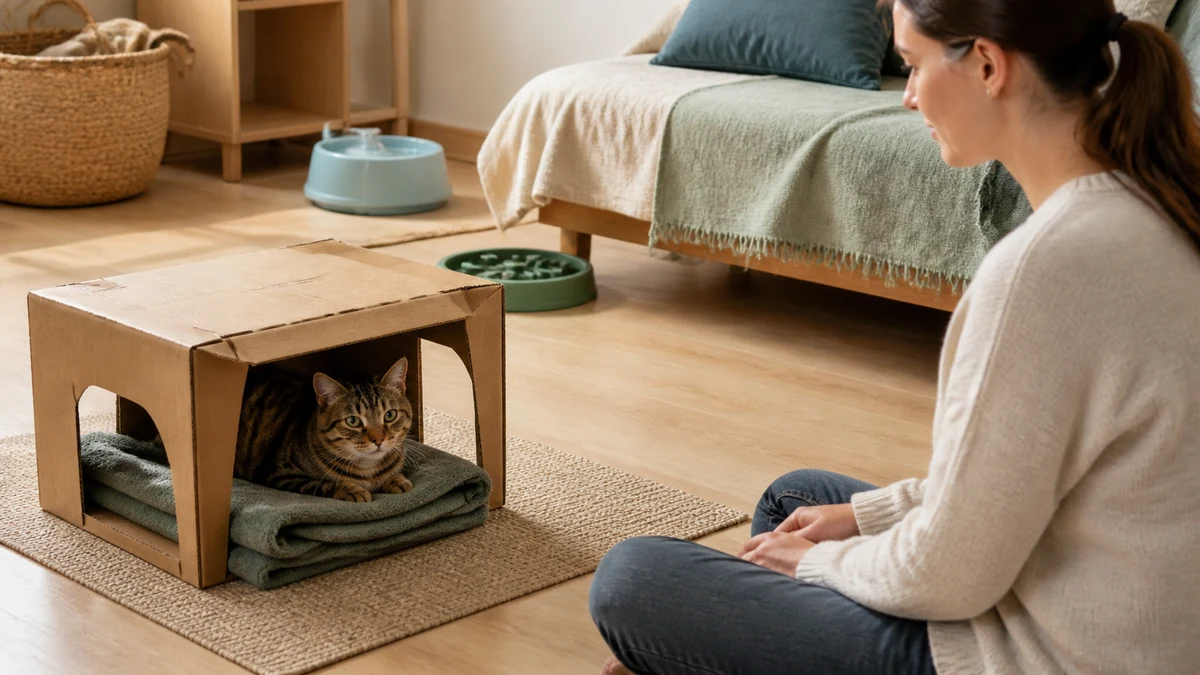
A seven-day observation note is more useful than an impulse order. Record where the cat rests, whether it prefers vertical or horizontal scratching, how it drinks, which toy actions prompt relaxed play, how it enters the box, and which surfaces it avoids. Then buy one solution to one observed need.
The final 48 hours before pickup
48 to 24 hours before
- Confirm the pickup time, journey, carrier size, current food and litter, feeding routine, medical records, microchip details, and emergency contacts.
- Finish the transition room and safety sweep. Test windows, screens, doors, cabinet latches, and cable covers.
- If other animals live in the home, prepare physically separate resource areas and an introduction plan. Do not rely on holding animals apart by hand.
The last 24 hours
- Wash and dry bowls, box, scoop, and bedding without strong fragrance. Set food, water, litter, hide, bed, scratcher, and toys in their separated positions.
- Test the carrier again. Place an absorbent layer and familiar-smelling blanket inside.
- Put the veterinarian, emergency clinic, shelter or previous caregiver, and poison-service numbers where all household members can find them.
- Keep the home quiet. Delay parties, renovations, and nonessential visitors.
Pickup and arrival
Transport the cat inside the secured carrier. Go directly to the prepared room, close doors and windows, set the carrier on the floor, and open it. Let the cat choose when to emerge; do not tip, pull, or chase. Show resource locations without repeatedly placing the cat in each one.
A calm first-week sequence
Arrival day: Keep the world small and predictable. Offer the familiar food and fresh water, clean the litter box, and allow hiding. Sit quietly and let the cat initiate contact.
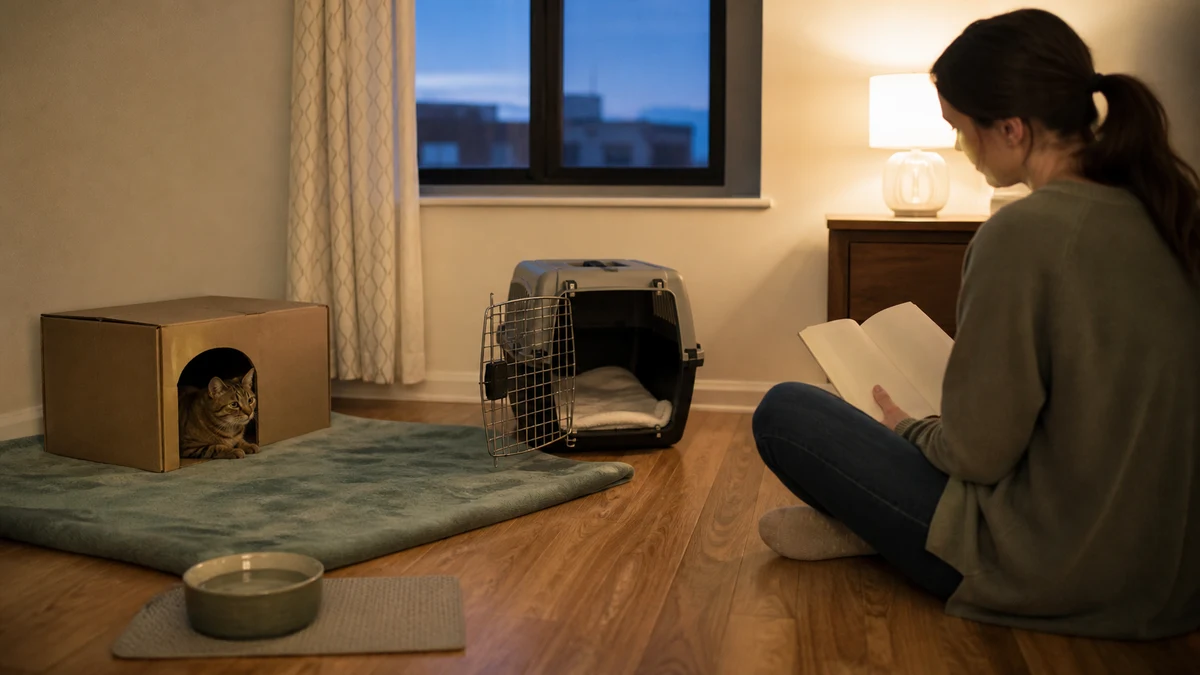
Days 1–2: Check actual food and water intake, urine and stool, breathing, movement, grooming, and alertness. A change of home can alter behavior, but persistent or concerning changes should be discussed with a veterinarian. Urgent signs—including breathing difficulty, collapse, suspected poisoning, repeated unproductive urination, or severe injury—need prompt veterinary care.
Days 3–4: Keep feeding, cleaning, lighting, and visits predictable. Add short play or grooming only when the cat approaches comfortably. Do not force handling or remove a hide to make the cat socialize.
Days 5–7: If the cat is eating, drinking, toileting, resting, grooming, and exploring confidently, open access to one additional cat-proofed area. Keep the transition room available as a retreat. Introduce people and resident animals gradually and return to an earlier step if either cat becomes tense.
The right first-week setup is not the one with the most equipment. It is the one that makes essential resources easy to find, prevents predictable hazards, preserves choice, and gives the caregiver clear observations to share with a veterinarian.
Frequently asked questions
Do I need two litter boxes for one cat?
One box in the transition room is the immediate minimum. Across the home, two boxes in separate locations give one cat a useful alternative and follow the common “one per cat plus one” baseline. Space and individual mobility still matter.
Should food and water bowls be placed together?
They do not have to be. Cats Protection advises separate food and water areas, with both away from litter. Starting with separation also lets the caregiver see which location the cat uses.
Is a water fountain essential?
No. Begin with fresh water in a stable, easy-to-clean wide bowl, ideally with more than one water location. A fountain is an optional later trial. Our cat hydration guide covers ways to observe and support drinking without forcing water.
How long should a new cat stay in the transition room?
There is no fixed countdown. Expand territory when the cat is consistently eating, drinking, toileting, resting, grooming, and exploring with relaxed behavior. A shy cat may need longer; forcing progress can set the process back.
When should the first veterinary visit happen?
Arrange the practice and discuss timing before pickup. Cornell recommends an examination as soon as possible after a new cat comes home, while the exact timing, precautions, and tests depend on records, age, symptoms, origin, and other animals in the household.