How to Prevent Your Cat from Getting Lost: IDs, Doors, Carriers, and a Search Plan
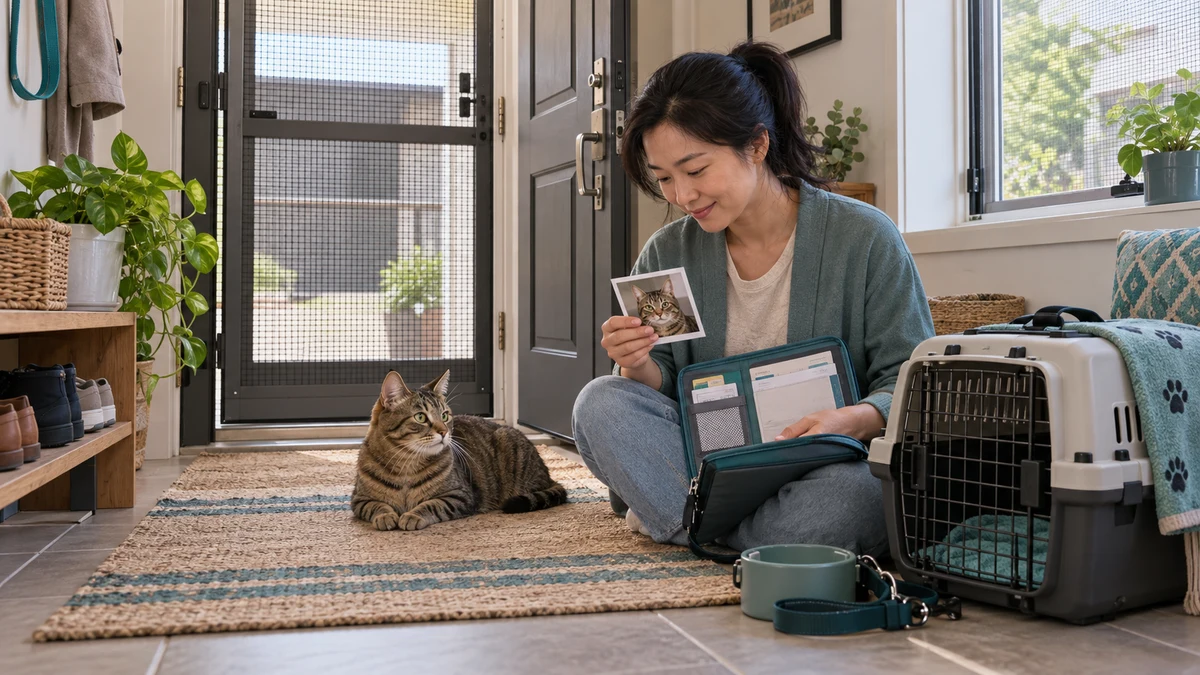
No device can guarantee that a cat will never get lost. The strongest prevention is a layered system: a scannable microchip tied to current registration details, optional visible identification that the cat can wear safely, escape-resistant doors and windows, a latched carrier for every transfer, written procedures for visitors and moving day, and a recovery file prepared before it is needed. A microchip is permanent identification read with a scanner; it is not GPS and does not show a live location. Each layer covers a different failure, so a collar, tracker, or indoor lifestyle should never replace the rest.
Think in layers, not gadgets
A careful household can still have a delivery door held open, a screen pushed loose, a frightened dash during repairs, or a carrier door that was not fully latched. The aim is not to blame a person after one mistake. It is to keep one mistake from becoming an escape.
Use six layers together:
- Permanent identity: an implanted chip that can be scanned and traced to a registry.
- Immediate visible contact: when suitable, a correctly fitted quick-release collar and readable ID tag.
- Physical containment: secure screens, doors, balcony enclosures, and an entry buffer.
- Contained transport: the cat is inside a checked, latched carrier before any exterior route opens.
- Event procedures: everyone follows one plan for guests, contractors, moving, and emergencies.
- Recovery readiness: current photos, identifying details, records, and local contacts are already assembled.
Layer 1: make the microchip useful
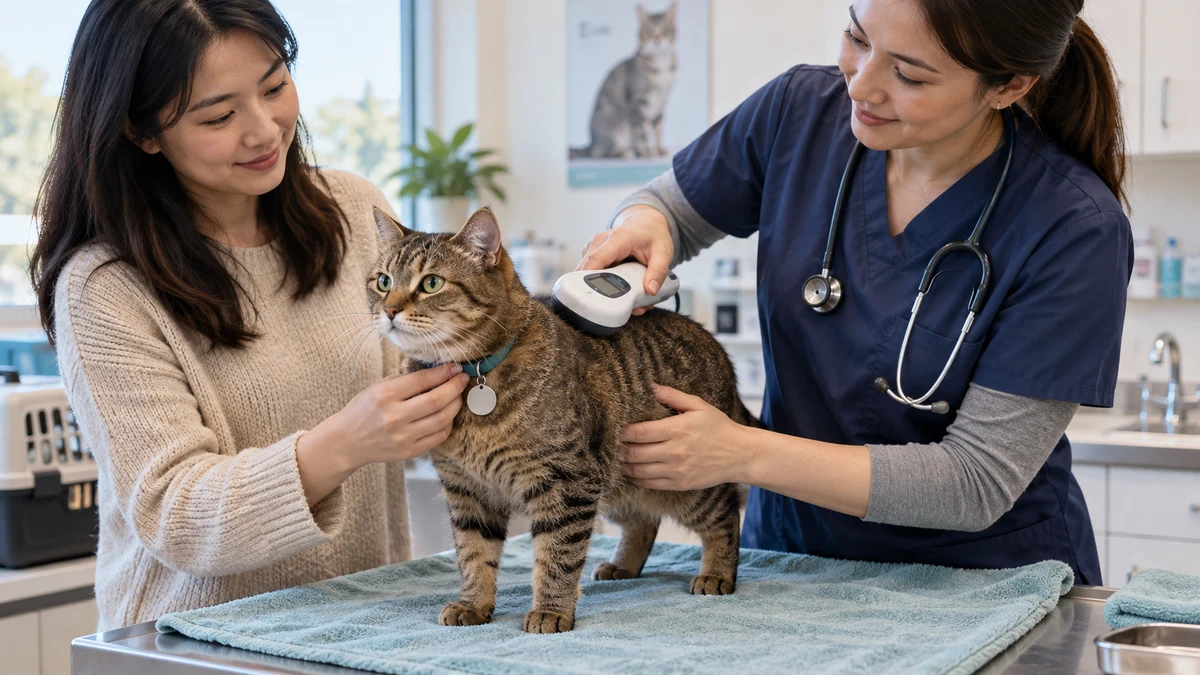
VCA veterinary guidance explains that a microchip has no GPS capability. A scanner activates and reads its identification number; someone must find the cat, scan the chip, identify the relevant registry, and use the registry record to contact the keeper. Implantation without registration, or registration with an old phone number, breaks that chain.
Ask a veterinary clinic to scan the chip during routine care and confirm that the number read matches the number in your records. A scan check is especially useful after adoption, a move between countries, or uncertainty about the paperwork. Keep the full number, the registry name, its phone number or website, and proof of registration in two places—for example, on a phone and in a paper emergency file. Do not publish the full chip number in a lost-cat post; retain it as identifying evidence.
Review the registry entry after any change of phone, email, address, emergency contact, or ownership. If you do not know the registry, ask the implanting clinic, veterinarian, shelter, or local animal authority which recognized lookup route applies. A lookup service and a registration database may be different things: confirm that the actual database holds the cat and current contacts. Countries use different systems.
Registration rules depend on location
The examples below were checked on September 13, 2026. They are not a global summary and can change, so verify the current official rule where the cat lives or travels.
| Location | Checked rule or system | Practical action |
|---|---|---|
| Taiwan | The Ministry of Agriculture added cats to mandatory pet registration in 2025, with penalties for an unregistered, unchipped owned cat applying from January 1, 2026. Its system says a registered pet’s loss should be reported within five days. | Use the official Pet Registration Information System or a registration station; keep the keeper details current and check today’s procedure. |
| England | GOV.UK states that a cat must be microchipped and registered by 20 weeks old, with keeper details held on an approved database. | Confirm the approved database and update it after a move or contact change. Rules elsewhere in the UK differ. |
Wherever you live, ask the local veterinarian, animal authority, or registry what counts as completed registration, how changes are made, and how a missing status is filed. Travel or relocation may add identification and entry requirements; check the destination’s current government rules rather than assuming the home system follows the cat.
Layer 2: decide whether visible ID is safe for this cat
A readable tag may let a neighbor call without taking the cat to a scanner. It is supplementary identification, not a replacement for a chip or secure home. A collar can be lost, removed, snagged, or hidden under fur.
If a collar suits the cat, choose a cat-specific quick-release or snap fastening, test that it releases as designed, and fit it carefully. Cats Protection advises that two fingers should fit snugly underneath; an elasticated or badly fitted collar can trap a jaw or leg. Keep accessories small and check the neck, fit, buckle, tag, and fabric regularly. Replace a damaged collar. Stop and reassess with a veterinarian if the cat repeatedly catches a jaw or limb, develops skin injury, panics, or cannot tolerate it safely.
Put a current phone number on the tag. A second number can help if the primary person is unreachable. Balance address details with personal privacy and local advice. A collar-mounted tracker adds separate trade-offs—weight, fit, snag risk, battery, radio or mobile coverage, subscription, and whether it interferes with the release mechanism. It may provide useful information in some environments, but it can detach and it still cannot replace registered identification or physical containment.
Layer 3: manage every opening as an escape route
Walk through the home at cat height. A general cat-proofing check catches hazards, but lost-cat prevention needs special attention to anything that opens outdoors.
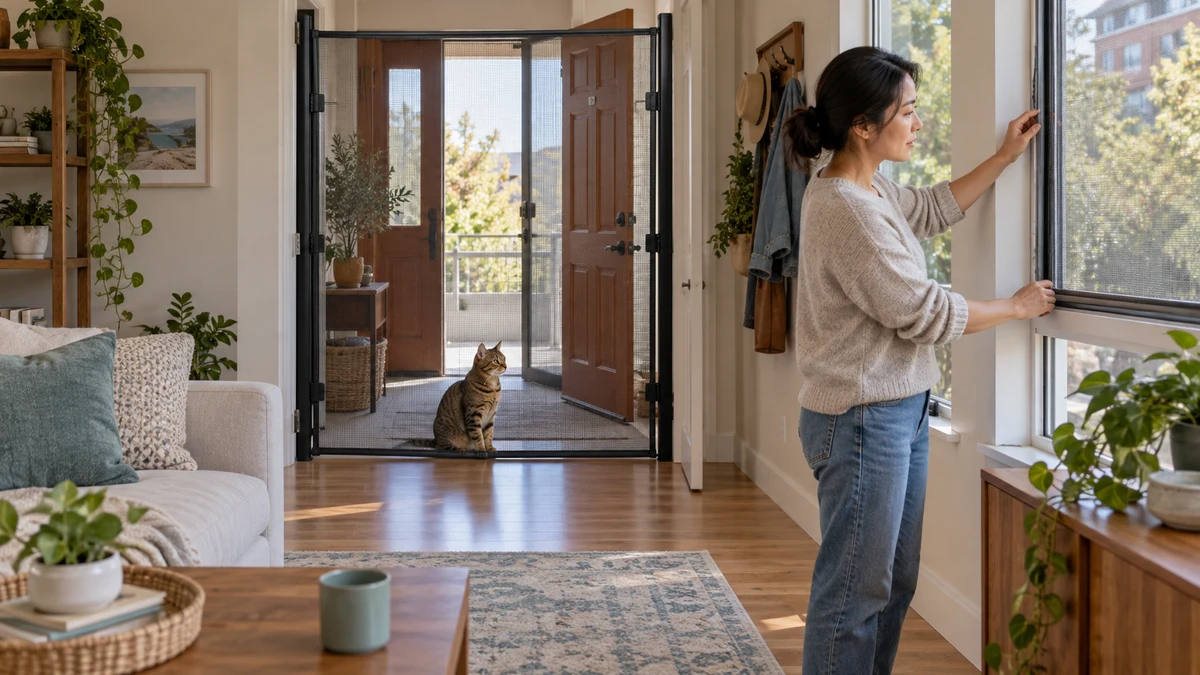
- Fit snug, sturdy screens to windows that open; check the frame, corners, spline, mesh, and latch rather than only looking for tears. ASPCA warns that child window guards are not cat containment.
- Treat a balcony as unsecured unless it has a professionally appropriate floor-to-ceiling enclosure with no climb-through, squeeze-through, or loose edges. Supervision does not repair a physical gap.
- Give the main entrance two sequential barriers where possible: a closed room door, full-height anchored screen, vestibule, or another layout in which one barrier closes before the next opens.
- Keep parcel handoffs outside the inner boundary. Do not prop both barriers open for convenience.
- Check cat flaps, sliding doors, air-conditioner openings, utility hatches, and screens after storms, maintenance, or furniture moves.
- Provide indoor hiding, climbing, play, food, water, litter, and rest so containment is a workable life, not an empty room with a locked door.

Write one household rule: before an exterior door opens, a named person knows where the cat is and which closed barrier protects it. “The cat is probably upstairs” is not a head count.
Layer 4: close the carrier before opening the route
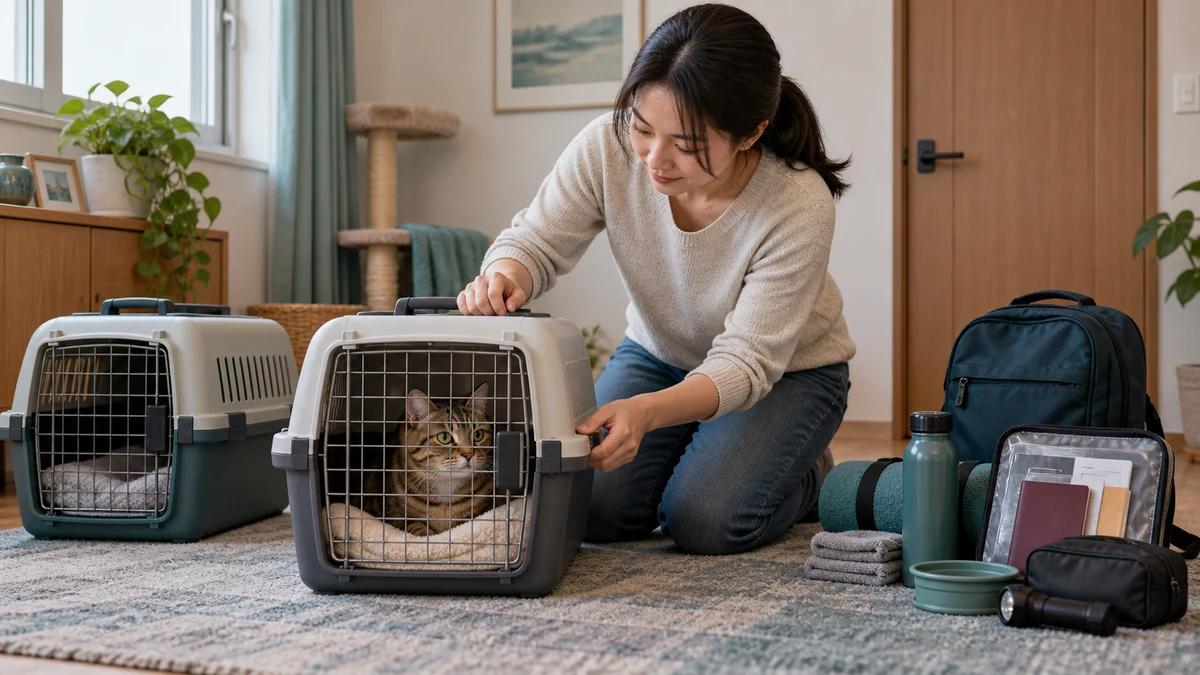
For veterinary visits, travel, evacuation, or a move, place the cat in a sturdy, ventilated, correctly sized carrier inside a closed room. Close the carrier door, engage every latch, check removable top clips, and gently test the door before opening the room or exterior door. Never carry a loose cat through a hallway, lobby, parking area, transit platform, or vehicle transfer.
Cats Protection recommends a strong, secure carrier and keeping it upright and restrained in the car. Inspect plastic, screws, clips, zippers, seams, and handle attachments before each use. Each cat should have its own carrier. A label on the carrier should include current contact information, but the cat still needs its own registered identification in case carrier and cat separate.
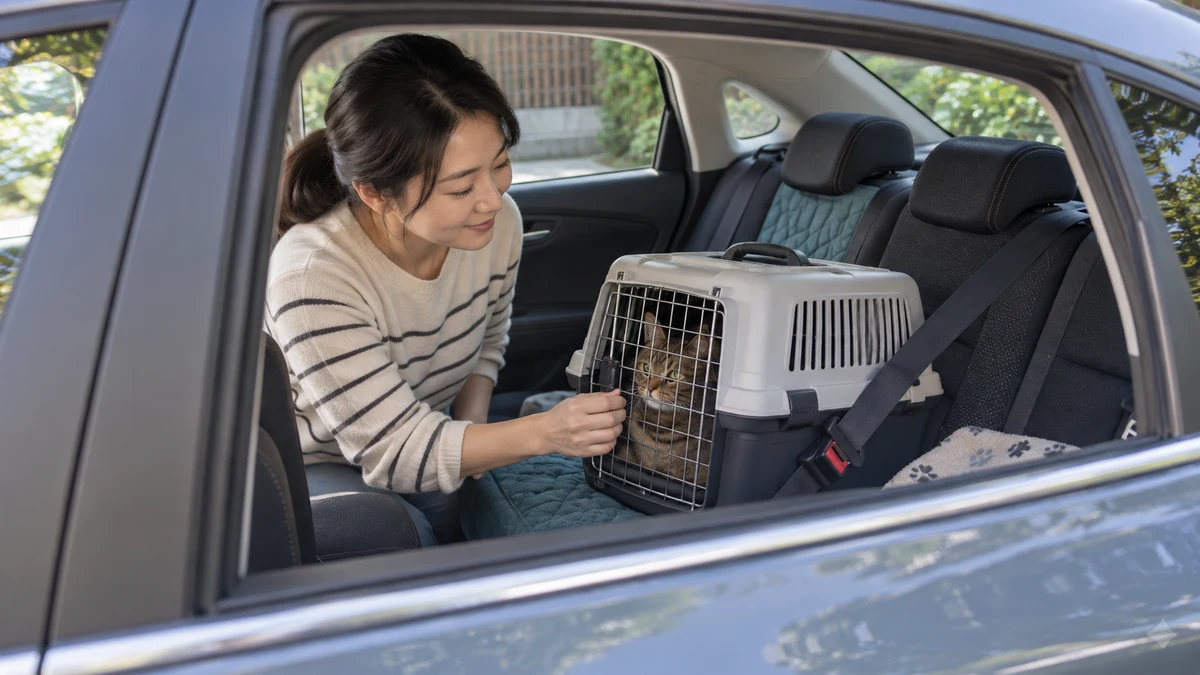
Leave the carrier out between trips and build positive familiarity gradually. Carrier training can make safe loading easier, but training does not replace a latch check. Never open the carrier outside to “comfort” a frightened cat unless you are inside a genuinely escape-proof room.
Layer 5: use special-event protocols
Most high-risk days are predictable. Decide the safe location, the responsible person, and the release condition before activity starts.
| Situation | Before doors open | During activity | Release condition |
|---|---|---|---|
| Guests or deliveries | Put the cat behind the inner barrier or in a comfortable closed room | Tell guests not to open that barrier; one resident handles the exterior door | Exterior door is closed and the household confirms the route is secure |
| Repairs or construction | Move the cat, litter, water, bed, and hide to a checked safe room; inspect vents and unfinished openings | Put a clear notice on the door and tell every worker; one person retains responsibility | Tools, workers, open walls, windows, and doors are cleared; cat is visually counted |
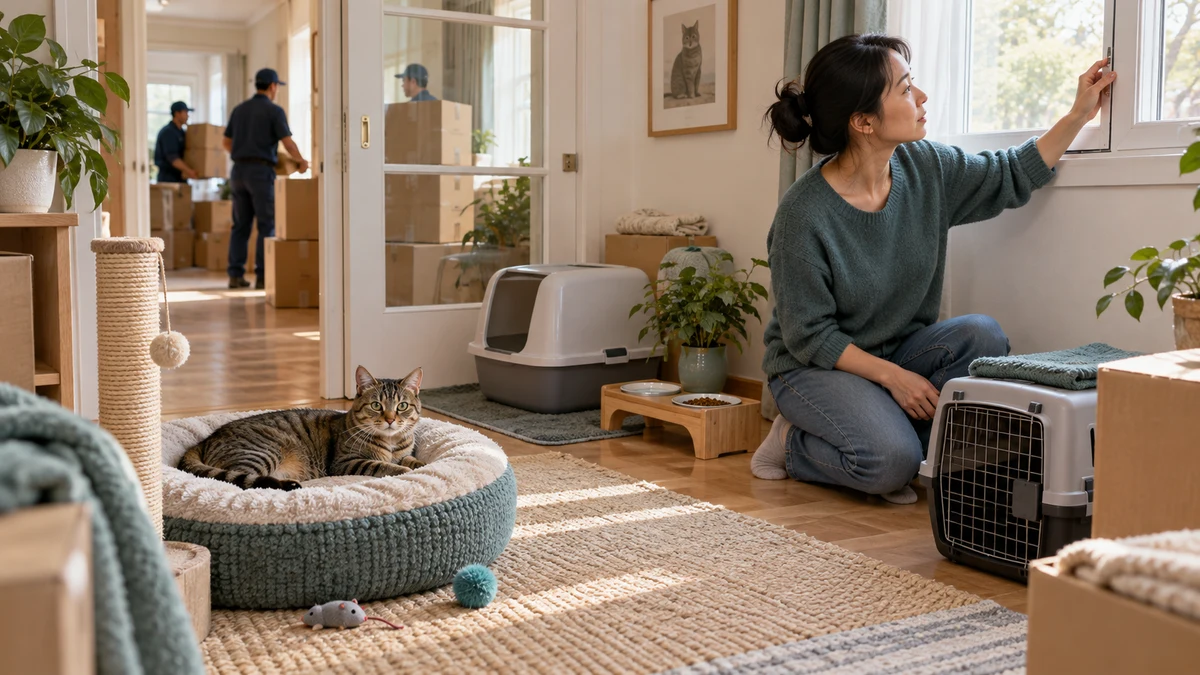
| Moving home | Update identification, photograph the cat, inspect the carrier, and prepare a safe room at both addresses | Keep the cat in the closed room or latched carrier, never in the removal vehicle | The destination safe room is closed, screened, furnished, and checked before the carrier opens |
| Evacuation | Keep one carrier per cat near the exit with records and supplies | Load in a closed room; record who carries each cat | Open only inside the designated secure destination room |
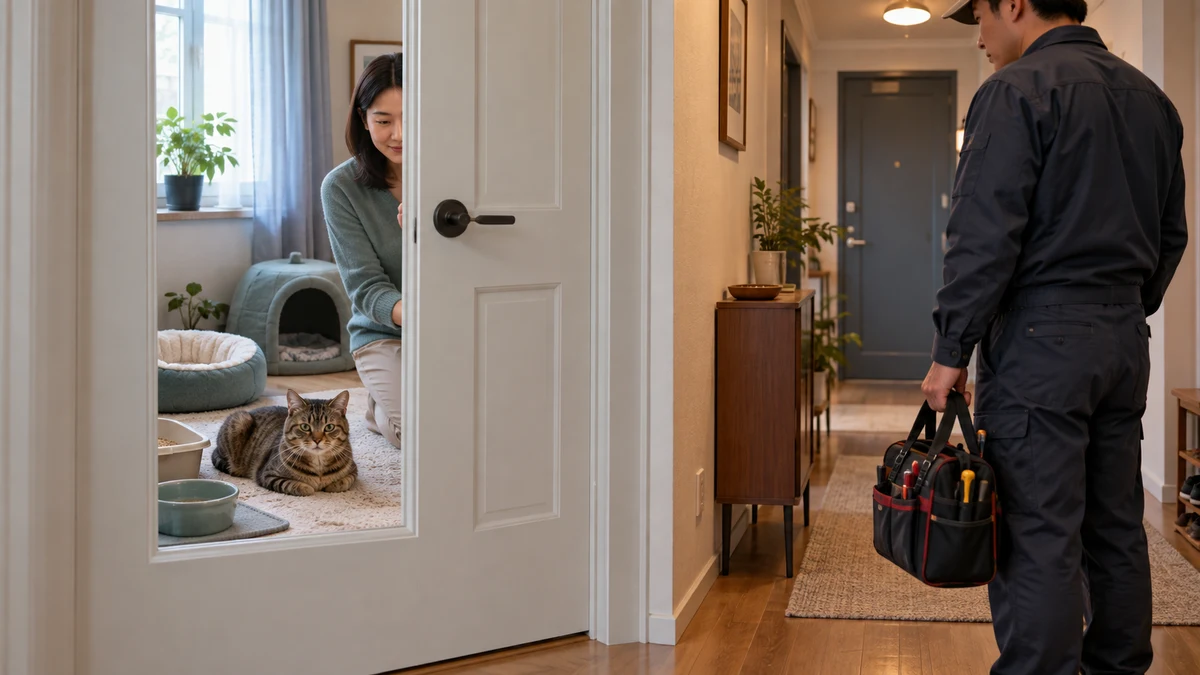
For repairs, a note on the door supports a spoken briefing; it does not replace it. If workers must enter the cat’s room, relocate the cat in its latched carrier to a second secured space first. Never expect a contractor to recognize a hiding cat or manage the household plan without instruction.
On moving day, update the chip registry before or as soon as the address changes, retain both old and new contact details where the local system allows, and register with a destination veterinarian. Cats Protection recommends a safe room and secure carrier. Advice about when an outdoor cat can first go outside varies with the individual and place; obtain current local guidance and do not use a fixed countdown as proof that release is safe.
A 20-point prevention check
Run this monthly and before a move, holiday, renovation, pet sitter handoff, or severe-weather season.
- The chip can be scanned and matches the stored number.
- The correct registry has the cat linked to current phone, email, and address details.
- The household stores the chip number, registry, registration proof, and veterinary or adoption records.
- The emergency contact knows they are listed and can answer.
- Current full-body, face, both-side, tail, and distinctive-mark photos exist.
- If used, the quick-release collar opens correctly, fits, and causes no injury or panic.
- The ID tag is legible and the phone numbers work.
- Every opening window has a snug, sturdy cat-resistant screen.
- Balcony protection reaches floor to ceiling and has no loose edge or climb-through gap.
- Exterior door latches and the inner entry barrier close reliably.
- Cat flaps and utility openings work as intended and cannot be pushed loose.
- Every carrier is intact, correctly assembled, ventilated, and large enough for its cat.
- Carrier doors, top clips, zippers, and handle attachments pass a gentle test.
- The household can load each cat in a closed room without opening an outside route.
- Visitors receive the door rule before arrival.
- A safe room with normal resources is ready for contractors and deliveries.
- Moving plans assign one named person to each cat at both addresses.
- The emergency kit stores records, recent photos, registry details, and local contacts.
- The household knows the cat’s usual hiding places and performs a visual head count.
- Everyone knows who starts the search plan and where its checklist is stored.
Prepare the recovery file now
ASPCA emergency guidance recommends recent photos, medical and registration records, microchip and registry details, contact information, and a sturdy carrier. These same items remove delays in a lost-cat search.
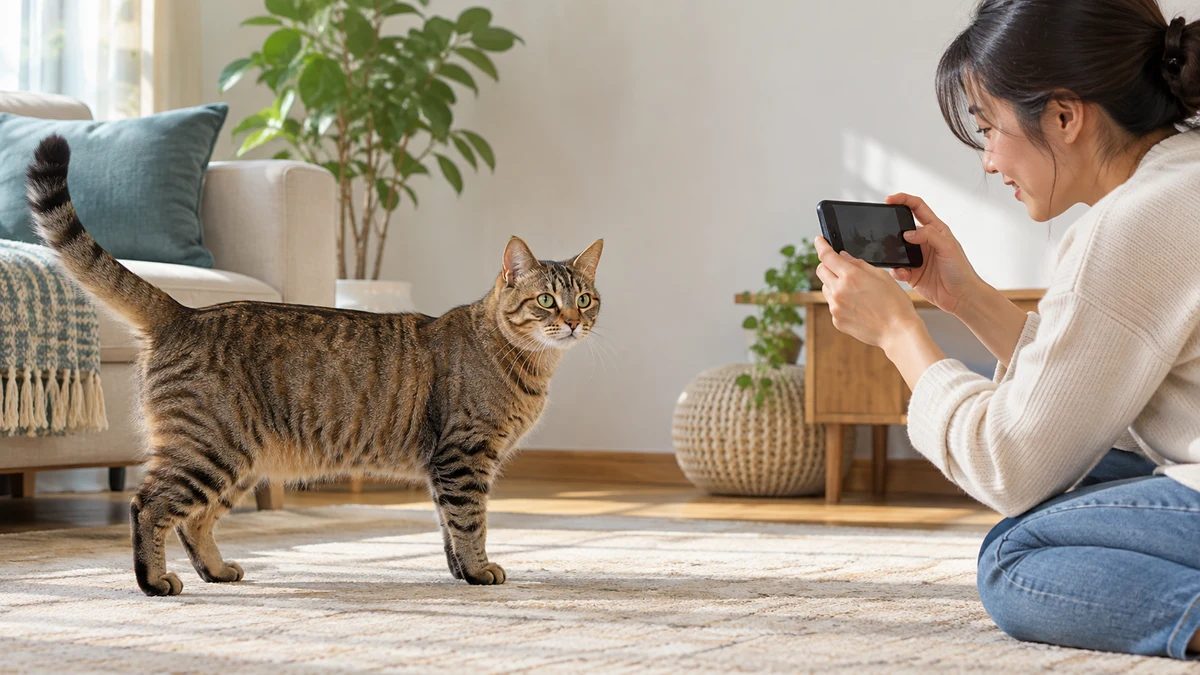
Create one phone folder and one waterproof paper copy containing:
- sharp, recent photos of the face, full body from both sides, tail, paws, and every distinctive mark;
- name, age range, sex, coat color and pattern, approximate size, and any feature visible from a distance;
- chip number, registry, registration status, and how to flag the cat missing;
- collar and tag description, noting whether either may have detached;
- veterinary clinic, adoption or ownership evidence, and relevant handling or urgent care information to share privately with professionals;
- primary and alternate contacts;
- local animal control, municipal shelter, humane organizations, emergency veterinary clinics, and the correct official lost-pet portal;
- a blank search log for time, place, direction, witness contact, photo or video, and follow-up.
Photograph the cat again after a major coat change, grooming change, growth, weight change, or new scar. Keep an unedited full-frame version; a heavily filtered portrait may be attractive but poor identification.
If the cat seems missing: separate “inside” from “outside”
First, close exterior doors and windows and stop people from creating new exits. Ask when and where the cat was last visually confirmed, not merely assumed present. Quiet the home and check one room at a time: behind curtains, inside open cupboards, under and inside furniture, behind appliances where it is safe to look, in closets, boxes, laundry, carriers, high shelves, and any room used by workers. Check washers, dryers, and reclining furniture before operating them. Do not dismantle energized equipment or enter an unsafe void.
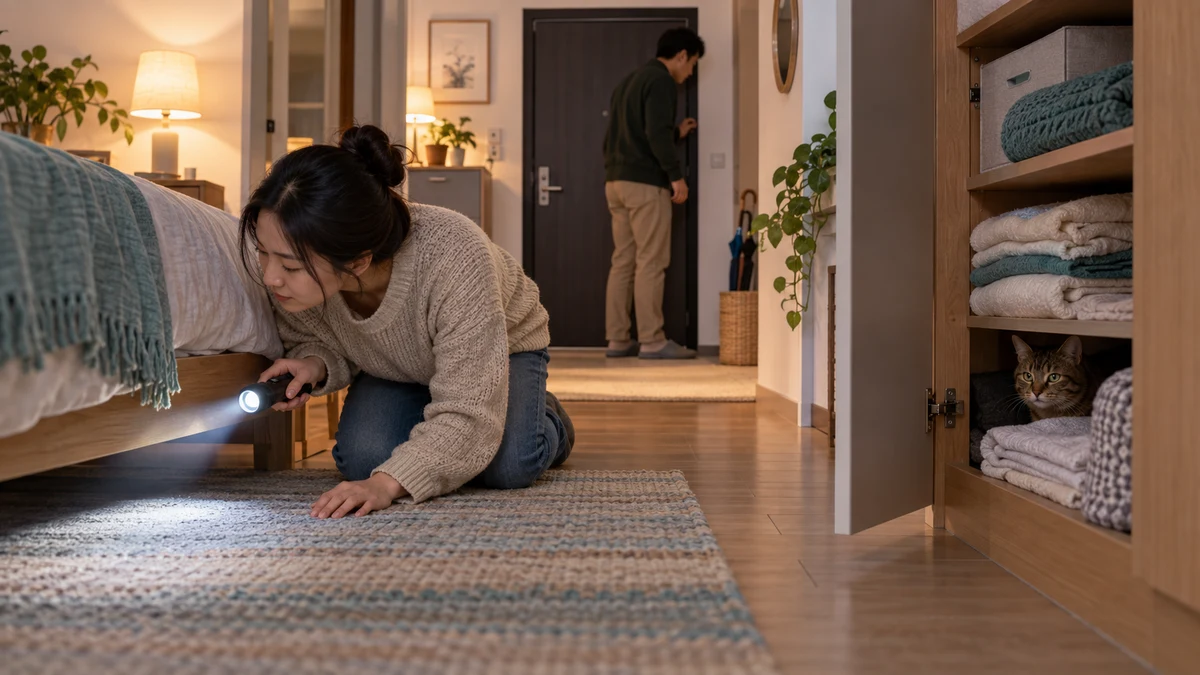
Have one person record cleared areas so people do not repeatedly open the same doors. Use a flashlight; reflected eyes or a silhouette may reveal a silent cat. Listen, pause, and recheck. A frightened or sleeping cat may not answer a call or food sound.
If an outside exit was possible or the indoor search finds no cat, begin the local lost-cat plan immediately while continuing controlled indoor checks.
Confirmed outside: start a calm, local, recorded search
Use every safe route available rather than waiting for one post or one device to work.
- Record the facts. Note the last confirmed time and place, possible exit, direction of any sighting, weather, and who searched each area.
- Flag the microchip record missing. Confirm the registry can reach both contacts. Notify the relevant local animal authority, shelters, veterinary clinics, and official lost-pet system; jurisdictions differ.
- Search close to the escape point. Cats Protection advises checking home and garden first and asking neighbors to inspect sheds, garages, outbuildings, and vehicles. Search slowly with permission, a flashlight, and traffic awareness; repeat quiet areas at quieter times.
- Distribute clear information. Use one current photo, exact area and time, distinctive marks, collar status, and a monitored contact method. Update or remove notices after a verified recovery. Keep chip numbers and ownership documents private.
- Check intake channels repeatedly. Online listings can lag or use a different description. Follow each shelter’s process and expand to every agency serving the area, not only the nearest address.
- Log and verify sightings. Ask for time, exact place, direction, and a photo or video if it can be obtained without pursuit. Plot confirmed reports; do not send a crowd to every vague comment.
- Use monitoring or a humane trap only with a plan. Ask a local shelter, rescue, animal control team, or experienced recovery professional about permission, placement, weather, wildlife, bait, continuous or frequent monitoring, and safe handling. An unattended trap or improvised capture can harm the cat or another animal.
- Change the plan with evidence. A verified sighting, camera image, shelter intake, or weather hazard should alter the search area and method. Keep one coordinator so helpers receive the same update.
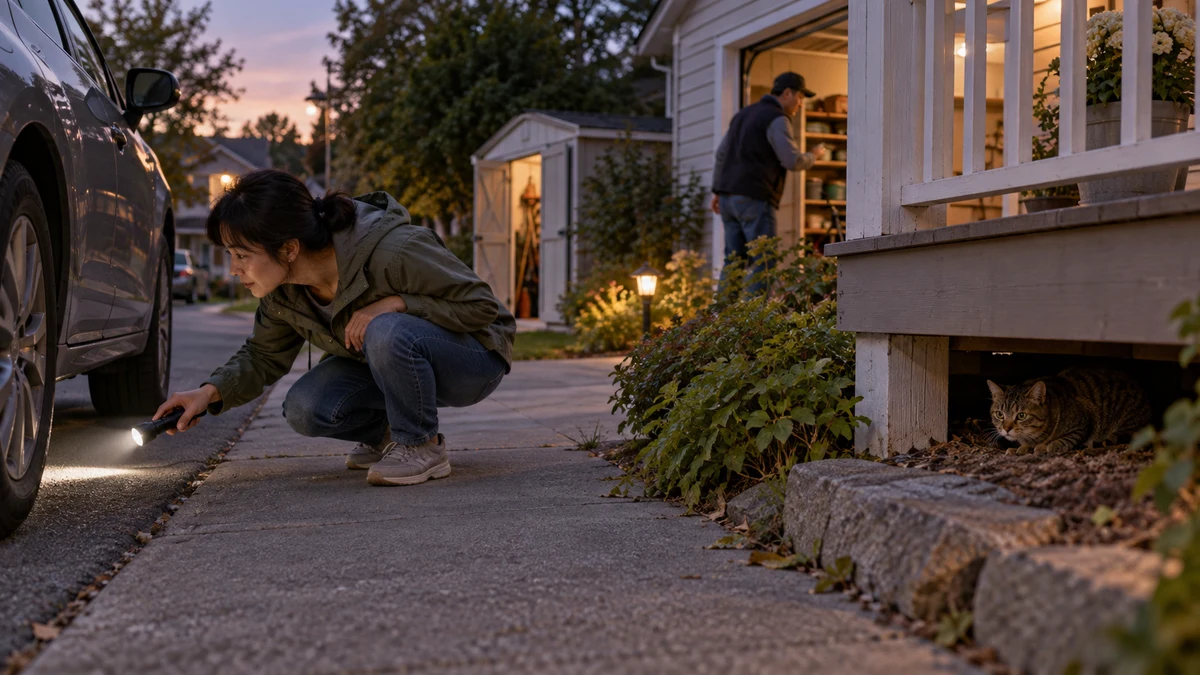
Do not sprint at, corner, or grab a fearful cat. Reduce the number of people, turn sideways, lower your body if it is safe, and allow space. Use familiar calm cues without assuming the cat will respond normally. Do not trespass, crawl beneath unstable structures, step into traffic, enter drains or construction areas, or ask an untrained helper to do so. Contact the property owner or the appropriate local service for a hazardous location.
Be cautious of recovery scams. A stranger claiming to have the cat should provide a current photo or a privately agreed identifying detail before money, codes, or personal documents are exchanged. Never send a verification code or pay a courier based only on a message.
Shortcuts that leave a gap
- “The chip will show me where the cat is.” It cannot; the cat must be found and scanned.
- “The tracker means doors do not matter.” A tracker can lose power, coverage, or the collar.
- “Indoor cats do not need identification.” Indoor cats can escape during a single unusual event and may be disoriented outside.
- “Someone else is watching the door.” Name the responsible person and use a closed barrier.
- “A screen looks fine.” Test its seating, frame, latch, and edges.
- “The carrier is closed.” Check every latch before the secure room opens.
- “A viral post is the search.” Direct nearby checks and official notifications still matter.
- “Chasing proves urgency.” Pursuit can move a frightened cat farther or push people into danger.
Prevention is strongest when it becomes ordinary: confirm identity during routine care, inspect openings during home maintenance, rehearse the carrier before travel, and review the recovery folder on a calendar. None of these layers promises that a cat cannot get lost. Together, they make escape less likely and make a fast, organized response possible.
Frequently asked questions
Is a microchip the same as GPS?
No. A microchip returns an identification number when a compatible scanner reads it. Registry information can then help an authorized finder contact the keeper. It does not transmit a live location.
Does an indoor-only cat still need a microchip?
An indoor lifestyle reduces some exposures but does not eliminate an accidental door, screen, carrier, repair, move, fire, or disaster escape. Ask a veterinarian about implantation and follow the current registration law where you live.
Should every cat wear a collar and ID tag?
Not automatically. Visible ID can speed contact, but fit, environment, quick-release function, snag risk, skin, and the individual cat’s tolerance matter. Use a cat-specific quick-release design when appropriate, check it often, and keep the chip and physical controls regardless.
Should I put the cat’s microchip number on a public poster?
No. Share a current photo, area, time, markings, collar status, and a safe contact route. Keep the full chip number and ownership records private for verification with a registry, veterinarian, shelter, or authority.
How far away should I search first?
There is no universal radius. Start with a meticulous indoor check and the immediate escape area, then use verified sightings, the cat’s normal access, terrain, hazards, and local recovery guidance to expand. Do not substitute a fixed distance for evidence.
What should I do if I can see the cat but it will not come to me?
Do not chase or surround it. Reduce pressure, keep people and traffic away, use calm familiar cues, and contact a local shelter, animal control service, rescue, or experienced recovery professional for a safe containment plan if the cat remains fearful or the location is hazardous.