How to Switch Cat Food Safely: A Flexible, Step-by-Step Transition
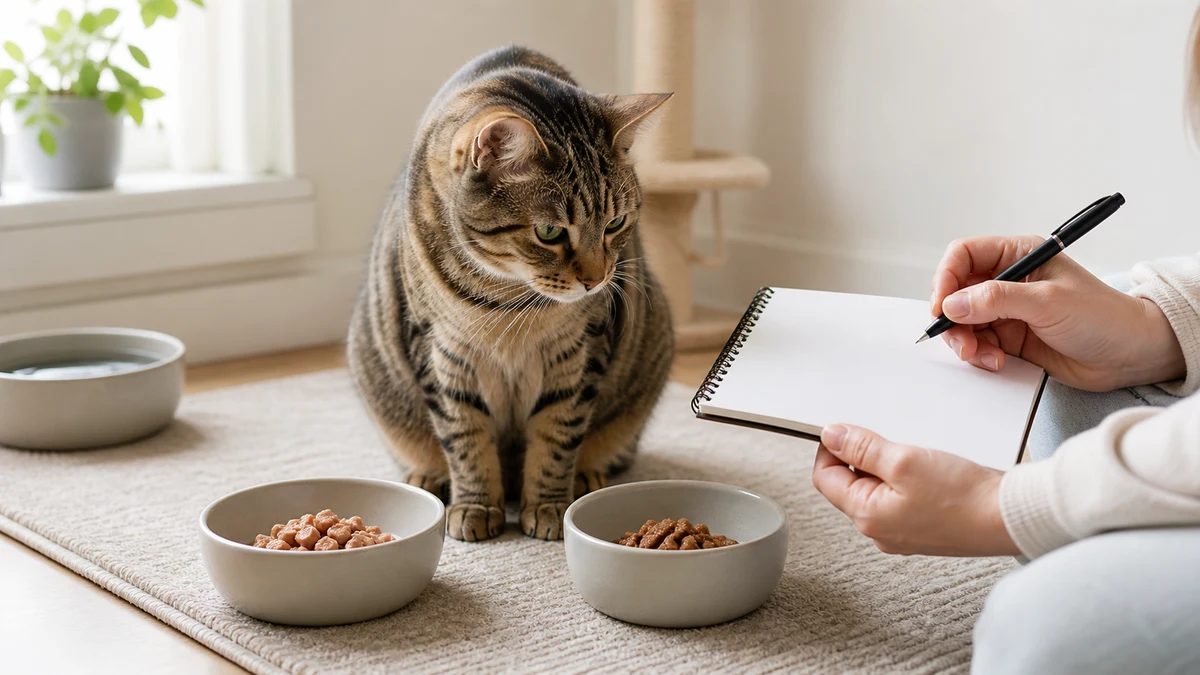
For most healthy cats, change food gradually: keep the familiar food available, present a small amount of the new food, and increase it only while appetite, stool, vomiting, energy, and weight remain stable. A seven-day ratio chart can be a starting example, but it is not a deadline or a rule for every cat. Some cats adapt in several days; cautious cats or those with a history of digestive upset may need weeks. If the diet is prescribed, the cat is ill, or the change is medically urgent, follow the treating veterinarian’s instructions instead of this general plan.
The safest transition is controlled but flexible. You need to know what is changing, preserve total food intake, watch the individual cat rather than the calendar, and be willing to pause. Refusal is information—not stubbornness to defeat.
Before the first taste: confirm the destination
First ask why the food is changing. A routine life-stage update, a different texture, a budget change, a weight plan, a suspected adverse food reaction, and a veterinary therapeutic diet are not interchangeable projects. The last three may require a specific calorie target, strict ingredient control, rechecks, or no unapproved extras.
For foods sold in the United States, as checked in August 2026, read the nutritional adequacy statement. The FDA and AAFCO explain that “complete and balanced” identifies a food intended to supply the full diet, and the statement names the species and applicable life stage. Growth, adult maintenance, gestation/lactation, and all life stages do not have identical nutrient needs. A treat, topper, or product labeled for intermittent or supplemental feeding should not silently replace the sole diet.

Readers outside the United States should find the equivalent complete-diet, species, life-stage, calorie, and intended-use information required in their market. The exact regulatory wording differs. The separate guide to reading a cat-food label explains these fields in more detail.
Before buying a large supply, confirm:
- the new food is appropriate for this cat’s species, life stage, and medical plan;
- whether it is a complete diet or only a supplement;
- its kilocalories per can, pouch, cup, or kilogram;
- the planned daily amount—not merely the old food’s cup volume copied across;
- whether the veterinarian has set a different transition method or deadline.
Foods differ in calorie density. Half a cup of the old food and half a cup of the new food may not deliver equal energy. Use the label calories and the existing calorie plan, or ask the veterinary team to translate the new food into grams or containers. A kitchen scale is often more repeatable than an unmarked scoop.
Record a baseline before changing the bowl
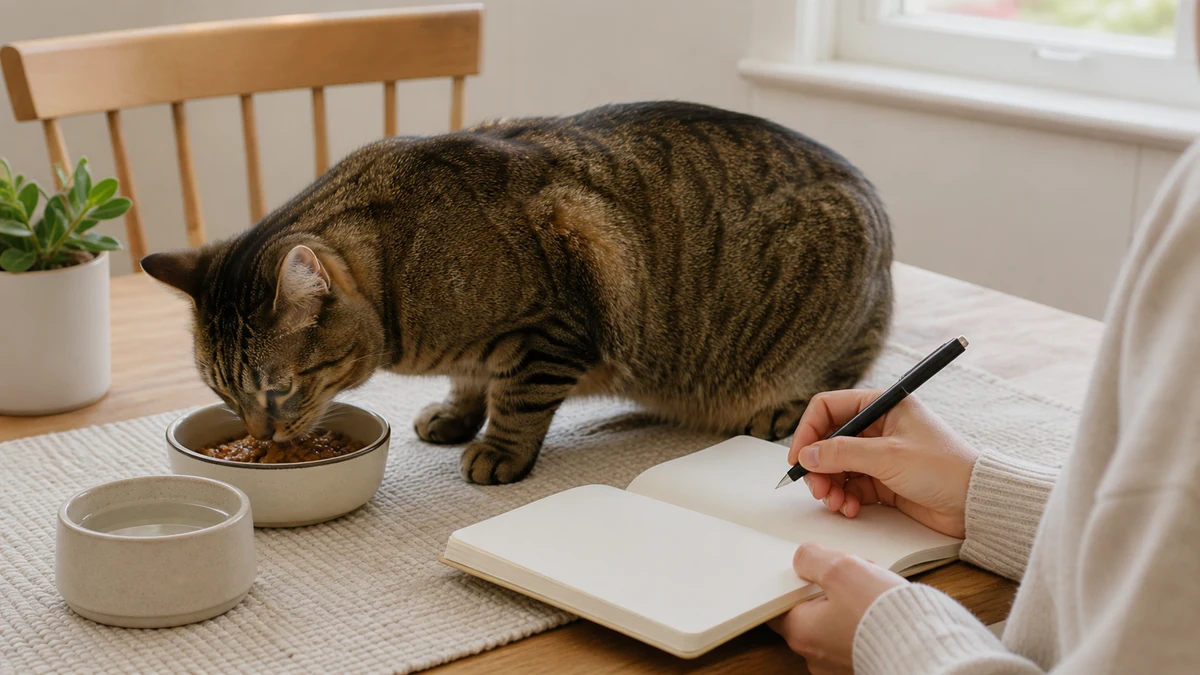
For a routine, non-urgent change, record several normal meals before replacing anything. The goal is not to create perfect medical data. It is to learn what “usual” looks like, so one softer stool or a real downward appetite trend does not disappear into memory.
Write down the old food, actual amount offered and eaten, meal times, treats and toppers, medications given with food, stool pattern, vomiting, energy, and current weight if it can be measured calmly. In a multi-cat home, feed separately long enough to know which cat ate. An empty shared bowl is not individual intake data.
Delay an elective change and ask the veterinary clinic for direction if the cat is already eating less, vomiting, having diarrhea, losing weight, acting painful, or unusually quiet. Starting a new diet while signs are active makes it harder to tell whether the food, the underlying problem, or both are involved.
Use the cat—not the calendar—as the traffic light
The Tufts veterinary nutrition team notes that some pets change easily while others require a four-to-six-week transition. WSAVA gives a short gradual schedule for healthy pets but says animals with disease need longer and veterinary guidance. These are compatible messages: a ratio chart is a scaffold, while the cat’s response determines the pace.
| Signal | What you see | Next move |
|---|---|---|
| Green: continue | Normal interest and intake; usual stool; no new vomiting; normal energy | Move one small step at the next planned meal or after another stable day |
| Yellow: hold | Slightly softer stool once, mild gas, hesitant tasting, or a small but temporary intake dip while the cat otherwise acts normal | Keep the last well-tolerated ratio; do not add more new food; record the result and reassess |
| Orange: step back and call for advice | Signs recur, intake stays below normal, stool keeps worsening, or the cat repeatedly avoids the mixed bowl | Return to the last clearly accepted setup if the medical plan allows and contact the veterinary team |
| Red: stop the DIY transition | No food eaten, repeated vomiting, liquid or persistent diarrhea, lethargy, dehydration concern, pain, or ongoing weight loss | Contact a veterinarian promptly; urgent or emergency assessment may be needed |
“Hold” does not mean fasting the cat. It means stop increasing the new component while keeping an accepted complete food available, unless a veterinarian has instructed otherwise. A cat with a prescribed elimination trial or therapeutic diet may not be allowed to return to an old food, so call rather than improvising.
An eight-stage cat-food transition that can stretch or shrink
The percentages below are navigation points, not a seven-day prescription. One stage may last a meal, several days, or longer. A very food-cautious cat may need the “separate taste” stage before any mixing. Another cat may accept mixing immediately. Keep total calories reasonably aligned with the existing plan as the two foods trade places.
| Stage | Approximate new-food share | What to do | Advance when | Hold, step back, or call when |
|---|---|---|---|---|
| 0. Protect the plan | 0% | Confirm complete-and-balanced status, life stage, calories, medical restrictions, and baseline intake | The cat is stable and the reason for changing is clear | The cat is already unwell, eating less, or the veterinary instructions are unclear |
| 1. Make it familiar | A taste; no meaningful replacement | Put a teaspoon-sized sample or a few pieces in a separate familiar dish near—but not touching—the old meal | The cat sniffs or tastes without reducing the familiar meal | The cat avoids the whole feeding area or eats less because the new food is present |
| 2. First replacement | Up to about 10% | Replace a small calorie-equivalent part of one meal; separate bowls may work better than mixing | Planned intake, stool, energy, and comfort remain usual | Any new sign appears; stay at the prior accepted setup |
| 3. Low share | About 20–25% | Repeat the accepted presentation and keep meal timing and location stable | Several observations remain green and the cat reliably eats both components | Intake falls, the new component is consistently left, or stool becomes looser |
| 4. Middle test | About 40–50% | Let the new food supply roughly half the planned calories, not automatically half the volume | Normal appetite and stool continue without repeated vomiting | A mild sign recurs; return to the previous tolerated share and contact the clinic if it persists |
| 5. New food becomes the majority | About 60–75% | Continue measured meals; avoid celebrating with extra toppers that change the test | The cat maintains intake, normal behavior, and stable digestive signs | The cat only eats coating or toppers, overall calories drop, or weight trends down |
| 6. Near complete | About 85–90% | Keep a small familiar portion while confirming the cat will eat the new food consistently | The new food is eaten reliably across more than one meal and the log remains stable | Refusal appears when the familiar portion becomes small; do not remove the last accepted food to force compliance |
| 7. Complete and confirm | 100% | Feed the measured new diet and keep logging through the settling period | Intake, stool, vomiting, energy, and weight remain acceptable | New or persistent signs develop; contact the veterinary team and bring the log |
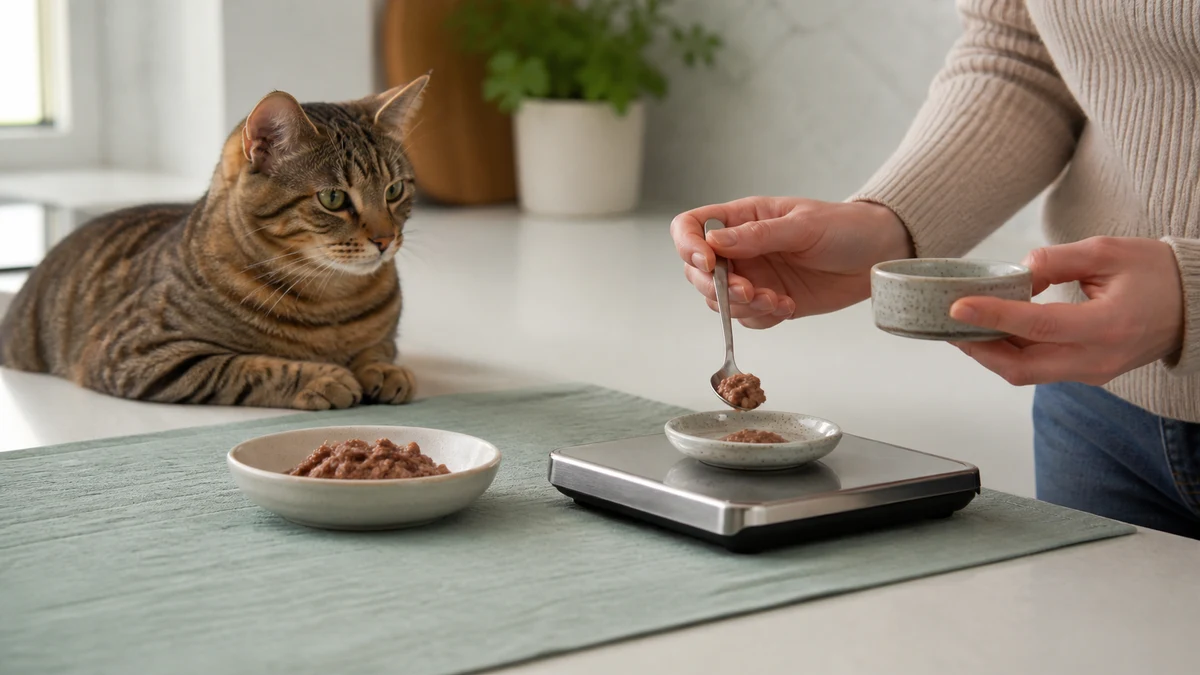
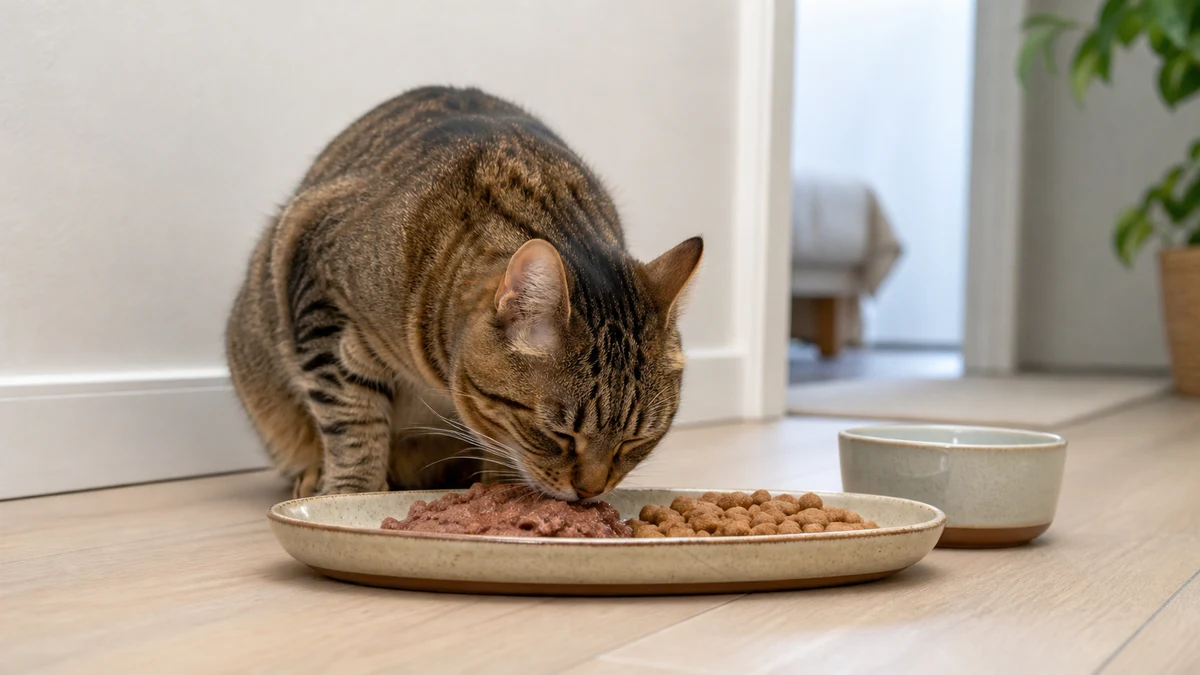
If changing between wet and dry food, texture and water content change along with flavor. Do not assume equal-looking spoonfuls provide equal calories. The wet-versus-dry guide covers calorie density, hydration, storage, and mixed feeding. Fresh water should remain available regardless of food format.
A transition log with the details a veterinarian can use
Use one row per meal or per day, depending on how closely intake needs to be watched. Record amounts in grams, cans, pouches, or another repeatable unit. “Ate some” is less useful than “offered 45 g, left 12 g.” Use the same stool description system throughout; a number is helpful only if everyone knows what it means.
| Date and time | Old food offered / eaten | New food offered / eaten | Appetite and approach | Stool | Vomiting | Energy, behavior, and pain signs | Weight and hydration notes | Action next meal |
|---|---|---|---|---|---|---|---|---|
| Example: Mon dinner | 36 g / 36 g | 4 g / 3 g | Approached promptly; sampled both | Usual, formed | None | Normal play and grooming | 4.6 kg; no concern noticed | Repeat same share once more |

The six core observations are appetite, actual intake, stool, vomiting, energy, and weight. Hydration concern, pain, itching, and medications or treats add context. Do not use a home log to diagnose the cause of a sign; use it to notice change and communicate clearly.
If the cat is picky, change the presentation without creating a contest
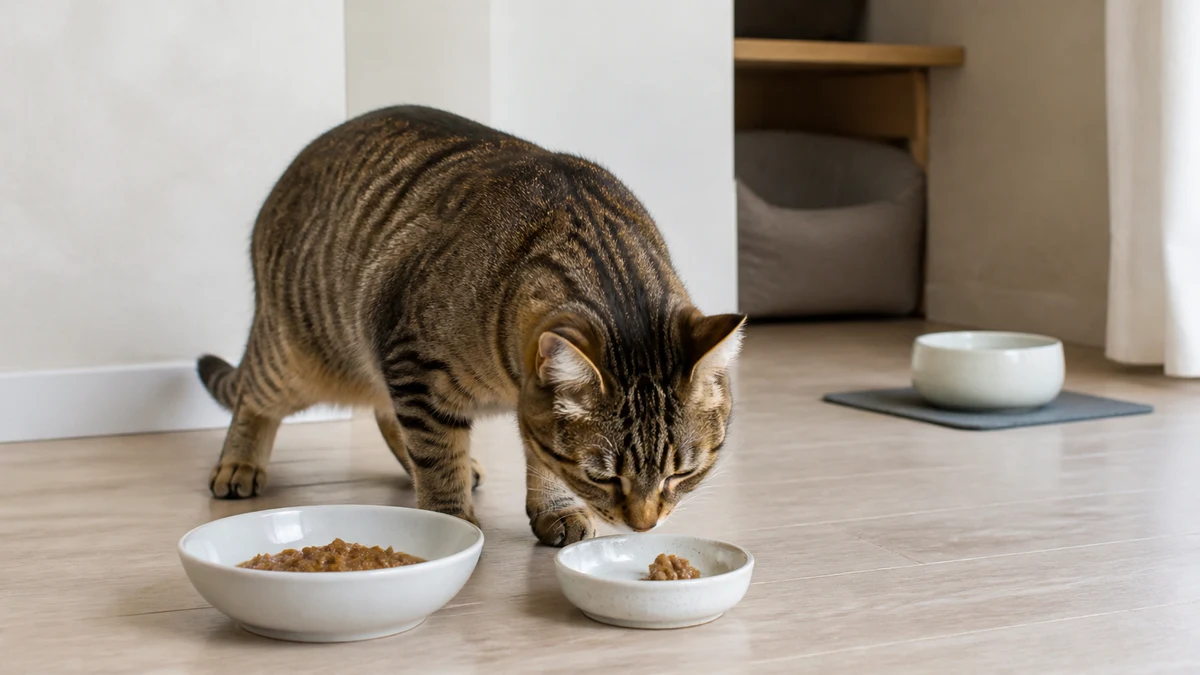
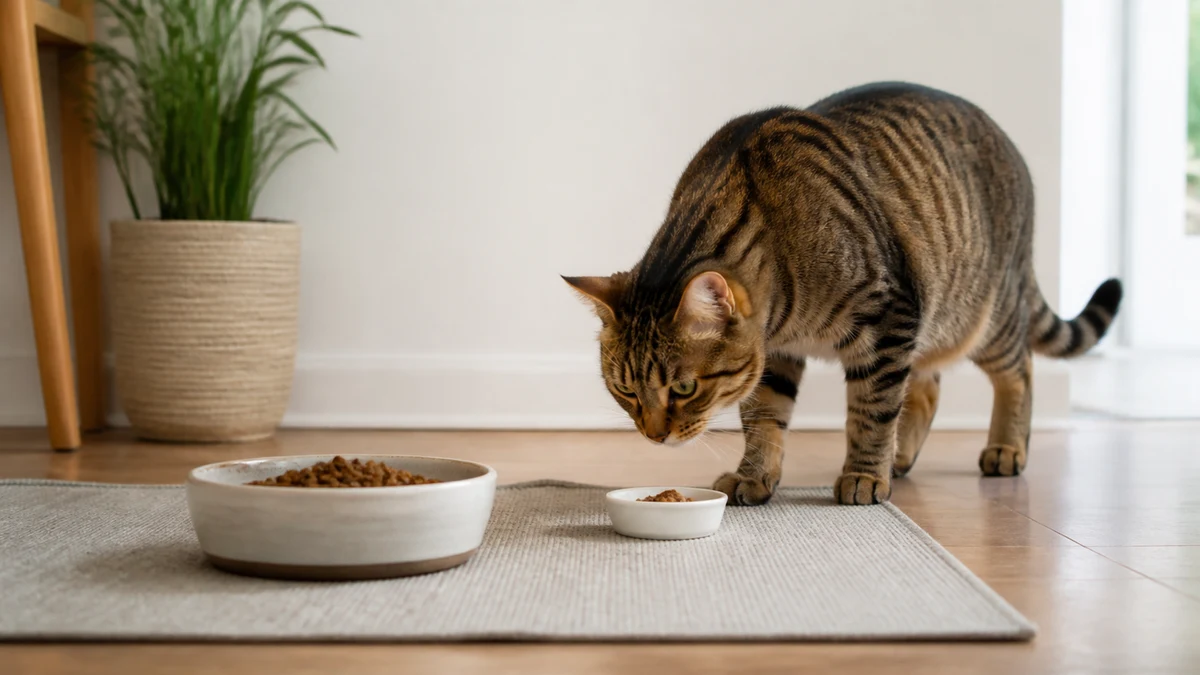
Cats may refuse foods that are mixed together even when they will investigate the same food in a separate bowl. WSAVA and Tufts both describe side-by-side presentation as useful for some cats. The purpose is voluntary familiarity, not a choice between “new food or nothing.”
Try one controlled adjustment at a time:
- offer a small fresh portion in a separate, familiar ceramic or glass dish;
- use the normal meal location and schedule, away from litter, noisy appliances, and another cat’s pressure;
- preserve the cat’s usual dish depth and comfortable access;
- remove an untouched trial portion after the normal meal window and offer a fresh trial later;
- limit the experiment to the old food and one new option rather than a confusing buffet;
- if the clinic approves it, test whether the food is preferred at room temperature or slightly warmed.
Do not withhold the only food the cat reliably eats for a prolonged period. Do not pry the mouth open, syringe food without veterinary instruction, smear food on the paws or nose, or repeatedly push the bowl into the cat’s face. Cornell, WSAVA, and FelineVMA materials warn that force feeding can intensify food aversion; improper feeding can also create aspiration risk. Veterinary tube feeding is a clinical nutrition tool, not the same as forcing food by mouth at home.
Avoid turning every meal into a pile of tuna, oils, treats, or calorie-dense flavor enhancers. Extras can change calorie intake, unbalance a diet, obscure an elimination trial, or conflict with a therapeutic plan. Ask the veterinary team before adding anything when disease, weight loss, allergy evaluation, or a prescribed diet is involved.
What to do with a mild digestive response
A single slightly softer stool in an otherwise bright cat is different from repeated vomiting, liquid diarrhea, pain, or lethargy. For a mild isolated change, stop increasing the new food. Hold at—or, if appropriate, return to—the last clearly tolerated share while you observe and keep the accepted food available. Tufts specifically describes extending the transition after a minor sign rather than continuing to raise the new-food ratio on schedule.

Do not automatically blame the recipe. The portion may have increased too quickly, calorie intake may have changed, a treat may be involved, or an unrelated illness may have started at the same time. If the sign repeats, intensifies, or comes with reduced appetite or abnormal behavior, contact the veterinarian instead of running repeated food experiments.
Do not give human anti-diarrheal products, leftover medication, supplements, or a homemade “bland diet” unless the veterinary team specifically recommends it for this cat. This article does not establish a diagnosis or treatment plan.
Situations that should not use a generic transition chart
A veterinary therapeutic or prescription diet
Use the prescribing team’s method. AAFCO notes that some veterinary medical foods have nutrient levels intentionally adjusted for disease management and may state “use only as directed by your veterinarian.” Mixing, diluting, or replacing that diet can change the intended nutritional effect. If the cat refuses it, call; do not silently add unrestricted toppers or stop the previous medical plan.
A food-allergy elimination trial
The value of a diet trial depends on controlling everything the cat consumes. Treats, flavored medication, another pet’s food, and unapproved toppers can invalidate the trial. Follow the veterinarian’s permitted-food list and timing. A reaction during a diet trial is not an invitation to diagnose an ingredient at home.
An acute illness, recovery, or urgent diet change
When the cat is nauseated, painful, dehydrated, recovering from surgery, or already eating poorly, adequate intake and treatment of the underlying problem take priority over a standard percentage ladder. The veterinary team may choose a different pace, feeding method, or nutrition-support plan. Do not delay an urgent prescribed change just to complete seven routine stages, and do not force an ill cat to accept it.
Warning signs: contact a veterinarian promptly
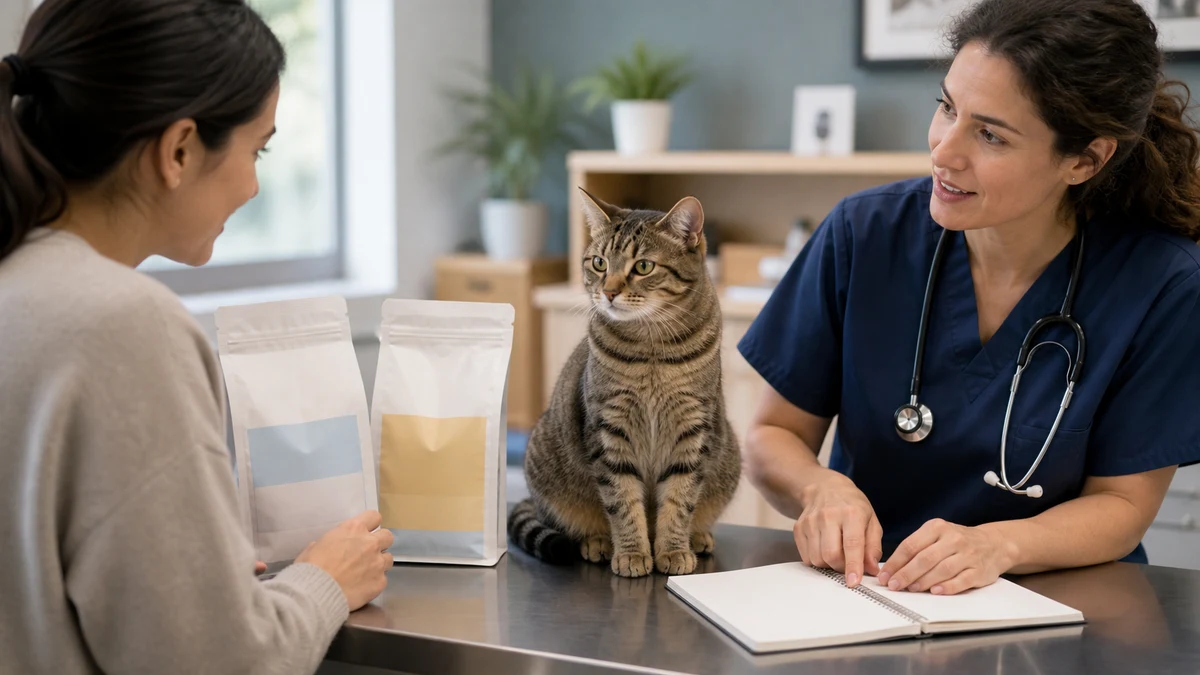
Stop treating the situation as an ordinary food transition and seek veterinary advice when any of these occurs:
- the cat eats nothing, or intake becomes markedly lower than normal;
- vomiting repeats, the cat cannot keep food or water down, or vomit contains blood;
- diarrhea is persistent or liquid, contains blood, or comes with dehydration concern;
- the cat is lethargic, weak, hiding unusually, collapsing, or not behaving normally;
- there are signs of pain, such as a tense posture, vocalizing, guarding the abdomen, or reluctance to move;
- weight is falling, especially across a short transition period;
- facial swelling, breathing difficulty, or another rapidly escalating reaction appears—seek emergency care.
Cornell warns that sustained appetite loss can seriously affect a mature cat in as little as 24 hours, and very young kittens can become critical even sooner. That is not a timer to wait out. Age, body condition, existing disease, current treatment, and the severity of other signs can make earlier care necessary. If in doubt, call the clinic and describe what was offered, what was eaten, when the cat last ate normally, and the accompanying signs.
The practical rule
A successful food change is not the day the old bag becomes empty. It is the point at which the cat voluntarily eats an appropriate new diet in an adequate amount, digestive signs remain acceptable, weight and behavior are stable, and any medical goal is still protected.
Start with the label and the cat’s baseline. Introduce the new food in a way the cat can investigate without losing access to familiar nutrition. Increase only after stable observations, and step back instead of racing the calendar. Most importantly, do not let “finishing the transition” become more important than the cat eating safely.
FAQ
Must every cat-food transition take seven days?
No. Seven days is a common example, not a universal rule. Healthy, adaptable cats may progress faster, while cautious cats, cats with prior digestive upset, and cats with medical needs may require a much longer or veterinarian-directed plan. Advance according to intake and signs, not the printed day number.
Should I mix old and new cat food in the same bowl?
You can if the cat reliably eats the mixture, but many cats reject mixed foods. Offering a small amount of the new food in a separate familiar dish lets the cat investigate without contaminating the accepted meal. Once the new food is familiar, mixing may become acceptable.
What if my cat eats around the new pieces?
That means the current presentation has not been accepted. Do not remove the old food to force the issue. Return to a separate tiny sample, keep the environment familiar, and progress more slowly. Call the veterinary team if total intake drops or the change is medically necessary.
Can I use treats or tuna to make the new food irresistible?
Not automatically. A small approved topper may help some cats, but it adds calories and can interfere with a therapeutic diet or elimination trial. Repeatedly increasing high-calorie extras can also teach the cat to wait for additions. Ask the veterinarian what, if anything, is compatible with the plan.
When is food refusal urgent?
Treat complete refusal or a marked intake reduction as a reason to call promptly, especially in a kitten, older cat, overweight cat, ill cat, or cat receiving treatment. Repeated vomiting, diarrhea, lethargy, dehydration concern, pain, or weight loss increases the urgency. Do not wait for a seven-day schedule—or even a full 24 hours—when the cat is unwell.