Why Do Cats Scratch Furniture? Choose a Scratcher They Will Use
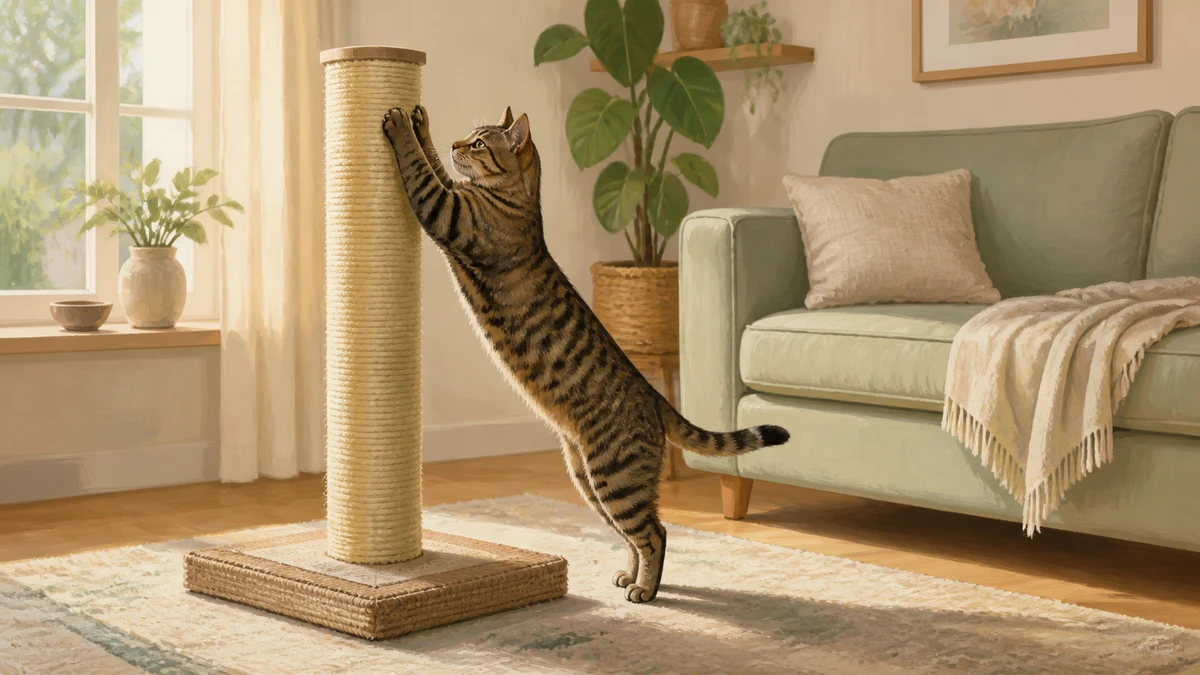
Cats scratch furniture because scratching is a normal way to care for their claws, stretch, leave visible and scent marks, and use their bodies—not because they are spiteful or taking revenge. A sofa can accidentally be an excellent scratcher: stable, tall, textured, and placed in a socially important room. The practical answer is not to eliminate scratching. It is to put an equally useful scratching surface exactly where the behavior already happens, reward the new choice, protect the furniture temporarily, and adjust the setup to the individual cat.
Buying the tallest post or the material with the best reviews is not enough. Cats differ, and one cat may use a vertical sisal post while another chooses a horizontal cardboard pad. Watch the direction, height, texture, location, and timing of the scratching you already have. Those clues are a free product test conducted by your cat.
Scratching is a job, not a protest
Scratching combines several functions in one short movement. Four are especially useful for understanding why a substitute must do more than look attractive to a person.
- Claw care. Scratching helps remove worn outer claw sheaths and exposes newer claw beneath. It does not replace routine claw checks or trimming when a cat needs them, but it is part of normal claw use.
- Whole-body movement and stretching. A cat leaning into a firm vertical surface can extend the forelegs, shoulders, back, and hindquarters. A horizontal or angled surface changes the posture and may be more comfortable for another cat.
- A visible marker. The lines left on a surface remain after the cat walks away. Cornell describes those scratch marks and shed sheaths as part of the display created by scratching.
- A scent marker. Glands around the paws contribute scent at the same place. Visual and scent information help explain why cats often scratch noticeable objects and return to the same sites.
Scratching also provides physical activity and a predictable outlet for a normal behavior. These functions can overlap in one session. We cannot ask a cat which one mattered most at that moment, so avoid turning a useful list into a single proven motive. A post beside a waking spot may support a stretch; a sofa arm beside a doorway may also be a prominent marking location.
Calling the behavior “revenge” makes the solution harder to see. The cat is not evaluating the price of the upholstery. The sofa simply works. Punishing the cat leaves every useful feature of the sofa unchanged while adding fear around the person.
Let the damaged furniture describe the right scratcher
Before shopping, photograph or write down the current pattern for several days. Do not wait beside the sofa to catch the cat. Existing marks and ordinary observation are enough.
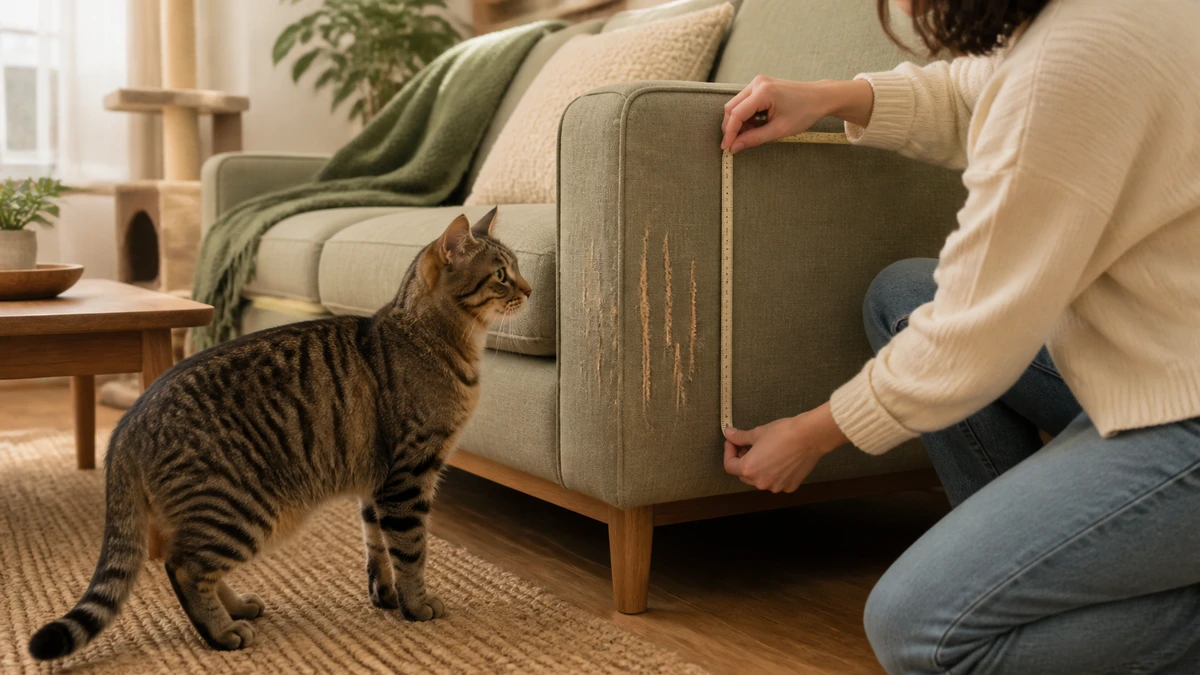
Record these clues:
- Direction: Are the marks mostly vertical on a sofa arm, horizontal across a rug, or diagonal along an edge?
- Reach: How high or long is the scratched zone? Does the cat fully extend, remain crouched, or alternate between postures?
- Texture: Is the target tightly woven, loosely woven, rough wood, cardboard, carpet, or another material that lets the claws engage?
- Stability: Does the chosen object stay absolutely still when the cat pulls against it?
- Location: Is it beside a sleeping place, window, doorway, busy family area, route between rooms, or another repeated destination?
- Timing: Does scratching follow waking, play, a household arrival, seeing an outdoor cat, or a tense interaction with another cat?
The pattern is more informative than a general claim that “cats love sisal.” Sisal is a sensible option, corrugated cardboard is another, and some cats prefer rough fabric or wood. Preference belongs to the individual and can change with age, comfort, or experience.
Vertical, horizontal, or angled: match the movement first
| What the cat does now | First option to test | What to check |
|---|---|---|
| Reaches high on a sofa arm, door frame, or curtain area | Tall vertical post or securely mounted panel | Taller than the cat’s comfortable full reach; broad base or secure mounting; no wobble |
| Scratches a rug or carpet with the body low | Horizontal cardboard, wood, or fabric pad | Long and wide enough that the cat can stand on it without the pad sliding |
| Pulls along a sloped edge or changes between low and upright postures | Stable angled scratcher | Angle stays fixed under force; surface is long enough for the preferred motion |
| Uses more than one direction or material | Two or more different scratchers | Keep the options separate enough to learn which location and texture are being chosen |
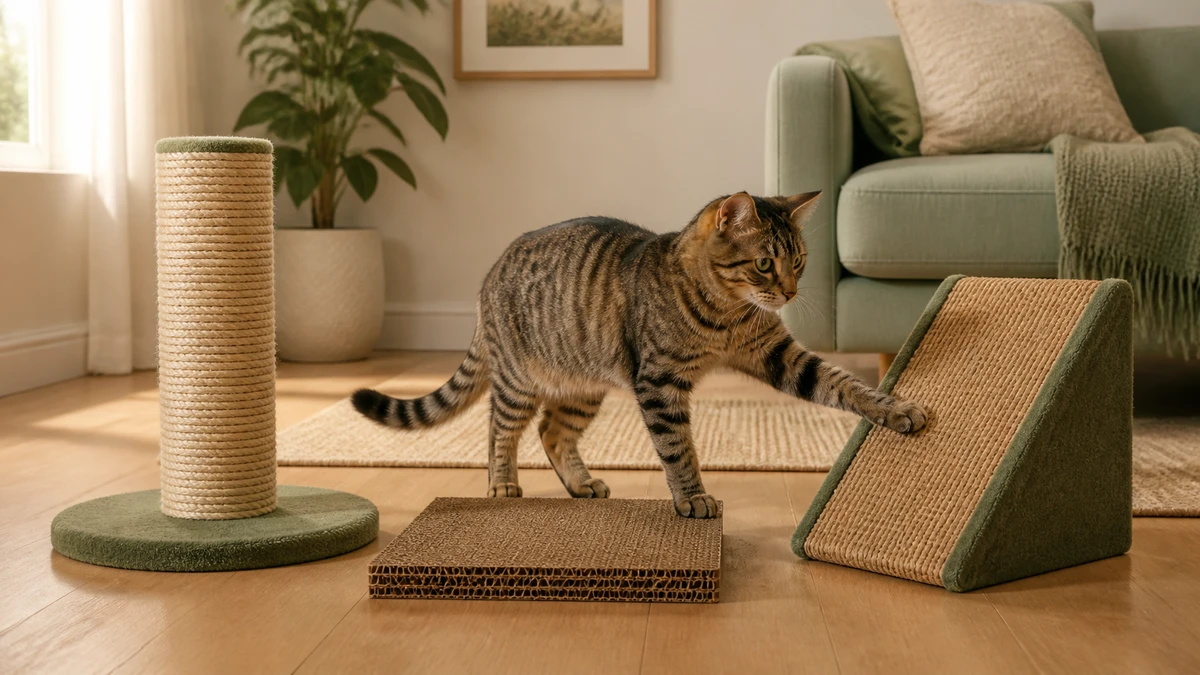
“Vertical” alone is not a specification. A short post may force a long cat to hunch. A tall post with a narrow base may sway during the first pull and never earn a second attempt. A horizontal pad can still fail if it skates across the floor. Test the object with your hands before offering it: push at the top, pull from the side, and check that no staple, sharp edge, loose loop, or small detachable part can catch a claw.
For a vertical scratcher, use the cat’s own relaxed full extension as the size guide rather than a universal number. For a horizontal or angled model, allow the cat to place the body securely while pulling with both forepaws. Bigger is useful only when the object remains stable and fits the route without creating a trip hazard.
Choose from five connected features
Direction, material, stability, size, and location should be evaluated together. If even one is wrong, the sofa may remain the more functional choice.
1. Direction
Start by copying the current movement. Offer vertical for a high reach, horizontal for low carpet scratching, and angled when the marks or posture suggest a slope. If the pattern is unclear, offer at least one vertical and one horizontal option rather than forcing a guess.
2. Material
Corrugated cardboard gives and tears differently from sisal rope. Woven sisal, rough fabric, carpet, and unfinished wood each produce different resistance. Match the texture the cat already selects, then test one alternative at a time. Avoid loose strands, adhesive, finishes, or components that could be chewed, swallowed, or catch a claw.
3. Stability
Stability is not optional. Furniture succeeds partly because it does not fall over. A freestanding post needs a broad, heavy base; a wall or door panel needs secure mounting appropriate for that surface. A non-slip backing can make a horizontal pad usable on a smooth floor.
4. Size
A vertical surface should allow a complete comfortable stretch. A low surface should be long and wide enough that the cat is not balancing on one edge. Watch the first attempts: shortened strokes, stepping off, or avoiding the upper section may mean the dimensions or angle do not fit.
5. Location
Scratching is communication as well as exercise, so hiding the post in an unused room can remove the reason to use it. Start at the existing scratch point. Other useful sites include near a favorite sleeping place, because cats often scratch after waking, and near windows, doors, or routes where scratching already occurs.
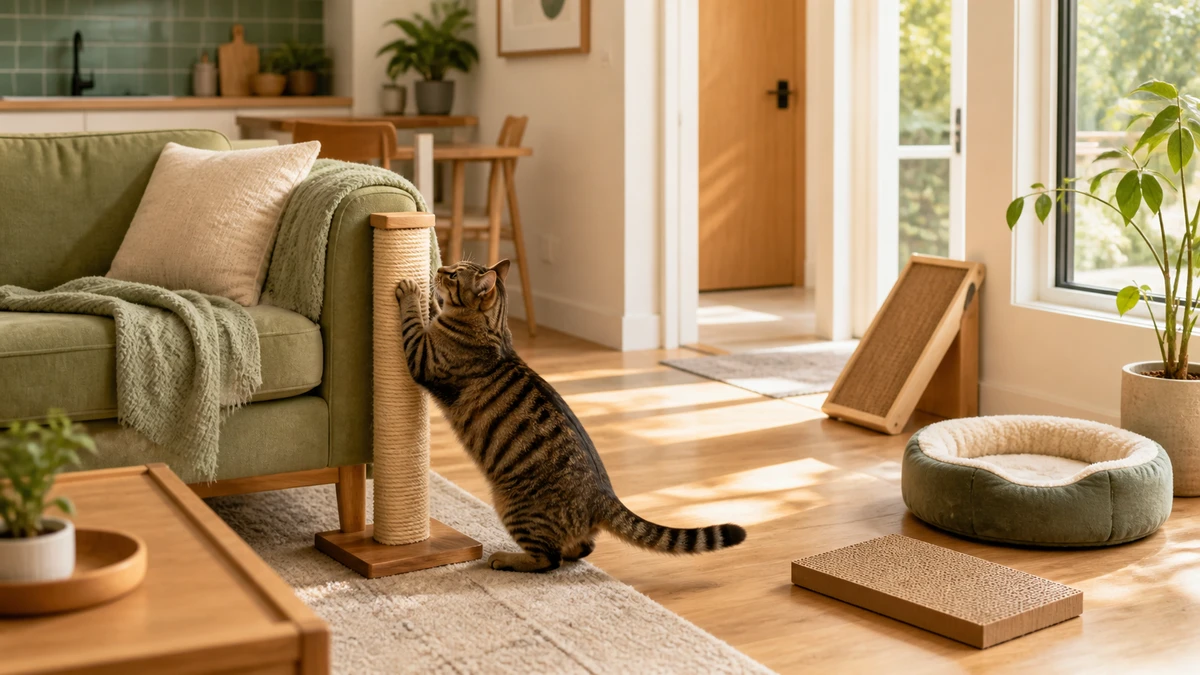
In a multi-cat home, one prized post may not be freely available to every cat. Spread suitable scratching surfaces across different areas so one cat cannot control the only route to them. The broader environmental-needs principle is simple: key resources work better when cats can reach them without confrontation.
A nine-step plan to redirect scratching
Changing the habit works best when the new option and furniture protection begin at the same time.
1. Map every active scratch point
List the furniture, rug, wall, or doorway sites used during the past week. Note direction, material, height, time, and what is nearby. If there are three active locations, one post in a distant room is unlikely to cover all three.
2. Put a matched scratcher directly at each important point
Place the new surface in front of or immediately beside the existing marks. The first goal is not interior design; it is making the acceptable choice the easiest choice in the exact context where scratching already occurs.
3. Offer more than one useful option
When preference is uncertain, provide vertical and horizontal choices with different safe textures. Keep the options available long enough to observe repeated use. One glance, sniff, or walk past a new object does not establish a permanent dislike.
4. Make the surface easy to investigate
Use a wand toy to lead movement past the scratcher without dragging claws across it. For cats that respond to catnip, a small amount on or near the surface may invite exploration; not every cat responds. Never hold the paws and scrape them on the material. Forced contact can make the object predict restraint instead of choice.
5. Reward the choice immediately
When the cat touches, stretches on, or scratches the intended surface, deliver something that cat values—one small treat, a brief toy chase, gentle attention, or another preferred reward. The FelineVMA advises rewarding within about three seconds so the consequence is linked to the desired action.
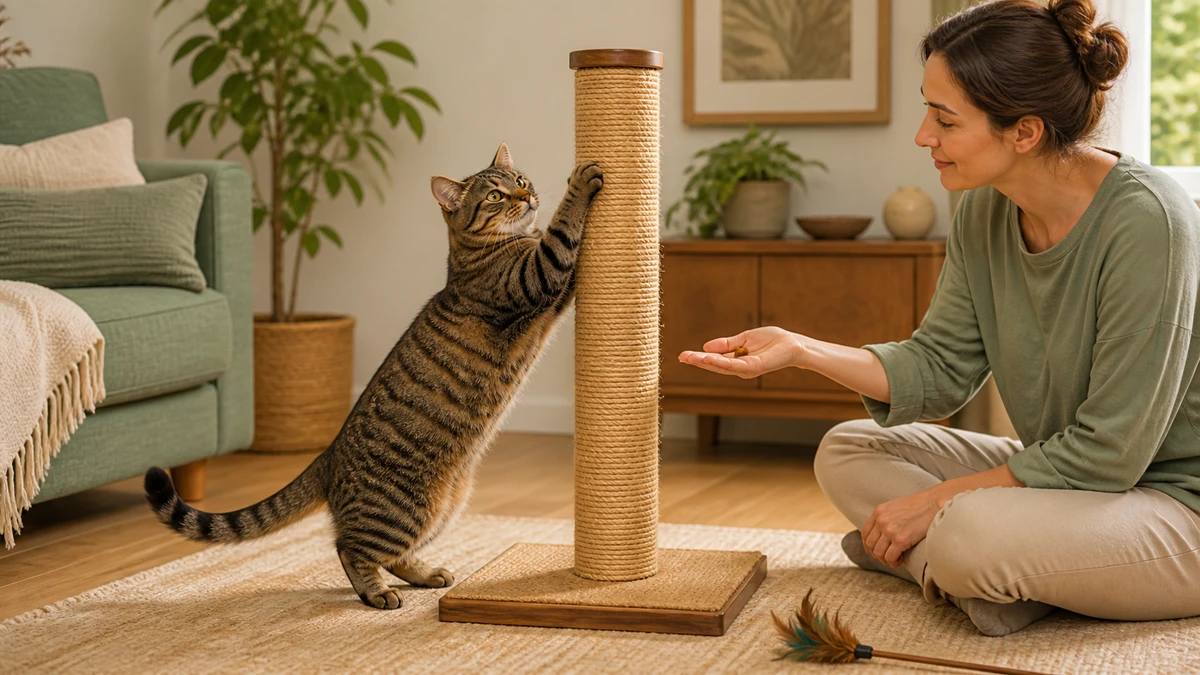
Do not lure continuously until the cat is overexcited. Short successful repetitions are clearer than a long session. As the new habit becomes reliable, reward intermittently while leaving the scratcher freely available.
6. Protect the furniture without frightening the cat
Use a fitted smooth furniture guard, a securely tucked throw, or a physical arrangement that blocks the exact corner while keeping routes and resting places available. Check the cover for loose loops or edges that could catch claws. The protection is temporary management, not the lesson by itself; the attractive scratcher must remain beside it.
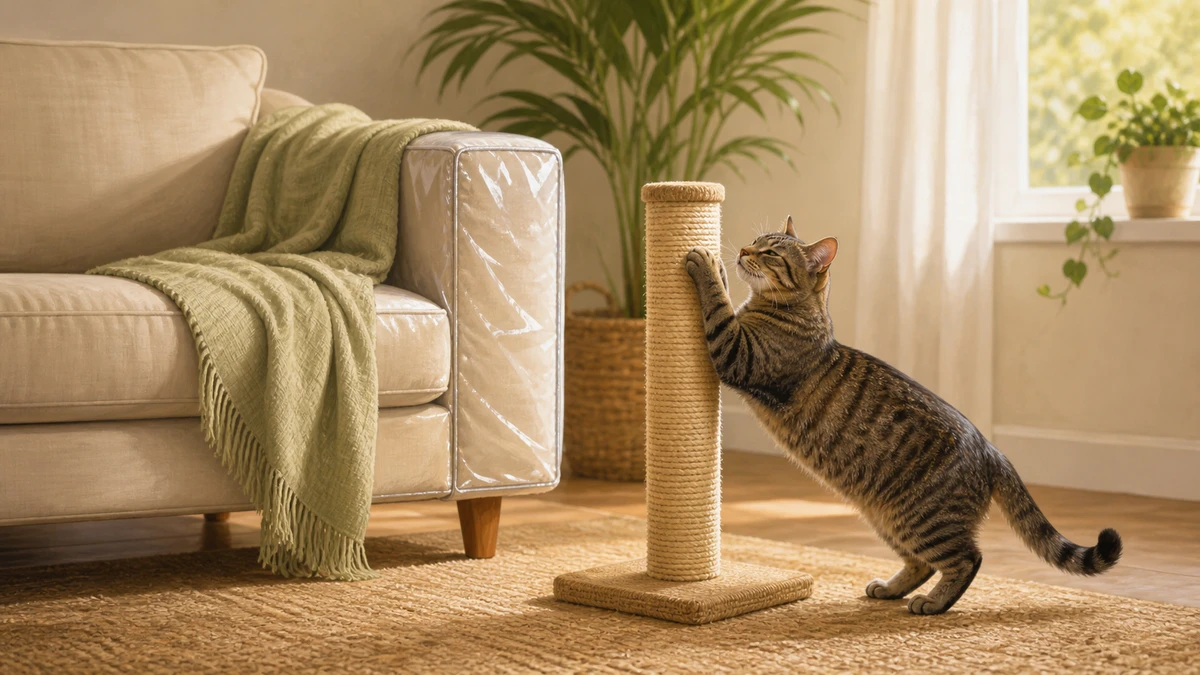
Avoid squirt bottles, shouting, hitting, painful surfaces, sudden noise traps, or anything designed to frighten the cat. The FelineVMA warns that punishment can increase distress, inhibit learning, and damage the human–cat bond. Our guide to why you should never hit your cat explains why interruption is not the same as teaching an alternative.
7. Keep the setup consistent
Leave the scratcher in the successful location while use becomes predictable. Do not put it away after guests leave, rotate it daily, or clean away every familiar scent. Consistency helps the cat find the same answer the next time the urge appears.
8. Move it only after it is established
If the scratcher must end up elsewhere, move it in small stages after the cat uses it reliably. Pause when use drops and move it back toward the last successful spot. Some scratchers need to remain near a sofa, bed, window, or doorway because location is part of their function.
9. Maintain the accepted surface
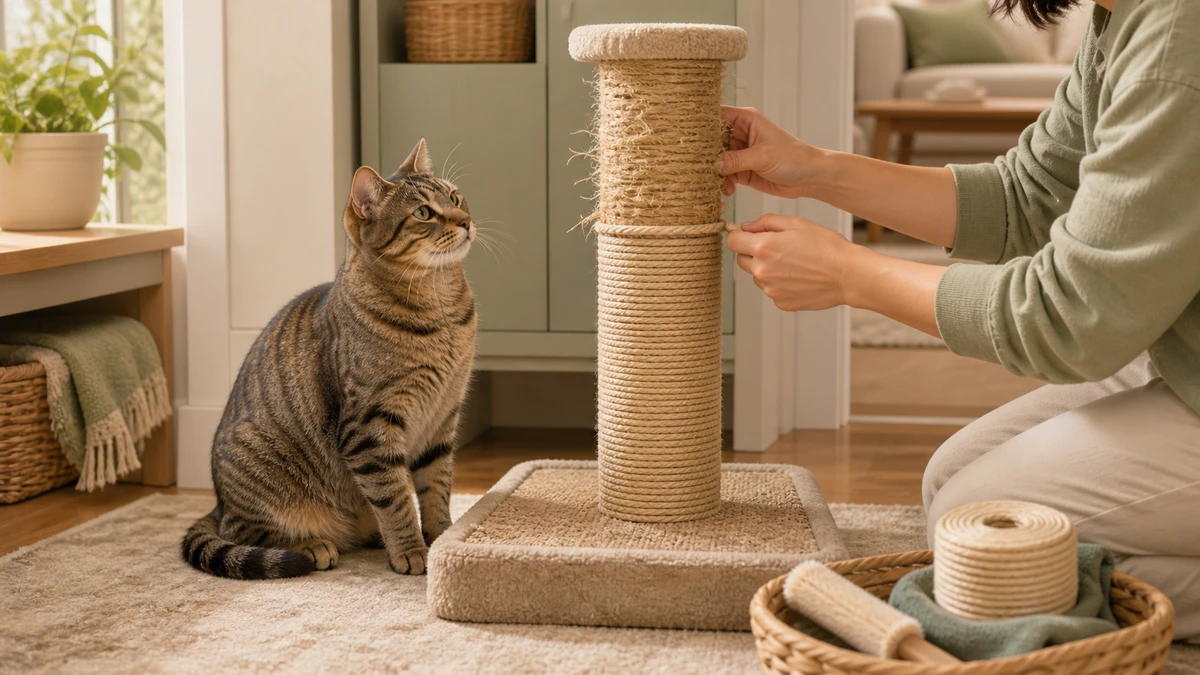
A ragged post is often evidence of success, not an aesthetic emergency. Keep it while it remains structurally safe. Tighten the base, repair or replace dangerously loose material, and introduce a replacement beside the familiar object before removing the old one.
Adjust the plan as the cat changes
A setup that worked for a young adult may not remain comfortable forever. International Cat Care notes that a tall vertical post can be painful for some cats with mobility problems and suggests trying a horizontal surface. Reduced scratching can also contribute to overgrown claws in cats with compromised mobility.
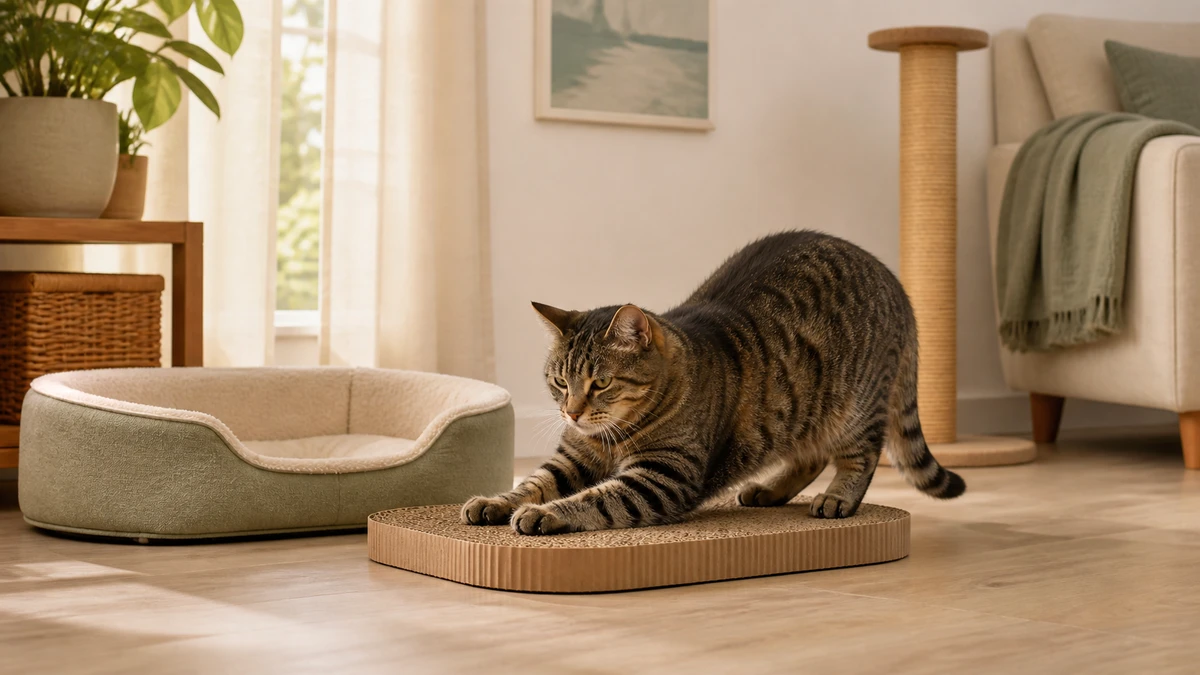
Offer a low, non-slip horizontal or gently angled surface when a cat stops reaching high, appears stiff, or avoids a previously loved post. This is an accommodation, not a diagnosis. Do not assume age alone explains the change; discomfort and mobility changes deserve veterinary discussion.
Kittens may explore several textures and need durable, stable choices in the places where they play and rest. In multi-cat homes, duplicate successful types in separate locations. A cat should not have to pass another cat in a narrow doorway to reach the only legal scratching surface.
What not to do
- Do not punish, yell, hit, or spray water. These actions do not teach which surface should be scratched and may add fear or frustration.
- Do not use painful or startling deterrents. A humane plan changes access, protects the target, and makes an appropriate outlet rewarding.
- Do not force the paws onto a post. Let toys, scent, curiosity, and reinforcement invite voluntary use.
- Do not hide every scratcher for the sake of appearance. Prominent furniture is often scratched because the location matters.
- Do not discard a safe, worn favorite without transition. The visible and scent history may be part of its value.
- Do not treat declawing as a furniture solution. Declawing is amputation of the third phalanx, not a nail trim. The FelineVMA strongly opposes it as an elective procedure and recommends scratching surfaces, claw care, enrichment, and other non-surgical alternatives.
When a veterinary check belongs in the plan
Normal scratching can vary, but a sudden clear change deserves attention. Contact a veterinarian if scratching sharply increases or decreases, the cat stops using a familiar posture, or the change appears alongside hiding, reduced activity, irritability, or other changes from baseline. Increased scratching may occur with distress, but one behavior cannot identify the cause; our guide to signs of stress in cats can help you record the wider context without self-diagnosing.
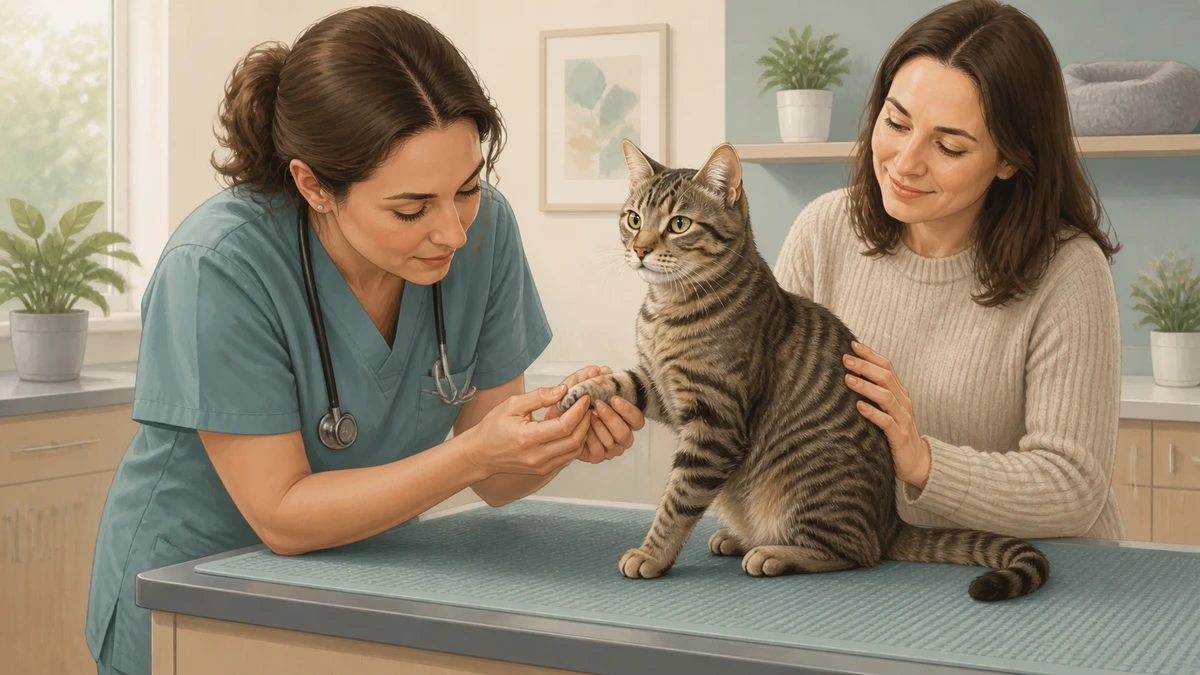
Arrange veterinary care for a split, bleeding, swollen, or painful-looking claw, repeated licking of one paw, holding a paw up, limping, difficulty walking or jumping, or a sudden preference for low surfaces. Do not pull a damaged claw or give human pain medicine. A veterinarian can examine the claw, paw, movement, and overall health, then advise on safe care and whether the environment should change.
The goal is not a home in which scratching never happens. It is a home where normal scratching has safe, stable, well-placed outlets—and the sofa no longer has to do the job.
Frequently asked questions
Why does my cat ignore a new scratching post?
The post may be in the wrong place, point in the wrong direction, feel unfamiliar, move under pressure, or be too short for the cat’s preferred motion. Put it beside the current scratch marks, verify stability, offer another texture or orientation, and reward voluntary investigation. Give the cat repeated opportunities rather than forcing the paws onto it.
Is sisal always better than cardboard?
No. Sisal is durable and works well for many cats, while corrugated cardboard works well for others. Carpet, rough fabric, or wood may also be selected. Observe what your cat already scratches and offer safe comparisons. The best material is the one the individual repeatedly uses without getting claws caught.
How many scratchers does one cat need?
There is no universal number. Provide enough appropriate surfaces to cover important contexts: active furniture targets, a waking area, and any other repeated location. Multiple cats often need options in separate areas so access cannot be blocked. Add rather than remove choices while you are still learning the pattern.
Can I move the scratching post away from the sofa?
Yes, sometimes—but wait until the cat uses it reliably, then move it gradually. If use drops, return toward the last successful location. A post may need to stay beside the sofa because that visible, frequently used spot is part of why the cat scratches there.
Should I replace a scratching post as soon as it looks shredded?
Not if it is still stable and safe. Wear often shows that the surface works. Repair unsafe loose sections and introduce a replacement beside the old post before removing the familiar one. Replace immediately if the structure wobbles, sharp hardware is exposed, or material creates an entanglement or ingestion hazard.