Why Does My Cat Bite When I Pet Them? Read the Stop Signals
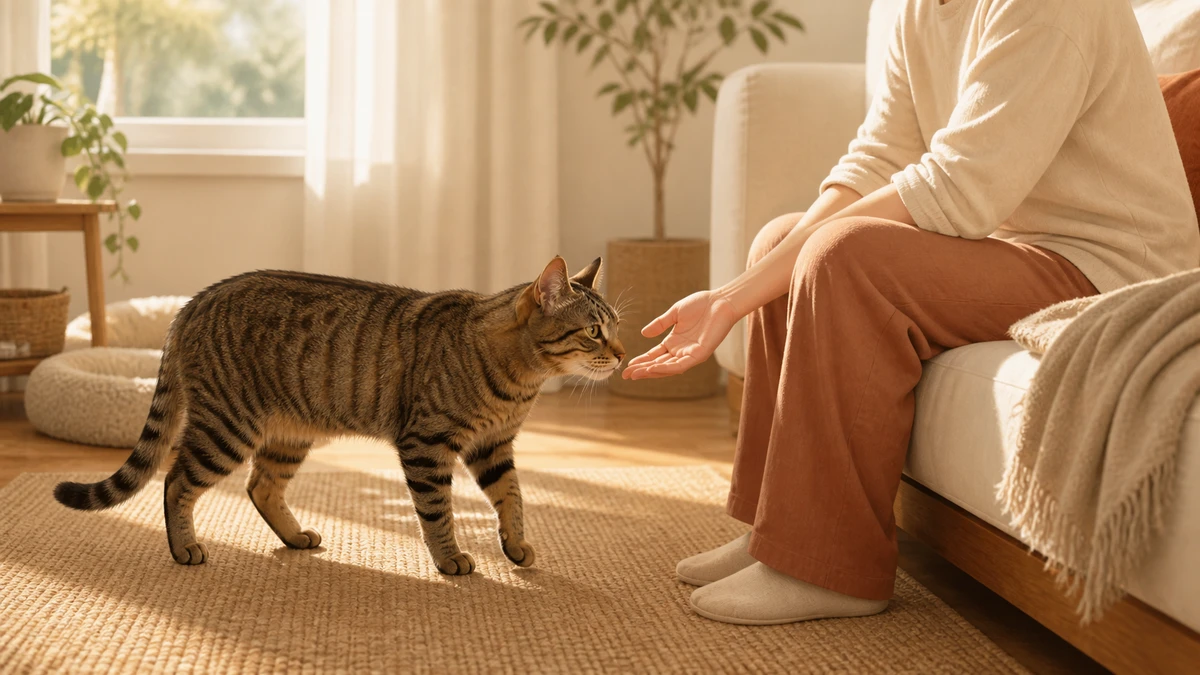
A cat that bites during petting is usually not being spiteful and did not necessarily change moods “out of nowhere.” The bite is more usefully read as a request for that interaction to change or stop. Many cats show smaller signals first: a flicking tail, rippling skin, ears turning back, a tense pause, or a sharp look toward the hand. Stop at those signals and give the cat room to leave. If the behavior is new, happens only when one area is touched, or comes with changes in movement, grooming, appetite, or activity, arrange a veterinary examination because pain can lower tolerance for touch.
“Petting overstimulation” is a convenient description, not a proven explanation for every bite. Cornell University’s feline aggression guidance says the reasons remain unknown and lists overstimulation and control over when petting ends as possibilities. VCA’s veterinary behaviorists likewise emphasize that different cats bite in this setting for different reasons. Duration, location of touch, the room, the cat’s earlier experiences, current arousal, and physical comfort can overlap. There is no universal number of strokes or seconds after which every cat will bite.
A bite is the end of a conversation, not the first sentence
People naturally notice teeth. Cats often begin communicating earlier and more quietly. The useful skill is not predicting a dramatic attack; it is recognizing the first change away from relaxed engagement.
Watch the whole cat and compare the current posture with that individual’s relaxed baseline. Possible stop signals include:
- the tail tip flicking, the tail swishing more forcefully, or the tail becoming tense;
- skin along the back twitching or rippling under the hand;
- ears rotating sideways or backward, or flattening closer to the head;
- the body becoming still, rigid, lower, or angled away;
- a quick head turn, stare, or glance toward the hand;
- pupils appearing wider together with other tension signals;
- purring, rubbing, or leaning into the hand stopping;
- the cat shifting position, moving away, or no longer returning after a pause;
- a brief nose lick, head shake, or sudden short burst of grooming;
- a paw lift, growl, hiss, swat, or mouth opening—the interaction has already escalated and needs space.
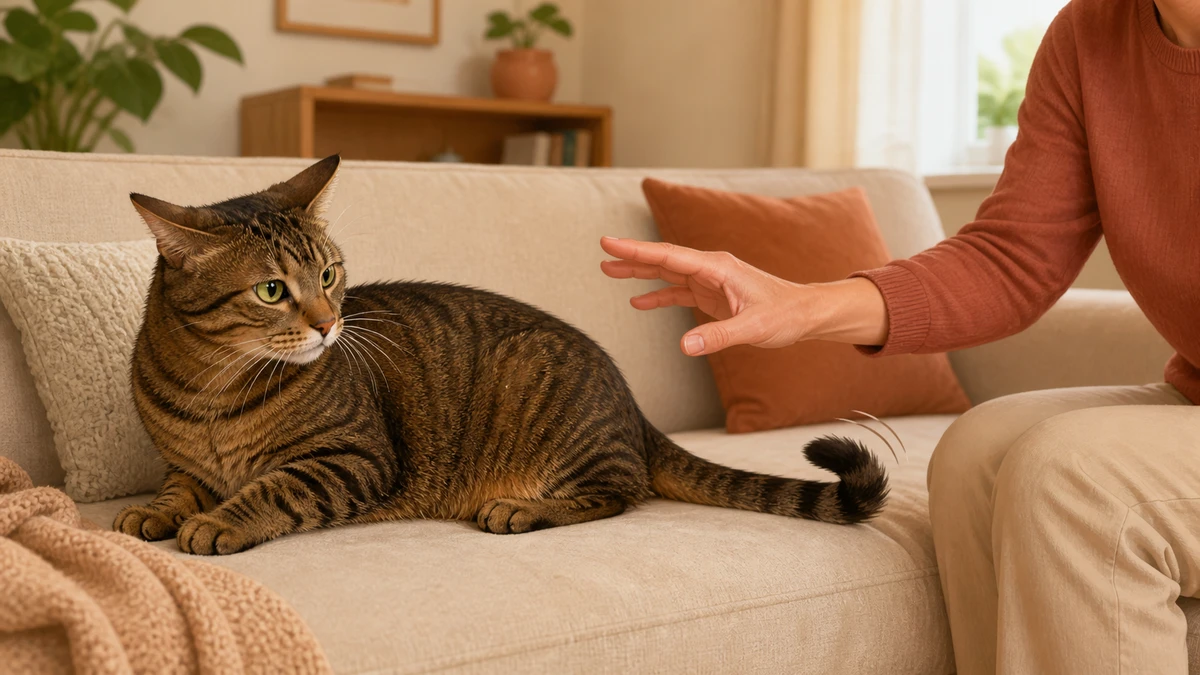
No single item proves what a cat feels. Pupils change with light as well as arousal; a tail moves for more than one reason; purring is not a guarantee that all contact remains welcome. Context, combinations, and change over time matter. Our guide to signs of stress in cats explains the same whole-body approach in more situations. If the tail starts whipping at the same moment the ears turn back and the body freezes, the safest response is to stop—not to keep touching in order to “test” the interpretation.
This is why “my cat gave no warning” can be true from the person’s perspective without meaning the cat had no earlier response. A signal may have been tiny, brief, or unfamiliar. Some cats also escalate faster than others. The goal is not to blame the person for missing it. The goal is to make the next interaction easier to read.
Coming close is not always permission to stroke
A cat may sit on a lap for warmth or companionship without wanting repeated strokes. Rubbing a cheek against a hand can be friendly contact, but it does not create permanent consent for touching every body part. A cat can enjoy two strokes and decline the third. It can choose proximity today and prefer space tomorrow.
The 2022 AAFP/ISFM cat-friendly interaction guidelines report that cat-initiated interactions tend to last longer than person-initiated ones. They recommend giving cats choice over location and body position instead of restraining them. The earlier AAFP/ISFM environmental needs guidelines similarly describe many cats as preferring frequent, low-intensity social contact that they can initiate, adjust, and end.
Choice changes the practical setup. Sit or crouch at the cat’s level, offer a relaxed hand, and wait. If the cat approaches, rubs, or leans in, use one or two gentle strokes in a familiar preferred area, then pause. That small number is a cautious starting test—not a rule or a claim about the cat’s fixed limit. During the pause, the cat gets to answer: lean in again, nudge the hand, remain neutrally nearby, turn away, or leave.

If the cat does not reinitiate, let the interaction end. Remaining beside you is not a failed consent test and does not require more touching; shared quiet company may be exactly what the cat chose.
Where you touch can matter—but preferences are individual
The AAFP/ISFM handling guidelines identify the head and neck, especially around the facial glands near the cheeks, ears, and chin, as commonly preferred regions. They describe the abdomen, feet, and the rear of the body near the tail as less welcome for many cats. A 2021 controlled study of best-practice human–cat interaction used similar guidance: prioritize cheeks, the base of the ears, and sometimes the chin; be cautious around the back, flanks, legs, tail, abdomen, and tail base.
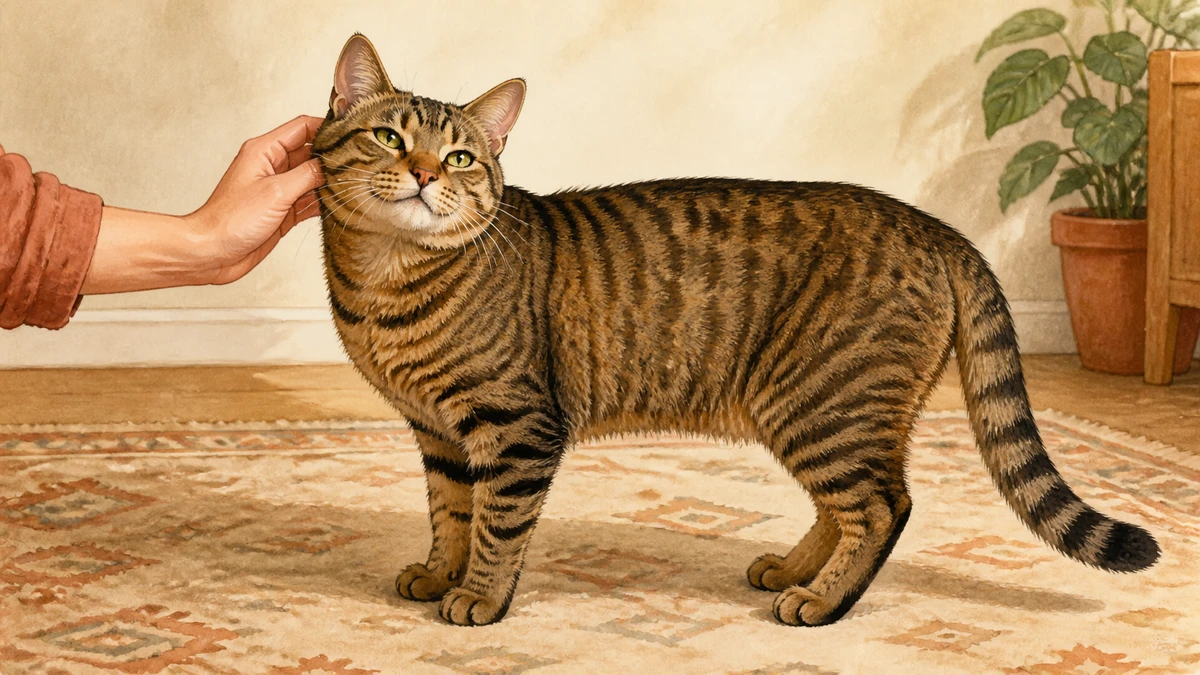
These are population-level starting points, not a map stamped onto every cat. One cat may love a long back stroke; another may tense as soon as the hand leaves the cheeks. A cat that exposes the belly may be stretching or showing trust rather than requesting a belly rub. Follow the individual’s response, and never hold the cat in place to finish a petting session.
Stroke direction and pressure also matter. Begin with light contact in the direction of the fur. Avoid patting, scrubbing, squeezing, or rapid back-and-forth movements unless you already know the cat actively seeks that style. Familiarity is not permission to become rougher.
Five context factors that can lower petting tolerance
The same cat can respond differently across interactions because the interaction is not happening in a vacuum. Consider at least these five categories:
- Touch location and technique. The abdomen, paws, tail base, flank, or a particular joint may be less tolerated. Pressure, stroke length, speed, and reaching from above can change the experience.
- Duration and repetition. A pleasant sensation may stop being pleasant after repeated strokes. The threshold is individual and can vary from day to day; it is not a universal timer.
- Environmental stimulation and current arousal. A loud sound, unfamiliar odor, visitor, nearby dog, or cat outside the window can add tension. A hand may receive a redirected response even when it did not create the original arousal.
- Learning history and social experience. Genetics, early socialization, previous handling, frightening restraint, and the person involved can shape what contact feels predictable or safe. Tolerance is not a moral score and cannot be forced into existence.
- Pain, itch, illness, or reduced mobility. VCA notes that joint, limb, neck, back, dental, ear, and skin discomfort can make touch or a small position shift painful. The article cannot identify the cause; a veterinarian needs to examine a sudden or location-specific change.
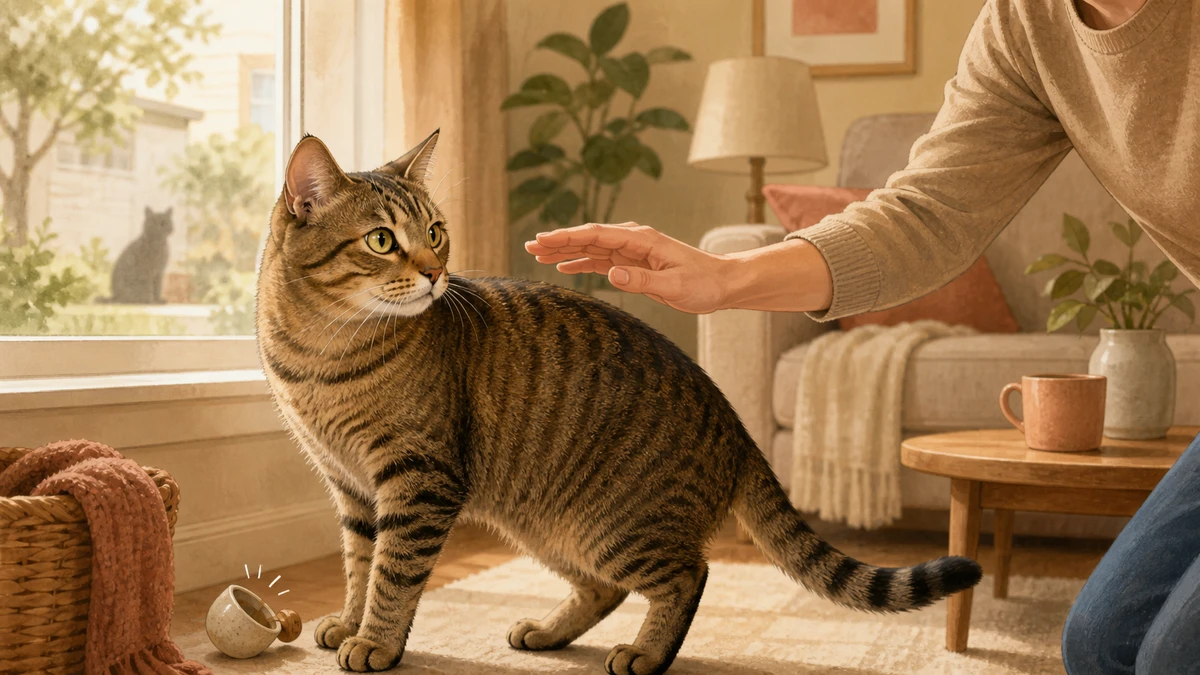
Current activity belongs in the picture too. A cat focused on eating, watching prey, sleeping deeply, grooming, or recovering from play may not want a hand introduced. Cornell advises avoiding uninvited petting and not picking up or interacting with a cat while it is eating when managing petting-related aggression. That is not because food automatically causes biting; it is a way to remove preventable pressure from a known high-risk interaction.
A low-pressure petting routine
You do not need to avoid all affection. Replace automatic touching with a short loop that repeatedly returns control to the cat.
1. Invite instead of reaching in
Approach at the cat’s level and from the side rather than looming overhead. Keep the hand soft and still enough to inspect. Let the cat close the final distance. If there is no approach, choose non-contact company or play instead.
2. Start in a known comfortable area
Use a cheek, temple, ear base, or chin only if this cat has welcomed contact there. Begin lightly and along the fur. Do not use the first attempt to explore the belly, paws, tail, or a body area the cat protects.
3. Pause while the cat is still relaxed
After a very small amount of contact, take the hand away. Do this before a warning, not after a bite. Continue only when the cat clearly re-engages. A pause is an information window, not a trick designed to make the cat tolerate more.

4. Record patterns, not a magic number
For several days, note who was present, the location, what the cat was doing, where and how you touched, the earliest body change, and what happened after you stopped. Patterns may reveal that a cat usually welcomes cheek rubs in the evening but struggles with long back strokes when the room is noisy. Do not turn the average into a forced quota. Stop sooner whenever today’s body language differs.

5. End on calm behavior and offer other ways to connect
Let the session finish while the cat is relaxed. Quiet company, slow blinking, a treat placed away from your hand, or a wand-toy session can provide social contact without continuous touch. Keep hands and feet out of play so hunting movements are directed toward toys, not skin.
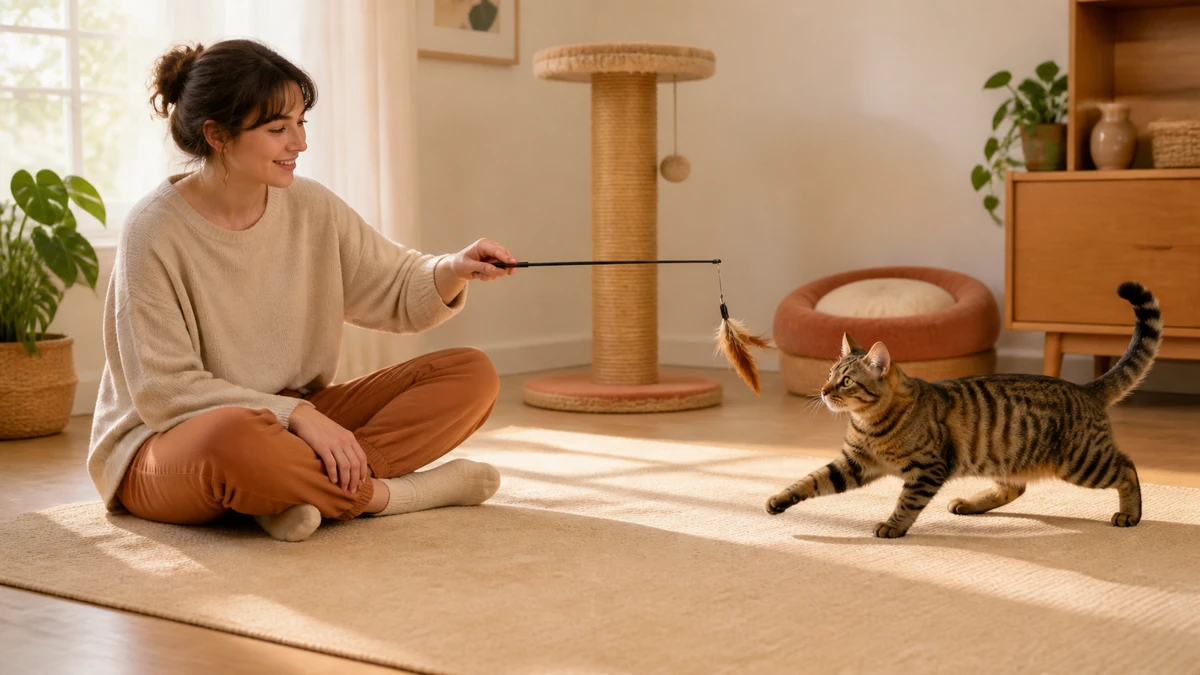
6. Give space; never chase, restrain, punish, or test the boundary
If a warning appears, calmly remove the hand and allow an exit. Do not grab the cat, pin it down, follow it, yell, spray water, hit, or repeat the touch to see whether the cat “really means it.” Cornell warns that physical punishment can increase fear or anxiety and worsen aggression; our article on why you should never hit a cat covers safer ways to interrupt and redirect behavior. Restraint also removes the very exit the cat is trying to request.
For a cat with a history of hard bites, protect children and other high-risk household members with supervision, distance, doors, or barriers while you seek individualized help. Safety management is not punishment; it prevents another rehearsal while the cause is assessed.
When the veterinary track comes first
Book a veterinary examination when biting begins suddenly, increases, or occurs consistently when one spot is touched. Also seek veterinary advice if you notice limping, stiffness, reluctance to jump, hiding, appetite or sleep changes, unusual vocalization, skin twitching with intense licking, overgrooming, reduced grooming, or a change in litter-box habits. These signs do not diagnose a specific disease. They simply make a physical assessment more important than another home behavior experiment.
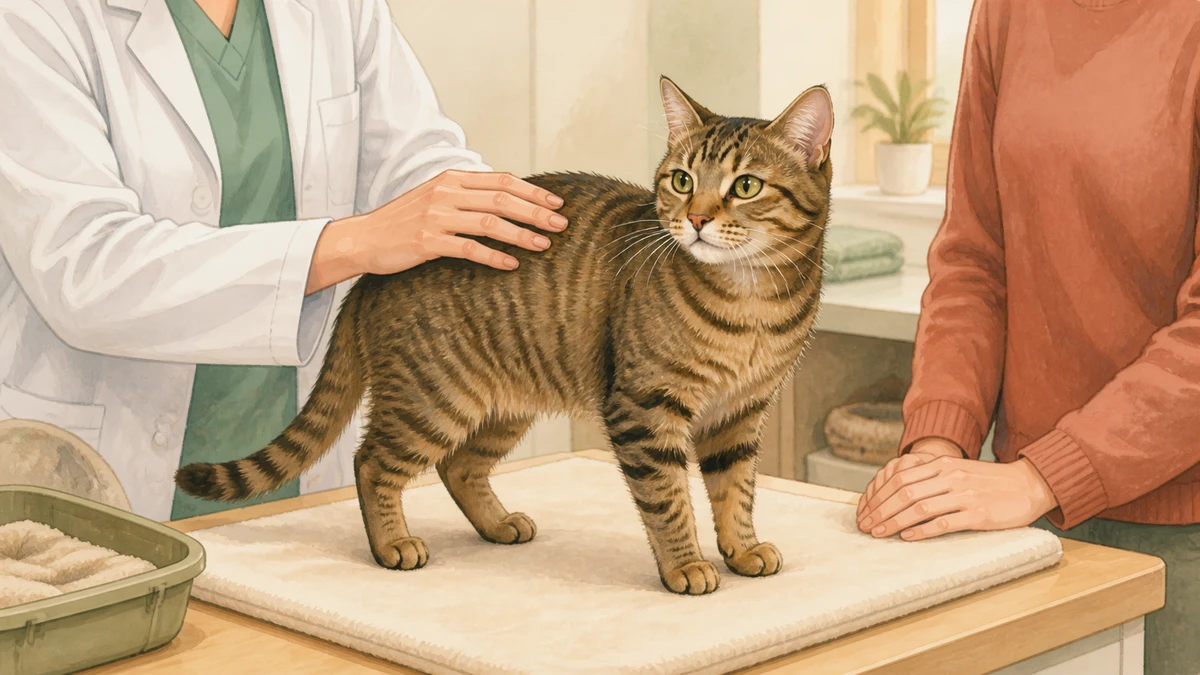
A veterinarian can assess pain and health, then help decide whether a veterinary behaviorist or appropriately qualified feline behavior professional should join the plan. Severe or unpredictable aggression, repeated injuries, or danger to a child or vulnerable adult needs an individual safety strategy rather than generic internet tips.
If a bite breaks human skin, step away safely, wash the wound with soap and warm water, cover it with a clean dressing, and obtain medical advice. NHS guidance calls for urgent help when a bite becomes hot, swollen, painful, discolored, or drains fluid, and emergency care when a wound is large, deep, or will not stop bleeding. Local services may give different instructions, so follow the healthcare guidance where you live. Human first aid and the cat’s behavior plan are separate needs; caring for the wound is not a reason to punish the cat afterward.
The most useful question is not “How many seconds can I pet my cat?” It is “What is my cat communicating in this interaction, today?” Invite, touch lightly, pause, and accept the answer. A shorter session that ends calmly is more affectionate than a longer one the cat has to end with teeth.
FAQ
Why does my cat purr and then bite me? Purring does not override the rest of the body. The cat may have enjoyed the interaction initially, may use purring in more than one emotional state, or may reach a point where continued touch is no longer welcome. Watch for changes such as tail movement, tension, ears rotating back, or stopping the lean into your hand, and pause before the bite.
Is there a fixed petting time or number of strokes that prevents bites? No universal limit is supported. Each cat’s tolerance differs and can change with body area, technique, environment, arousal, experience, and physical comfort. One or two strokes followed by a pause is a conservative way to ask for feedback, not a rule that every cat must accept.
Does a cat showing its belly want a belly rub? Not necessarily. Rolling over can occur during relaxation, greeting, play, or defensive preparation. Many cats prefer touch around the head and cheeks and dislike abdominal contact. Treat the exposed belly as information about posture, not automatic permission, and follow the individual cat’s response.
Should I give a treat after I stop petting? A small reward placed away from the hand can help a calm ending for some cats, and veterinary behavior guidance sometimes pairs brief tolerated contact with food. Do not use food to lure a tense cat back into unwanted touch, and account for treats in the daily diet. The essential step is still stopping when the cat asks.
When should I consult a professional? Start with a veterinarian for any sudden change, touch sensitivity in one location, possible pain, or accompanying activity, grooming, appetite, sleep, or litter-box changes. Ask about qualified behavior support when health has been assessed but biting continues, is difficult to predict, causes injury, or creates a safety risk.