Are My Cats Playing or Fighting? Read the Whole Interaction
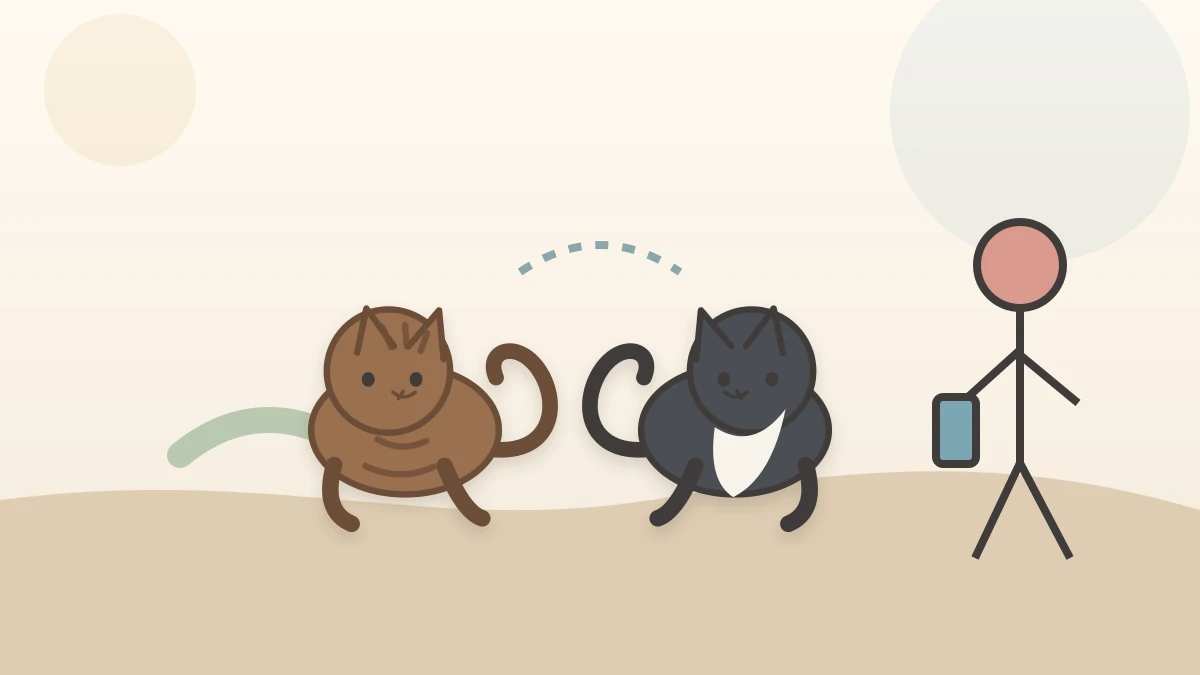
Cats are more likely to be playing when the interaction is reciprocal, loose, punctuated by pauses, and easy for either cat to leave—and when both voluntarily return and behave normally afterward. Conflict is more likely when pursuit stays one-way, a cat is cornered, bodies remain tense, vocalization persists, contact escalates, or one cat hides, avoids resources, eats less, or cannot settle later. Do not decide from one hiss, chase, ear position, or wrestling move. Read both cats, the sequence, the escape options, and the aftermath. If safety is uncertain, create distance without putting your hands between them.
The important question is not whether the scene looks dramatic. Cats can chase, pounce, mouth, kick, pin, and wrestle during play, and some conflict is quiet. The useful question is whether both cats still have choice. Reciprocity, release, and recovery tell you more than any isolated gesture.
Use three categories, not a play-or-fight switch
The 2024 AAFP Intercat Tension Guidelines note that chasing, wrestling, and mouthing can occur in both social play and agonistic encounters. A video study published in Scientific Reports likewise identified playful, intermediate, and agonistic patterns rather than a perfect two-box split. An interaction can begin as play, become too intense for one participant, and improve when the other cat respects the request for space. It can also stay unequal even when there is no dramatic fight.
Use three practical zones:
- Likely mutual play: both cats initiate, chase and are chased, release, pause, and choose to return. Movement is generally loose, contact is controlled, exits remain open, and normal life resumes afterward.
- Ambiguous or needs observation: one cat is more enthusiastic, a hiss or short protest occurs, roles are only partly balanced, or a pause is followed by uncertain re-entry. Slow the situation down and watch whether choice returns.
- Likely conflict or unwanted interaction: pursuit is one-way, one cat repeatedly tries to escape, access is blocked, bodies stay rigid, vocalization or striking escalates, injury occurs, or the effects continue into eating, sleeping, toileting, grooming, movement, or room use.
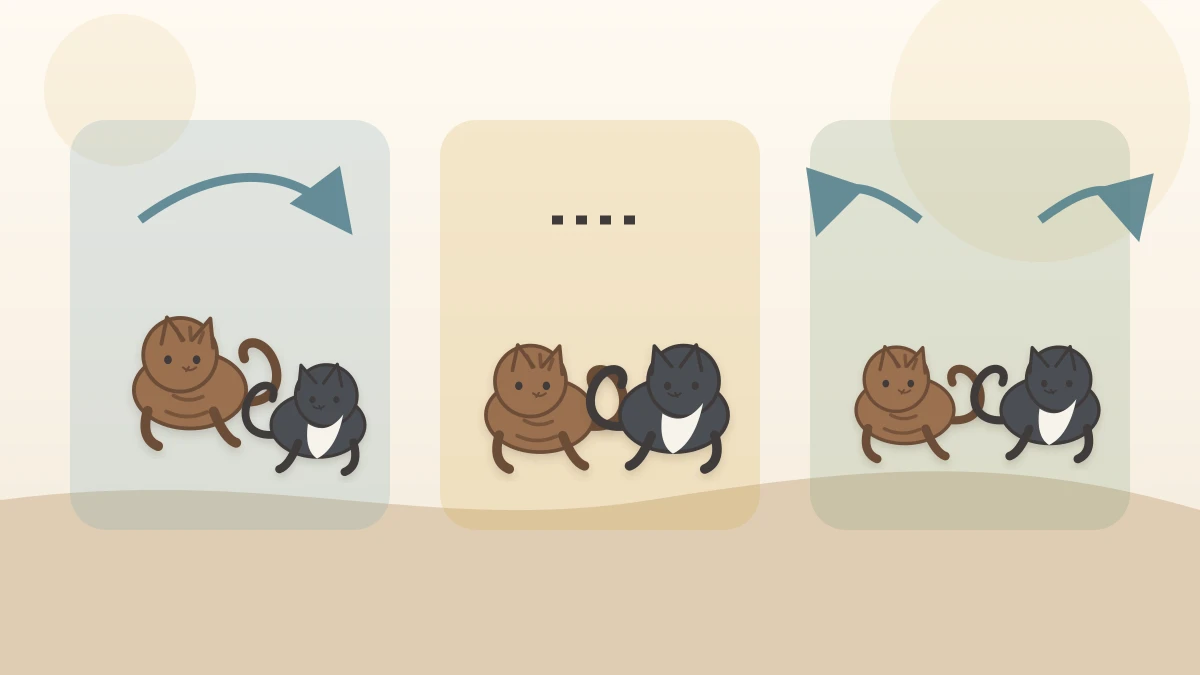
“Intermediate” is not a diagnosis and does not mean the cats should be left to solve it. It is a reminder to gather more context, reduce intensity, and protect the less willing cat before the interaction becomes a dangerous test.
Compare at least seven dimensions
No row is a standalone verdict. Read across the table, compare with each cat’s normal behavior, and pay special attention to whether the less active cat can leave.
| Dimension | More consistent with mutual play | Ambiguous—pause and observe | More consistent with conflict or unwanted play |
|---|---|---|---|
| Reciprocity | Cats alternate initiating, chasing, being chased, pinning, or being underneath | Roles change sometimes, but one cat drives most bouts | One cat persistently pursues, pins, stalks, or returns after the other withdraws |
| Pauses and re-entry | Both disengage, reposition, groom, look around, or walk away; either may voluntarily return | A pause occurs, but one cat watches closely or re-enters only after being approached | Little workable release, or a withdrawing cat is immediately followed, blocked, or attacked again |
| Whole body | Curved, springy, or loose movement; weight shifts freely | Excitement rises; one posture briefly stiffens | Sustained rigidity, crouching, leaning away, piloerection, fixed staring, or repeated defensive posture |
| Sound | Often quiet; an occasional brief protest stops or changes the interaction | A hiss, growl, or cry occurs and you need to see whether the other cat backs off | Repeated or intensifying hissing, growling, yowling, or screaming with ongoing pursuit or contact |
| Escape and space | More than one route is open; a cat can climb, hide, or leave without being followed | An exit exists but passes close to the other cat | A doorway, stair, litter area, perch, or narrow route is guarded; a cat is cornered or chased from refuge |
| Contact intensity | Bites and swats are inhibited enough to avoid injury; release is frequent | Contact becomes rougher or one cat repeatedly signals “enough” | Force escalates, claws or bites cause injury, fur flies, or the cats remain locked together without release |
| Afterward | Both return to usual eating, resting, grooming, play, toileting, and comfortable room use | One cat needs more distance or time but returns toward baseline | Hiding, avoidance, vigilance, reduced appetite or play, changed sleep or toileting, or loss of access persists |
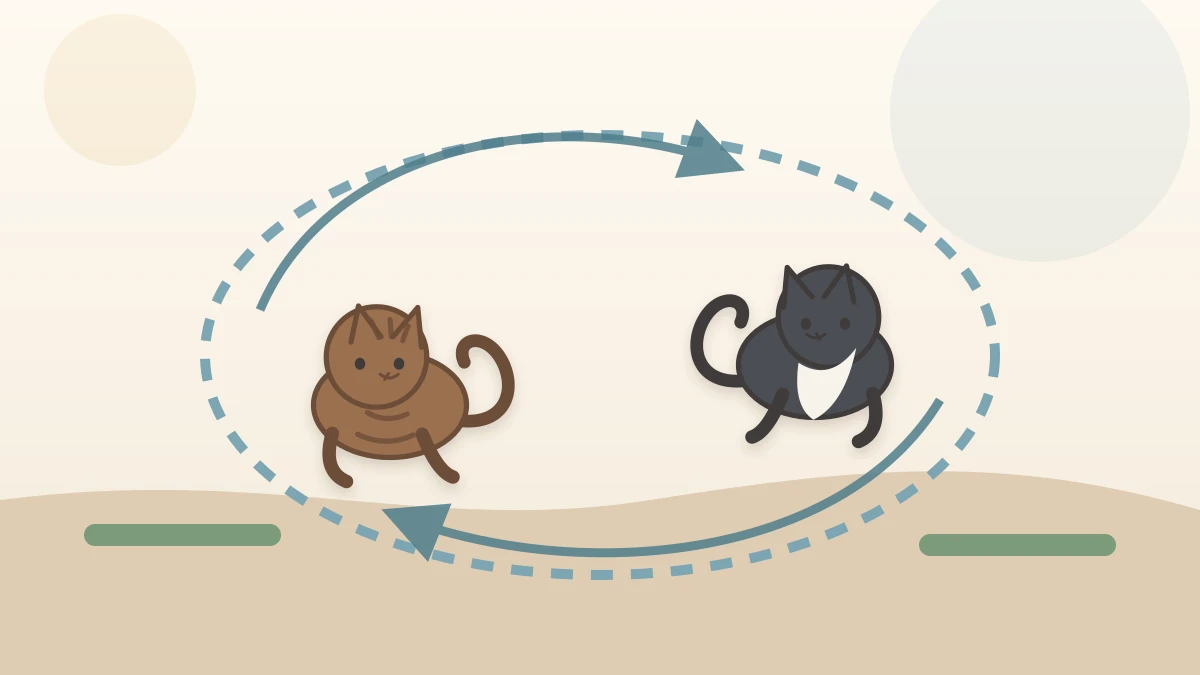
Reciprocity does not require a perfect 50–50 score. One cat may be faster or more likely to start. What matters is whether the quieter cat sometimes initiates, can end the bout, and is not repeatedly turned into a moving target. The Frontiers review describes social play as reciprocal and notes that pauses, inhibited biting or scratching, and little vocalization are commonly proposed play features—but it also cautions that much of the literature is still limited. Treat those features as evidence within a pattern, not a mechanical test.
A hiss is information, not a verdict
Hissing, growling, and a brief squeal can mean that a boundary has been reached. The next few seconds matter. If the other cat stops, loosens, looks away, or leaves—and the hissing cat can recover—the signal may have successfully ended an overly intense moment. If the other cat keeps pursuing, blocks the exit, or renews contact, the interaction is no longer mutually acceptable even if it began as play.
The reverse mistake is assuming silence means safety. The AAFP guidelines emphasize that intercat tension is often subtle. Fixed staring, following, waiting in doorways, displacing a cat from a bed, or controlling access to food, water, litter, height, and preferred people can happen without a loud fight. A quiet cat may freeze or avoid rather than vocalize.
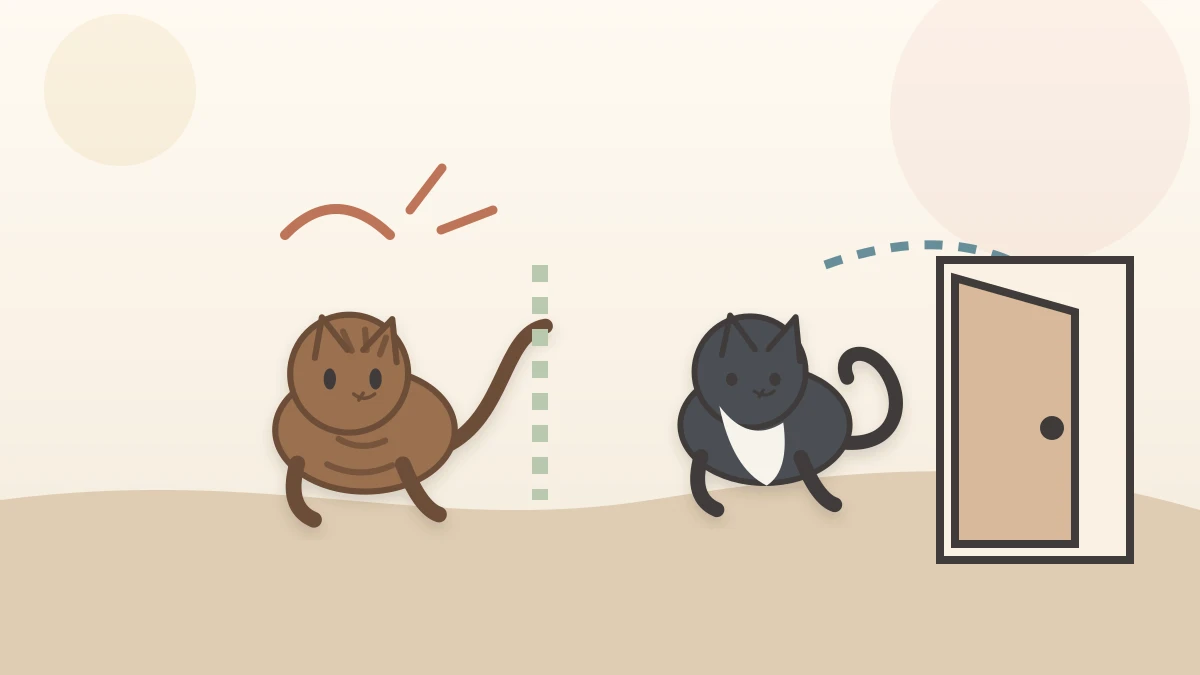
Ear, tail, pupil, and fur changes are also context-dependent. Play can involve flattened ears, tail movement, stalking, and a sudden pounce. Light affects pupils. One body part cannot tell you intent. Look for a cluster: muscle tension, weight direction, gaze, distance, sound, contact, escape, and what each cat does next.
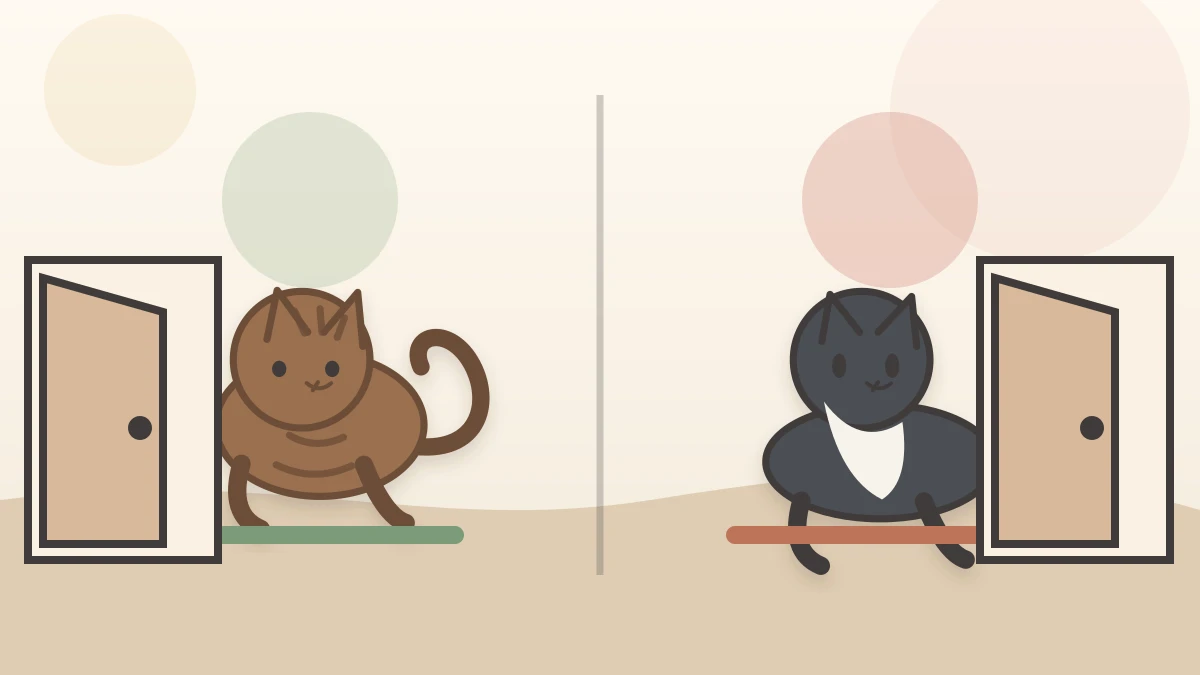
Choice is the clearest home-level check
During a pause, ask four questions:
- Can each cat leave by more than one route? A cat on a shelf with only one way down may be trapped even if the other cat is on the floor.
- Does the withdrawing cat get to stay away? Following once is not the same as repeated pursuit into hiding, behind furniture, or toward a litter area.
- Does either cat voluntarily re-engage? Turning back with loose movement is different from being flushed from cover or intercepted at a doorway.
- Can both resume ordinary behavior? Eating, grooming, stretching, exploring, resting, and using the litter box are useful recovery checks.
Do not manufacture a test by holding one cat, putting them nose-to-nose, closing an exit, or placing one bowl between them. Those actions remove the choice you are trying to observe.
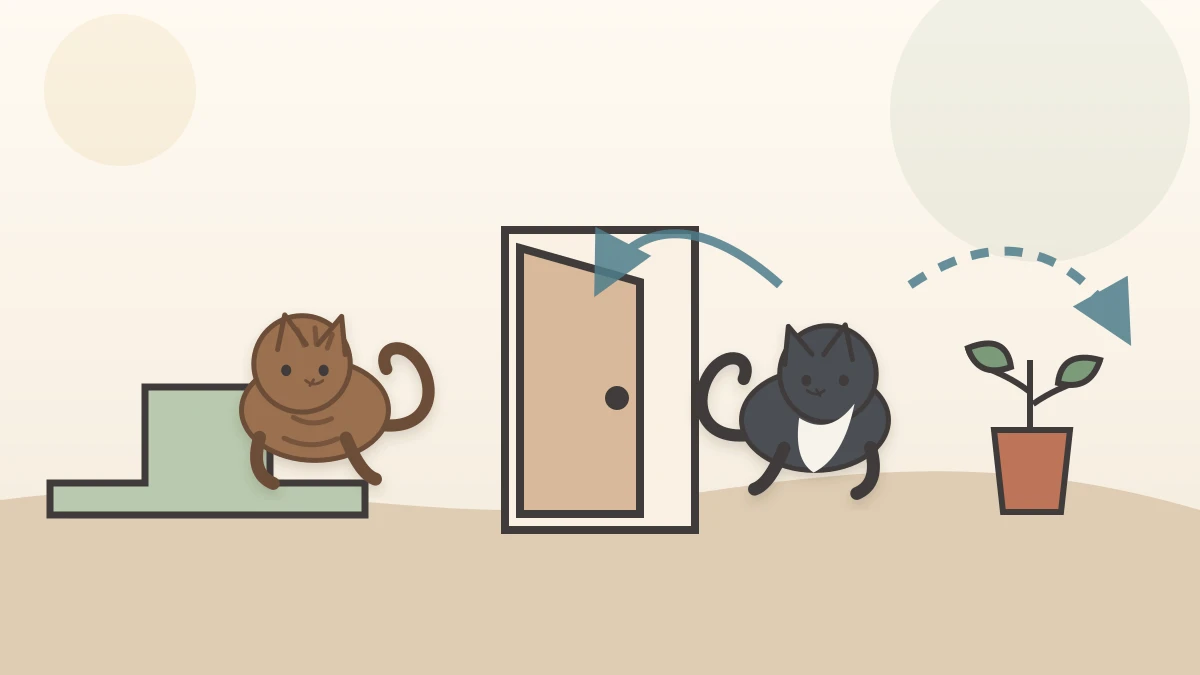
The relationship outside play matters too. Cats who reliably groom each other, rub, touch noses, or sleep in contact show affiliative behavior, while peaceful distance can reflect acceptable tolerance. Neither pattern guarantees that every wrestling bout is comfortable. Conversely, one disagreement does not prove the relationship has permanently broken down. Judge repeated patterns across the whole day.
Record the event without provoking another one
A short video can help a veterinarian or qualified behavior professional distinguish wrestling from one-way pursuit. Start recording only if you can remain distant and doing so does not delay a safety response. Never recreate the scene, move cats together, or wait for a conflict to become “clear enough.”
For several ordinary days, record:
- date, time, room, and who initiated;
- what happened in the preceding ten minutes, including outdoor animals, noises, feeding, visitors, play, or a return from the clinic;
- chase direction and whether it reversed;
- the approximate sequence of contact, releases, pauses, and voluntary returns;
- each cat’s posture, sound, exit route, and response when the other stopped;
- whether food, water, litter, beds, perches, doorways, stairs, or people were nearby;
- any fur loss, scratch, bite, limping, tenderness, or other possible injury;
- when each cat returned to ordinary eating, drinking, toileting, grooming, movement, play, sleep, and room use.
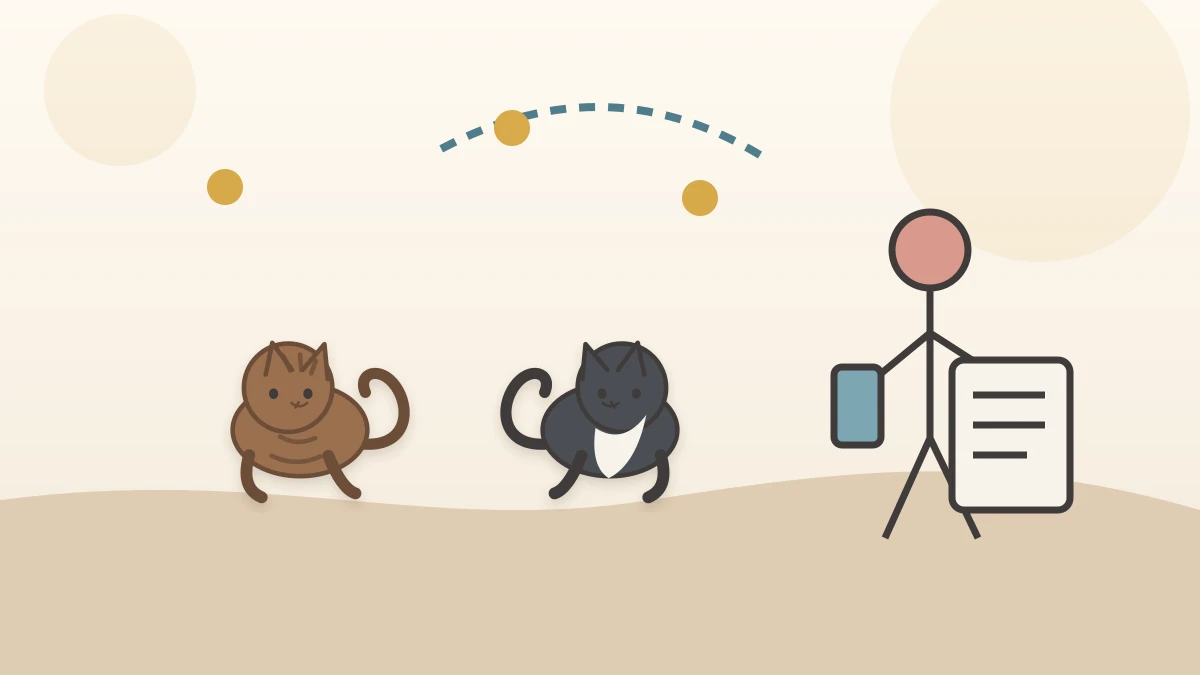
Review the clip at normal speed first. Slow motion can clarify the order of events, but it can also make every movement look more deliberate. Ask what each cat could choose, not which one looked “dominant.” Labels such as bully, victim, jealous, or alpha can hide useful facts about route blocking, unequal play drive, pain, fear, or a repeatable trigger.
Interrupt safely when choice is disappearing
Intervene early when a cat is trying to leave but cannot, pursuit stays one-way, tension is rising, or you are uncertain that both cats remain safe. The objective is to create space—not to punish, grab, or settle the relationship in that moment.
- Keep hands, feet, and your body out of the gap. Cornell explicitly warns never to put a body part between fighting cats because serious injury can result. Do not pick up, hold, or restrain an aroused cat.
- Move children and uninvolved animals away. Use an existing door if you can do so without crossing the cats’ path.
- Try a brief interruption from a safe distance. A single familiar call or short neutral sound may create a pause. Do not scream continuously, chase, bang objects near the cats, or turn noise into punishment.
- Break the sightline. From outside striking range, place a large piece of cardboard, opaque panel, chair cushion, or thick towel upright between them. Keep your hands behind the barrier.
- If you cannot approach, toss a large soft object onto the floor between—not at—the cats. A cushion or folded blanket may interrupt the sightline long enough for one cat to leave. Do not throw hard, small, or startling objects.
- Open separation routes. Let cats move into different rooms; do not herd both toward one doorway. Close a solid door only after each cat has cleared it.
- Give each cat a complete quiet zone. Provide water, litter, food as appropriate, bedding, hiding, and rest. Wait for ordinary behavior rather than opening the door at a preset time.
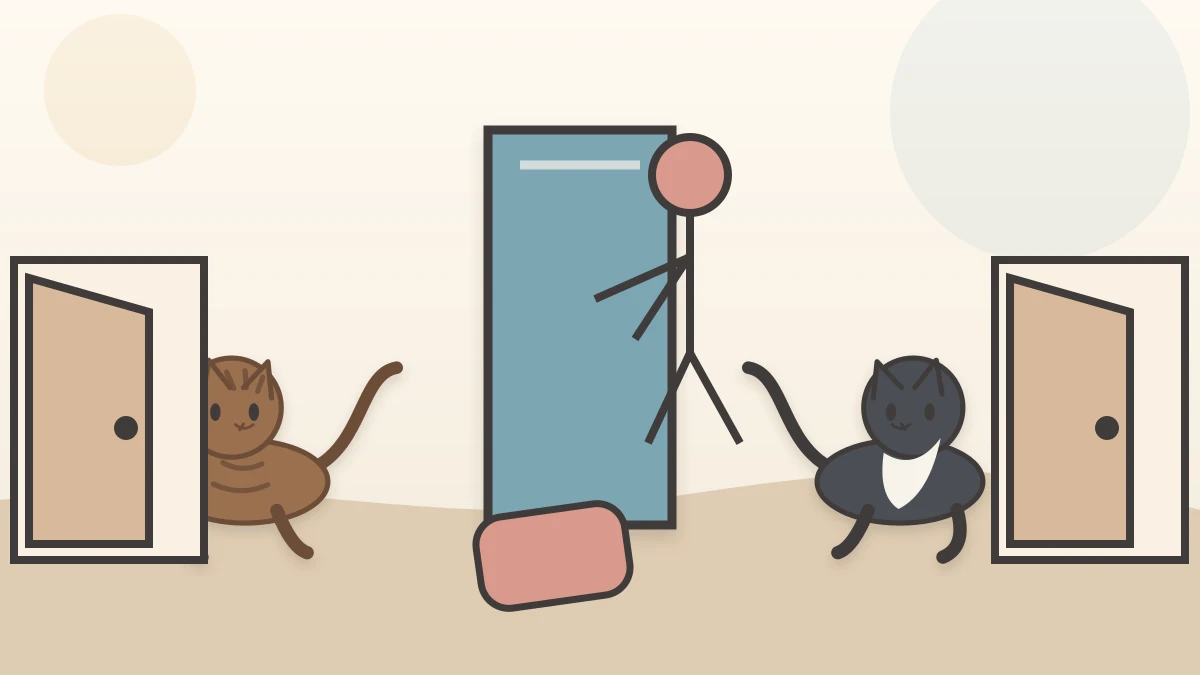
Never spray water, hit, yell at, chase, or force the cats back together. Physical punishment can increase fear or anxiety and worsen aggression, according to Cornell. Do not let cats “fight it out”; injury and fear can deepen the next association. If you cannot separate safely, contact a veterinary clinic, emergency veterinary service, or an appropriate local emergency resource for situation-specific help.
After separation, check bodies and routines
Do not handle an aroused cat to search for injuries. Observe from a safe distance and follow veterinary instructions for safe transport or examination. Contact a veterinarian promptly for a known or possible bite, bleeding, swelling, limping, marked pain, breathing change, collapse, or another concerning physical sign. If you cannot assess the cats safely after forceful contact, call the clinic rather than handling them to settle the question.
Also arrange veterinary assessment when aggression is new, sudden, repeatedly worsening, or accompanied by a change in appetite, drinking, toileting, movement, touch tolerance, sleep, grooming, orientation, or social behavior. The AAFP guidelines emphasize that a behavior change can be an early sign of a medical problem as well as social tension. This article cannot determine the cause for an individual cat.
If both cats recover and the incident was mild, do not immediately stage another bout. Keep them in separate comfortable zones long enough to return toward baseline. If they remain tense at the door, hide in distress, refuse normal activities, or rush back into pursuit, use a gradual reintroduction plan rather than a direct reunion. Our guides to redirected aggression and introducing cats explain those situations in more detail.
Reduce unequal pressure in daily life
An energetic cat may repeatedly recruit a quieter, older, sore, or less social housemate as a play object. More human-directed play can give the active cat an appropriate outlet, but the goal is not to exhaust either cat or use one cat as exercise equipment. Offer individual wand-toy sessions with catchable movement and let each cat opt in. The interactive play guide provides a structured approach.
Spread key resources so one cat cannot control them from a single position:
- food and water in separated locations, with visual distance where practical;
- litter boxes reached by more than one route rather than lined up in one narrow area;
- several beds, hides, scratching surfaces, and elevated resting places;
- open pathways around furniture and alternatives to chokepoints, stairs, and doorways;
- individual play, rest, and human interaction that do not require close sharing.
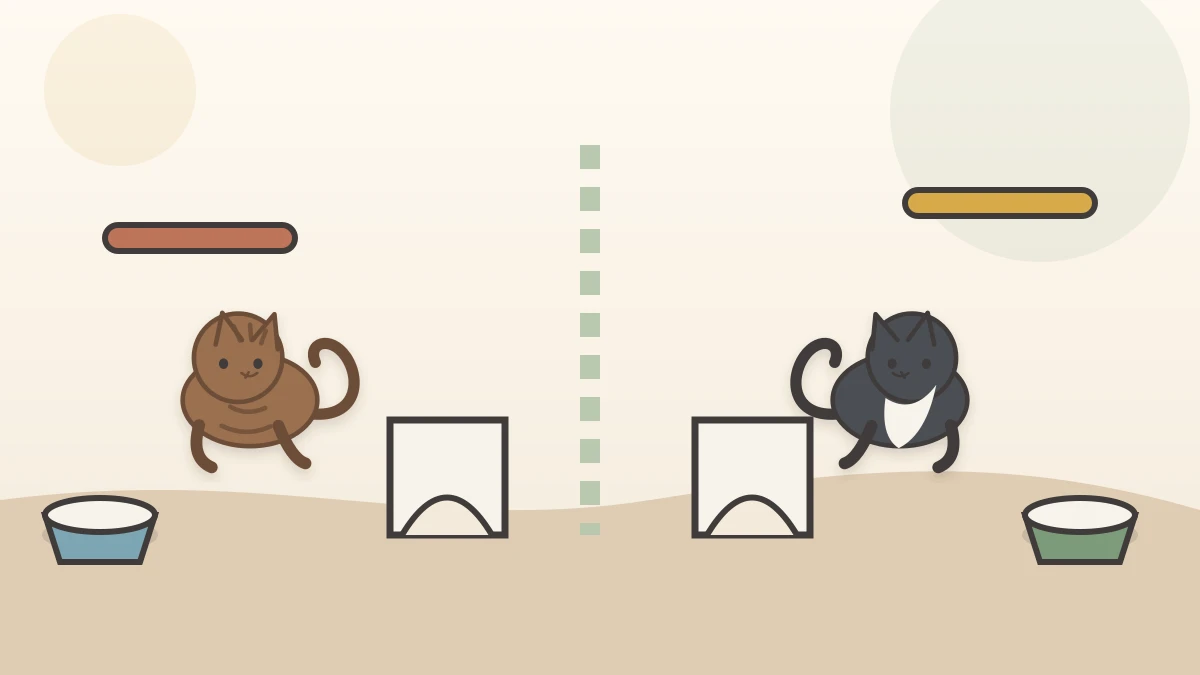
Watch whether a change improves the quieter cat’s actual access. Adding three bowls side by side still creates one feeding station. A second perch is not useful if the same cat guards the only approach. The AAFP intercat guidelines recommend multiple, separated resources, safe places, opportunities for play, predictable positive human interaction, and attention to feline sensory needs.
Do not force shared bowls, beds, carriers, or play sessions to make cats “bond.” Calm coexistence with independent resources is a valid outcome. If the conflict began after a new cat arrived, return to the staged plan in the same-language introduction guide instead of using unstructured contact as practice.
When to involve professional help
Start with a veterinarian when the pattern is sudden, persistent, escalating, injurious, or paired with any physical or routine change. Bring videos and the event log. The clinic can assess health, pain, sensory change, mobility, and other individual factors before a behavior plan is chosen.
Ask for a board-certified veterinary behaviorist or another appropriately qualified feline behavior professional when one cat repeatedly blocks, stalks, corners, or injures the other; normal resource access is not restored; safe separation is difficult; or gradual management is not improving welfare. A sound plan should protect choice, use reward-based steps, and coordinate with veterinary care. Do not start medication, sedatives, or supplements from a generic article.
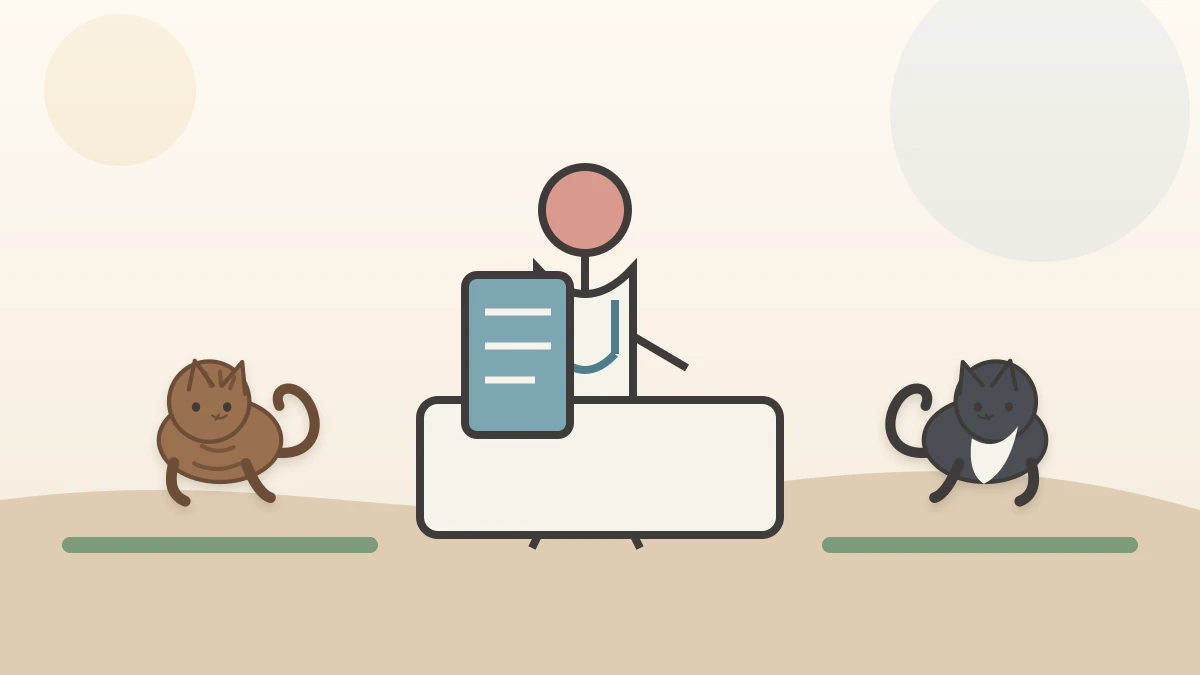
The practical standard is not “Did they scream?” or “Did anyone bleed?” It is whether both cats can participate, stop, leave, recover, and live normally afterward. When one cat loses those options, create safety and investigate early.
Frequently asked questions
Can cats hiss and still be playing?
Yes, a brief hiss can be a boundary signal rather than proof of a fight. Watch the response: if the other cat stops and both regain choice, the moment may settle. Repeated or escalating vocalization with pursuit, blocking, rigid posture, or persistent effects is more concerning.
If one cat is always on top, does that prove aggression?
Not by itself. Compare initiation, chase direction, release, voluntary return, escape access, and the aftermath. A size or style difference may make positions uneven, but a cat who cannot stop or leave is not in reciprocal play.
Should I spray water to stop a cat fight?
No. Spraying can add fear and does not teach a safe alternative. Keep your body out of the gap, create a brief distant interruption if useful, block the sightline with a solid barrier, open separate routes, and let the cats recover in complete separate zones.
How long should I keep the cats apart?
There is no universal timer. Reunite only through an appropriately gradual process after both cats return toward normal eating, drinking, toileting, grooming, movement, rest, and ability to disengage. Persistent tension or routine change needs veterinary guidance.
Do my cats need to cuddle to prove they get along?
No. Grooming, rubbing, nose touching, and sleeping in contact can show affiliation, but peaceful tolerance is also acceptable. The welfare goal is reliable access, choice, safety, and normal daily behavior—not a staged friendship.