Do Indoor Cats Need Parasite Prevention? Fleas, Ticks, and Intestinal Worm Risks
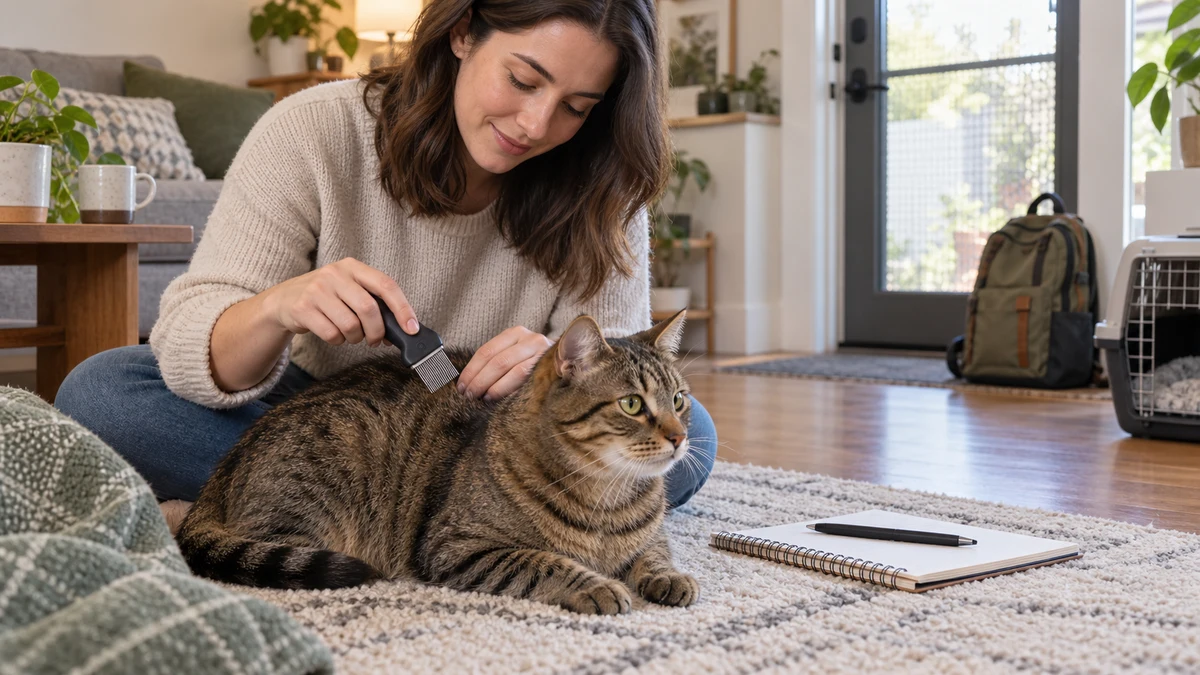
Yes, an indoor cat may still need parasite prevention—but “indoor” is not a complete prescription. Staying inside usually reduces contact with fleas, ticks, contaminated soil, feces, and prey; it does not remove every route into a home. Another pet, a new animal, travel, a screened patio, an escape, rodents, insects, or a tick carried on clothing can change exposure. Ask your veterinarian to match any testing and prevention plan to local parasite activity, the household, travel, hunting access, age, health, and product history. Do not give every indoor cat the same schedule or choose a product by guesswork.
Indoor is a powerful barrier, not a sealed bubble
Keeping a cat indoors is one of the most useful ways to reduce encounters with parasites. The Companion Animal Parasite Council (CAPC) notes that indoor living limits tick exposure and that preventing predation reduces roundworm exposure. The European Scientific Counsel Companion Animal Parasites (ESCCAP) likewise places a cat that lives exclusively indoors and is unlikely to eat prey in a lower intestinal-worm risk group than a free-roaming hunter.
Lower risk is not zero risk. “Indoor cat” can describe very different lives: a cat in a high-rise apartment with no other animals; a cat sharing a house with a dog that hikes; a cat using a catio; or a cat that boards, travels, catches mice in the basement, and occasionally slips outside. The useful question is not simply, “Does the cat go outdoors?” It is, “Which routes connect this cat and home to parasites in this place?”

Ten routes that can change an indoor cat’s exposure
| Route | What it may introduce | What to tell the veterinarian |
|---|---|---|
| 1. A dog or another cat goes outdoors | Fleas or ticks can arrive on an animal; household pets can share an infested environment | Which animals go out, their prevention plans, and whether they share beds or grooming |
| 2. People return from grassy, brushy, or wooded places | The CDC notes that ticks can ride indoors on clothing and gear | Hiking, gardening, field work, camping, coats, packs, and where gear is stored |
| 3. A new, fostered, rescued, or visiting animal enters | Fleas and intestinal parasites may be present before obvious signs appear | Origin, health records, stool history, skin findings, and date of arrival |
| 4. The cat uses a balcony, patio, catio, hallway, garage, or shared yard | Exposure shifts with vegetation, wildlife, neighborhood animals, and local season | Exact access, surfaces, screening, duration, and wildlife activity |
| 5. The cat escapes or takes supervised walks | Even brief outdoor access can cross parasite habitat | Where the cat went, how long, season, terrain, and whether ticks were checked |
| 6. The cat travels, boards, attends a show, or stays in another home | Geography and contact with animals or shared environments change | Destination, dates, lodging, transport, and other animals present |
| 7. Rodents enter the building | Rodents can carry fleas, ticks, and larval stages of some intestinal parasites | Droppings, gnawing, noises, sightings, basement or storage access, and control work |
| 8. The cat catches a rodent, bird, flea, cockroach, or cricket | Swallowing infected prey, a flea during grooming, or certain insects can transmit different gastrointestinal parasites | What was caught or swallowed and when; do not assume every insect carries a parasite |
| 9. Contaminated fecal material or soil reaches the cat’s environment | Some roundworm eggs become infective in contaminated environments | Shared litter tools, foster animals, tracked soil, garden access, and sanitation gaps |
| 10. A previously established home infestation persists | Flea life stages can remain in the indoor environment, so seeing no adult on the cat does not prove the home is clear | Past infestations, untreated animals, moving history, bedding, carpets, and pest-control steps |
These are possible routes, not proof of infection. Their importance varies widely. A tick on a jacket does not mean it reached the cat; a cockroach sighting does not diagnose a stomach worm. Record the event, check the cat without force, and let the veterinarian decide whether examination, parasite testing, environmental action, or a preventive plan is appropriate.
Fleas: the home can become part of the life cycle
Fleas are not just an outdoor-cat problem. CAPC explains that acquiring newly emerged fleas from an infested environment is a primary way an infestation begins, although adult fleas can also move directly between hosts. Once established, the problem involves both the animal and the indoor environment. A warm home can support flea activity beyond the outdoor season, and control can take time because eggs, larvae, and pupae are not all sitting visibly on the cat.
Some cats scratch intensely; others groom away evidence. Look for a change from the cat’s baseline: repeated scratching or biting at the coat, overgrooming, thinning hair, small scabs, irritated skin, or restless sleep. A fine flea comb over a white towel can collect adults or dark debris. Cornell advises that suspected flea dirt may be found during combing, but home observation is not the same as a veterinary diagnosis. Skin disease, mites, pain, and other causes can resemble “fleas.”
Fleas also connect external and intestinal parasite risks. Cornell and CAPC describe cats acquiring a common tapeworm by swallowing an infected flea during grooming. That is why addressing only visible worms without considering fleas can leave a route for reinfection.
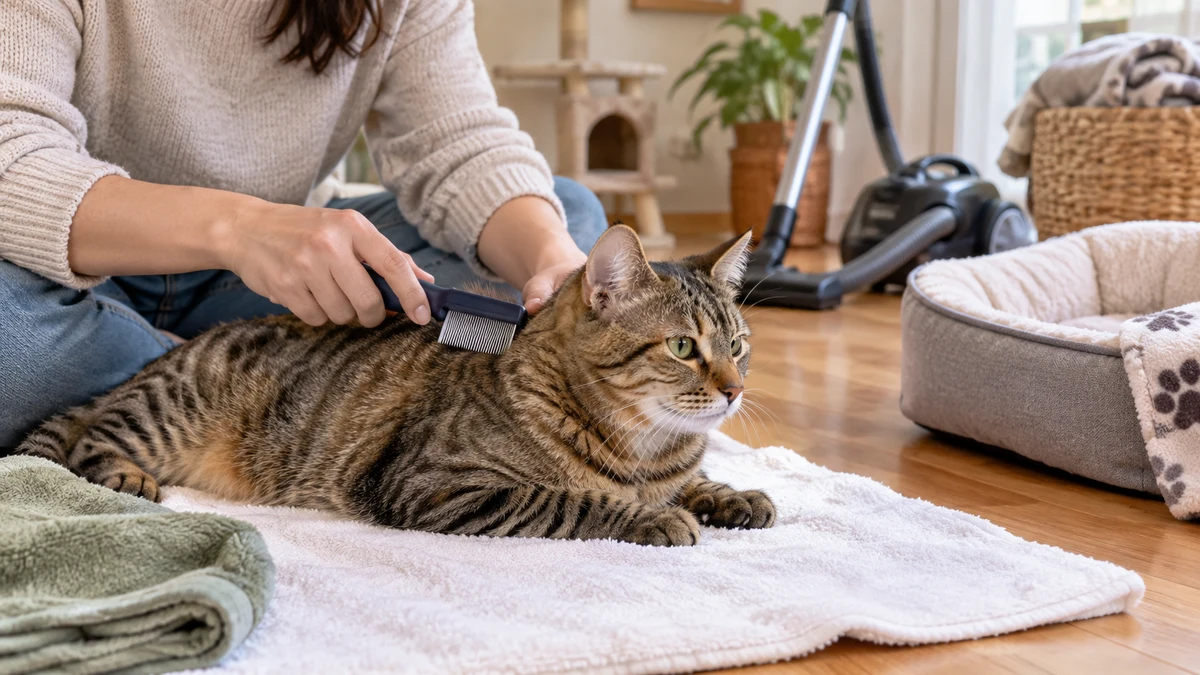
If fleas are confirmed or strongly suspected, contact the veterinarian rather than treating one animal at random. The household plan may need to account for every dog and cat, life-stage and health restrictions, bedding and soft furnishings, and the time needed to interrupt the environmental cycle. Vacuuming and washing washable bedding can support a professional plan, but they do not turn an unsafe or mismatched product into a safe one.
Ticks: usually less likely indoors, still possible
Ticks are generally more closely tied to outdoor vegetation, leaf litter, wildlife, and local habitat than fleas. CAPC states that keeping cats indoors limits tick infestation risk. A strictly indoor high-rise cat with no traveling animals will often have a very different tick profile from a cat that uses a ground-level catio beside brush or lives with a trail-running dog.
There are still bridges indoors. The CDC advises people to examine clothing, gear, and pets after potential tick exposure because ticks can ride inside and attach later. Pets can also transport ticks into a home. Travel matters because tick species and activity are geographically dynamic; even seasonality differs by climate. Advice written for one U.S. state, European country, or tropical region should not be copied automatically to another.
After a known exposure, perform a calm hands-on check where the cat tolerates it: around the ears and eyelids, under the collar area if one is worn, along the neck and shoulders, under the front legs, between the toes, around the tail, and anywhere the coat feels uneven. Long or dark coats make small ticks easy to miss. Do not repeatedly restrain a frightened cat or assume every bump is a tick.
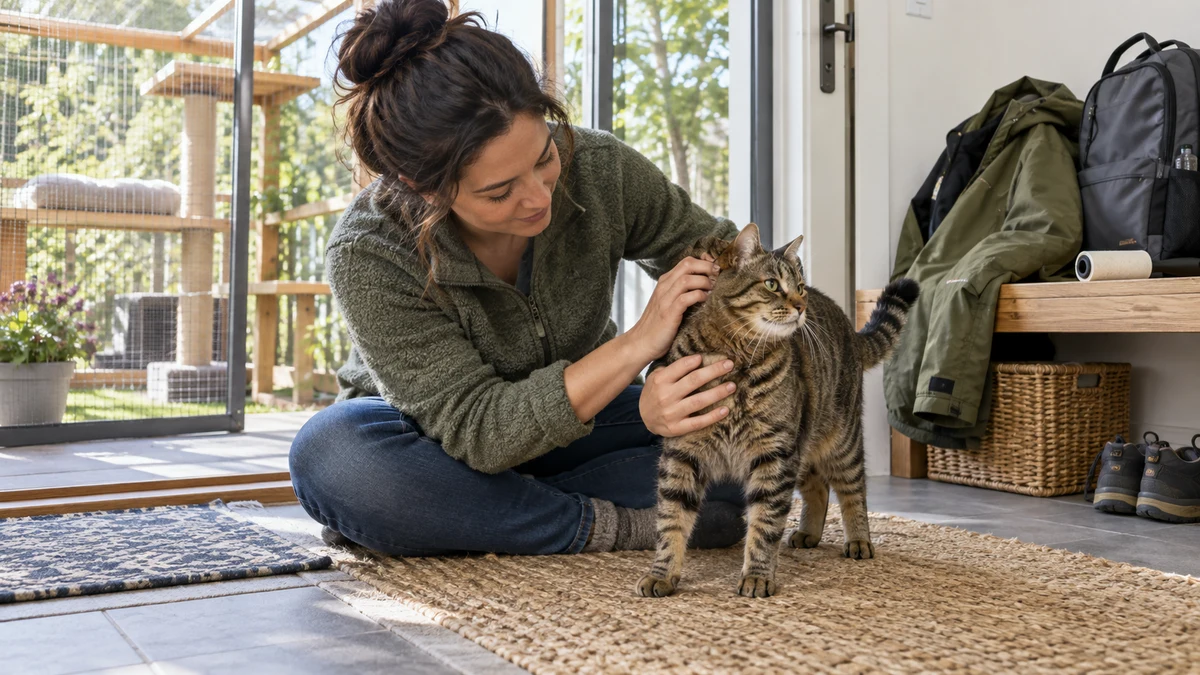
If you find an attached tick, call the veterinary clinic for safe removal and identification advice, especially if you are unsure what you are seeing or cannot remove it without squeezing, twisting, burning, coating, or distressing the cat. Save a clear photo and note where and when the cat could have been exposed. After a suspected bite, report changes in appetite, energy, movement, breathing, or behavior rather than trying to name a tick-borne disease at home.
Intestinal parasites: several organisms, several routes
“Worms” is not one exposure or one test. Common intestinal-parasite discussions include roundworms, hookworms, and tapeworms; veterinarians may also consider protozoal parasites or less common gastrointestinal worms according to the cat’s age, origin, signs, and region.
Roundworms
Roundworm eggs are passed in feces and can become infective in the environment. Cats may acquire Toxocara cati by swallowing infective eggs or a transport host such as a rodent; kittens can also acquire larvae from an infected queen through milk. CAPC emphasizes that cats can have subclinical infections, meaning the absence of obvious illness does not rule infection out. Indoor living reduces hunting and contaminated-soil contact, but a new cat, a rodent problem, or uncertain early-life history can matter.
Hookworms
Hookworms attach to the intestinal lining and feed on blood. Adult cats usually acquire larvae by swallowing them or through skin contact. Cornell notes that whether cats also acquire hookworms through infected prey or a queen’s milk remains uncertain. Risk and species distribution are regional. Significant infection can contribute to anemia and intestinal signs, which is one reason pale gums or marked weakness deserves prompt veterinary attention rather than a home deworming guess.
Tapeworms
Tapeworm routes depend on the species. Cornell explains that cats commonly acquire Dipylidium by swallowing an infected flea while grooming, while eating an infected rodent can transmit other tapeworms. Rice-like segments around the rear or bedding can be a clue, but stool testing does not detect every tapeworm reliably. Photograph what you see and call the clinic; do not identify a species from appearance alone.
Other gastrointestinal parasites
Persistent diarrhea or vomiting is not automatically “worms.” Protozoal infections, non-parasitic illness, diet, and many other problems can produce similar signs. Cornell also describes a rarer stomach worm whose life cycle may involve cockroaches or crickets. That supports preventing insect hunting, but it does not mean every swallowed insect requires treatment.
Testing has limits and timing matters. A single fecal sample may miss an infection that is not shedding detectable eggs or antigens at that moment, while a visible flea or tapeworm segment may direct a different test or response. Bring a fresh sample only when the clinic tells you how to collect, label, store, and transport it. Never interpret one negative result as a lifetime parasite clearance.
Why there is no universal indoor-cat schedule
Professional guidance is not identical across every region. As checked in September 2026, the U.S.-based Feline Veterinary Medical Association life-stage resource and CAPC guidelines recommend year-round broad parasite prevention, including for indoor cats. The FDA also notes that flea and tick seasons vary by location and tells owners to work with a veterinarian on the appropriate time frame and product.
ESCCAP’s European worm-control guideline takes a visibly risk-stratified approach: an exclusively indoor cat unlikely to eat prey is placed in a lower risk group than a free-roaming hunter, with veterinarian-directed fecal examination or deworming options tied to the risk group. These documents serve different regions and public-health contexts. They are not a reason to choose whichever schedule is most convenient. They show why local epidemiology, household exposure, diagnostic strategy, and the individual cat belong in the decision.

Bring this short risk inventory to a checkup:
- Does the cat ever use a balcony, patio, catio, hallway, garage, garden, leash, or carrier outdoors?
- Do dogs or other cats in the household go outdoors, travel, hunt, or miss their own prevention?
- Has any animal recently arrived, visited, fostered, boarded, or returned from another region?
- Are fleas, ticks, specific intestinal parasites, or vector-borne infections currently reported locally?
- Has the home had fleas, rodents, wildlife access, or a move from an infested building?
- Does the cat catch fleas, insects, rodents, birds, or other prey, or eat raw animal tissue?
- What were the cat’s last physical examination and veterinarian-recommended parasite tests, and what were the results?
- What are the cat’s age, weight range, health conditions, pregnancy or nursing status, prior reactions, and current medicines?
- Which parasite products have been used in the household, on which species, and when?
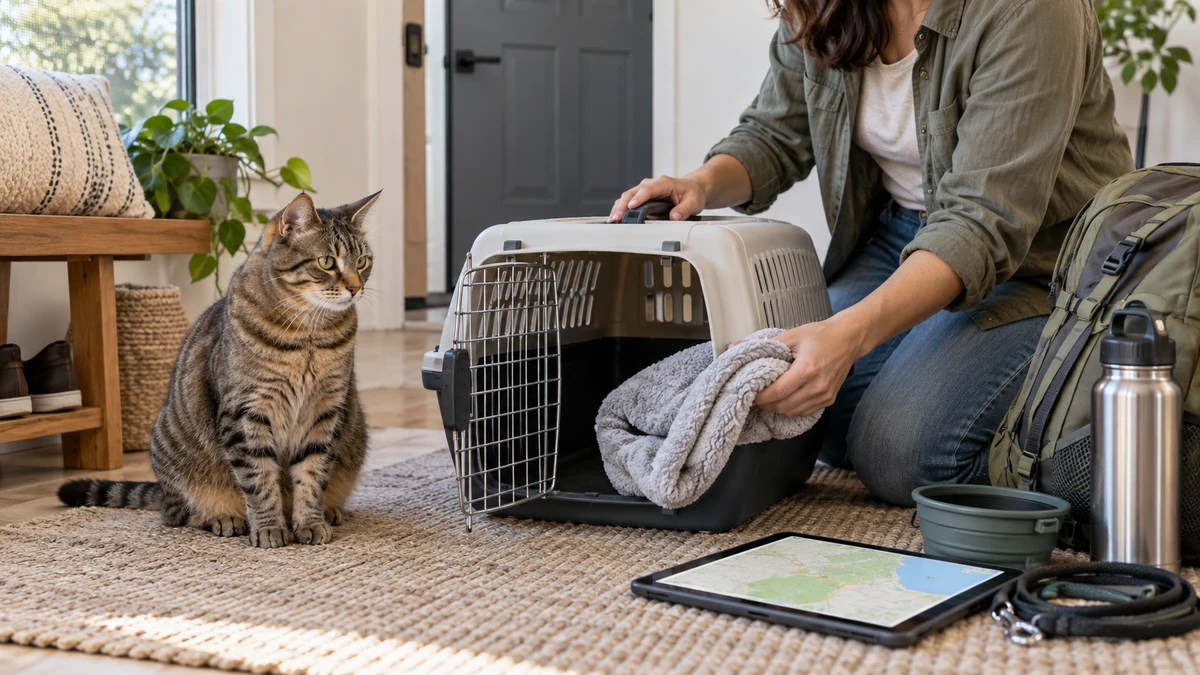
The result may be continued monitoring, scheduled testing, an ongoing preventive product, a change before travel, coordinated treatment of a household infestation, or another plan. Only the veterinarian who knows the cat and local risk can turn the inventory into an individual schedule.
Twelve low-risk actions for an indoor home
Environmental care and observation are useful whether or not the veterinarian recommends a product. They reduce opportunities, reveal changes early, and provide better history; they do not guarantee that parasites cannot occur.
- Check the coat routinely. During normal consent-based handling, look around the neck, back, tail base, belly, legs, ears, and paws for a change in skin, coat, debris, or attached objects.
- Use a flea comb when risk rises. Comb gently over a light towel after a known exposure or when scratching changes. Stop if the cat becomes tense.
- Inspect after outdoor contact. Check the cat, outdoor-going pets, coats, packs, blankets, and carriers after brush, grass, travel, or boarding.
- Wash washable bedding and vacuum resting areas. Include rug edges, upholstery seams, and spaces under furniture when fleas are suspected; empty vacuum debris away from pets.
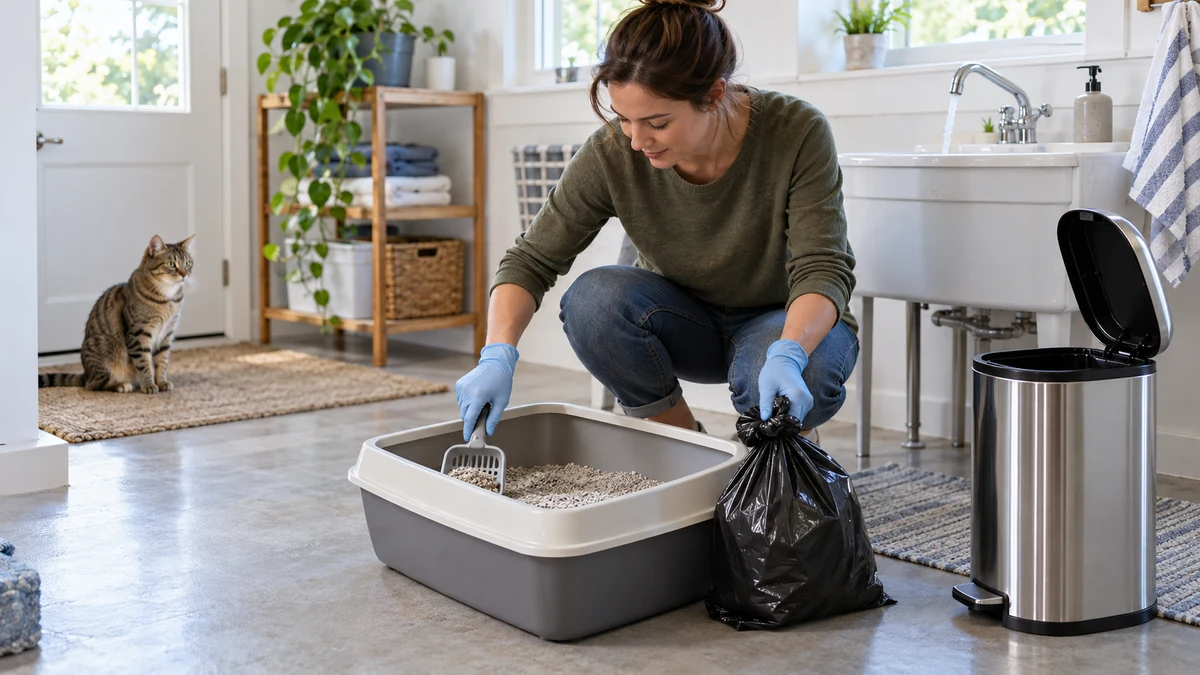
- Scoop litter promptly. Remove feces at least daily, bag it, keep tools from food-preparation areas, and clean the box according to safe material and veterinary guidance.
- Wash hands after litter, soil, or feces. Help children do the same and keep them away from litter-maintenance areas.
- Prevent hunting and scavenging. Secure screens, supervise catios, store food and waste, and address rodent or insect access without leaving poisons or traps where pets can reach them.
- Prepare a separate room for a new animal. Give the newcomer separate litter, food, water, bedding, and observation until a veterinarian advises on examination, testing, parasite control, and introductions.
- Keep household plans coordinated. Tell the veterinarian about every species in the home. One untreated animal or shared infested environment can undermine a flea-control plan.
- Record products and dates. Keep the package, label, lot information, species, animal, application date, and any reaction. Do not rely on memory or package color.
- Review risk before travel or housing changes. Ask early enough for destination-specific advice; do not improvise at departure.
- Keep routine veterinary visits. A normal-looking coat and stool do not exclude every parasite. Examination and tests are selected according to life stage and risk.

Our brushing guide shows how to make coat checks less stressful, while the home safety checklist covers screens, storage, and household hazards.

Separation is not a diagnosis or punishment. It creates time to notice scratching, stool changes, appetite, visible parasites, and general health without immediately sharing litter tools, bedding, or close contact. Use our new-cat checklist to prepare the room, then let the veterinarian set the health steps for that particular arrival.

Product safety: “for pets” is not enough
Never use a dog product on a cat unless the label explicitly says it is for cats and the cat’s veterinarian has confirmed it is appropriate. The FDA warns that even flea and tick products for dogs can be dangerous or life-threatening when used on cats. A safe choice must match species, life stage, weight category, health history, and the parasites that actually need to be addressed.
Read the current label every time. Do not split a larger animal’s package, combine products, repeat an application early, use a home or yard pesticide on the cat, or copy another pet’s plan. In a multi-pet home, prevent animals from licking one another after a topical product for as long as the label and veterinary instructions require. Store dog and cat products separately in their original packages.

Skip homemade essential-oil sprays, concentrated plant oils, and unlabelled internet mixtures. “Natural” does not establish feline safety, concentration, effectiveness, or a suitable route of use. Environmental pesticides also need label-directed use and pet-safe re-entry instructions; professional pest control should be told that cats live in the home.
After any product, observe the cat and keep the package. Contact a veterinarian promptly for unusual drooling, vomiting, diarrhea, poor appetite, marked lethargy, agitation, wobbliness, tremors, seizures, breathing changes, or a major skin reaction. Do not apply another product to counteract the first. The clinic or poison service can advise what to do based on the exact package and exposure.
When to contact a veterinarian
Parasites are only one possible explanation for these signs. Call rather than trying to diagnose from a photo when you notice:
- intense or rapidly increasing scratching, biting, or overgrooming;
- open skin, bleeding, swelling, widespread scabs, hair loss, or apparent pain;
- a visible attached tick, many fleas, moving worms, or rice-like segments around the rear or bedding;
- pale, grey, blue, or yellow-looking gums, or a major change from the cat’s normal gum color;
- marked weakness, collapse, breathing difficulty, unusual sleepiness, poor coordination, or seizures;
- persistent or repeated vomiting or diarrhea, blood, dehydration concerns, poor appetite, or weight loss;
- a kitten, senior, pregnant or nursing cat, or cat with a health condition showing any concerning sign; or
- any abnormal sign after a parasite-control or pesticide product, especially a dog-only, unknown, spilled, or misapplied product.
Breathing difficulty, collapse, seizures, profound weakness, abnormal gum color, or a serious suspected product exposure can be emergencies. Contact an emergency veterinary service now. For a stable cat, the clinic can still decide whether the timing should be same-day or scheduled based on the whole picture.

Before the call, note when signs began, all animals affected, recent travel or outdoor contact, visible pests, stool and appetite changes, and every product used in the home. Photograph the package and lot number. Clear, specific observations are more useful than declaring, “It must be worms.”
A practical conclusion
Indoor living meaningfully lowers parasite exposure, so it remains an important protective choice. It cannot answer the entire prevention question on its own. Map the real bridges into the home, check coat and litter without force, control prey and pest access, introduce new animals carefully, and keep precise product records. Then review the map with a veterinarian who knows local parasite activity and your cat’s health. That approach avoids both false reassurance and unnecessary one-size-fits-all treatment.
Frequently asked questions
My cat has never stepped outside. Can fleas still happen?
Yes. Risk may be low, but fleas can arrive with another animal or from an already infested indoor environment. Scratching alone does not confirm fleas. Use a gentle flea comb if the cat tolerates it, check other pets, and ask a veterinarian to confirm the cause and plan household control.
Does one tick indoors mean my cat needs the same plan as an outdoor cat?
Not automatically. Record where the tick was found, recent outdoor activity by people and pets, the cat’s access, and local tick conditions. Ask the veterinarian whether the event changes examination, monitoring, testing, or prevention. Do not apply a dog tick product to the cat.
Can I deworm an indoor cat only when I see worms?
Visible worms or segments are not present in every infection, and different parasites require different diagnostic and control decisions. Some tests can also miss an infection at a particular time. Use veterinarian-directed risk assessment and testing rather than waiting for a visible worm or choosing a general dewormer yourself.
Are essential oils a safer “natural” alternative?
No. Natural origin does not prove that an oil is safe for cats or effective against a parasite. Concentration, route, contamination, and licking all matter. Do not apply a homemade oil mixture to the cat or environment; ask the veterinarian about cat-appropriate, labelled options.
What should I bring to a parasite-prevention appointment?
Bring the cat’s travel and outdoor-access history, details for every household pet, any new-animal or pest exposure, prior stool-test results, current medicines and conditions, and the packages or photos of products already used. A short timeline of scratching, coat changes, stool, appetite, and any visible parasite will help the veterinarian tailor the plan.