How Much Do Cats Sleep? Follow the Pattern, Not One Number
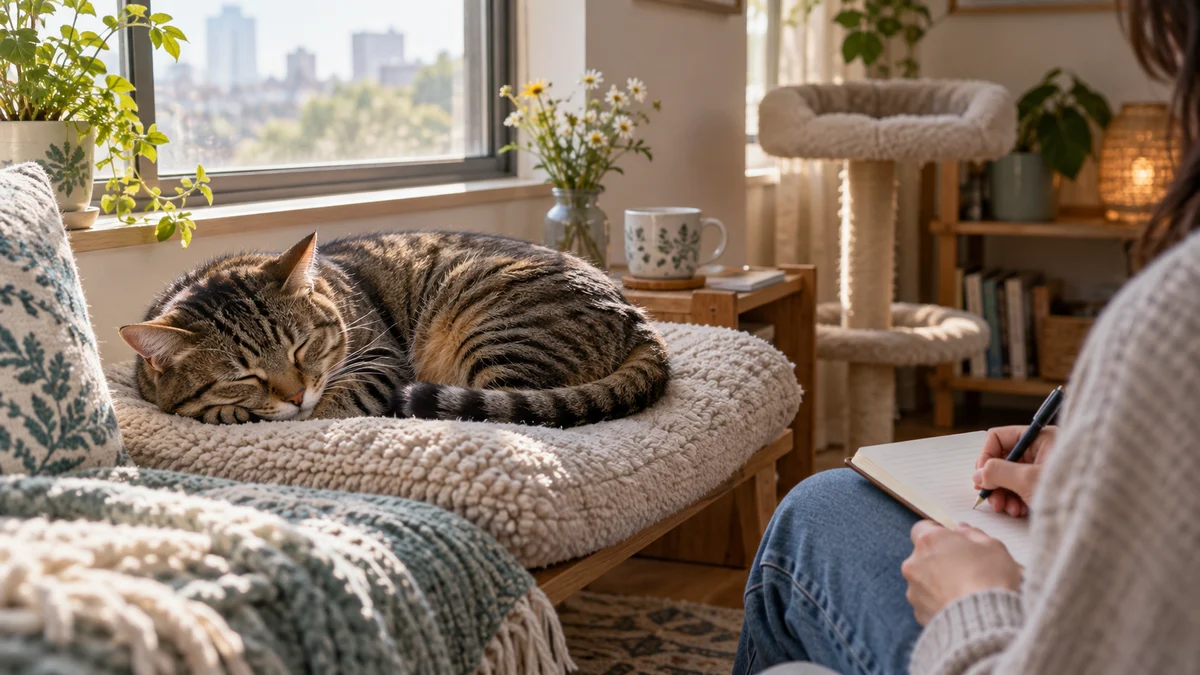
Many healthy adult cats appear to sleep or nap for roughly 12–16 hours in a 24-hour day, while a VCA kitten guide says cats may need up to 18 hours. These are broad references, not a pass–fail rule. A cat may rest in many short bouts, and an observer cannot reliably turn every closed-eye minute into measured sleep. What matters most is the cat’s own pattern: when the cat rests, how readily it responds, and whether eating, drinking, movement, toileting, grooming, play, and social behavior remain normal. A sudden change or other loss of function matters more than one total.
First decide what you are counting
A cat lying still may be quietly awake, dozing lightly, or in a deeper sleep state. Half-closed eyes, relaxed ears, a tucked posture, small twitches, or a quick response to a familiar sound are useful descriptions, but none lets a person time sleep stages precisely from across the room.
Research can separate wakefulness, non-rapid-eye-movement sleep, and rapid-eye-movement sleep with recordings such as brain electrical activity, muscle tone, and eye movement. That is different from a home estimate based on posture or a motion sensor. For everyday care, use plain labels—awake and active, quiet rest, apparently asleep, or response unclear—instead of claiming that a cat was in “deep sleep” for an exact number of minutes.
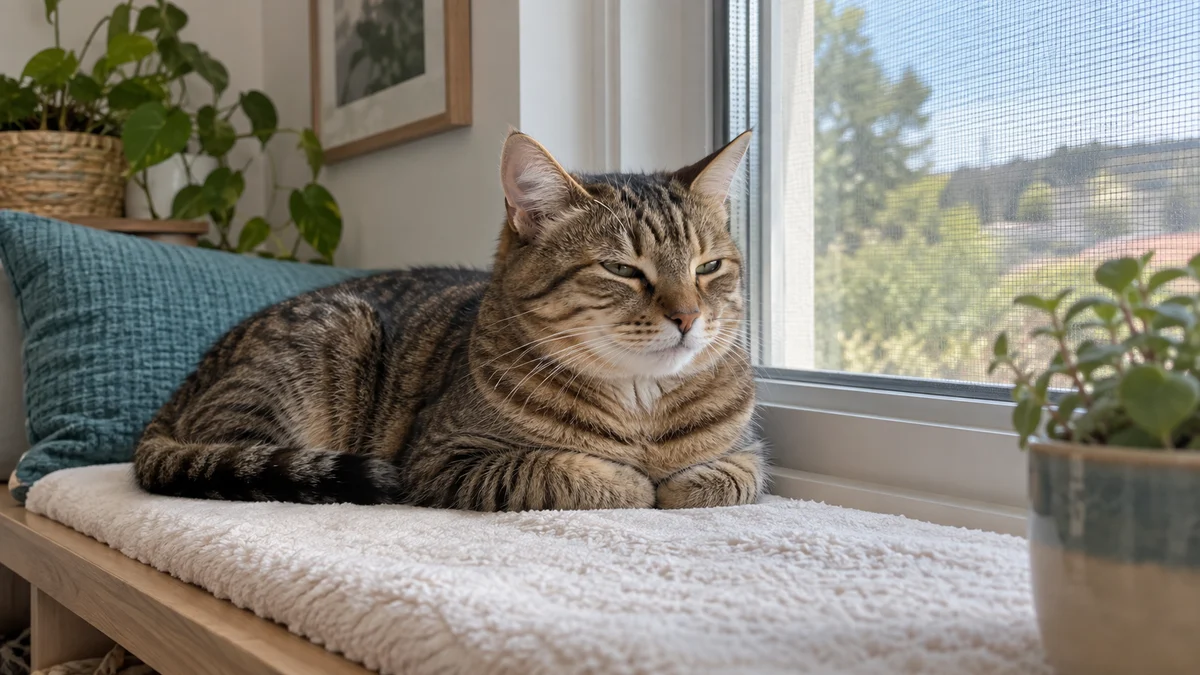
This distinction prevents two common errors. First, adding every period spent on a bed can overstate sleep. Second, repeatedly calling or touching a comfortable cat to test whether it is asleep disrupts the very pattern you are trying to understand. Observe without staging or waking the cat.
A range is context, not a universal quota
VCA gives 12–16 hours per day as a common feline reference and notes that day-to-day variation makes total time alone a poor test of illness. Its kitten booklet says cats may need up to 18 hours per day. Use those figures as orientation, not as a minimum every cat must reach or a maximum that proves disease.
Life stage changes the context:
| Life stage | Pattern you may observe | What not to assume |
|---|---|---|
| Kitten | Frequent sleep between short periods of eating, exploration, and energetic play; the broad reference may extend up to 18 hours | More sleep does not remove the need to notice poor appetite, weakness, breathing changes, or failure to engage when awake |
| Healthy adult | Many short rest or sleep bouts across day and night; 12–16 hours is a broad reference, not a target | A cat outside the range is not automatically ill, and a cat inside it is not automatically well |
| Senior | Less activity and more sleep may occur, while access to familiar resting places may become harder | New withdrawal, stiffness, night confusion, appetite change, or altered sleep–wake timing is not “just age” |
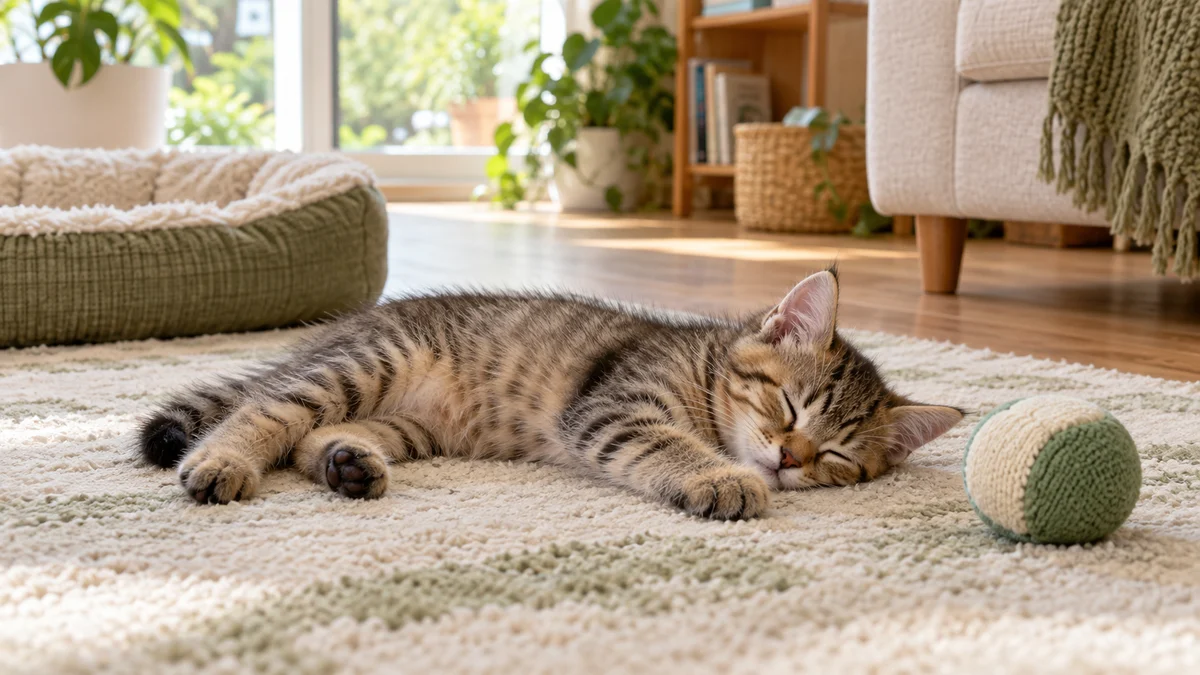
Cornell notes that older cats may become less active and sleep more, but advises against dismissing gradual or sudden health and behavior changes as aging. The practical comparison is therefore this cat now versus this cat’s usual pattern, with life stage as background.
At least six influences can shift the pattern
Sleep and rest are not controlled by age alone. Consider these 7 categories before interpreting one long nap:
- Life stage and individual temperament. Kittens, adults, and seniors can organize activity differently, and two healthy cats of the same age need not match.
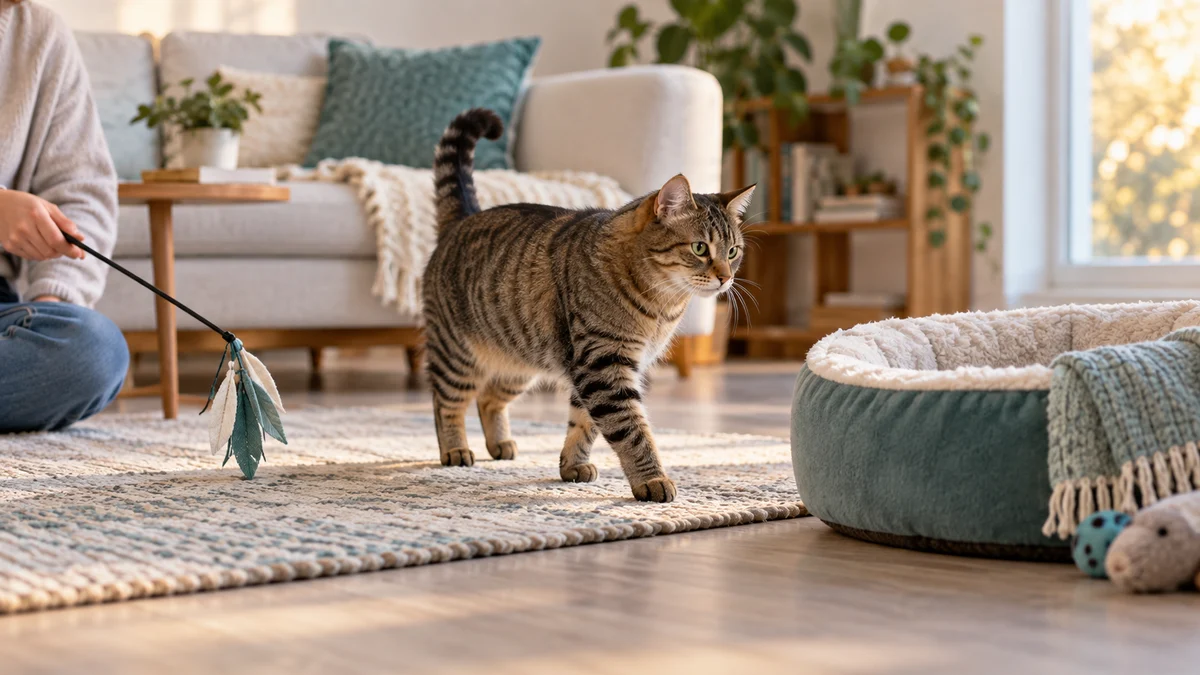
- Recent activity and opportunities to play. A lively play period may be followed by rest; a day without normal engagement may produce more quiet time without proving true sleep. Keep ordinary movement and cat-appropriate play available rather than exhausting the cat on purpose.
- Environmental safety and social pressure. Noise, visitors, renovation, another animal blocking a route, or competition for a perch can move rest to a different time or hiding place. A secure home can also allow a cat to settle more openly.
- Temperature, weather, and comfort. Cats may choose a sunny or insulated spot in cool weather and change location when a room becomes hot. Painful joints or an uncomfortable surface can make settling difficult.
- Household timing. Feeding, work, school, lights, and human attention all provide cues. A house cat may partly adjust its activity to the people in the home.
- Dawn–dusk biology. Cats are often more alert around dawn and dusk. An evening burst of running or early-morning play does not by itself equal insomnia or prove that a cat is strictly nocturnal.
- Health and recovery. Pain, illness, recent veterinary care, and medications prescribed for an individual can change rest, alertness, movement, or sleep timing. A number on a clock cannot identify which cause applies.
Change one harmless environmental variable at a time. If a new bed, quieter room, cooler weather, or changed family schedule coincides with a shift, record it; do not use the coincidence as a diagnosis.
Build a baseline without policing every nap
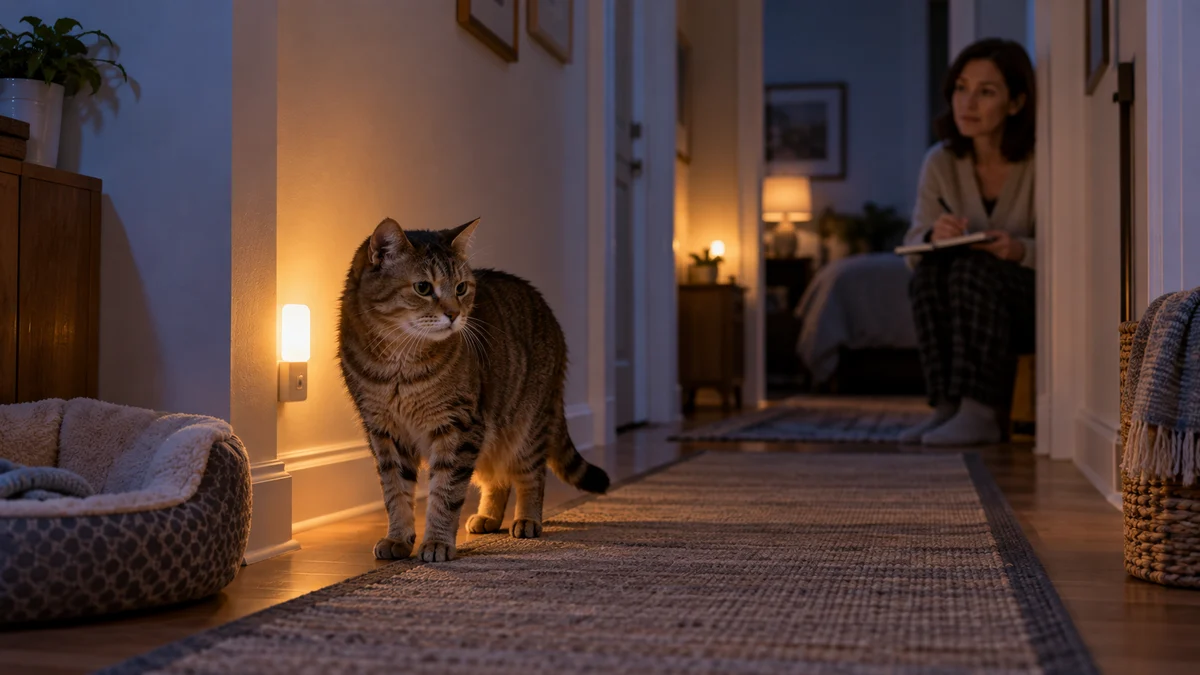
For 7 ordinary days, use two or three check-ins at consistent times or review a fixed camera only if it does not disturb the cat. Exact minute-by-minute scoring is unnecessary. Record these 10 items:
- broad periods of active wakefulness, quiet rest, and apparent sleep;
- usual resting locations and any new hiding place;
- response to a normal cue such as a meal routine, your arrival, or a favorite toy—without repeatedly waking the cat;
- walking, jumping, stairs, stiffness, play, and general activity;
- measured food intake and interest in meals;
- water use or a clear change from the cat’s usual drinking pattern;
- urine and stool output, litter-box access, and accidents;
- grooming and coat condition;
- social contact, avoidance, vocalizing, and nighttime wandering;
- breathing effort, cough, vomiting, signs of discomfort, and any medication or unusual event.
A one-line entry such as “rested in usual window bed; came promptly for dinner; played normally; food, water, litter, and breathing unchanged” is more useful than “slept 14.3 hours” if the latter was guessed from presence on a cushion. Video of a new event can help a veterinary conversation, but do not delay care to complete the log.
Support rest while preserving choice
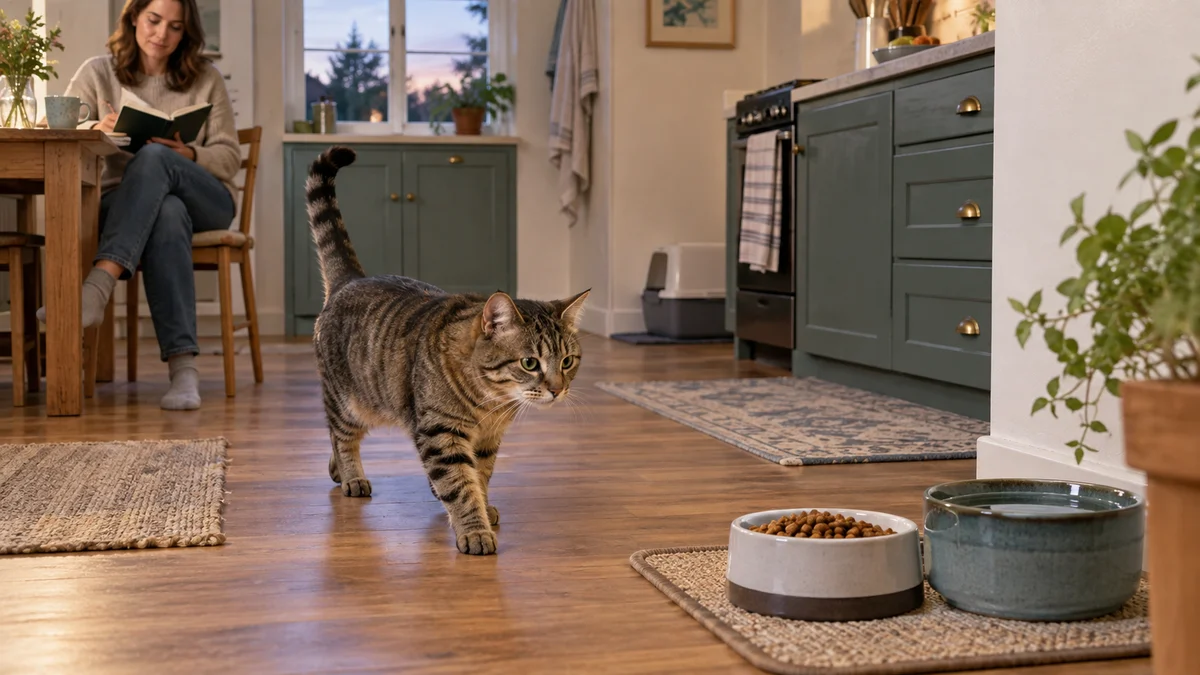
The AAFP/ISFM environmental guidelines describe a safe place as a private, secure area that may also serve for sleep, and recommend multiple, separated resources. A simple home setup can follow that principle:
- offer at least a couple of stable resting options with different height, warmth, light, and enclosure;
- keep one familiar bed or open carrier in a quiet area where people and animals cannot trap the cat;
- provide more than one exit from a hide in a multi-cat home when possible;
- place low beds or add stable nonslip steps for a kitten, senior, or cat with limited mobility;
- keep food, water, litter, scratching, play, and sleep areas from crowding one another;
- preserve familiar bedding scent and a predictable routine during ordinary household changes;
- allow voluntary, gentle daily activity, then let the cat end the interaction;
- avoid repeated touching, picking up, bright lights, loud checks, or moving the cat just because it is resting.
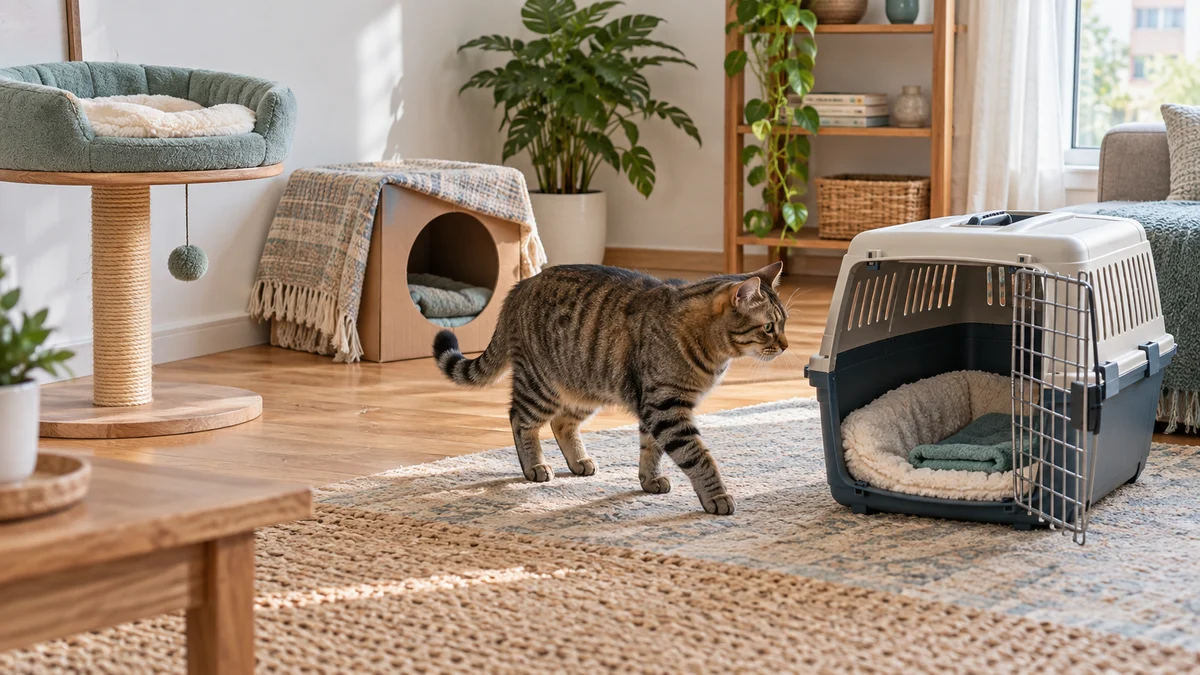
Choice matters more than buying a special “sleep product.” If a cat suddenly abandons an elevated favorite for a floor-level hide, record the access change and look at movement, appetite, grooming, toileting, and comfort rather than forcing the old spot.
When a sleep change needs veterinary help
Contact a veterinarian promptly for a sudden or persistent increase or decrease in sleep or rest, especially with any of these 9 changes:
- unusually difficult to wake, weak, collapsed, unresponsive, or mentally dull when awake;
- labored, fast, shallow, noisy, or open-mouth breathing, or a changed resting posture used to breathe;
- refusing food, eating clearly less, missing normal meals, or reduced interest in water;
- stiffness, limping, reluctance to jump, a hunched rest posture, repeated repositioning, or another sign of pain;
- new hiding, withdrawal, irritability, reduced interaction, or loss of normal play;
- nighttime wandering, staring, seeming lost in familiar space, or a reversed sleep–wake pattern;
- vomiting, diarrhea, coughing, seizure, or another new physical sign;
- changed urination, defecation, litter-box use, thirst, or grooming;
- a broader loss of function—no longer reaching resources, navigating normally, or responding to familiar routines.
International Cat Care lists more sleeping, unusual sleeping locations, a hunched resting posture, reduced movement, reduced appetite, and elimination changes among possible pain clues. Cornell lists excessive sleeping, altered sleep–wake cycles, disorientation, nighttime vocalizing, reduced interest in play, and food, water, or litter changes among signs that warrant assessment in older cats. These are reasons to seek evaluation, not a checklist for diagnosing pain or cognitive dysfunction at home.
Merck treats breathing difficulty, loss of consciousness, severe pain, and ongoing seizures as emergencies. If a cat is unresponsive, collapses, struggles to breathe, breathes with an open mouth, has blue or very pale gums, or has an ongoing seizure, seek emergency veterinary care rather than timing sleep or waiting for the log to fill.
For a non-emergency change, tell the clinic when it began, whether it is increasing, how the cat responds when awake, and what changed in food, water, litter, movement, breathing, medication, environment, and schedule. The senior-cat home-care guide and cat stress-signs guide can help organize observations, but neither replaces an examination.
The useful question is not “Did my cat pass the hourly quota?” It is “Is this pattern normal for this cat, and is the cat comfortable, responsive, and functioning normally while awake?”
Frequently asked questions
Is 12–16 hours of sleep normal for every adult cat?
It is a broad veterinary reference, not a universal requirement. Home observations also mix quiet rest with sleep. Compare the timing, response, and waking function with your cat’s own baseline instead of treating either boundary as a diagnosis.
Do kittens and senior cats sleep more?
Kittens may sleep frequently between growth, meals, exploration, and play; a VCA kitten guide says cats may need up to 18 hours. Older cats may also become less active and sleep more. At either life stage, a new pattern with weakness, reduced eating, pain, breathing change, confusion, or loss of function needs veterinary advice.
Is my cat awake at night because of insomnia?
Not necessarily. Cats are often more alert around dawn and dusk, and house cats may adapt around human schedules. Record whether nighttime activity is new and whether it includes distress, disorientation, vocalizing, pain, or daytime functional change; activity at night alone does not establish insomnia.
Should I wake my cat to check that everything is fine?
Do not repeatedly disturb a comfortable cat just to count sleep. Notice the natural response to ordinary routines. If the cat is unexpectedly hard to wake, unresponsive, weak, collapsed, or breathing abnormally, treat that as a health concern and contact a veterinarian or emergency service according to severity.