How Do Senior Cats Change? Home Adjustments and Checkup Priorities
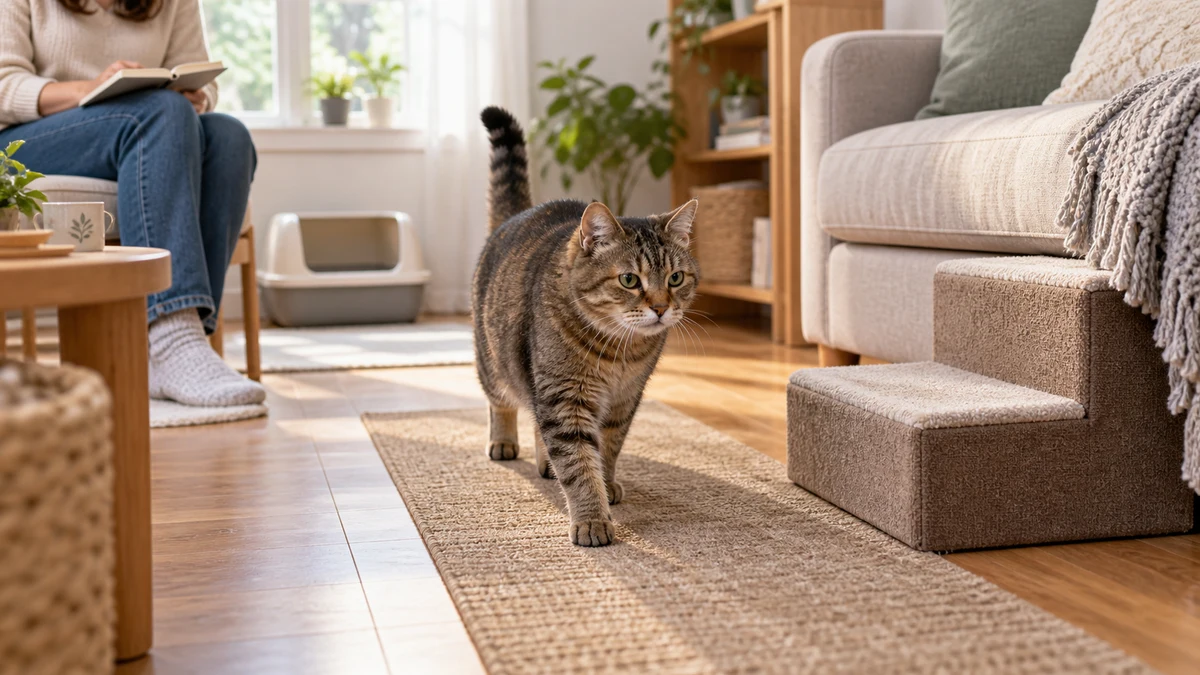
Senior cats may change in activity, weight and muscle, sleep, grooming, sensory responses, and social behavior, but age alone does not explain why. The useful response is to establish your cat’s baseline, record changes consistently, make essential resources easier to reach, and schedule examinations at the interval your veterinarian recommends for that individual. Sudden weakness, breathing difficulty, inability to urinate, severe pain, loss of balance, or an acute change in awareness calls for immediate veterinary help.
What age is “senior”? Use age as a framework, not a diagnosis
The 2021 AAHA/AAFP Feline Life Stage Guidelines divide the age-related stages into kitten (birth to under 1 year), young adult (1–6 years), mature adult (7–10 years), and senior (over 10 years). An end-of-life stage can occur at any age. The same guidelines caution that age bands are arbitrary divisions along a continuous process, not biological absolutes. Individual condition, breed predispositions, existing health, and function still shape care.
That means an 11-year-old cat is not automatically frail, while a change in a 9-year-old should not automatically wait. The label is a prompt to watch trends more closely, review risk, and compare each new finding with that cat’s own history.
Common changes are not automatically “normal aging”
An older cat may jump less, sleep at different times, groom less completely, or respond differently to household activity. Aging may contribute, but pain, oral discomfort, sensory changes, or other problems that need evaluation can look similar. Cornell and the senior-care guidelines both warn against dismissing physical or behavioral changes as age alone.
Changes worth recording include lower activity, hesitation before jumping, weight gain or loss, altered muscle contours over the back or hindquarters, different eating or drinking patterns, urine or stool changes, a shifted sleep schedule, reduced grooming, altered breath or chewing, different responses to sound and light, and increased dependence, withdrawal, nighttime vocalizing, or disorientation. These observations are clues for a veterinary history, not diagnoses to assign at home.
Track 12 home indicators in the same way each time
A short record made under comparable conditions is more useful than occasionally thinking, “My cat seems much older.” Never chase, restrain, or repeatedly touch a cat just to complete a data sheet. Calm partial observations are enough.
| Indicator | Objective details to record | Reason to contact the veterinarian sooner |
|---|---|---|
| Body weight | Same scale, unit, location, and similar time | An unexplained upward or downward trend |
| Body condition | Rib covering, waist, and abdominal outline | Appearance or feel keeps moving away from baseline |
| Muscle condition | Contours over the spine, shoulder blades, skull, and pelvis | Muscle seems to decline even if weight is stable |
| Appetite | Amount offered and left, speed, interest, and preferences | Persistent food refusal, inability to eat, or a rapid change |
| Water intake | Locations used, refills, and change relative to normal | A marked increase or decrease, especially with other changes |
| Urine and stool | Frequency, amount, straining, and elimination outside the box | Inability to urinate, pain, blood, or sudden loss of habits |
| Activity and jumping | Common routes, heights, hesitation, and landings | Sudden lameness, non-weight-bearing, or major mobility difficulty |
| Sleep | Day/night timing, chosen places, and nighttime wandering | An abrupt reversal, disorientation, or inability to settle |
| Grooming and coat | Mats, oiliness, flakes, and areas repeatedly missed | Sudden cessation, painful touch, or damaged skin |
| Mouth and eating motion | Breath, dropped food, one-sided chewing, approach then retreat | Pain, drooling, bleeding, or inability to eat comfortably |
| Vision and hearing responses | Reactions to familiar sound, light, obstacles, and approach | Sudden apparent blindness, collisions, or abrupt change |
| Social and cognitive behavior | Interaction, hiding, vocalizing, routes, and litter-box use | Acute confusion, loss of balance, or a sudden personality change |
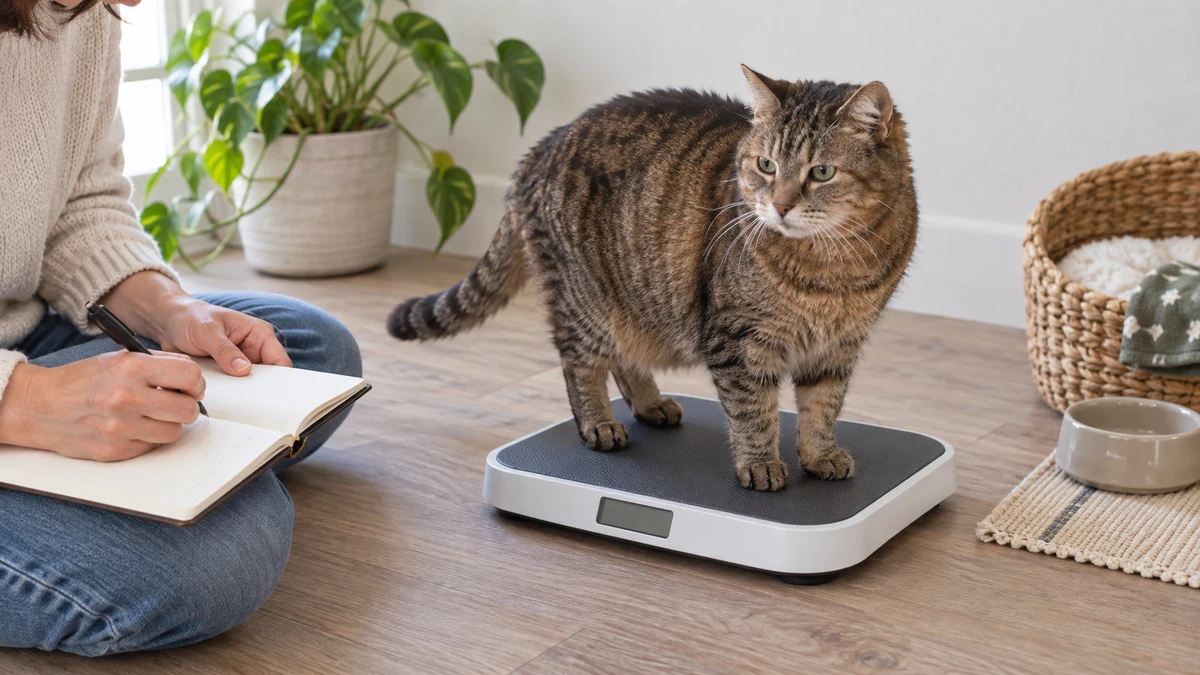
Track weight, body condition, and muscle separately. A senior cat can lose muscle while the number on the scale changes little, and a long coat can conceal body contours. Our same-language guide to body and muscle condition can help you organize observations, but a veterinarian should confirm palpation sites, scores, and an appropriate monitoring interval.
Short phone videos can add context. Record naturally occurring walking, rising, jumping, eating, or nighttime behavior. A clip is often easier to compare than saying the cat is “different at home.” Do not prompt a painful or frightening movement to capture it.
Home adjustments: make daily routes shorter, steadier, and optional
Environmental support is not an admission that decline is inevitable. It reduces the effort and stress required to perform ordinary tasks. Start with routes the cat uses every day, then observe whether each change is actually helpful.
| Adjustment | Practical detail |
|---|---|
| Low-entry litter box | Make at least one side easy to step over while keeping enough room to turn; low entry should not mean cramped or leaky |
| Distributed litter boxes | Offer an easy option on frequently used floors or zones so stairs are not mandatory |
| Distributed food and water | Use quiet, unobstructed locations; in multicat homes, prevent one cat from controlling every resource |
| Nonslip footing | Secure runners at smooth floors, turns, takeoff points, and landings; check that edges do not curl |
| Steps or ramps | Lead to a frequently used sofa, bed, or window; make surfaces broad, stable, and nonslip, with a slope the cat chooses to use |
| Low, padded resting place | Preserve a warm option at floor level or low height, away from drafts; warm must not become hot |
| Gentle night lighting | Mark routes to litter, water, food, and resting places without glare or new obstacles |
| Easier-access carrier | Use a stable, wide-opening or removable-top carrier and leave it open with familiar bedding between visits |
| Grooming assistance | Briefly brush areas the cat misses while participation is voluntary; stop for pulling, pain, or abnormal skin |
| Familiar routine | Keep food, rest, and interaction predictable; preserve retreats and transition time when furniture or household members change |
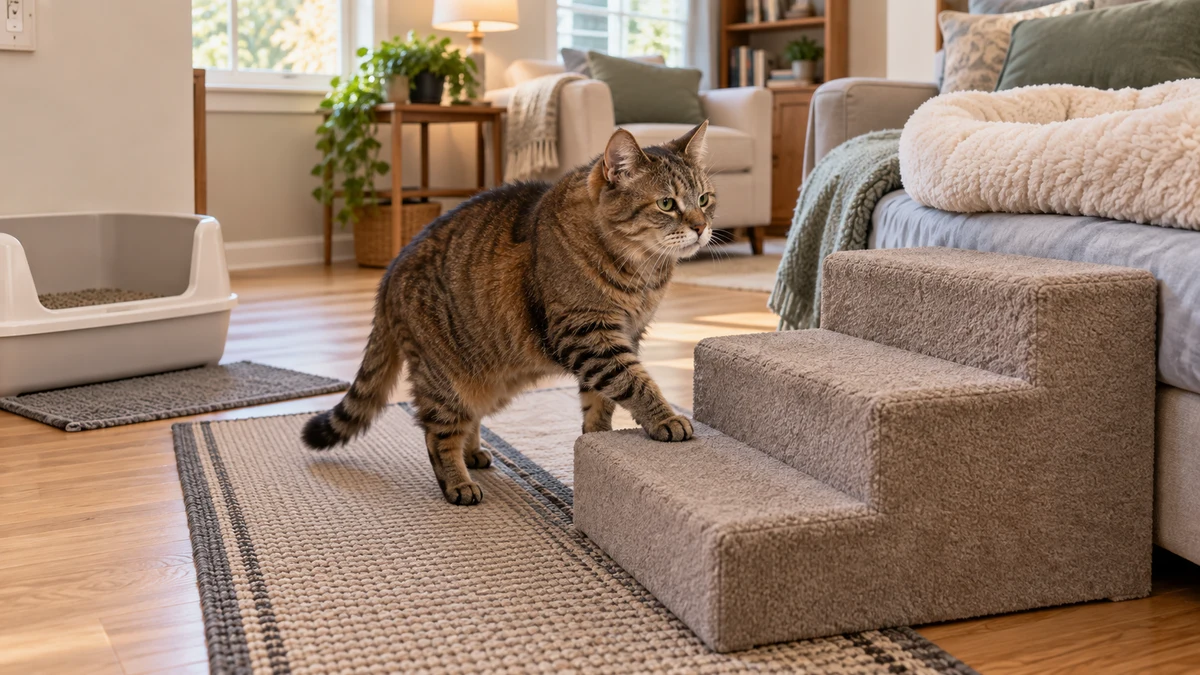
Check whether a resource is reachable before deciding the cat no longer wants it. If litter, water, food, or a favored bed is available only after jumping, climbing stairs, or passing another animal, use may decline. Distributed options still need familiar substrates, daily cleaning, and follow-up to see which locations the cat chooses.
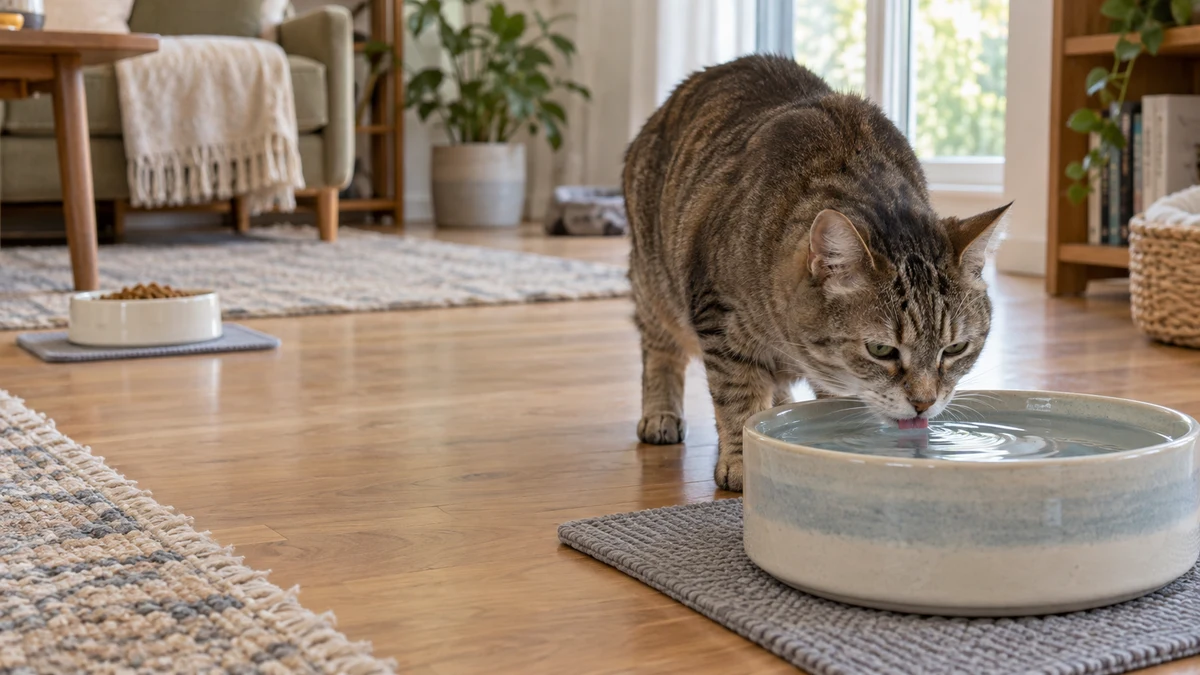
Do not buy a supplement, switch to a product labeled “senior,” or set a universal water or calorie target based on age alone. Weight, muscle, oral comfort, health, and the current diet all matter. Bring a complete list of foods, treats, and supplements to the visit so the veterinary team can advise you. If access is the problem, our guide to making water easier to find and use offers environmental ideas without replacing a health assessment.
Grooming, rest, and sensory change: assist without taking control
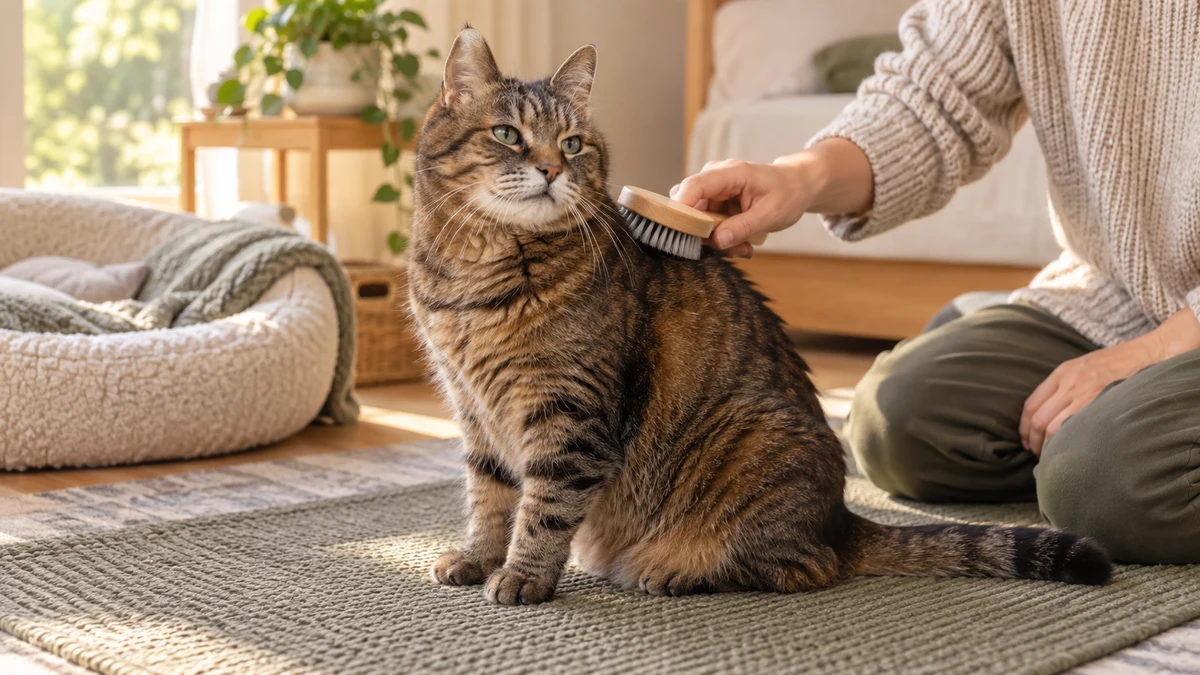
Reduced grooming may mean that movement has become difficult, but it can also accompany pain or illness. Offer brief, low-tension brushing where the cat accepts it, and do not pull through a mat. Contact the veterinarian about sudden grooming loss, inflamed skin, wounds, or a changed response to touch. The low-stress brushing guide explains a gradual approach.
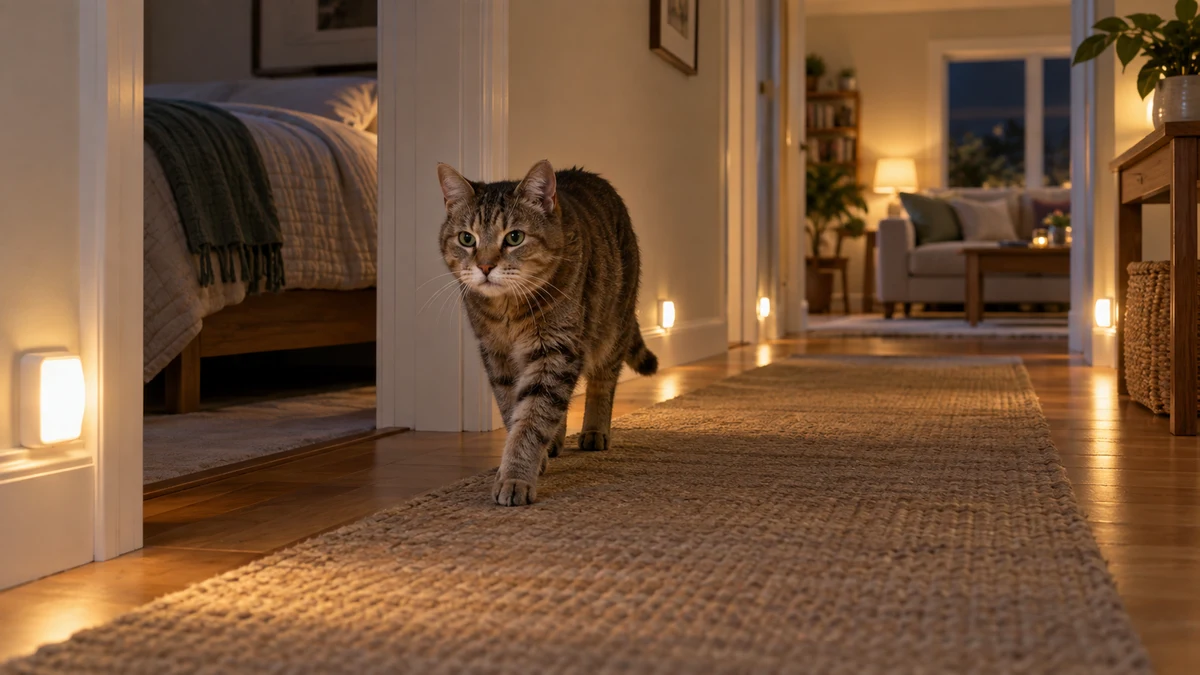
If vision or hearing responses change, keep furniture, litter boxes, food, and water in stable locations. Approach from a predictable direction and avoid unexpected lifting. Night lights may help identify a route, but new collisions, eye changes, or abrupt response changes still need assessment; lighting cannot determine or treat the cause.
The purpose of regular checkups: establish a baseline and detect change
As of September 2026, the US-based 2021 AAFP Feline Senior Care Guidelines recommend visits at least every 6 months for senior cats aged 10–15. They recommend about every 4 months for healthy cats over 15, with potentially more frequent visits for chronic health problems. The 2023 AAHA Senior Care Guidelines use an individualized risk framework, suggest a senior medical workup once or twice a year, and list 6–12-month reference intervals for several laboratory tests.
These are clinical frameworks from US professional organizations, not a universal examination or testing package for every country and cat. The actual interval should reflect age, prior results, current signs, visit stress, existing conditions, and local veterinary judgment. An online article cannot choose an individual cat’s test schedule.
A senior visit is valuable for more than finding a disease. A detailed history, full physical examination, weight, body condition score, muscle condition score, oral and eye assessment, blood pressure, and diagnostics selected for that cat’s risks can establish a comparison point. A normal result matters: it shows the veterinarian what “normal for this cat” looked like before a subtle shift appeared.
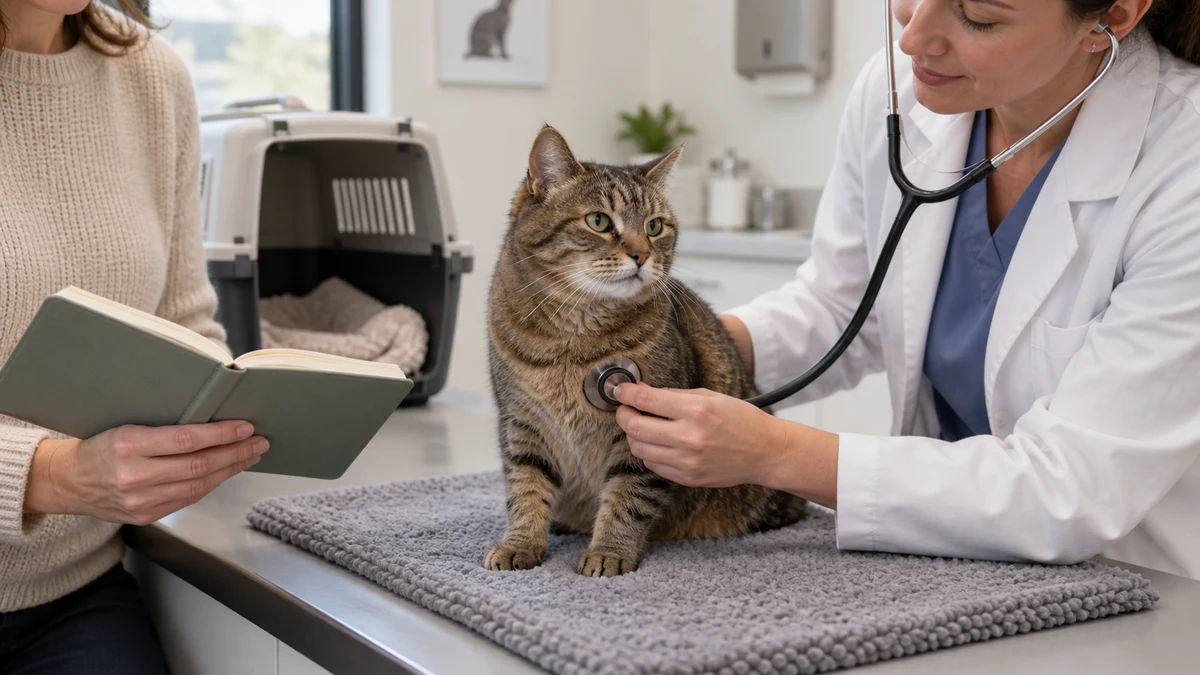
Prepare the complete names of foods and treats, amounts offered and left, water and elimination changes, medications and supplements, the weight trend, videos of walking or eating, and the start date for each change. Keep the carrier open at home with familiar bedding. If practice is needed, use our gradual carrier-training steps rather than staging a chase on appointment day.
Which signs call for immediate help?
The following are not “wait until the routine checkup” observations. Contact a veterinary service that can provide urgent triage, and ask the clinic how to transport the cat safely:
- breathing difficulty, open-mouth breathing, obvious respiratory effort, or blue-purple or abnormally pale gums;
- collapse, sudden severe weakness, unresponsiveness, or an acute change in awareness;
- repeated straining with no urine, or only tiny amounts while distress increases;
- severe pain, inability to bear weight, or sudden inability to walk;
- loss of balance, repeated falling, seizures, or active tremoring;
- persistent food refusal or obvious inability to eat, especially with weakness, vomiting, or rapid deterioration;
- severe or protracted vomiting, bloody diarrhea, major bleeding, or a suddenly swollen painful abdomen;
- any rapid deterioration that makes you fear the cat’s life is at risk.
Cornell’s emergency service lists difficulty breathing, unresponsiveness, collapse, loss of balance, difficulty urinating, weakness, pain, and difficulty walking among emergent conditions. Use the list to decide to seek help, not to guess a diagnosis. Do not delay contact to finish filming, weighing, feeding, or a home examination. Do not give human medication, supplements, leftover prescriptions, or forced food or water.
Start with a 30-minute home access audit
Begin at the cat’s most-used sleeping place and follow the routes to water, food, and litter. Look for slick surfaces, tall box entries, narrow turns, paths controlled by another animal, and essential resources available only by jumping. Improve one or two frequent obstacles first, photograph the setup before and after, and note whether the cat uses it more comfortably. Environmental support and veterinary evaluation can happen together; comfort does not need to wait for a confirmed explanation.
Frequently asked questions
Is every 11-year-old cat a senior?
The 2021 AAHA/AAFP framework labels cats over 10 as senior, but explicitly says age boundaries are not absolute. The category raises awareness; function, health, and individual risk still guide care.
Can I assume that more sleep and less jumping are natural aging?
No. Record when the change began, whether it is progressing, and whether weight, appetite, elimination, grooming, or interaction also changed. Pain and health problems can look similar, so let a veterinarian evaluate the pattern.
How often should a senior cat have a checkup?
The US-based 2021 AAFP guidance uses at least every 6 months for ages 10–15 and about every 4 months for healthy cats over 15. The 2023 AAHA guidance frames senior evaluation as once or twice yearly with individualized diagnostics. Your veterinarian should adapt the interval to your cat and location rather than treating either document as a fixed package.
Must I change the whole home at once?
No. Start with the hardest essential route, such as a litter-box entry, slick floor, or bed height. Change one or two features and watch whether the cat uses them. Familiarity and predictability are part of low-stress support.
If a ramp or low-entry box helps, does my cat still need veterinary care?
Yes. An adjustment can reduce effort but cannot explain why function changed. Home support preserves daily access, while regular examinations and prompt triage establish baselines, investigate change, and shape individual care.