Why Does My Cat Scratch the Floor Near the Food Bowl?
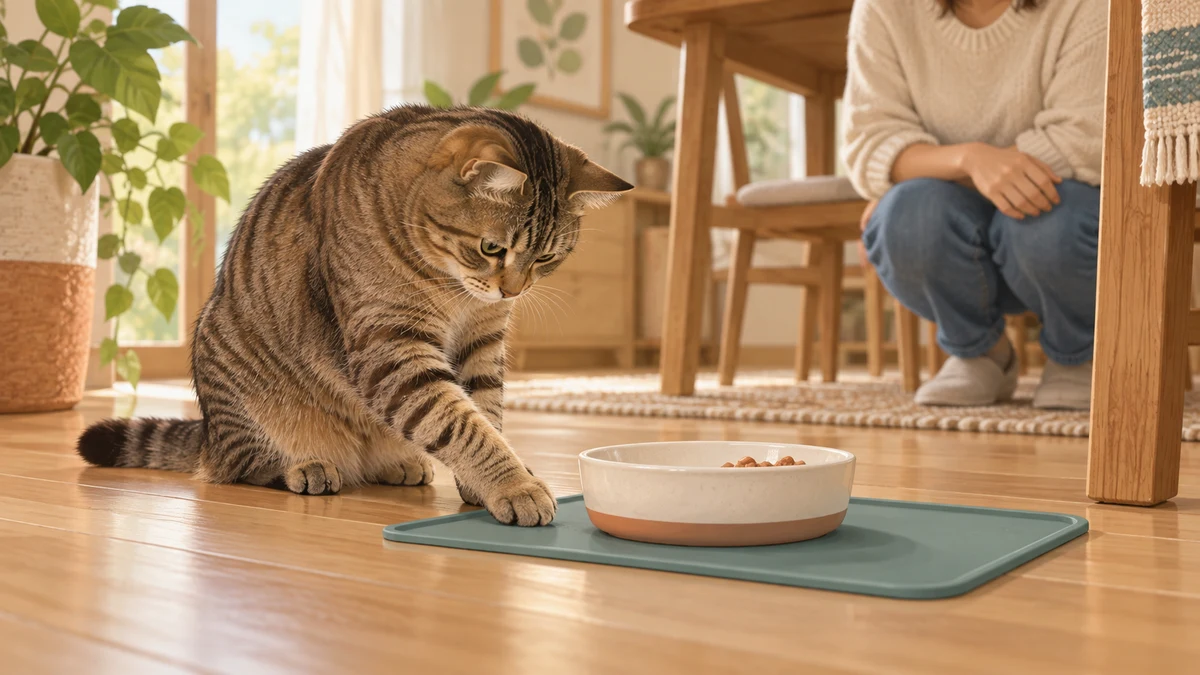
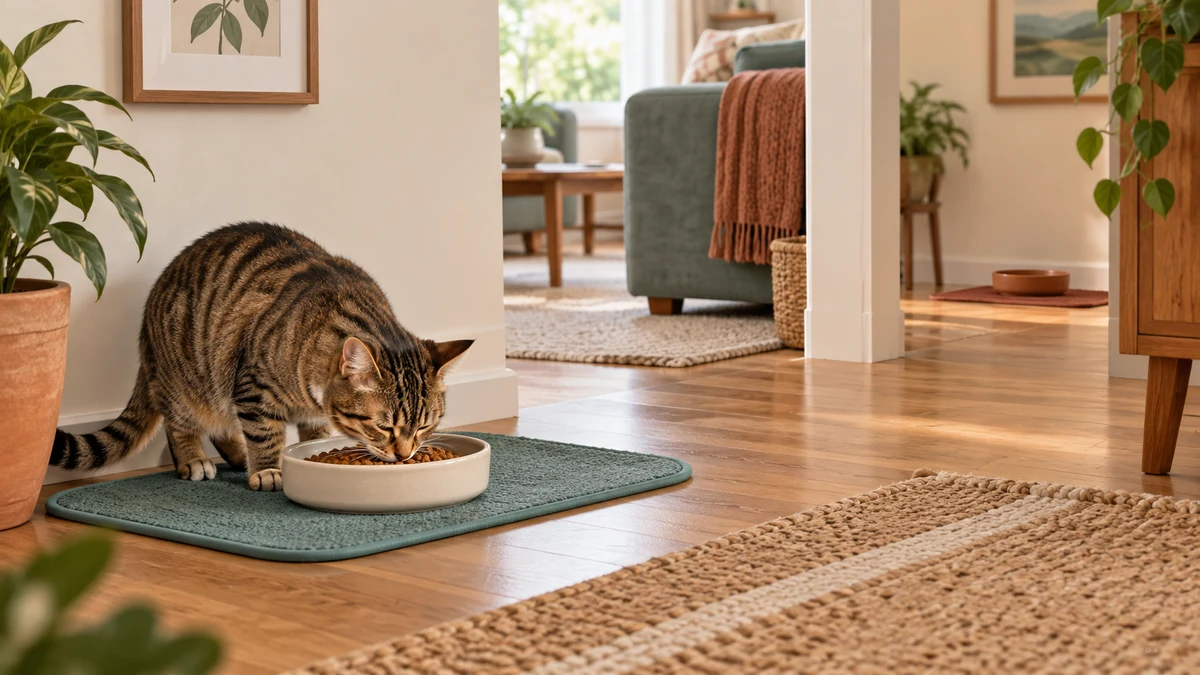
A cat that scratches the floor beside a food bowl is often performing a food-covering-like motion: sweeping a paw over the bare floor, scraping near the bowl, pushing a mat, or dragging a loose item toward leftovers. It may occur before eating, after a few bites, or when the cat walks away. The motion alone does not prove that the cat dislikes the food, is saving it for later, lacks a nutrient, or has a medical problem. First check when it happens and how much the cat actually eats. A sudden change with reduced intake or other signs deserves veterinary advice.
Describe the action before naming the reason
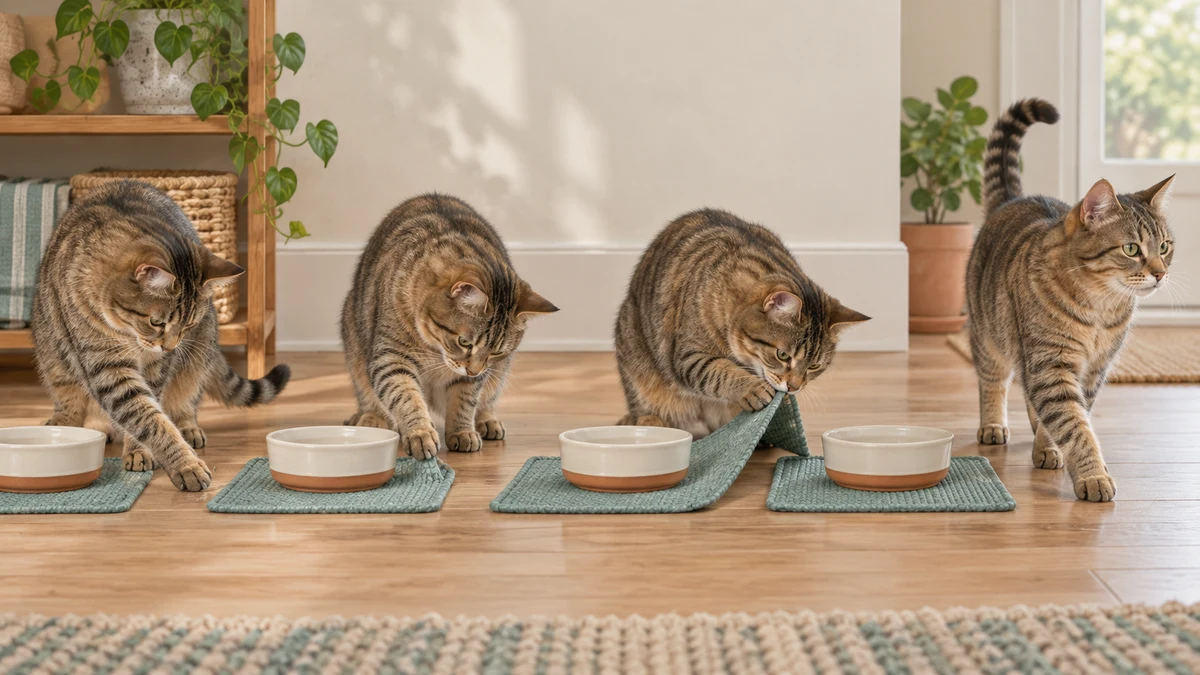
“Scratching around food” can mean at least these 4 observable actions:
- the cat sweeps one front paw backward over tile, wood, or another surface beside the bowl;
- the cat alternates short digging or scraping strokes without touching the food;
- the cat nudges, folds, or pushes the feeding mat;
- the cat drags a towel, paper, or another loose item toward the bowl as if covering it.
It is not the same as eating with a paw, knocking food out to eat elsewhere, scratching furniture, kneading, or guarding a bowl from another animal. Record the literal movement and its timing rather than deciding that the cat is “complaining.”
Is the cat really burying or saving food?
Food covering is a useful description, but intent is harder to prove. Cats Protection uses the terms “food caching” and “food covering” for pawing around leftovers. A peer-reviewed field study also documented European wildcats partly or completely covering large carcasses with leaves or snow on 7% of 105 recorded visits. That establishes that caching occurs in a wild felid under a particular winter scavenging situation.
It does not establish that a pet cat scraping a kitchen floor has the same motive. The species, food size, substrate, competition, and setting differ, and a paw cannot actually bury a ceramic bowl in wood or tile. Direct experiments that assign one cause to this household gesture are limited. “A covering-like motor pattern is plausible” is therefore more accurate than “the cat is definitely hiding food from predators” or “saving dinner.”
The same caution applies to claims that the cat hates the recipe or detects spoiled food. Smell, leftovers, bowl setup, location, prior consequences, or physical discomfort can be relevant observations, but the pawing motion does not identify which one matters.
Compare six contexts, not one gesture
Use the action as a prompt to look at the whole meal:
| Context to check | What to record | What it can and cannot tell you |
|---|---|---|
| Leftovers | Whether pawing begins after the cat eats part of the measured portion | A repeatable link with leftovers fits a covering pattern, but does not prove future storage |
| Before eating | Whether the cat paws, sniffs, approaches repeatedly, or walks away without taking a bite | This raises the importance of appetite and comfort; it does not prove dislike |
| Food and odor | Whether the food is newly opened, long exposed, refrigerated, warmed, or a new recipe | A consistent change is useful, but one meal cannot identify the ingredient or smell involved |
| Bowl, mat, and surface | Bowl width and depth, wobble, mat movement, floor texture, and any recent replacement | Setup may change contact and paw feedback; “whisker stress” should not be diagnosed from pawing |
| Place and company | Noise, foot traffic, walls, blocked exits, dogs, children, or another cat nearby | Location can affect eating, but quiet pawing alone does not prove fear or resource conflict |
| Learned result | Whether pawing makes a person remove the bowl, add toppers, replace the food, or give attention | Consequences may strengthen repetition, but this does not mean the cat is manipulative |
International Cat Care notes that bowl type and feeding environment can influence eating and suggests a wide dish for some cats that resist a particular bowl. The Feline Veterinary Medical Association recommends feeding plans tailored to the individual household, often using small meals, food-acquisition opportunities, and separated stations. Neither source makes floor scratching a diagnostic test for bowl preference or stress.
Make a short meal record before changing everything
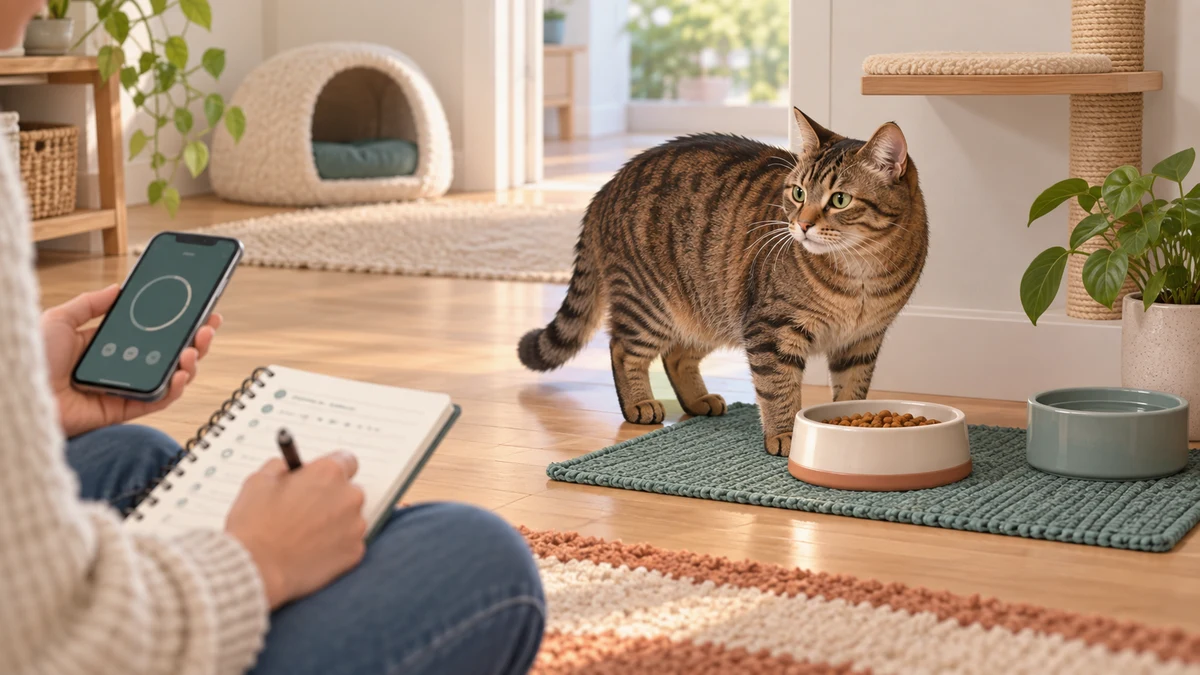
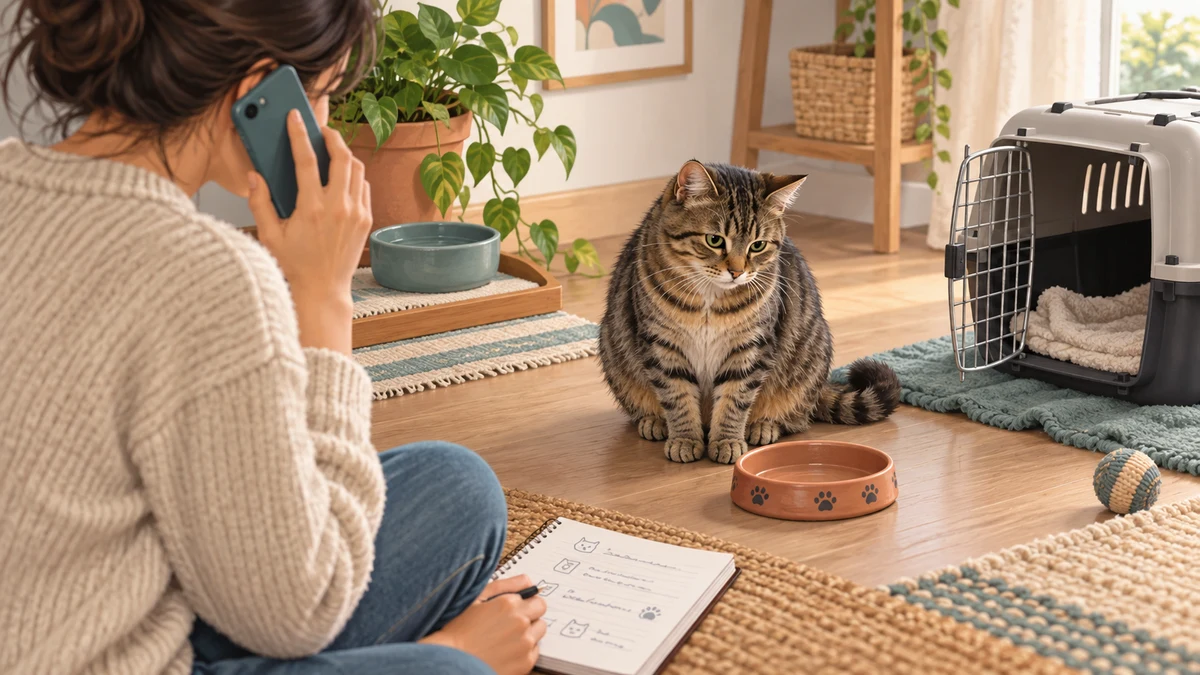
For 3 to 7 ordinary days, if the cat is otherwise well and still eating, record:
- the time food is offered and when pawing starts;
- the measured amount offered, the amount left, and treats or other food;
- whether the cat ate first, pawed first, returned later, or did not eat;
- wet or dry food, recipe, package opening date, serving temperature, and time left out;
- bowl, mat, floor, and exact location;
- people and animals nearby, noise, blocked routes, and unusual events;
- drooling, mouth pawing, dropping food, chewing change, vomiting, stool change, energy, and hiding;
- weekly body weight if weighing can be done calmly and safely.
A video from a distance may capture the sequence, but do not stage the behavior or hover over the meal. Compare the record with the cat’s own baseline. Total intake and the change from normal matter more than how dramatic the pawing looks.
Low-risk adjustments to try one at a time
If the cat remains bright, comfortable, and eats a normal amount, the goal is not to eliminate every paw stroke. Protect hygiene, preserve choice, and test one variable at a time:
- Measure the normal daily ration and actual intake. Do not refill automatically because food was covered or moved.
- Use smaller, more frequent servings when appropriate. Divide the same suitable daily amount rather than adding calories. The scheduled-versus-free-feeding guide explains the trade-offs.
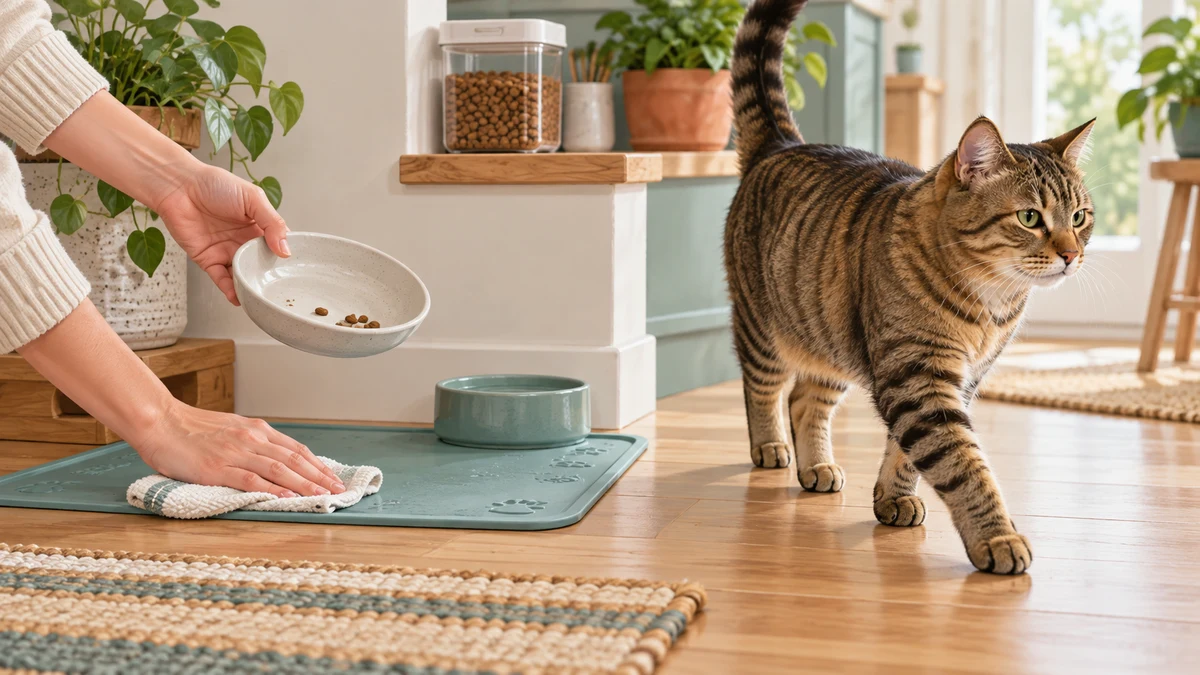
- Clear finished wet meals and handle leftovers safely. Follow the label and the opened-food storage guide; do not keep topping new food onto an old layer.
- Use a stable, easy-to-wash bowl and heavy washable mat. Remove loose towels or paper if the cat drags them into food.
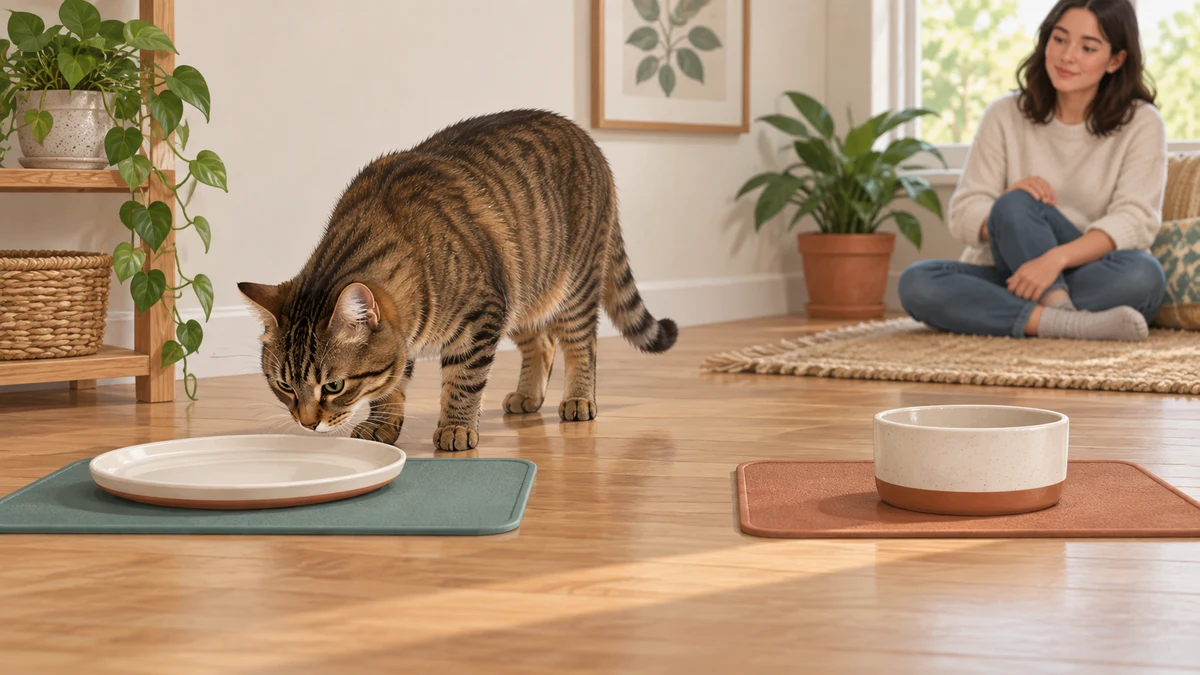
- If the cat resists the current bowl, test one wide shallow ceramic or stainless-steel dish. Keep the food and location unchanged during that test.
- Choose a quiet, accessible location with an open exit. Avoid forcing the cat to eat in a corner, busy walkway, or beside a noisy appliance.
- Separate feeding stations in multi-pet homes. Distance and a visual barrier are more useful than several bowls touching in one row.
- Clean spilled food and the mat after the meal. This limits odor and prevents damp food from being folded into fabric.
- Stay neutral. Do not scold, spray, clap, hold the paws, or repeatedly move the cat.
- Change only one variable for several comparable meals. Otherwise a new bowl, food, location, and schedule introduced together cannot show what helped.
Do not cycle through foods after every pawing episode or routinely add rich toppers to make the behavior stop. Frequent replacements can obscure reduced appetite and may teach a repeatable chain: paw, wait, receive something different. A medically necessary diet change should follow the veterinary plan rather than a generic behavior rule.
Avoid punishment and forced eating
The Feline Veterinary Medical Association warns that physical or verbal punishment can increase fear, stress, and fear-related aggression while interfering with learning. Scratching near the bowl is not a moral failure. Quiet cleanup, a stable surface, and reinforcing calm use of the feeding area are safer than startling the cat.
Do not force food into the mouth, smear food on the paws or face, or use a syringe unless a veterinarian has instructed an individual care plan. International Cat Care advises avoiding active interference with eating, and Cornell notes that force feeding can worsen food aversion. Appetite stimulants, medication, supplements, and therapeutic diets are veterinary decisions—not home tests for floor scratching.
When scratching belongs in a veterinary conversation
Contact a veterinarian when the behavior is new or suddenly much more frequent, especially with any of these 7 accompanying changes:
- eating less, refusing food, approaching food but repeatedly walking away, or a clear change in the amount eaten;
- drooling, bad breath, red or swollen gums, mouth pawing, dropping food, chewing on one side, or refusing hard food;
- repeated vomiting, retching, diarrhea, blood in vomit or stool, or another persistent digestive change;
- weight loss or a continuing downward weight trend;
- lethargy, weakness, hiding, reduced play, or a marked change in normal behavior;
- signs of pain or difficulty lowering the head, standing, or settling at the bowl;
- increased thirst or a clear change in urination together with appetite or behavior change.
Cornell describes appetite loss as a broad clinical sign that deserves a veterinary workup and notes that dental pain can cause refusal to eat. Its dental guidance lists bad breath, inflamed gums, mouth pawing, and refusal of hard food among warning signs. Cornell also recommends prompt evaluation when vomiting occurs with lethargy, weakness, decreased appetite, blood, thirst or urination change, or diarrhea.
Do not use the list to diagnose a disease. It explains why a changed meal pattern should not be hidden by constant food switching. If your cat is eating less now, use the cat-not-eating guide while arranging veterinary advice; urgent timing depends on the cat’s age, health, intake, and accompanying signs.
The practical question is not “What secret message does one paw stroke contain?” It is “When does it happen, how much did the cat eat, what else changed, and does a simple environmental adjustment or veterinary assessment come next?”
Frequently asked questions
Does scratching near the bowl mean my cat hates the food?
No. Some cats paw after eating normally, and the motion cannot identify dislike. Check measured intake, timing, food freshness, and the rest of the cat’s behavior. Repeatedly walking away without eating is more important than the scratch itself.
Is my cat saving the food for later?
Possibly, but it cannot be proven from an indoor scraping motion. Food covering has been described in cats, and caching occurs in a studied wild felid, but the evidence does not assign that intent to every pet cat at a bowl.
Should I take the bowl away when the scratching starts?
If the cat has clearly finished, calmly clear leftovers according to the food label and normal meal plan. Do not snatch the bowl while the cat is still eating or use removal as punishment. Measure intake so cleanup does not hide a reduction.
Will a different bowl stop the behavior?
It may change the pattern for an individual cat, but there is no guaranteed bowl cure. Test one stable, wide, shallow dish while keeping food, place, and schedule constant. More scratching plus reduced intake or mouth signs needs veterinary advice, not an endless bowl search.