Cat Not Eating? What to Observe and When to Call a Vet
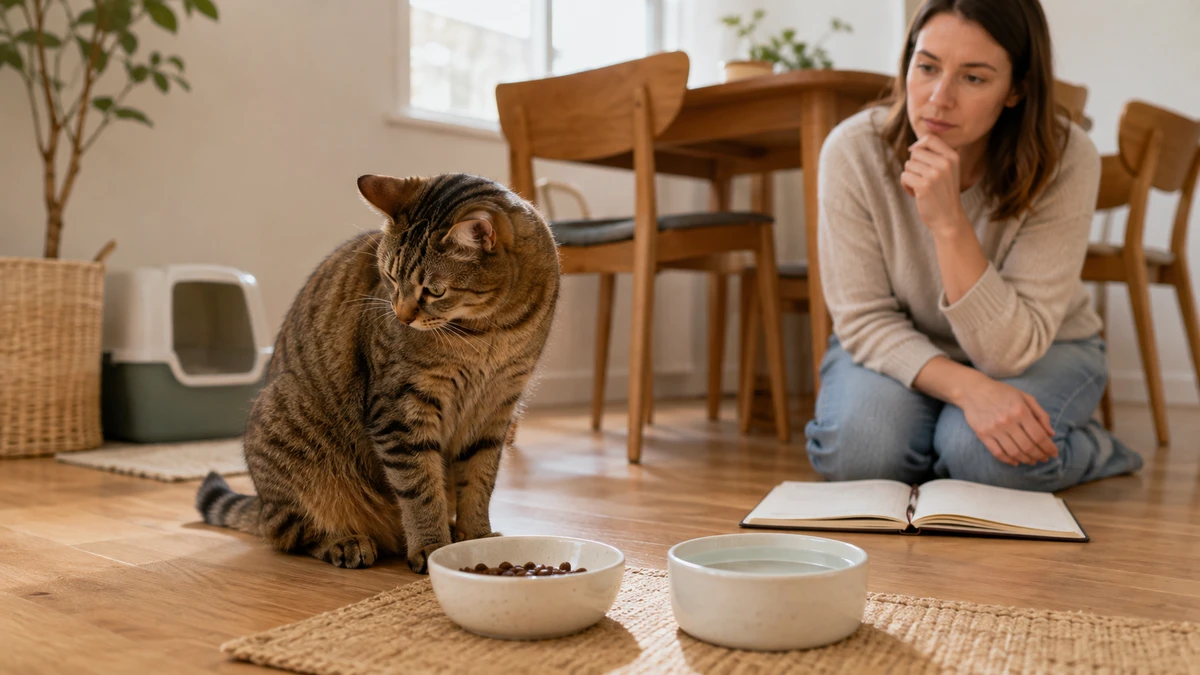
If your cat suddenly stops eating or eats much less than usual, contact a veterinary clinic early instead of assuming the cat is merely picky. First check the whole cat: breathing, alertness, movement, vomiting, urine, stool, drinking, and possible access to toxins or foreign objects. An emergency sign means leaving for urgent care now. A stable cat still needs risk-based advice, especially if very young, older, overweight, recently treated or operated on, or already managing a health condition. While arranging advice, measure what is actually eaten and offer familiar fresh food in a calm setting. Never force-feed, syringe-feed, induce vomiting, give human medicine, or wait by withholding food.
Start with triage, not a new menu
Reduced food intake is a sign, not a diagnosis. International Cat Care uses inappetence for eating less than normal, anorexia for complete loss of appetite, and hyporexia for reduced appetite. Those words describe intake; they do not identify why it changed. Illness, pain, nausea, dehydration, stress, medication effects, an unpleasant food experience, and difficulty picking up, chewing, or swallowing food can act alone or together.
Use this order:
- Look for an emergency. Breathing difficulty, collapse, abnormal gum color, seizures, suspected toxin exposure, inability to urinate, or rapid deterioration takes priority over examining the meal.
- Call early. Tell the clinic what the cat has actually consumed, the change from baseline, and every accompanying sign. The clinic can decide whether the cat needs emergency, same-day, or another prompt assessment.
- Preserve the usual diet and routine unless the cat’s own veterinarian says otherwise. A few bites of treats do not prove that nutritional intake is adequate.
- Observe without pressuring. A cat that walks to food and retreats gives different information from a cat that never approaches or a cat that tries but cannot chew.
Do not let a generic “12-, 24-, or 48-hour rule” override the individual cat. Veterinary sources warn that insufficient intake can harm cats quickly, but the safe response depends on age, body condition, medical history, recent procedures, actual intake, and other signs. A high-risk cat or a cat with an emergency sign should not wait for a countdown to expire.
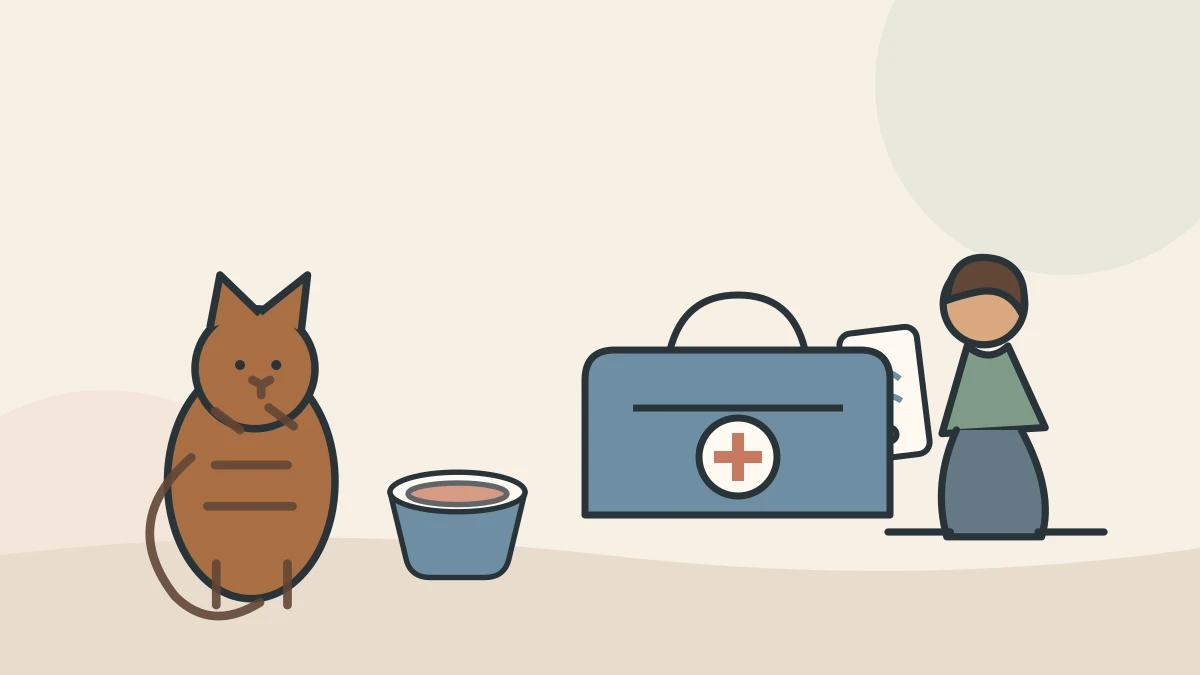
“Not eating” can mean several different things
Watch one quiet meal from a comfortable distance. Do not repeatedly put the bowl under the cat’s nose. Describe the sequence you see rather than deciding on a cause at home.
| What you observe | What to record | Why the distinction helps |
|---|---|---|
| Complete refusal: no usual food, treats, or lickable food | Last definitely observed intake; whether water is taken | Establishes that this is more than refusal of one flavor |
| Marked reduction: a few bites, then stops | Food offered, starting weight, leftovers, estimated proportion eaten | “Ate something” can conceal a large calorie shortfall |
| Treats only: rejects meals but accepts extras | Every treat and supplement as well as regular food | Treat acceptance does not rule out illness or provide a balanced daily intake |
| Approaches, sniffs, then backs away | Lip licking, drooling, repeated swallowing, posture, and whether odor seems to trigger retreat | May indicate interest without comfortable eating; it is not proof of “fussiness” |
| Tries to eat but drops food or chews oddly | Side used for chewing, pawing at the mouth, head tilt, food falling out | Points the veterinarian toward difficulty grasping or chewing rather than absent interest |
| Licks gravy only or accepts one texture | Which components and textures are swallowed; whether solids are attempted | Separates actual intake from an apparently empty bowl and may reveal difficulty with texture |
| Coughs, gags, or struggles when swallowing | Video if safe, sound, timing, saliva, and breathing effort | Swallowing or breathing difficulty changes urgency; stop offering food and call |
| May be displaced in a multi-cat home | Feed each cat separately and identify whose portion remains | A shared bowl cannot show which individual ate; guarding may be subtle |
| Food may be unavailable or altered | Package lot, opening date, smell, texture, storage, feeder operation, and whether another intact package differs | Checks access and food quality without concluding they are the only cause |
A cat can fit more than one row. For example, a cat may approach because it is hungry, lick liquid, drop solids, and then hide. International Cat Care notes that some cats retain appetite but cannot comfortably eat because of a mouth, jaw, or swallowing problem. That pattern needs veterinary assessment; it is not a reason to keep cycling through flavors.
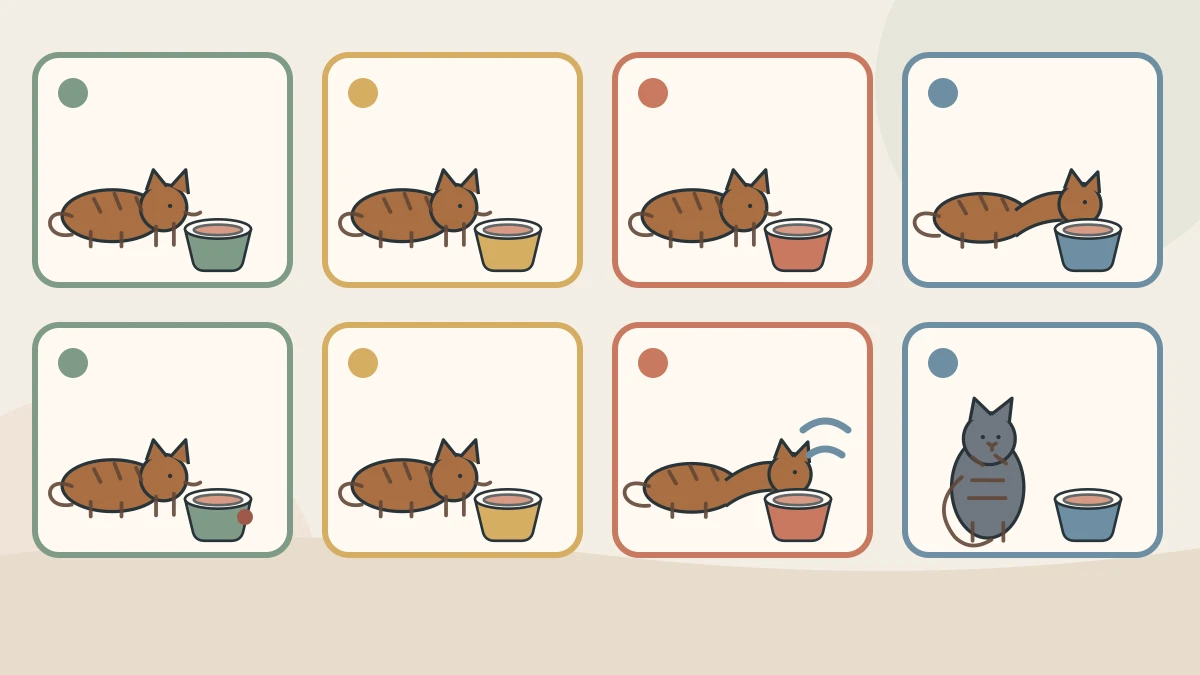
Why early contact matters
A sudden appetite change can accompany many physical or emotional problems, and several may be present at once. Cornell’s Feline Health Center emphasizes that loss of appetite is a broad clinical sign whose underlying cause must be investigated. A stressful move or veterinary visit can affect eating, but stress should not be used to dismiss pain, illness, or dehydration.
Eating too little can also become a problem of its own. International Cat Care warns that even a few days of inadequate intake can worsen illness and cause complications. Cats—particularly overweight cats—are vulnerable to hepatic lipidosis, a potentially life-threatening buildup of fat in liver cells associated with anorexia or food deprivation. This does not mean an owner can diagnose fatty liver from an untouched bowl. It means “wait until hunger wins” is unsafe, and veterinary nutrition support may need to begin while the original cause is being investigated.
Kittens have small reserves and high needs. Older cats and cats with known health problems may deteriorate with less warning. A cat recovering from anesthesia, surgery, hospitalization, dental work, or a medication change may have discharge instructions that specify whom to call and when. Follow those case-specific instructions over any general article.
Warning signs: emergency now or same-day advice
When in doubt, describe the signs to a veterinary clinic in real time. If the clinic is closed and the cat is worsening, contact an emergency service. Local availability differs, so identify a nearby option before a crisis.
Seek emergency veterinary care now for any of the following:
- open-mouth breathing, obvious breathing effort, choking, or blue, purple, grey, or very pale gums;
- collapse, unresponsiveness, seizure activity, active tremors, loss of balance, or profound weakness;
- known or suspected access to a toxic plant, human or veterinary medication, chemical, pesticide, rodenticide, or unsafe food;
- known or suspected swallowing of string, ribbon, thread, a toy piece, bone, or another foreign object;
- repeated vomiting or retching, blood, inability to keep water down, or rapid deterioration;
- a swollen or painful-looking abdomen, marked distress, or a cat that cannot settle;
- repeated trips to the litter box with little or no urine, straining to urinate, or inability to urinate; or
- severe trauma, substantial bleeding, or appetite loss occurring with another obvious emergency.
Cornell’s emergency service lists difficulty breathing, collapse, abnormal gum color, difficulty urinating, toxin or medication ingestion, seizures, tremors, lethargy, and weakness among emergent conditions. Cornell’s hazard guidance says to call immediately after suspected toxin exposure and not to induce vomiting unless a veterinarian or poison service specifically directs it.
Contact the cat’s veterinarian the same day when the cat is stable but:
- eats nothing, or intake is markedly below the cat’s usual amount;
- wants food but cannot pick it up, chew, or swallow normally;
- drools, paws at the mouth, has new bad breath, or appears painful around food;
- vomits, has diarrhea, produces much less stool, is constipated, or shows a major drinking or urination change;
- is unusually quiet, hiding, weak, painful-looking, or less responsive than usual;
- has yellow-looking skin, gums, or eye whites, or is losing weight;
- is a young kitten, senior, overweight, underweight, pregnant or nursing, or has a known health condition;
- recently had surgery, anesthesia, hospitalization, dental treatment, an injury, or a prescribed medication or diet change; or
- has diabetes or another condition for which missed meals may alter a case-specific treatment plan.
Do not change a prescribed dose in response to a missed meal unless the prescribing veterinarian gives directions for this cat. Bring the package or prescription information to the call.
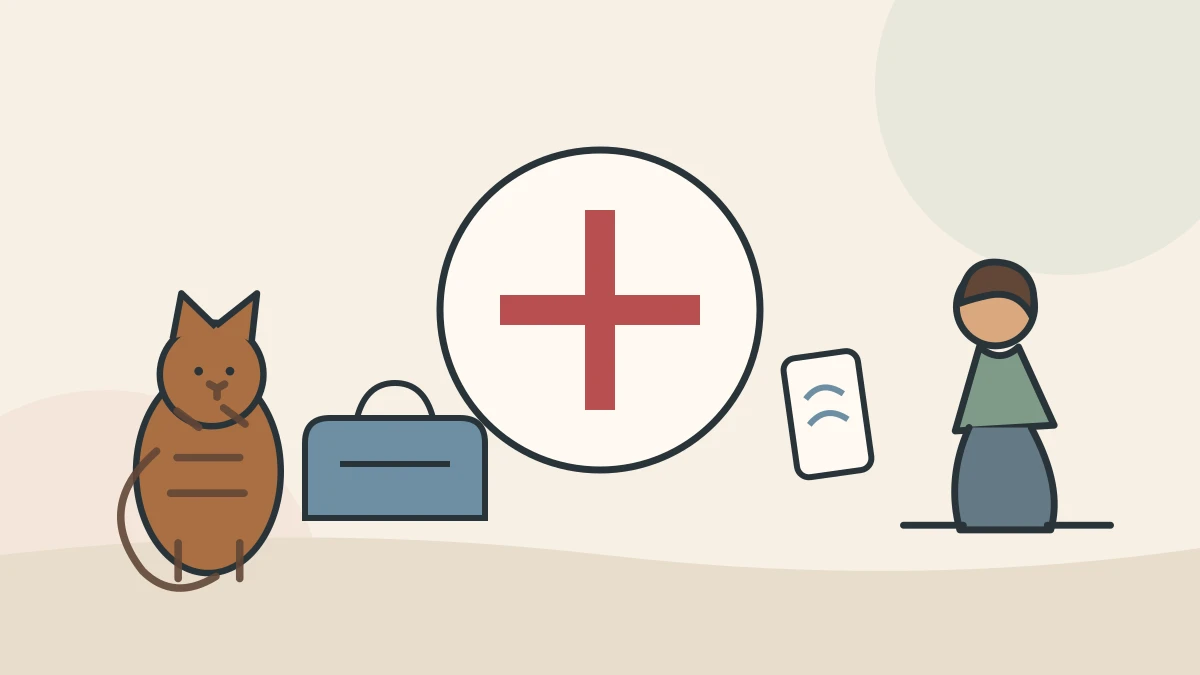
Build a food and symptom record the clinic can use
“Not eating” is important, but measurable detail makes the history more useful. If urgent care is needed, leave first; the log must never delay it.
For dry food, weigh the portion before and after when practical. For wet food, note the can or pouch size, the fraction served, and the fraction left; weighing is more accurate than eyeballing. Account for food discarded because it dried out, another pet’s access, treats, edible supplements, and food used to give medicine. A camera or supervised separate meal can clarify who ate in a multi-cat home. Our scheduled-versus-free-feeding guide explains why individual intake is harder to see when food is shared or continuously available.
| Date and time | Food and batch | Amount offered | Amount left | Amount swallowed | Eating pattern | Water | Vomit / diarrhea | Stool | Urine | Energy / behavior | Weight | Recent events and possible exposures |
|---|---|---|---|---|---|---|---|---|---|---|---|---|
| Example: Sep 8, 7:30 a.m. | Usual wet food, newly opened pouch; lot photographed | 85 g | 78 g | About 7 g | Sniffed, licked gravy, dropped one solid piece | Drank once; amount unknown | No vomiting seen; stool formed yesterday | One normal stool yesterday | Two usual-size clumps overnight | Quieter, still walking normally | 4.8 kg on pet scale | Returned from clinic yesterday; no known toxin or string access |
Add these details when relevant:
- the cat’s normal daily food and normal meal pattern;
- the last meal you definitely watched the cat swallow;
- all treats, supplements, medicines, prescription food, and recent changes;
- lip licking, repeated swallowing, drooling, food dropping, chewing side, gagging, or coughing;
- hiding, posture, mobility, grooming, sleep, interaction, and apparent comfort;
- water offered and observed drinking—not just whether a bowl is present;
- the number and appearance of vomit, stools, and urine clumps;
- current weight compared with a recent reliable weight; and
- travel, visitors, construction, a new animal, boarding, hospitalization, surgery, food-package changes, feeder failure, and possible access to plants, string, rubbish, chemicals, or medication.
Use consistent measurements, but do not wrestle an ill or painful cat onto a scale. A short video of the approach to food, chewing, swallowing, gait, or breathing can help the veterinarian when filmed without restraint and without delaying care.
Low-risk support while you arrange veterinary advice
These steps are for a stable cat while you contact the clinic. They do not treat the cause and should not postpone an appointment.
Offer familiar, fresh food without pressure
Use food the cat normally eats, served fresh in a clean familiar dish. Remove stale remnants and check the product’s smell, texture, package integrity, lot information, opening time, and storage. If one package seems abnormal, save the package and lot details, stop using that package, and ask the manufacturer or veterinarian what to do. Our opened cat-food storage guide covers label-first handling and signs that food should be discarded.
Offer a modest fresh portion rather than an overwhelming buffet. Some cats prefer food slightly warmed because the aroma is stronger; others retreat from a strong smell, especially after nausea or an unpleasant association. Follow the cat’s response and the veterinarian’s instructions instead of treating warming as a universal fix. Do not leave perishable food out beyond its safe handling window.
Make access quiet and individual
Place food away from litter, noisy appliances, busy walkways, glass doors, and animals that stare, follow, or block access. In a multi-cat home, feed the affected cat behind a closed door with its own measured portion, water, resting place, and litter access. Separation is for accurate observation and calm access, not punishment.
Keep fresh water easy to reach unless the veterinarian gives different instructions. Do not force water by syringe. If drinking has changed, record it; our cat hydration guide describes low-pressure water options, but appetite loss plus dehydration signs needs veterinary care rather than a fountain purchase.
Respect prescription diets and recovery instructions
If the cat has a prescribed diet, fluid restriction, feeding tube, postoperative plan, or medication tied to meals, contact the original veterinary team before changing anything. Do not dilute, mix, replace, or abandon a prescription diet on generic internet advice. Tell the clinic honestly if the cat will not eat it; that information helps the veterinarian choose a safe alternative.
Keep food presentation separate from stressful medication handling when the veterinary team says that is appropriate. Hiding a bitter medicine in the main meal can create aversion and make both eating and dosing harder. Ask the clinic about another formulation or administration plan; do not crush or alter medication without approval.
What not to do
- Do not withhold food for a long period to “make the cat hungry.” Food deprivation can worsen risk, especially in an overweight or already ill cat.
- Do not force food into the mouth or use a spoon or syringe to feed. International Cat Care advises avoiding this interference; it adds stress, can strengthen food aversion, and may be unsafe when swallowing is impaired.
- Do not syringe water. A cat that cannot swallow normally needs professional assessment, not liquid pushed into the mouth.
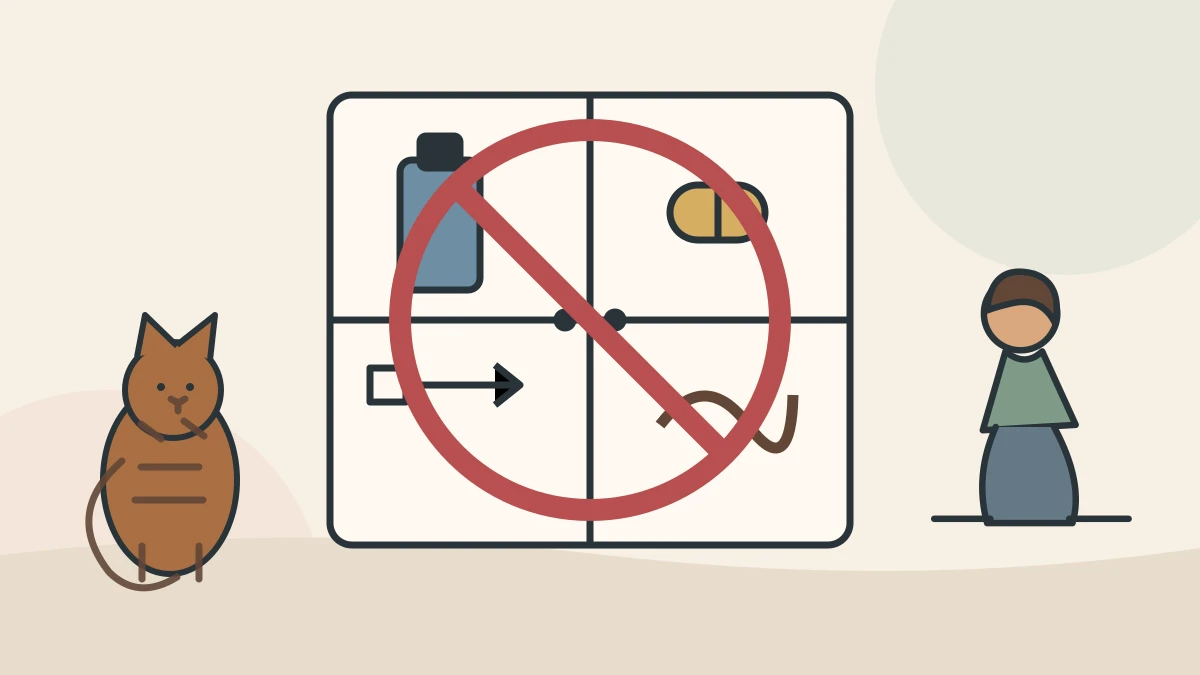
- Do not induce vomiting. There is no generally safe at-home method for making a cat vomit; call a veterinarian or animal poison service after a possible exposure.
- Do not start human medicine, another pet’s medicine, leftover prescriptions, appetite stimulants, pain relievers, supplements, oils, or herbal remedies. Continue or change an existing prescription only according to the prescribing veterinarian’s directions.
- Do not change a prescription diet, thin it with water, or mix in extras without the prescribing veterinarian’s agreement. Some cats have case-specific nutritional restrictions.
- Do not pull visible string from the mouth or anus. Keep the cat from chewing more and seek urgent veterinary direction.
- Do not assume treats, gravy, or one tiny bite means the problem is over. Continue measuring total intake and watch the whole cat.
Veterinary feeding tubes, anti-nausea treatment, pain control, appetite support, and fluid therapy are clinical tools. Their presence in veterinary guidance is not an instruction to improvise equivalents at home. A veterinarian chooses them after examining the cat and assessing the underlying problem.
Make the call concise and specific
Start with the most urgent facts:
“My cat normally eats two measured meals. Since yesterday evening I have watched her swallow about one-tenth of the usual amount. She approaches the bowl, licks liquid, and drops solids. She drank once, urinated twice, passed stool yesterday, and has not vomited. She is quieter than usual. She had dental treatment three days ago and is taking these prescribed medicines. What level of care does she need, and what should I do with the next meal and medication?”
Then give age, current and recent weight, known conditions, recent procedures, food and medication details, possible exposures, and your location if emergency options are limited. Say whether you can transport the cat and ask what to bring. Keep the carrier accessible; a calm carrier-training routine helps before emergencies, but do not delay departure to practise during one.
At the clinic, the veterinarian may review the history, examine the mouth and whole body, assess hydration and pain, and recommend tests based on the findings. The goal is to identify and manage the cause while protecting nutrition. The appropriate plan cannot be selected from one symptom online.
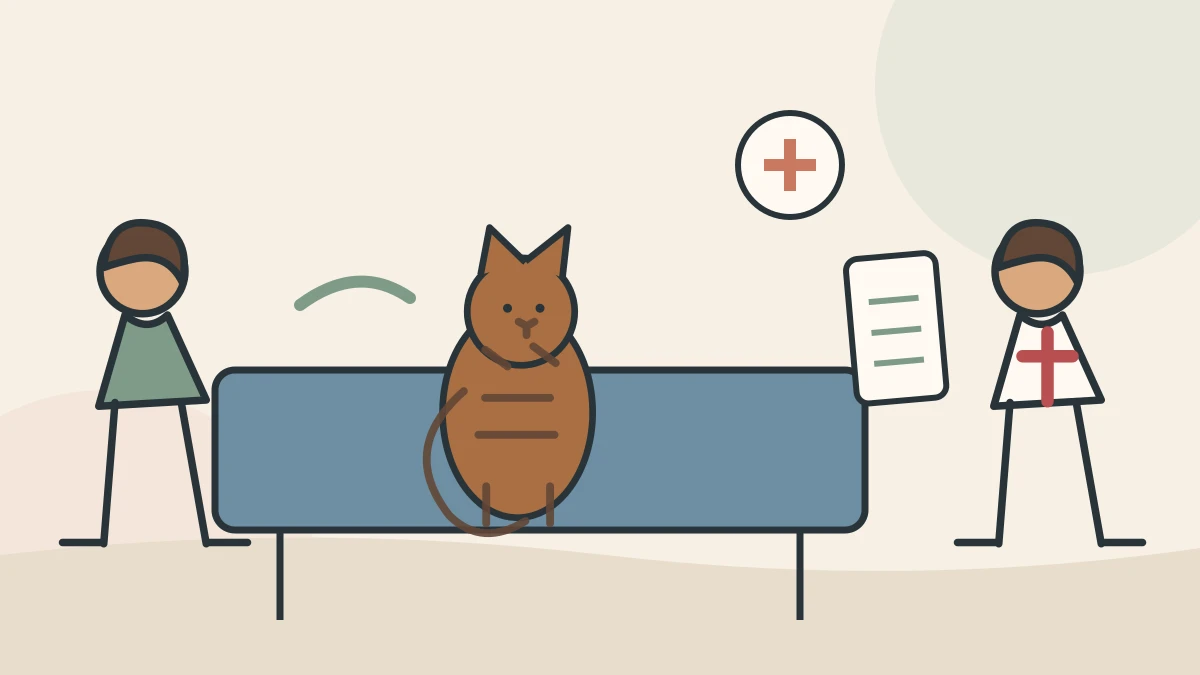
An appetite change is easy to minimize because a cat may still take a treat or sit near the bowl. Measure what was swallowed, not what was offered. Separate observation from diagnosis, use the cat’s individual risks and accompanying signs to set urgency, and involve a veterinarian early. The safest home role is calm access, accurate records, and prompt transport—not a forced meal.
Frequently asked questions
My cat ate a treat. Does that mean it is safe to wait?
No. A treat shows that the cat swallowed that item; it does not show that total nutrition is adequate or rule out pain, nausea, illness, or difficulty with the regular food. Record the treat and the measured meal intake, check for warning signs, and ask a veterinary clinic how soon this individual cat should be assessed.
How long can a cat go without eating?
Do not use one hour cutoff as permission to wait. The safe interval varies with age, body condition, health history, recent treatment, actual calorie intake, hydration, and accompanying signs. Very young, older, overweight, underweight, recently operated-on, and medically vulnerable cats warrant earlier contact. An emergency sign means immediate care regardless of the clock.
Should I warm the food?
For a stable cat, a small fresh portion of familiar food may be offered slightly warm if that normally appeals to the cat and the veterinary team has not restricted it. A stronger smell can also repel a nauseated cat, so stop if the cat retreats. Warming is an optional observation, not treatment and not a reason to delay calling.
Can I syringe-feed if my cat will not eat?
Not on the basis of a general article. Forcing food or water can increase stress and food aversion and may be unsafe when chewing or swallowing is impaired. Veterinary feeding tubes are placed and managed as part of a case-specific plan; they are not the same as pushing food into a cat’s mouth at home.
What if my cat only licks gravy?
Record exactly what was swallowed and whether the cat tried to pick up or chew solids. Gravy alone may represent much less nutrition than the bowl appears to contain. Because texture-selective eating can accompany mouth, jaw, swallowing, nausea, or aversion problems, contact a veterinarian rather than continually replacing meals with treats or liquid toppers.