Cat Overgrooming and Hair Loss: Where Normal Cleaning Ends

Normal grooming leaves the coat and skin intact. Repeated licking, nibbling, or pulling that produces short broken hairs, a thinning patch, bare skin, redness, scabs, or a wound is a change worth veterinary assessment—not a habit to punish or a diagnosis you can make from location alone. Arrange an appointment when hair loss appears or the pattern keeps recurring. Contact a veterinary clinic promptly if the skin is bleeding, open, swollen, wet, painful, foul-smelling, or changing quickly, or if appetite, energy, breathing, or litter-box behavior changes too.
First, sort the change by what you can see
Cats groom every day, and the amount varies by individual, coat, activity, and environment. Natural coat replacement can also release much more loose fur at some times of year. MSD Veterinary Manual notes that shedding without bald patches or symmetric hair loss is likely part of normal coat replacement. The important boundary is not a stopwatch number; it is a change from this cat’s baseline plus damage to hair, skin, or daily life.
| What you observe | How to respond | Why |
|---|---|---|
| Brief grooming mixed through normal activities; coat remains full and even; skin looks calm; loose fur increases without a thin or bald area | Monitor during routine care and keep a simple baseline | Normal cleaning and coat replacement should not progressively expose or injure skin |
| The cat repeatedly returns to one area; hairs look short, stubbly, or broken; a patch is thinning or bare; licking, chewing, or scratching is increasing; flakes, redness, bumps, or scabs appear | Book a veterinary assessment and begin a photo-and-video record | Hair loss is a sign with overlapping medical and behavioral possibilities |
| Bleeding, an open or moist wound, discharge, swelling, heat, odor, marked tenderness, rapid spread, or a concurrent change in appetite, energy, breathing, movement, or litter-box use | Call a veterinary clinic promptly for triage; use emergency care when the clinic directs or the cat is in immediate distress | Broken skin can worsen, and whole-body changes may raise the urgency beyond a coat problem |
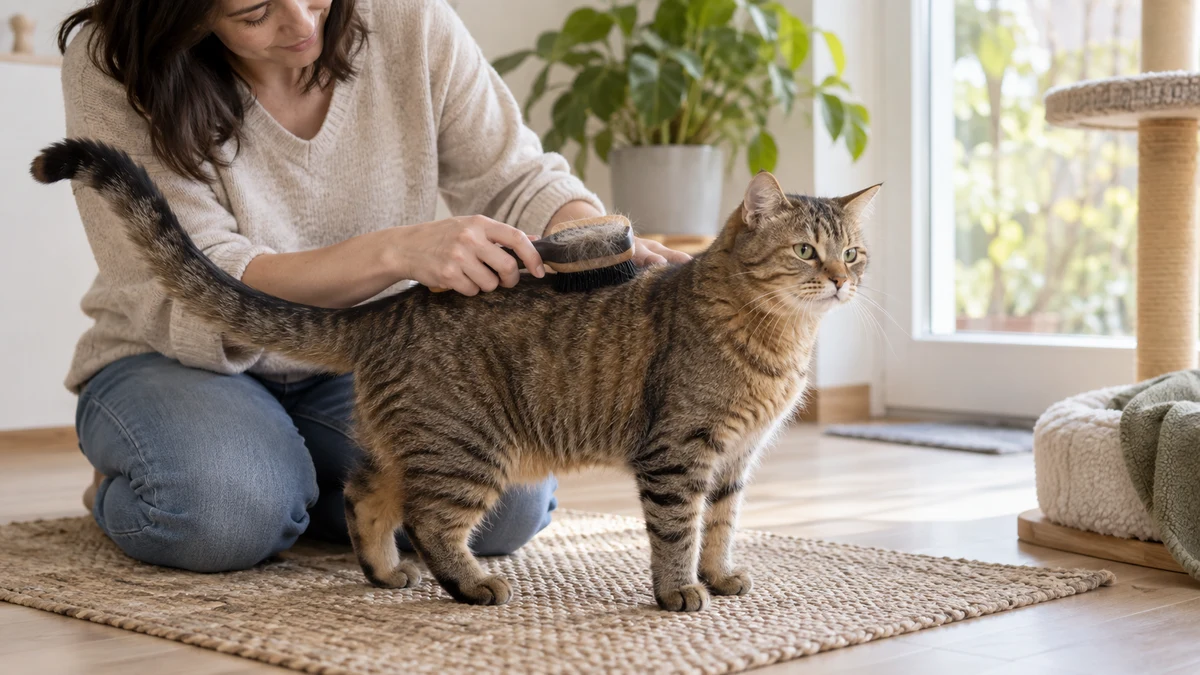
Seasonal shedding and overgrooming are not the same event. Loose hair from an otherwise even coat may be normal; a tongue or teeth repeatedly cutting hair down to stubble, exposing skin, or creating lesions is not. Gentle brushing that suits the cat and coat may help you remove loose hair and inspect the coat, but brushing should not be used to scrub, test, or treat a sore area.
A bald patch is a clue, not a home diagnosis
Cornell veterinary guidance explains that cats may lick an area because it itches or hurts. Skin inflammation, parasites, allergic reactions, infection, and pain can all be relevant. Environmental or emotional strain can also contribute, but only after medical possibilities have been considered. A 2024 veterinary review likewise describes a two-way relationship: physical problems can increase discomfort and grooming, while stress-related repetitive grooming can damage the coat or skin.
The body map helps a veterinarian ask better questions, but it cannot name the cause. Tail-base grooming does not prove parasites. Belly or inner-leg hair loss does not prove anxiety or allergy. A matching patch on both sides does not settle the question either. MSD notes that symmetric hair loss can occur with underlying disease, while Cornell emphasizes that patterns overlap.
This is more than a technical caution. In a small referral case series of 21 cats sent in with a presumptive behavioral hair-loss diagnosis, investigators identified a medical cause of itch in 16, a behavioral-only cause in 2, and both types of contribution in 3. Those numbers are not a population estimate, but they show why “the cat is stressed” should not replace a veterinary workup.
Think in broad categories, not labels:
| Possible category | Useful observations—not conclusions |
|---|---|
| Itch or skin inflammation | Scratching, chewing, rubbing, redness, flakes, crusts, bumps, discharge, odor, or another animal or person with a new skin problem |
| Parasite or exposure context | Current veterinarian-guided prevention, missed or changed dates, outdoor access, visiting animals, boarding, travel, new textiles, cleaners, litter, or grooming products |
| Pain or other physical discomfort | Focus on one reachable area, flinching, guarding, changed jumping or movement, altered sleep, appetite, drinking, or litter-box behavior |
| Environmental or emotional load | A move, schedule disruption, construction, visitor, conflict, resource competition, loss or arrival of a household member, or fewer chances to hide, climb, scratch, play, and rest |
More than one category can be active at once. The visible patch also may not reveal whether hair fell out, broke during grooming, or was removed for another reason. That distinction can require a close examination and tests.
Build a useful record before the appointment
Your goal is to preserve a timeline, not prove a theory. Start with the date you first noticed the change, even if you can only estimate it.
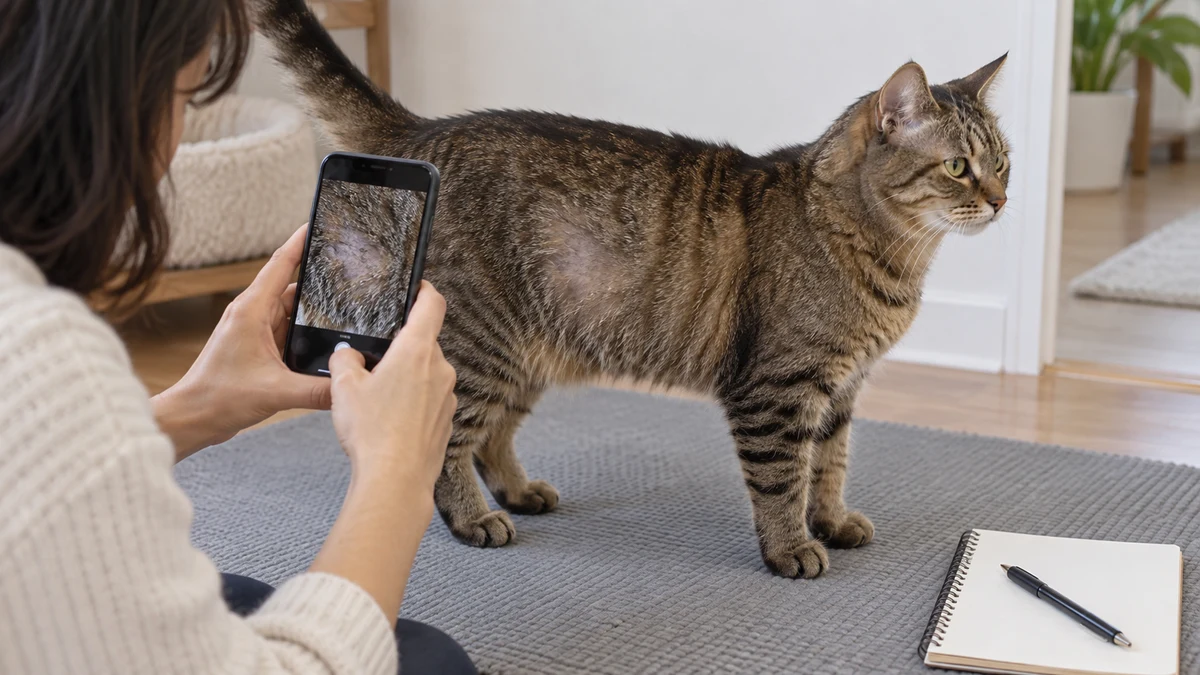
Record at least these 11 observations:
- Exact location: mark the face, neck, chest, belly, back, flank, tail base, tail, or each limb on a simple body sketch.
- Side and symmetry: left, right, midline, or similar areas on both sides.
- Coat change: loose long hairs, short stubble, broken tips, thinning, or fully bare skin.
- Skin appearance: normal-looking, red, darker or lighter, flaky, crusted, bumpy, swollen, wet, bleeding, or odorous.
- Action: licking, nibbling, pulling, scratching, rubbing, or a mixture.
- Timing: time of day, what happened just before it, bout length, and how often it recurs.
- Trend: stable, improving, spreading, or becoming more intense; take same-angle photos with dates and a size reference that does not touch the skin.
- Parasite-prevention history: exact product supplied or approved by the veterinarian, species it was intended for, last application date, and any gap—do not apply an extra dose to test a guess.
- Other body changes: appetite, water intake, vomiting, stool, urination, sleep, energy, walking, jumping, hiding, touch sensitivity, or increased hairball episodes.
- Environment: people or animals arriving or leaving, schedule changes, work at home, noise, moves, furniture changes, new products, blocked routes, or competition around resources.
- Household pattern: whether another pet is itchy or losing hair, or a person has developed a new skin change; tell the clinic rather than deciding whether it is contagious.

A short video can be especially useful when the cat stops grooming at the clinic. Film from a distance without calling, touching, or provoking the behavior. Do not delay care to collect a perfect week of data; bring what you have.
What the veterinary assessment may sort out
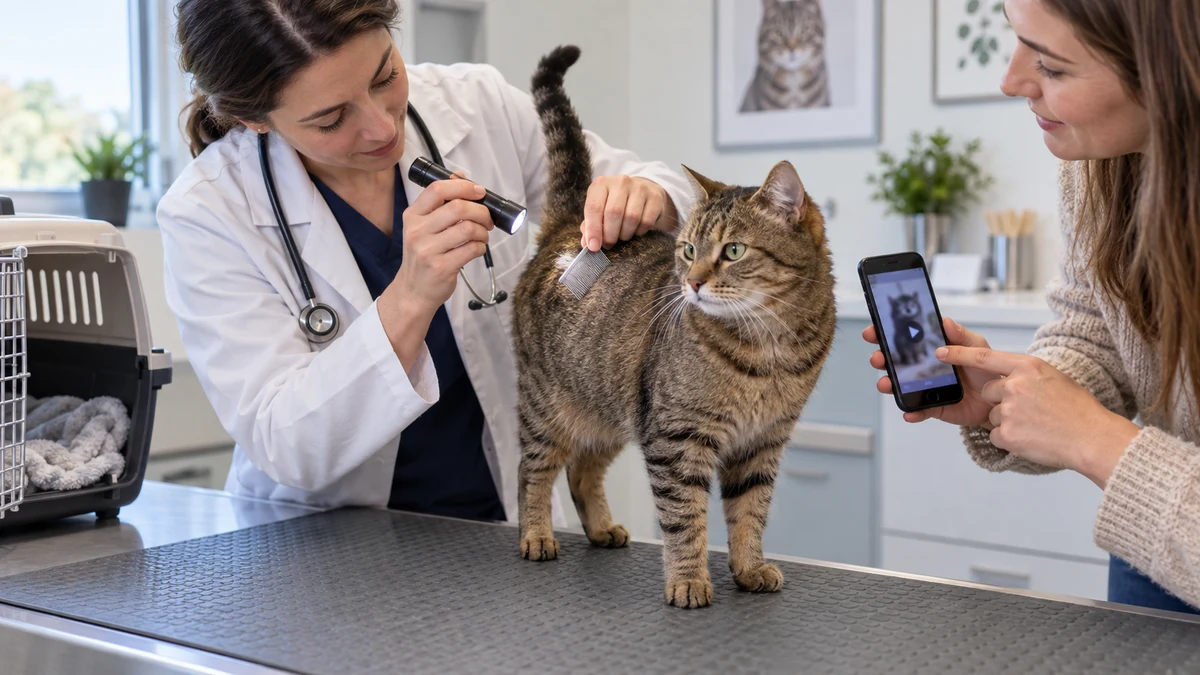
Cornell describes diagnosis as a combination of history, physical examination, and selected tests, sometimes followed by a veterinarian-controlled trial and reassessment. The clinician may examine the entire skin and coat, not only the bald spot; look at hair shafts and skin changes; check for parasite evidence; and choose skin, hair, laboratory, diet, or other steps according to the individual findings. A normal-looking patch does not by itself rule out itch or discomfort.
Bring the prevention packaging or a clear photo of its label, not just “flea medicine,” because species, active ingredient, schedule, and application matter. Report every home product already used. Also mention changes in movement, eating, drinking, urination, stool, sleep, or social behavior even if they seem unrelated. These details help the veterinarian decide whether the coat change is local, part of a broader physical problem, behavior-related, or mixed.
Avoid starting several home experiments before the visit. Extra parasite products, human creams, essential oils, anti-itch products, supplements, shampoos, diet changes, bandages, or a long-term cone can add risk, obscure the pattern, or interfere with a diagnostic plan. If the cat is actively injuring the skin, call the clinic for immediate, individual instructions on safe short-term protection.
Low-risk support while you wait
Do not scold, spray, chase, hold, or forcibly interrupt grooming. Punishment adds threat without addressing itch, pain, or another cause. Instead, keep the environment predictable and make observations quietly.

AAFP/ISFM environmental guidelines organize a healthy feline environment around safe places, separated key resources, opportunities for play and predatory behavior, positive predictable human interaction, and respect for scent. These are welfare foundations, not a treatment for unexplained hair loss. While the veterinarian investigates, you can:
- keep feeding, sleep, and household routines as stable as practical;
- preserve an accessible hide, elevated resting place, scratching area, and clear retreat routes;
- separate food, water, litter, rest, and play resources enough to reduce blocking or competition in a multi-cat home;
- offer brief, optional play or calm contact the cat already enjoys, and let the cat decline;
- change one environmental variable at a time and log it instead of redesigning the whole home overnight.
If you notice a possible household stressor, record it without declaring it the cause. Our guide to stress signs in cats can help you observe the whole pattern, but a checklist cannot rule out pain, itch, parasites, allergy, infection, or another physical contributor. Likewise, an indoor lifestyle does not by itself settle parasite risk; review prevention with your veterinarian rather than stopping, adding, or doubling products on your own. See the indoor-cat parasite prevention guide for questions to bring to that discussion.
The practical boundary
Normal grooming is flexible and leaves an intact coat. Overgrooming is a descriptive signal: repetition plus broken hair, thinning, bald skin, lesions, or disruption. The safest response is to document the pattern, protect the cat from avoidable escalation, and let a veterinarian investigate medical possibilities before a behavioral explanation is accepted. Even when environmental load contributes, care may need to address both body and surroundings.
Frequently asked questions
Can I diagnose the cause from where my cat is bald?
No. Location, symmetry, and skin appearance are useful clues, but itch, pain, parasites, allergic reactions, infection, and behavioral factors can produce overlapping patterns. Bring a body map, photos, video, and timeline to a veterinarian.
Is symmetric belly or inner-leg hair loss always anxiety?
No. Symmetry does not establish a behavioral cause. Medical contributors need assessment first, and physical and environmental factors can coexist.
Should I put on a cone to stop the licking?
Do not improvise long-term restraint. A barrier may add distress or hide progression, and it does not address the cause. If skin is being injured, call a veterinary clinic promptly for individual short-term protection and triage instructions.
Can I try a human cream, essential oil, shampoo, supplement, or extra parasite dose first?
No. Cats may lick topical substances, products can be inappropriate or toxic, and multiple experiments can complicate assessment. Tell the clinic what has already been used and follow a veterinarian’s plan.
How long should I monitor before booking a visit?
Once hair is repeatedly breaking, thinning, or becoming bare, arrange an assessment rather than waiting for a fixed number of days. Call promptly for open or bleeding skin, discharge, swelling, odor, marked pain, rapid spread, or changes in appetite, energy, breathing, or litter-box behavior.