How to Tell If Your Cat Trusts You: 10 Signs of a Close Bond

A cat probably trusts you when they repeatedly choose to approach, remain relaxed, rest nearby, and re-enter interactions while they are free to leave. No slow blink, purr, exposed belly, or tail position proves trust by itself. The useful evidence is a pattern: voluntary contact plus loose body language, normal eating, grooming, play, and recovery after small surprises. Read the whole cat, the setting, and what is normal for that individual instead of treating one charming behavior as a pass-or-fail test.
Trust is a pattern, not a score
“Trust” is a convenient human word for several observable things. A cat may feel safe enough not to monitor you constantly, expect your actions to be predictable, seek social contact, or know that moving away will end an interaction. Those experiences overlap, but they are not identical. A sociable cat may climb onto a visitor within minutes; a deeply settled but less tactile cat may prefer the other end of the sofa.
Use three questions before interpreting any signal:
- Did the cat choose it? An approach means more when the cat had a clear exit and was not carried, cornered, or lured past fear.
- What does the rest of the body say? Soft eyes, neutral or forward ears, loose muscles, natural breathing, and an unguarded tail support a relaxed reading. A crouch, flattened ears, hard stare, lashing tail, sudden skin twitch, or freezing changes the meaning.
- Is it normal for this cat in this setting? Look for a stable pattern or gradual change over days and weeks. One unusual afternoon can reflect food, heat, noise, pain, or a disrupted routine.
Here is the short version before we examine each sign:
| Possible sign | A trust-supporting context | Important limit or alternative explanation |
|---|---|---|
| 1. Voluntary approach | Loose body, room to retreat, no lure or restraint | May be checking food, a door, or a familiar routine |
| 2. Choosing your company | Returns to your room and settles without demanding contact | The room may simply contain warmth, height, food, or a favorite bed |
| 3. Upright-tail greeting | Tail up, soft curve, relaxed walk, neutral ears | Excitement alone is not proof of a close bond; read the whole posture |
| 4. Slow blinking | Soft face and loose body in a calm exchange | Blinking can also occur with stress, fatigue, or an eye problem |
| 5. Cheek rubbing or head bunting | Cat initiates contact and remains relaxed | Scent marking also occurs on objects and can request attention or access |
| 6. Resting or sleeping nearby | Loose side-lying posture and normal sleep while you move quietly | A warm or preferred resting site may be the main attraction |
| 7. Relaxed everyday behavior | Eating, grooming, stretching, and play continue naturally around you | Stillness can be freezing; relaxation needs more than “not moving” |
| 8. Rolling over or exposing the belly | Loose limbs, soft face, free route away | It is not automatically an invitation to touch the belly |
| 9. Purring or kneading in a relaxed interaction | Soft body, voluntary contact, ordinary appetite and activity | Both behaviors have other functions; purring can occur with distress or pain |
| 10. Initiating play or touch | Cat starts, pauses, returns, and can end the exchange | High play arousal is not the same as wanting to be picked up or stroked |
1. They approach you when they do not have to
Voluntary distance-closing is one of the clearest pieces of evidence available. The cat leaves a safe perch, walks toward you, sniffs a still hand, or comes back after stepping away. The important detail is control: the route is open, your body is not blocking a doorway, and nothing unpleasant happens if the cat changes their mind.
An approach is not a mind-reading device. A cat may be asking for breakfast, investigating a bag, or trying to reach a window. Look at what happens after the practical goal is met. A cat who continues to stand loosely beside you, rubs, settles, or later approaches in other contexts provides stronger evidence than a cat who arrives only when a can opens.
2. They choose to share space with you
Some cats express connection through proximity rather than touch. They follow you to another room, use a perch near your desk, or sit at the far end of the sofa. FelineVMA guidance stresses that cats have individual preferences for petting, grooming, play, being picked up, and sitting on a lap. A cat who never becomes a lap cat can still be making a meaningful social choice.
Test the interpretation gently. Does the cat choose your room even when food, water, and the best sunny spot are elsewhere? Can they settle instead of watching every movement? Do they sometimes leave and return? Repeated choice across different situations matters more than physical closeness measured in inches.
3. They greet you with an upright tail and a loose body
An upright tail is widely recognized as part of a friendly feline approach. In a reassuring greeting, the cat walks normally with the tail vertical, sometimes with a small curve at the tip; the ears and whiskers look neutral, and the back is not arched. The cat may add a chirp, nose investigation, or brief rub.
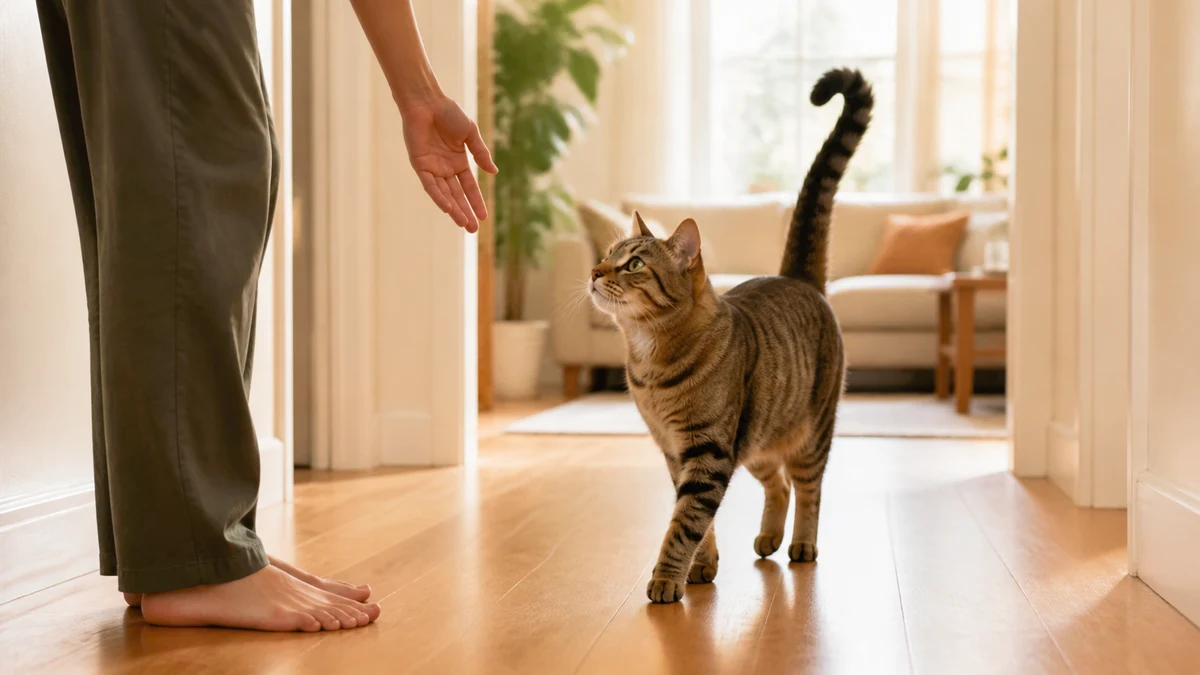
Do not isolate the tail from everything attached to it. An erect, bottle-brushed tail with an arched back signals a very different emotional state. A tail can also rise with anticipation around meals. Treat the friendly tail as one vote in a larger pattern, not a certificate of trust.
4. They slow blink with a relaxed face
A slow-blink sequence usually includes half-blinks, prolonged narrowing, or a gentle eye closure. In a 2020 two-experiment study, cats produced more eye-narrowing movements after their owners slow blinked than during a no-interaction control, and cats were more likely to approach an unfamiliar experimenter after a slow-blink exchange than after a neutral expression. The results support slow blinking as positive cat-human communication; they do not prove that every blink translates to “I love you.”
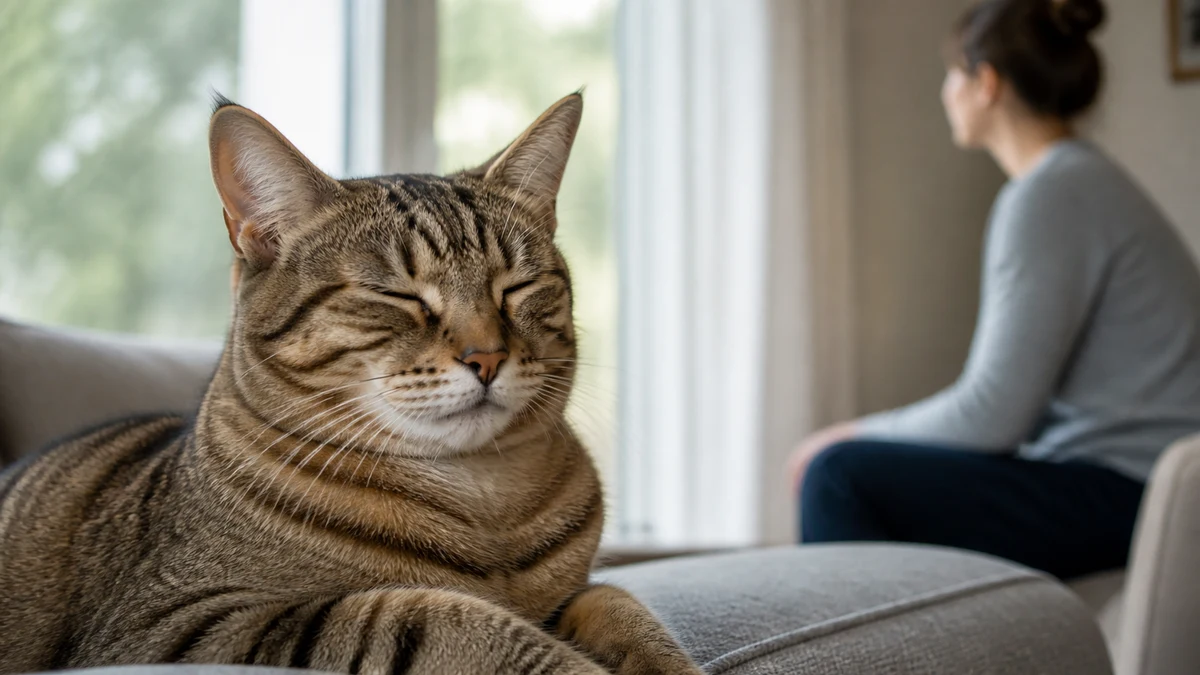
Context protects against overreading. A comfortable cat has a soft face and loose posture. A worried cat may also narrow or blink their eyes, and fatigue can look similar. Repeated squinting, discharge, redness, one eye staying closed, or a sudden change needs veterinary attention rather than a relationship interpretation.
You can answer with one unhurried blink, then angle your face slightly away. Avoid looming or staring while waiting for the cat to “reply.” No response is not a rejection; many secure cats simply communicate differently.
5. They rub their cheek, head, or side against you
Cats use facial and body rubbing in scent communication. FelineVMA material notes that human-directed rubbing often occurs when a cat seeks attention or reunites with a caregiver after a separation, and can help strengthen the relationship. If the cat walks up, presses a cheek against a still hand or leg, then remains loose or repeats the contact, the sequence supports familiarity and affiliative intent.
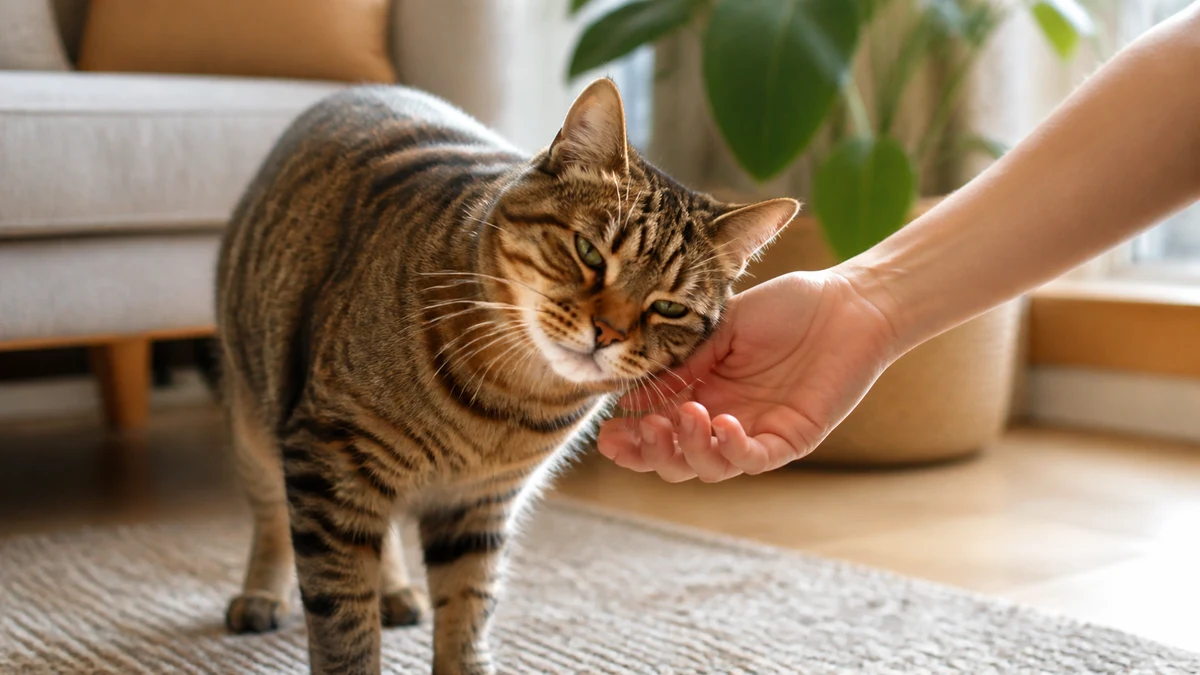
Rubbing is not exclusive to favorite people. Cats rub furniture and pathways, and a rub can be a request to open a door or serve a meal. Let the cat complete the movement; do not convert one head bump into an immediate scoop-and-hold. A brief cheek rub may be the entire greeting the cat wanted.
6. They rest or sleep near you
Sleep reduces how closely a cat can monitor the room. A cat who repeatedly naps in the open while you work, shifts into a loose side-lying position, or resumes sleep after you move quietly is showing that the immediate setting feels safe enough for rest. Choosing a spot near you can add a social component, especially when equally suitable empty spots exist.

The best response is often to leave the moment alone. Touching a sleeping cat can startle them, and “they slept near me” does not mean “they consented to cuddling.” Also check the obvious alternatives: sunlight, a heated blanket, elevation, and a familiar bed can drive location choice. Trust is better supported when relaxed proximity appears across several places and times.
7. Normal relaxed behavior continues in your presence
Trust can look ordinary. The cat eats at a normal pace, stretches, washes their face, explores, plays, or turns their back without repeatedly checking where you are. Ears rest in a neutral position, whiskers are not tightly flattened, the body is neither compressed nor rigid, and movements flow rather than stop abruptly.
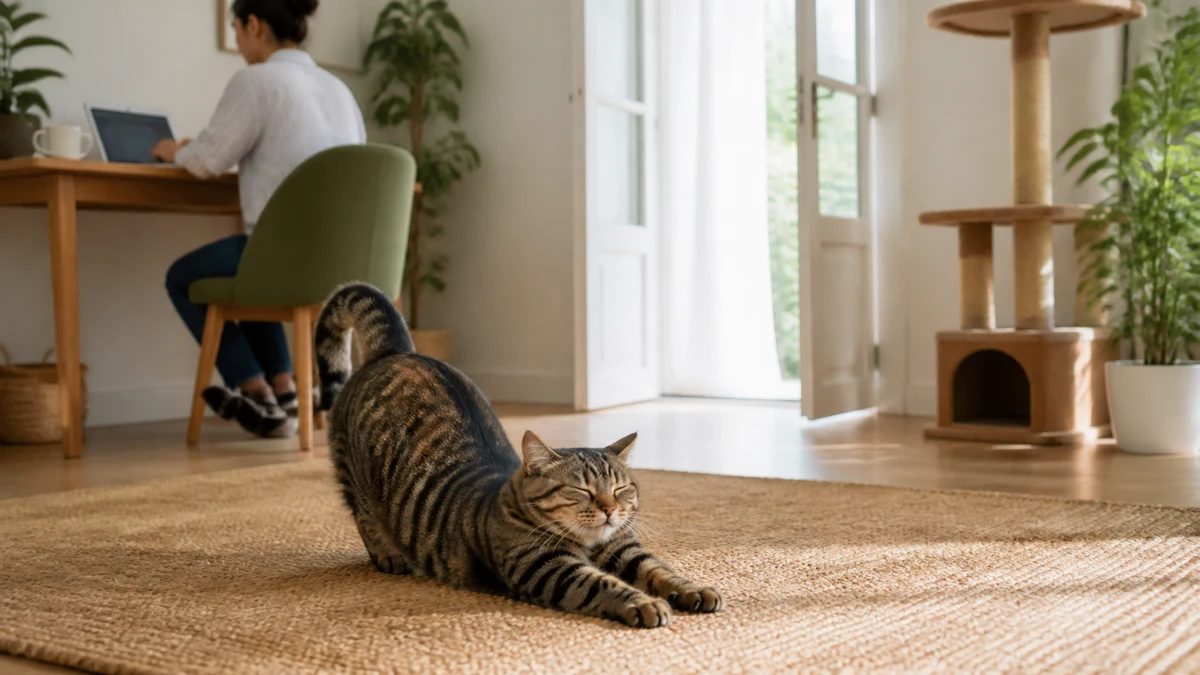
“Quiet” is not always “calm.” A frightened cat may freeze low to the ground with wide pupils, tense muscles, flattened ears, or a tucked tail. Cornell’s guidance on feline aggression emphasizes reading facial cues and posture together. Watch transitions: a relaxed cat changes positions, responds to normal sounds, and returns to baseline; a frozen cat stays braced or searches for escape.
Sudden withdrawal, hiding, touch sensitivity, reduced activity, appetite change, or a major change in social behavior should prompt a veterinary conversation. Pain and illness can alter interaction. Do not turn a medical change into a story about the cat being offended or no longer loving you.
8. They roll over or expose their belly
A loose roll can show that a cat is comfortable enough to assume a less guarded position. Supportive details include soft eyes, neutral ears, curved rather than rigid limbs, normal breathing, and freedom to stand and leave. It can be a warm greeting or an invitation to continue the social moment.
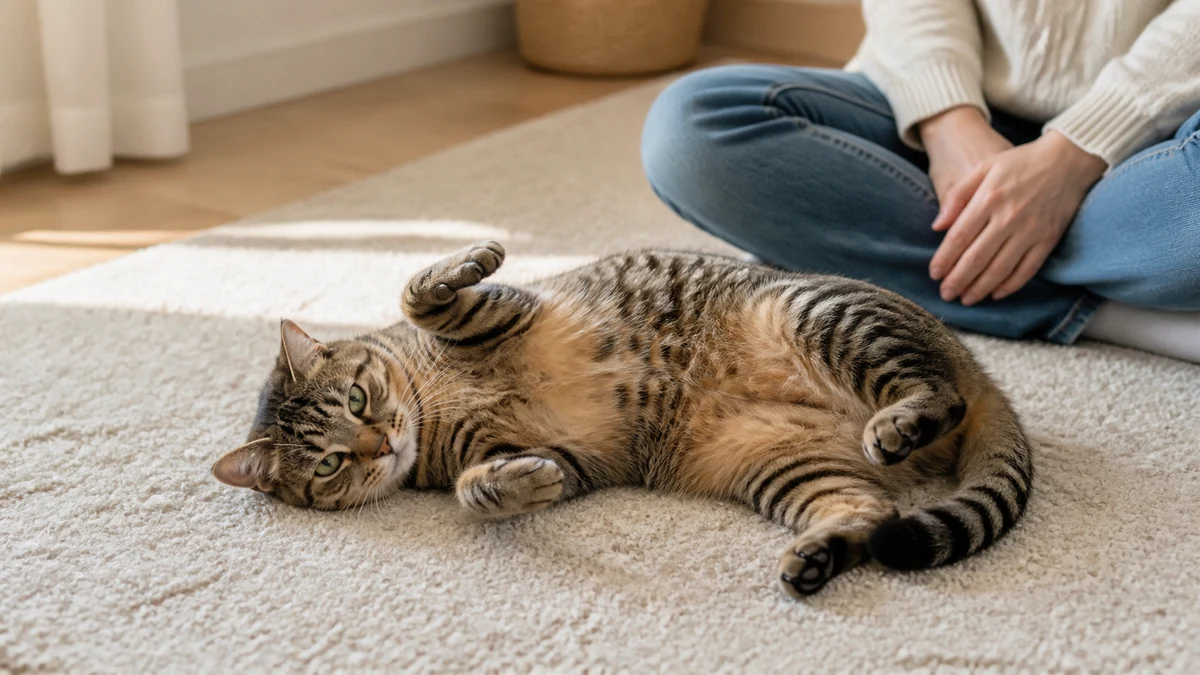
The belly is also vulnerable, so exposure is not automatic permission to rub it. Many cats will protect the abdomen with claws or teeth if a hand descends. That response does not reveal betrayal; it reveals that the person answered a display of comfort with touch the cat did not request. Keep hands still, speak softly, or offer a cheek-level hand if the cat gets up and approaches.
9. They purr or knead during relaxed contact
Purring and kneading can accompany a comfortable social interaction. A cat may settle beside you, press alternating front paws into a blanket, and purr with soft eyes and a loose body. Kneading begins in kittenhood during nursing, but adult cats may also knead while settling a resting surface or during comfortable contact. You can protect your lap with a folded blanket without holding the paws.
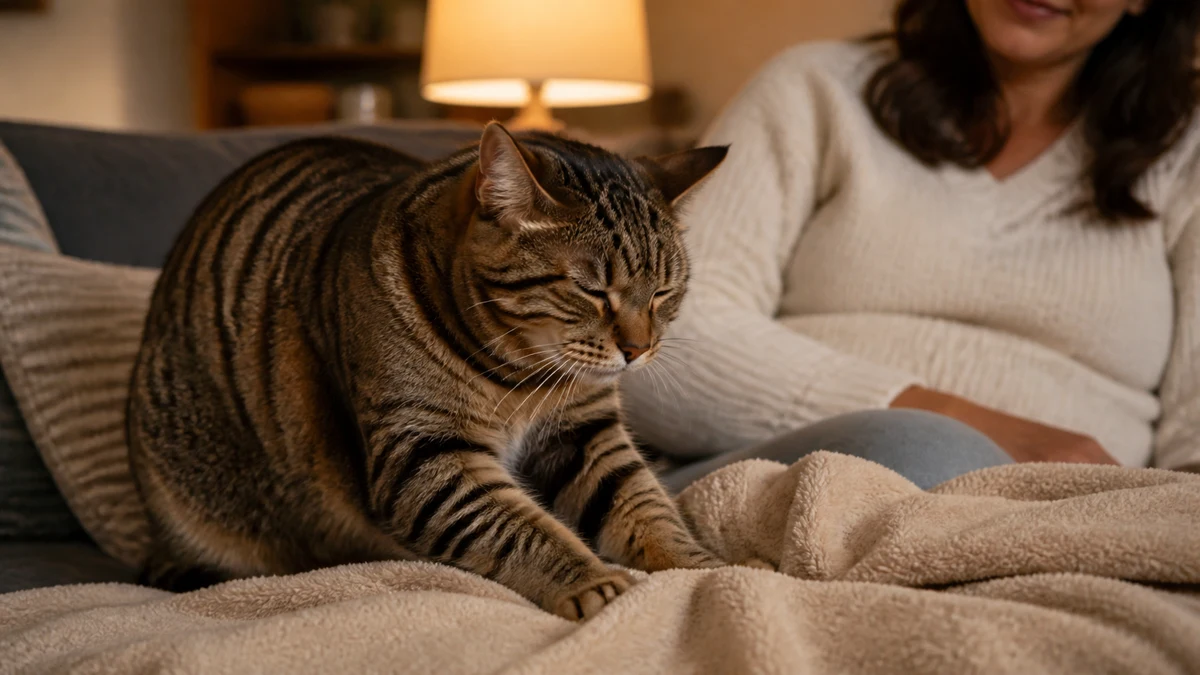
Neither behavior is a standalone trust meter. Cats can purr in several contexts, including when seeking attention and sometimes when stressed or in pain. Kneading also has more than one plausible function. Read appetite, mobility, breathing, facial tension, location, and the events before and after. An unfamiliar purr paired with hiding, poor appetite, or a hunched posture belongs in a health assessment, not a “ten signs” checklist.
10. They initiate play or touch—and choose to return
A cat may bring their social preference into action: approaching a wand-toy session, nudging your hand, leaning into a cheek stroke, hopping onto your lap, or returning after you pause. The return is especially informative because it separates active choice from mere tolerance. Cats Protection advises offering a still hand, allowing the cat to approach, watching the body, and stopping if they move away or look tense.
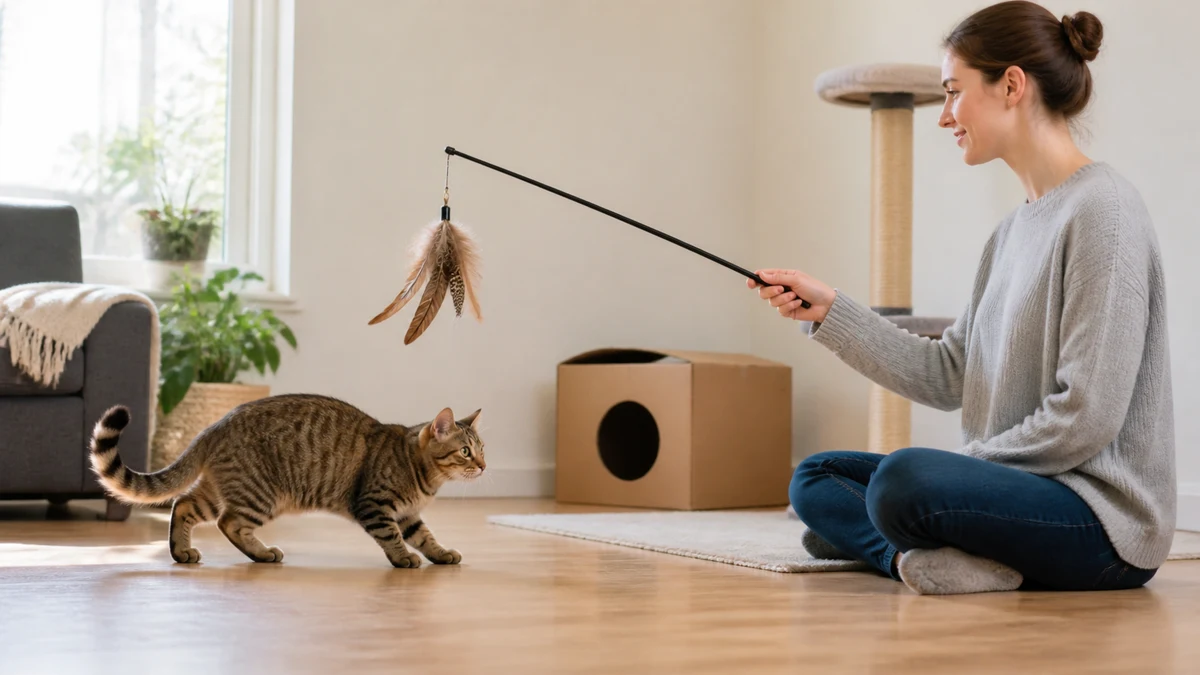
Play needs its own interpretation. Stalking and pouncing are predatory play behaviors, so a highly engaged cat is not necessarily asking to be stroked or lifted. Keep hands out of the hunt, use a wand or tossable toy, and let the cat catch it regularly. A balanced sequence—approach, play, pause, re-engagement, then a calm ending—supports positive expectation and control.
How to build trust without forcing it
Trust grows when your behavior becomes safe, predictable, and responsive. FelineVMA’s environmental guidance recommends positive, consistent human-cat interaction tailored to the individual, alongside safe places, separated resources, opportunities for play, and respect for feline scent. Put that into daily practice:
- Let the cat initiate and preserve an exit. Sit low or sideways, avoid blocking doors and hiding places, and let a retreat end the interaction. Never pull a cat from a refuge for social time.
- Use a short consent check. Offer one or two gentle cheek or chin strokes, pause, and keep your hand still. A nudge or lean can request more; turning away, tail movement, skin twitching, ear rotation, or leaving means stop.
- Create a predictable rhythm. Feed, scoop litter, play, and settle for quiet time in a broadly consistent order. Predictability does not require a minute-perfect schedule; it means your arrival does not randomly produce grabbing, chasing, or loud correction.
- Find this cat’s preferred reward. Food is useful for some cats; others value wand play, a door opening, a favorite perch, or brief cat-chosen touch. Reinforce approaches and calm behavior without using food to trap the cat in unwanted handling.
- Provide safe places and choice. Offer elevated perches, boxes or covered beds, separated food and water, clean litter areas, scratching surfaces, and more than one route through important spaces. Control over distance makes social exploration safer.
- Play like prey, not like a wrestling match. Move a wand away from the cat in short hiding and fleeing patterns, allow catches, and end before frustration rises. A predictable play-and-meal routine can help channel activity without making hands into targets.
- Replace punishment with management and reinforcement. Hitting, yelling, spraying, chasing, and forced holding can create fear without teaching a safe alternative. Change the environment and reward the behavior you want instead.
- Respect the bond your cat actually offers. Do not make lap-sitting the graduation exam. A cat who sleeps two meters away, chirps at your arrival, or chooses one brief cheek rub may be showing secure familiarity in their own style.
Keep a simple weekly note if progress is hard to see: closest comfortable distance, voluntary approaches, length of relaxed stays, play participation, and recovery after routine household noises. Look for a gentle trend, not daily perfection. Cats with limited early socialization, frightening histories, chronic pain, or major environmental changes may need much more time. A veterinarian can rule out health problems; for persistent fear or aggression, ask for a qualified feline behavior professional.
FAQ
Does my cat trust me if they do not sit on my lap? Yes, they may. Lap-sitting depends on individual preference, temperature, early experience, handling history, and the stability of the seat. Voluntary proximity, relaxed behavior, friendly greetings, and returning to interactions are more useful than requiring one form of contact.
Does showing the belly mean my cat wants a belly rub? Usually, no assumption should be made. A loose roll can signal comfort or greeting, but many cats protect the abdomen when touched. Keep your hands back and let the cat stand, approach, or direct a cheek toward you if they want contact.
Is slow blinking proof that my cat loves me? Research supports slow-blink sequences as positive cat-human communication, but one blink cannot prove a specific emotion. Check for a soft face, loose posture, a calm setting, and repetition. Persistent squinting or a sudden eye change needs a veterinarian.
Why does my cat purr and then bite during petting? Purring does not cancel other body-language signals. The cat may become overstimulated or may want the contact to stop. Watch for tail lashing, skin rippling, ears rotating back, pupils changing, or the body becoming tense; pause earlier and let the cat request more.
How long does it take a nervous cat to trust a person? There is no reliable deadline. Temperament, socialization, health, previous experience, and the current home all matter. Measure small voluntary changes over weeks rather than forcing a milestone. If fear prevents eating, toileting, resting, or safe movement through the home, involve a veterinarian and qualified behavior professional.