Why Does My Cat Attack My Feet? How to Redirect Play Aggression
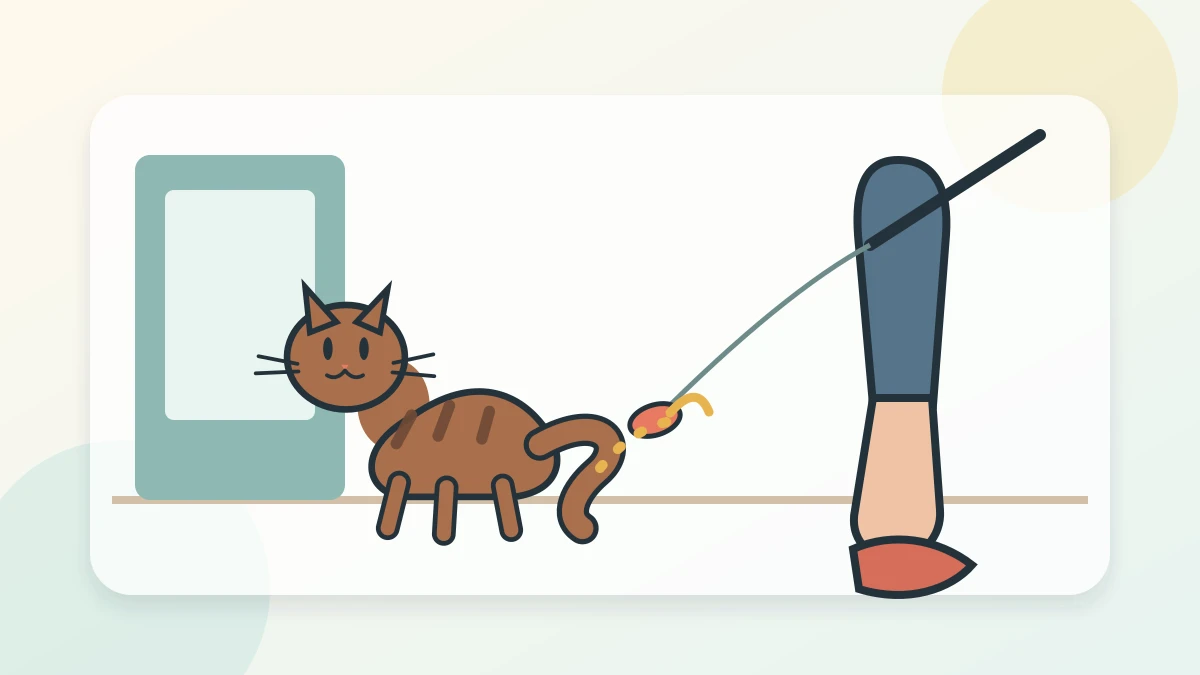
A cat that ambushes ankles, chases feet, or pounces on hands is often treating moving body parts as play or hunting targets. The practical fix is not punishment: stop using hands and feet as toys, schedule regular wand-toy play, and offer an acceptable target before the usual attack time. Do not assume every pounce is playful, however. Hissing, growling, a defensive crouch, prolonged arousal, a sudden increase in biting, or a reaction tied to touching one area can point toward fear, redirected arousal, or pain. Protect everyone first, arrange a veterinary assessment when the pattern is new or unexplained, and ask for qualified behavior support when injuries are serious or the risk cannot be managed.
Why ankles and hands become targets
A foot appearing around a corner, an ankle passing the sofa, or fingers moving beneath a blanket all share features that can invite pursuit: they appear, move, and can be caught. The ASPCA includes stalking, chasing, ambushing, pouncing, grasping, and biting among common play and predatory-style behaviors. Cornell describes a similar pattern in which a cat watches a target, waits in a hiding place, and pounces as it passes.
That explanation does not make the cat spiteful, and it does not mean a person should accept injury. “Play aggression” is a commonly used label for a cluster of behaviors, not a diagnosis that can be confirmed from one bite. Kittens and young cats show rough play more often, but adult cats can do it too. Too few appropriate play opportunities, a history of being invited to wrestle hands or chase feet, and exciting reactions after a pounce can all keep the pattern rewarding.
Look beyond the teeth: seven ways to read the context
The same visible act—biting—can occur during play, fear, defensive behavior, redirected arousal, or pain. No single ear, tail, or pupil position proves a motive. Compare the event with that individual cat’s relaxed baseline, what happened immediately before it, and how the cat behaves afterward.
| What to observe | More consistent with play or hunting-style pouncing | Reasons to consider another explanation first |
|---|---|---|
| Before the event | The cat waits at a predictable corner, under furniture, or along a walking route and starts when a hand or foot moves | The cat was touched, lifted, cornered, startled, watching an outdoor animal, or involved in intercat conflict |
| Body direction | Weight moves toward the target with repeated hiding, springing, and chasing | The body is low or leaning away, the tail is tightly tucked, fur is raised, or the cat is trying to escape or create distance |
| Face and sound | The cat may look intensely focused, with enlarged pupils or a moving tail; some cats play silently | Hissing, spitting, growling, screaming, or markedly flattened ears make a defensive state more concerning |
| Contact | A brief grab is released and may be followed by another playful setup, although even play can injure | Force escalates, deep or repeated bites continue, or stopping your movement does not help end the pursuit |
| Redirection | Before contact or at the earliest stare, the cat readily follows a toy moving away from your body | The cat ignores the toy and remains locked onto a person, another animal, or an outside trigger |
| Afterward | The cat soon returns to exploring, playing with an object, or ordinary activity | The cat hides, guards, pants, growls, or remains ready to strike for an extended period |
| Physical change | The pattern is longstanding and predictable while ordinary movement and daily functions remain stable | The behavior began suddenly or worsened along with limping, reduced jumping, or changes in appetite, grooming, sleep, or toileting |
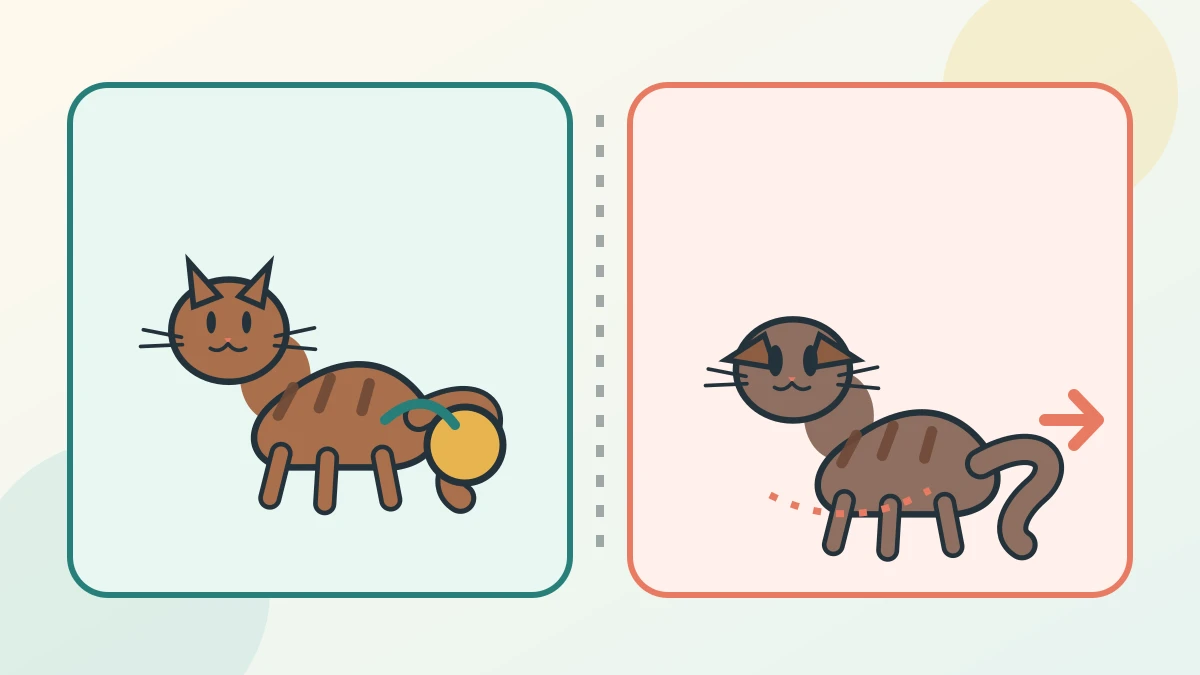
Use these clues to choose the safer next step, not to rule out illness at home. Motivations can overlap. A cat may begin in play and become overaroused, or may see an outdoor cat, remain highly activated, and bite the person who approaches. Our guide to whole-body stress signals helps with broader observation. If the bite happens during stroking rather than a chase, read the separate guide to stop signals during petting.
What to do during an ankle or hand attack
- Reduce prey-like movement when it is safe to do so. Pause rather than kicking, flailing, wrestling with your hands, or yanking repeatedly. Fast resistance can keep the chase interactive and can worsen a scratch.
- Use distance and a broad object for protection. Move away calmly, or place a cushion or piece of cardboard between you and the cat. Do not pin the cat, grab the scruff, or pick up a highly aroused cat with bare hands.
- End this round without drama. Cornell advises walking away and withholding interaction after inappropriate play so biting does not purchase more play. Do not wait for teeth to make contact and then deliver the day’s most exciting game; alternatives work best before the pounce.
- Give arousal time to fall. If the cat is hissing, growling, puffed up, or still tracking a target, preserve an exit and reduce approaches. Do not keep reaching in to test whether the cat is “over it.”
- Care for human injuries. Wash broken skin promptly with soap and warm water. Follow local medical guidance for deep wounds, bites to the hand or face, uncontrolled bleeding, increasing redness, heat, swelling, discharge, fever, or higher personal infection risk.
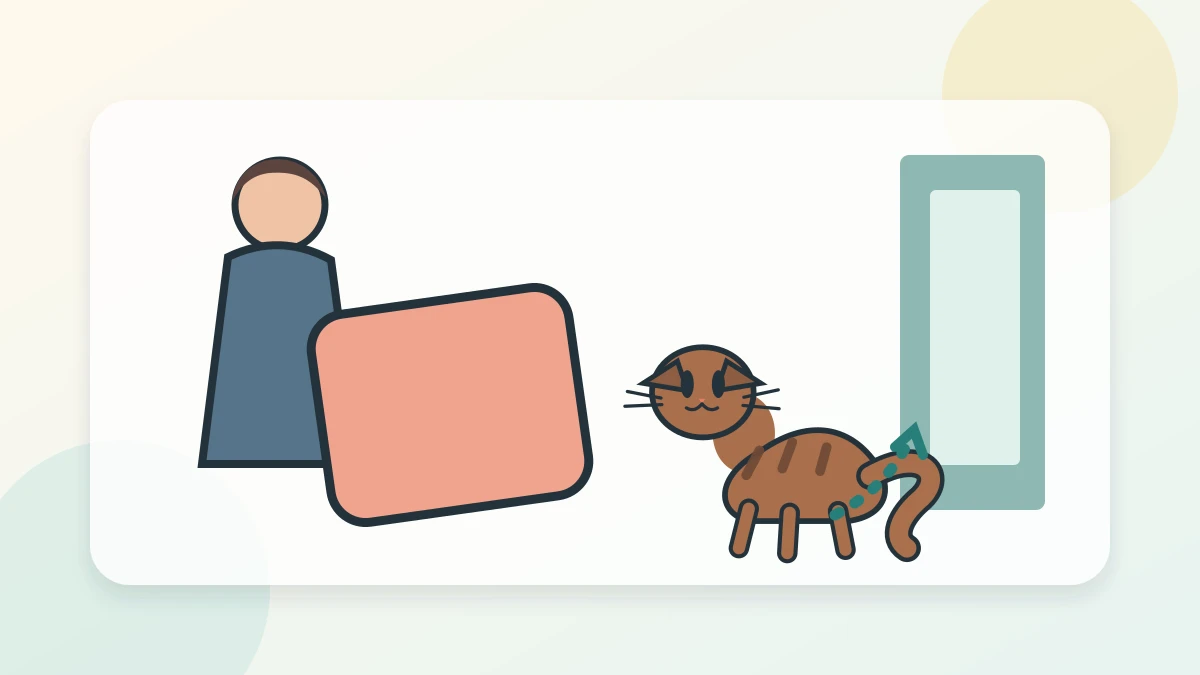
Hitting, yelling, chasing, spraying water, or holding the cat down may interrupt movement without teaching a safe alternative. Cornell warns that physical punishment can increase fear or anxiety and worsen aggression. The Feline Veterinary Medical Association also says punishment is inappropriate for biting and scratching. For the learning and relationship risks in detail, see why you should never hit your cat.
Ten practical, punishment-free changes
1. Make hands and feet permanently off-limits as toys
Stop crawling fingers across the floor, wiggling toes beneath blankets, and wrestling in thick gloves. A glove may protect skin while still teaching that human bodies are legal bite targets. Everyone in the household, including visitors, needs the same rule. A cat cannot reliably learn that one pair of hands is prey on Saturday but protected skin on Monday.
2. Schedule at least two short object-play sessions each day
The Feline Veterinary Medical Association recommends wand toys or tossed objects at least twice daily. A few focused minutes can be useful; this is not a precise prescription for every cat. Adjust duration and intensity for age, health, interest, and recovery. Predictable short sessions placed before the usual ankle-attack period are more relevant than one exhausting weekend marathon.
3. Build a complete search-to-catch sequence
Do not wave a wand rapidly in the cat’s face. Let the “prey” hide beside a box, pause, move away along the floor, get chased, and finally be caught. The AAFP/ISFM environmental needs guidelines recommend mimicking flying or ground prey, allowing the cat to capture the wand toy, and following play with a small food reward.
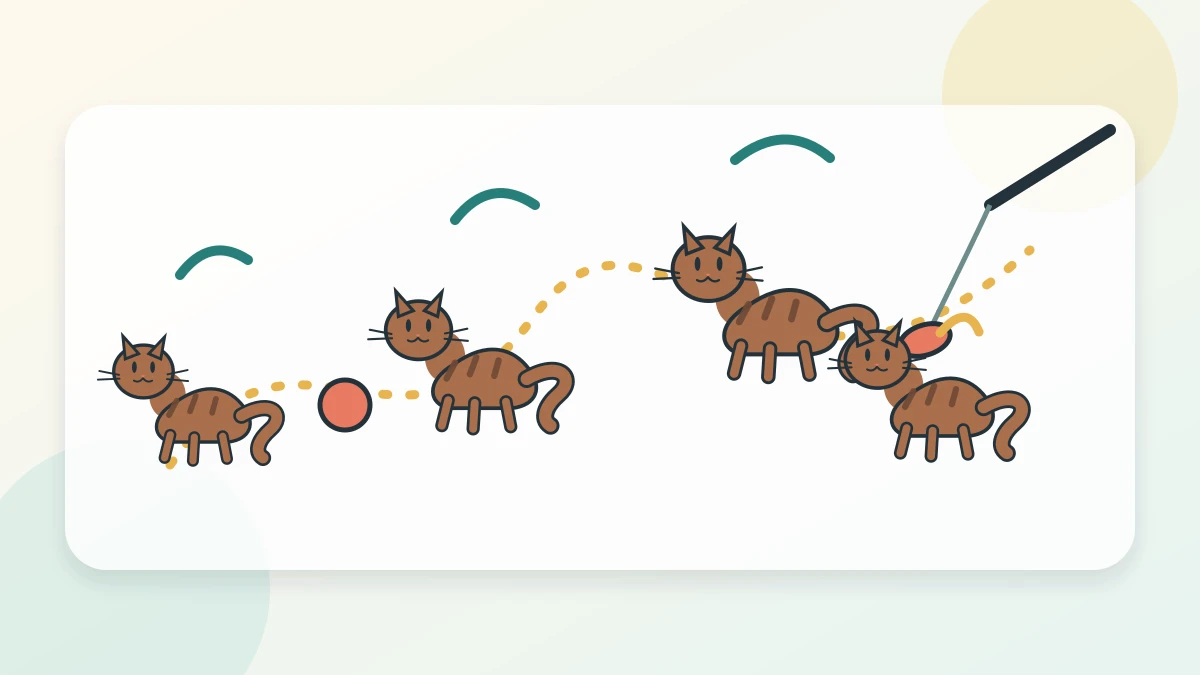
This is also a good place to watch for loss of control. A rapidly lashing tail, ears moving back, increasingly frantic movement, or grabbing that no longer releases means the session should become easier and end. The goal is a satisfying outlet, not pushing the cat until exhaustion.
4. Map the time, route, and early setup
For one or two weeks, record the time, location, person, previous half hour, hiding spot, contact intensity, and what followed. If attacks cluster at the kitchen doorway before dinner, play just before that period. If they begin under the bed, temporarily block the dangerous exit and provide a tunnel or hiding option in a safer place. Preventing rehearsal is more useful than punishing the final pounce.
5. Redesign ambush zones without removing all security
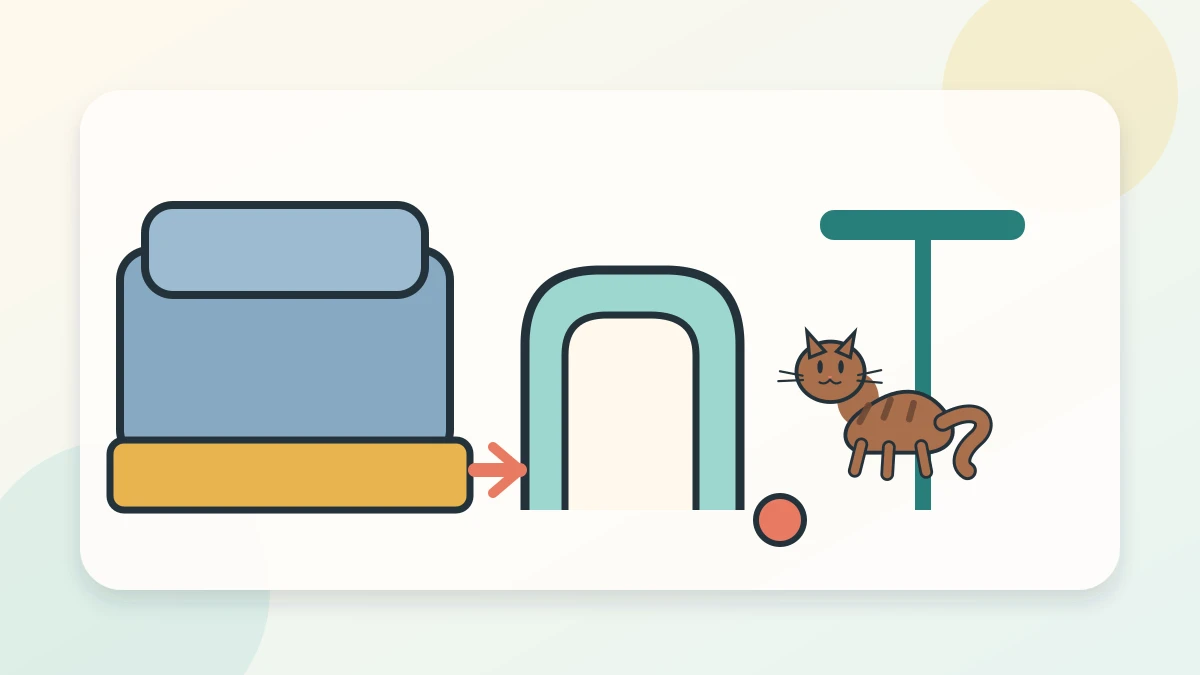
The goal is not to eliminate every hiding place. Move the ambush away from a narrow human route. Add a stable perch, open box, or tunnel before the hallway; send a toy away from ankles before anyone walks through. If the cat launches from a sofa gap, change the gap or block that angle while preserving covered resting choices elsewhere. A cat still needs safe retreat space.
6. Rotate safe toys instead of leaving everything out
Offer different items for chasing, rolling, carrying, wrestling, and searching, but expose only a few at a time. The Ohio State University Indoor Pet Initiative recommends an assortment that cats can roll, pounce on, capture, bite, carry, and chase. Put string, elastic, feather pieces, and small ingestible parts away after supervised play. A wand toy is not an unsupervised chew toy.
7. Add safe food-search activities
Put a small portion of the cat’s measured daily food into a puzzle feeder, or hide portions in safe, reachable places. The environmental needs guidelines include food-search and puzzle-feeding opportunities as ways to support predatory behavior. This does not mean adding unlimited treats. Ask a veterinarian how to allocate the daily ration when the cat has a weight plan, medical condition, or prescribed diet.
8. Reinforce a play station and calm waiting
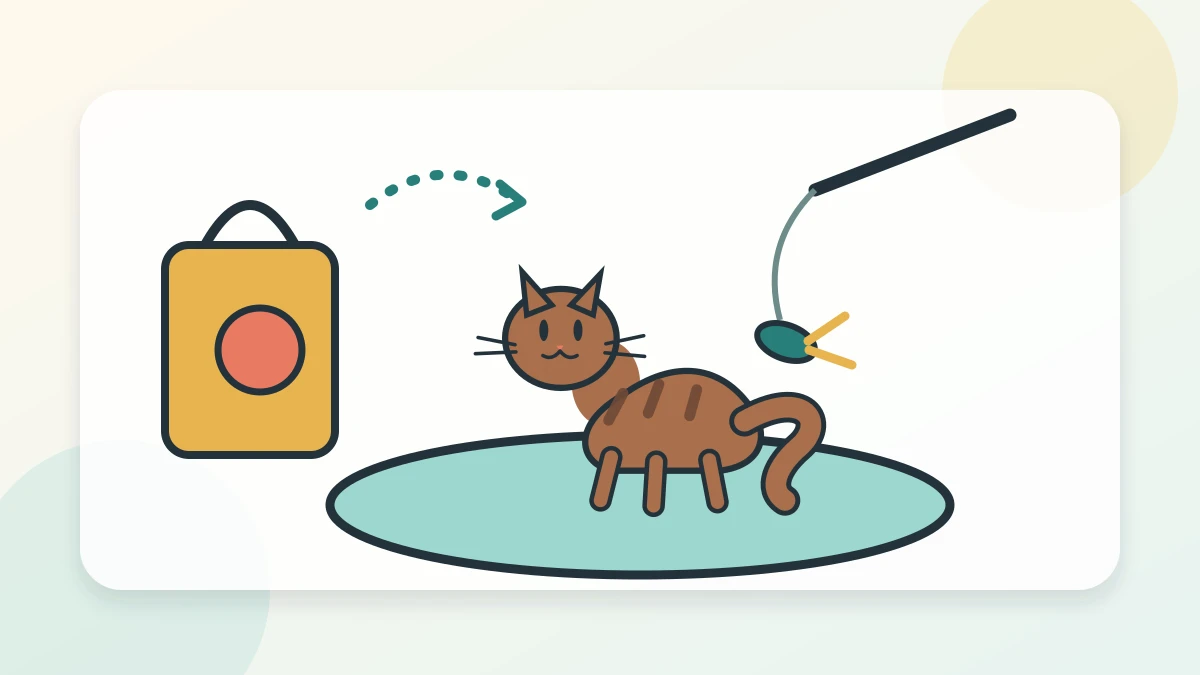
When the cat chooses a play mat, perch, or toy basket, respond immediately with something that individual values: begin a short wand game or offer a tiny piece from the daily ration. Reward easy early steps. Do not make a human ankle the required first step in the chain before the toy appears.
9. Keep children’s involvement structured and supervised
An adult should supervise every interaction. Children can use a long wand toy while maintaining distance; they should not run for the cat to chase, use hands, restrain the cat, or follow a cat that leaves. Teach them to stop when the tail lashes, ears turn back, the cat hisses, or the cat exits. When there is a bite history, use doors, gates, and separate zones rather than asking a child to judge risk alone.
10. Give each cat suitable opportunities
A multi-cat home does not guarantee that cats will tire each other out. Play styles can differ, and competition can suppress one cat while overarousing another. Schedule separate play when needed and distribute resting, hiding, scratching, feeding, drinking, and play resources. For a related activity pattern, our guide to nighttime zoomies explains how to build a steadier daily rhythm.

A realistic seven-day starting plan
- Days 1–2: Everyone stops hand-and-foot play. Log the time, place, trigger, contact intensity, and recovery after each event. Prepare two long-distance interactive toys.
- Days 3–4: Begin a short play sequence five to ten minutes before the usual problem period. Allow a catch, put string toys away afterward, and safely block the highest-risk launch gap.
- Days 5–6: Rotate a different toy type, add a mat, tunnel, or perch, and reinforce calm waiting in the alternative area. If pouncing continues, start earlier instead of escalating punishment.
- Day 7: Compare four measures: number of pounces, whether skin was broken, whether a toy could redirect the cat before contact, and how long recovery took. Use those observations to adjust the next week.
Improvement rarely means zero incidents overnight. Useful early changes include fewer setups, gentler contact, earlier toy engagement, faster recovery, and family members noticing the first stare before the launch. If frequency, force, or pursuit is increasing instead, do not continue treating it as “just excess energy.”
When to call a veterinarian or behavior professional
Arrange a veterinary examination when biting appears suddenly, increases markedly, happens when one body area is touched or the cat moves, or accompanies limping, reduced jumping, hiding, or changes in sleep, appetite, grooming, or toileting. Older cats and cats whose attacks do not fit a play context also need medical causes considered first. Pain or illness can make biting a way to stop contact; an article cannot rule those causes out.
Ask the veterinarian for a referral to a board-certified veterinary behaviorist or another appropriately qualified feline behavior professional when bites are deep or injuries recur, arousal lasts a long time, children or vulnerable household members are at risk, the cat pursues people who are not interacting, or veterinary and environmental steps have not made the situation manageable. An individual safety plan requires a health history, home layout, triggers, and direct behavior assessment.

FAQ
Should I redirect with a wand the instant my cat bites my ankle? Redirect at the hiding setup, fixed stare, or approach to the usual ambush zone whenever possible. Once teeth are on skin, prioritize a safe stop and distance. If biting always triggers the best game, the cat may learn that attacking a person is the opening move.
How long should I play each day? There is no universal minute count. Start with at least two focused object-play sessions each day, often a few minutes at a time, and adjust for age, health, interest, and recovery. Regular timing, a real catch, and stopping before frantic overarousal matter more than forcing a long session.
Will adopting another cat solve play aggression? Not reliably. Compatibility, age, health, and play style cannot be guaranteed, and a newcomer can add resource competition or stress. Do not adopt an animal as a quick behavior treatment. Meet the current cat’s play and environmental needs and obtain appropriate health or behavior advice first.
Will neutering or spaying stop attacks on feet? Play-related pouncing is not driven by sex hormones alone, so surgery does not replace object play, environmental changes, and consistent boundaries. Discuss neutering or spaying and the individual cat’s health with a veterinarian rather than treating it as a guaranteed solution to this behavior.
Does a gentle play bite still need attention? It deserves early redirection without panic. Stop body play, provide acceptable catchable targets, and track whether force is increasing. Early replacement is easier than waiting for deep bites. Wash any broken skin promptly and seek medical guidance appropriate to the wound.