How Long Can Cats Be Left Alone? A Safer Home-Care Plan
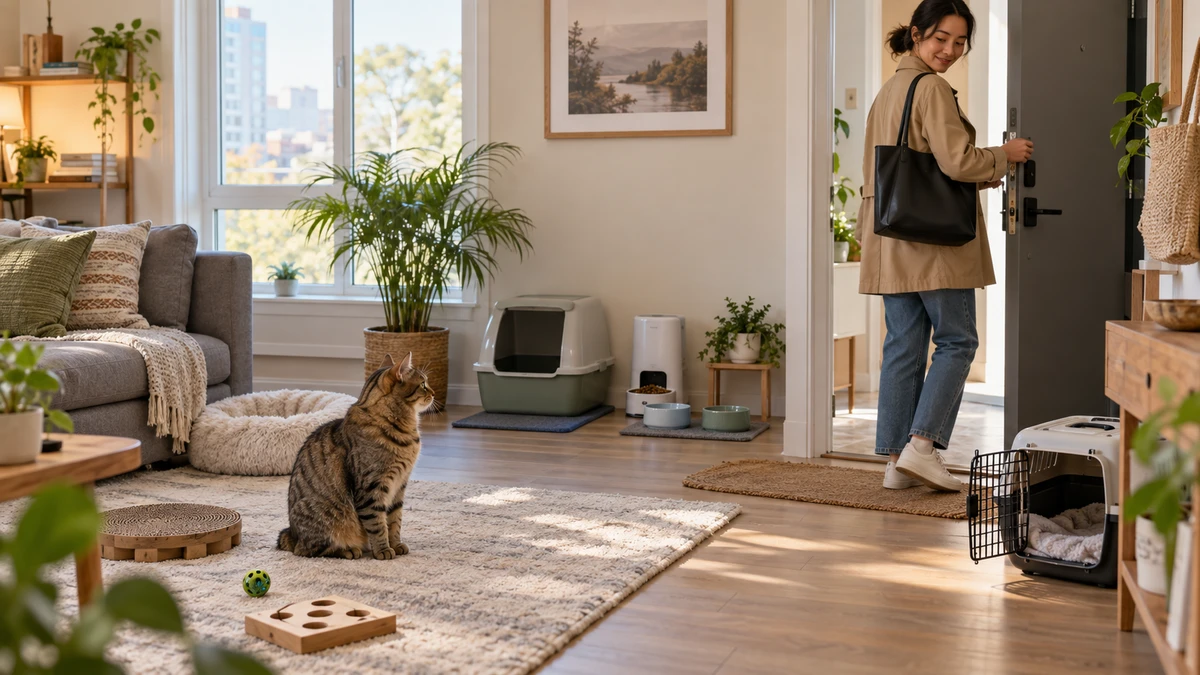
There is no single number of hours that is safe for every cat. A healthy adult with a stable routine may be comfortable during a normal same-day absence in a carefully prepared home, while a kitten, senior cat, recovering cat, or cat with scheduled care may need a person much sooner. Once an absence crosses the cat’s normal feeding, monitoring, or social rhythm—or could extend overnight—arrange reliable in-person care. Cameras and automatic feeders are useful backups, but they cannot refill spilled water, clean litter, assess a change, or open the door in an emergency.
Replace the countdown with a care decision
“How many hours?” sounds precise, but it hides the questions that actually determine risk. A device can fail soon after you leave. A cat that was well yesterday can stop eating today. Two cats that usually coexist may block each other from a bowl when nobody is present. Conversely, a stable adult may sleep through much of an ordinary workday when its resources and environment are reliable.
Use the absence categories below as planning triggers, not promises:
| Absence pattern | Minimum planning question | Safer response |
|---|---|---|
| Brief routine errand | Is the cat normal today, and is the room secure? | Leave normal essentials available and keep a way to return if plans change. |
| Usual same-day absence | Can the cat eat, drink, toilet, rest, and move between resources without a device or housemate blocking access? | Prepare redundant resources and a reachable backup person. |
| Overnight or beyond the normal care rhythm | Who will physically enter, see the cat, check intake and elimination, and correct a problem? | Schedule an in-person caregiver or suitable boarding arrangement before leaving. |
| Several consecutive days | Can the same dependable care, written records, access, and emergency authority continue every day? | Use a trusted sitter, qualified service, or suitable boarding plan; do not leave the home inaccessible. |
As of September 2026, the UK charity Cats Protection advises holiday caregivers to arrange at least two home visits a day, with more frequent visits for very young, old, or medically affected cats. That is a useful welfare organization’s planning floor for its audience, not a universal biological timer or a substitute for veterinary instructions. Your cat’s actual schedule may need to be more intensive.
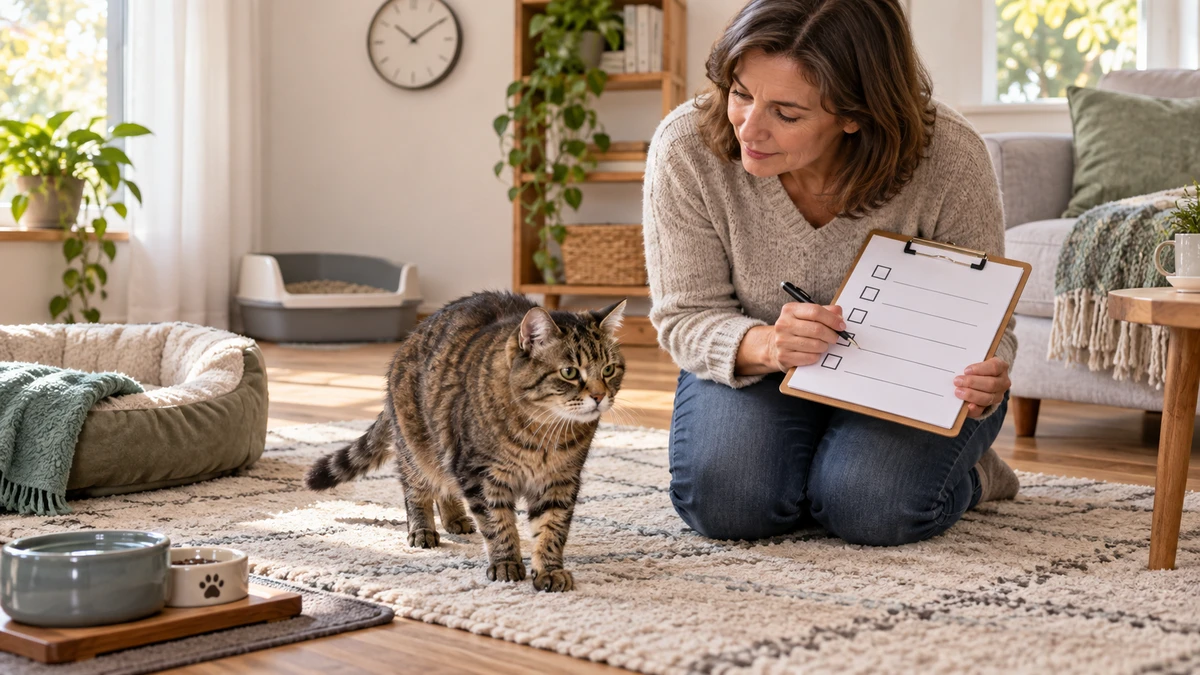
Ten factors that change the answer
Work through all ten. If one factor is uncertain, shorten the unsupported absence or add a person who can check and act.
- Age and life stage. Young kittens need frequent meals, supervision, and protection from their own exploration. Older cats vary widely; mobility, hearing, vision, cognition, and chronic conditions matter more than the word “senior” alone.
- Current health and recovery. A cat recovering from surgery, anesthesia, injury, or illness may have activity restrictions and signs that must be monitored according to its veterinary discharge plan.
- Medication and treatment timing. A prescribed schedule is a care deadline. An automatic feeder cannot confirm that a cat swallowed medication, and an untrained visitor should not improvise treatment.
- Eating and drinking baseline. A recent change in appetite, thirst, vomiting, or ability to keep food down needs attention before travel. Cornell notes that appetite loss is a broad clinical sign that deserves veterinary assessment rather than guesswork.
- Elimination and mobility. New litter-box avoidance, straining, unusually small or large output, diarrhea, constipation, or difficulty reaching a box can make an ordinary absence unsafe. Contact a veterinarian for a new or marked change.
- Recent behavior. Hiding, agitation, vocal changes, repeated escape attempts, conflict, or inability to settle can signal that the current setup is not routine for this cat.
- Temperature, ventilation, and weather. The home must remain comfortable if heating, cooling, ventilation, or local power fails. Weather and building design differ, so use local official alerts and a person who can intervene rather than a single worldwide thermostat number.
- Equipment reliability. Feeders, fountains, cameras, smart locks, climate systems, and internet service each create failure points. Ask what happens when power, batteries, Wi-Fi, a pump, or a latch stops working.
- Other animals and resource access. “They never fight” does not prove that one cat never guards a hallway, feeder, litter box, or preferred bed. Dogs and other pets may add chase, feeding, or door risks.
- Human access and delay risk. A flight cancellation, illness, lost key, building alarm, or blocked road can extend an absence. At least one trusted local person must be able to enter without waiting for your return.
Seven groups that usually need more frequent care
Do not use an adult-cat routine as the default for:
- young kittens, especially those still eating small, frequent meals;
- senior or frail cats, including those with reduced mobility, sight, hearing, or cognition;
- cats recovering from a procedure, anesthesia, injury, or illness;
- cats whose prescribed medication, feeding, wound, glucose, or other monitoring follows a veterinary schedule;
- cats with a recent appetite, water intake, vomiting, stool, urine, or litter-box change;
- newly adopted cats or cats adjusting to a move or another major household change;
- cats in a home with active intercat tension, guarding, chasing, or uncertain resource access.
The right response is not always “more gadgets.” It may be a capable sitter making more visits, a caregiver staying in the home, a veterinary boarding option, postponing travel, or an individualized plan from the cat’s veterinarian.
An 18-point before-you-leave checklist
Complete the checklist early enough to fix a problem. Do not discover at the doorway that the feeder jams or the backup caregiver cannot open the building door.
- Confirm today’s baseline. The cat is eating, drinking, moving, urinating, defecating, and behaving as expected for that individual.
- Resolve a health concern first. Call the veterinarian about a new or significant change instead of asking a sitter to watch an unexplained problem.
- Measure sufficient familiar food. Follow the cat’s established feeding plan and veterinary instructions; do not create a new diet for the trip.
- Store food safely. Keep dry food in its original package or preserve the label and lot information. Follow the product label; the FDA says unused canned or pouched food should be promptly refrigerated or discarded.
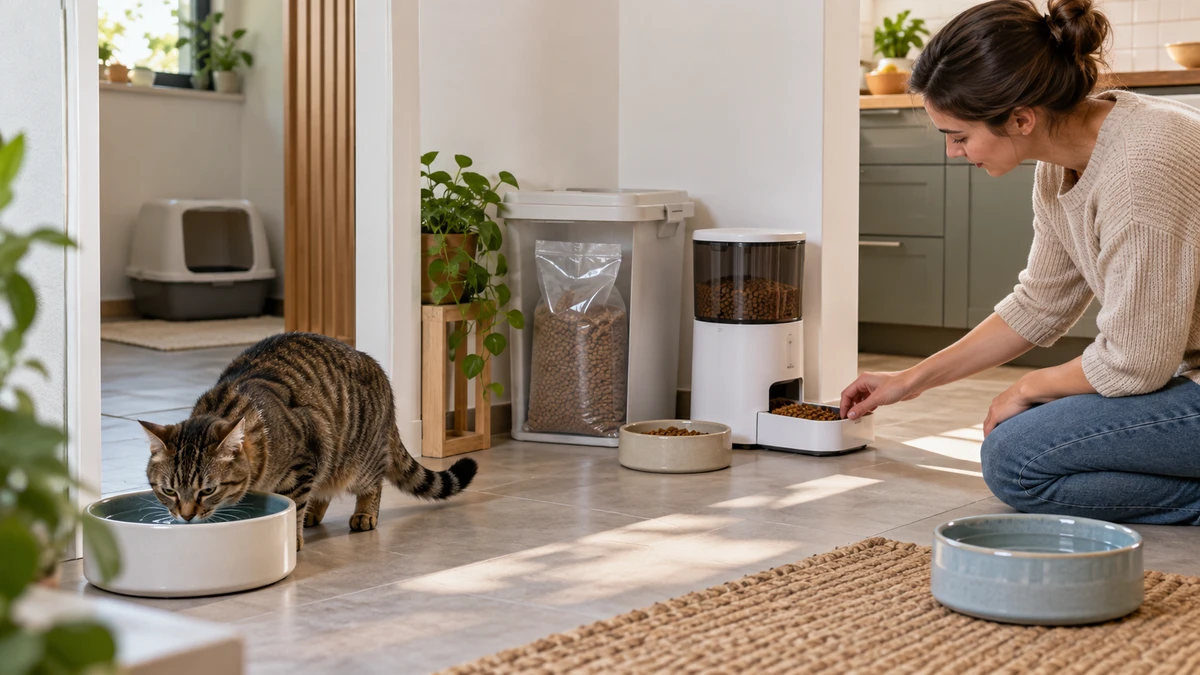
- Provide water in more than one location. Use clean, stable bowls even if the cat normally uses a fountain, so one tipped bowl, stopped pump, or blocked route does not remove all access.
- Clean and test every food and water vessel. Run automatic devices through repeated ordinary cycles before the trip and confirm the backup works without power.
- Provide enough clean litter capacity. Scoop before departure, add an accessible backup when appropriate, and keep boxes away from food and water.
- Protect every route to a resource. A closed door or another animal must not trap the cat away from water, food, litter, a bed, or a safe place.
- Stabilize temperature and ventilation. Check the forecast, building conditions, and local outage plan; leave safe non-electrical options where possible.
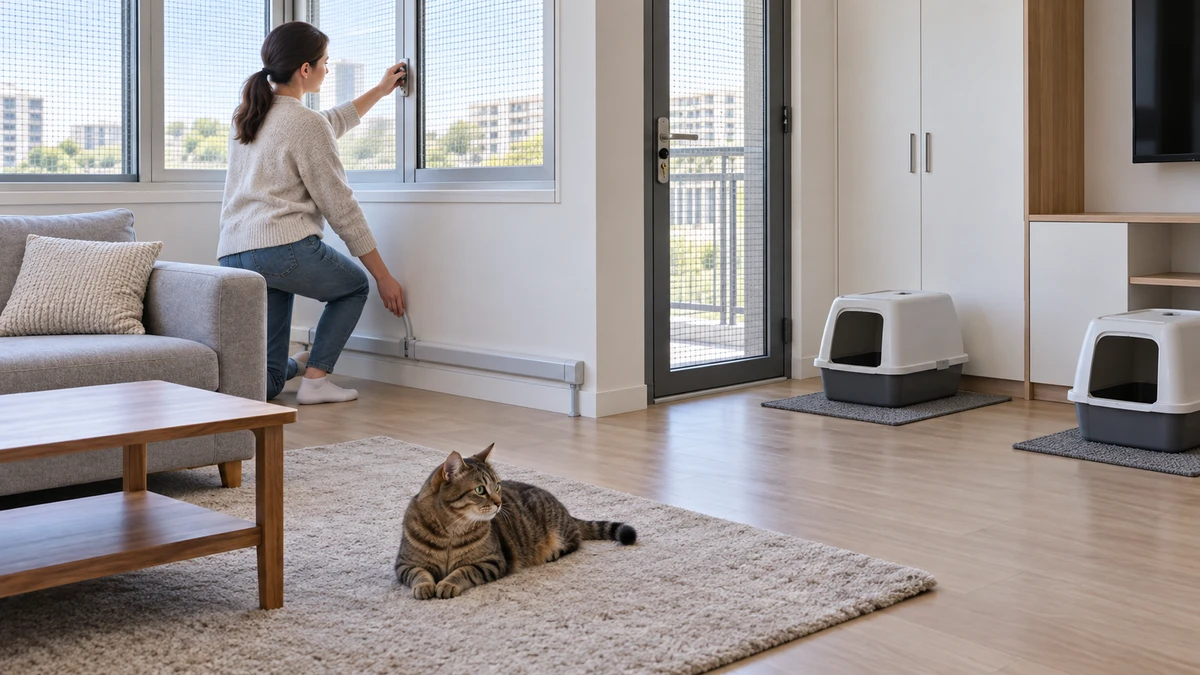
- Secure doors, windows, screens, and balconies. Test latches instead of assuming a screen, cracked window, or smart lock will hold.
- Remove ingestion and entanglement hazards. Put away string, ribbon, yarn, elastic bands, plastic, needles, fishing-line toys, and small chewable parts.
- Secure household hazards. Close access to medicines, cleaners, human food, trash, open flames, unstable objects, hot appliances, and unsafe plants.
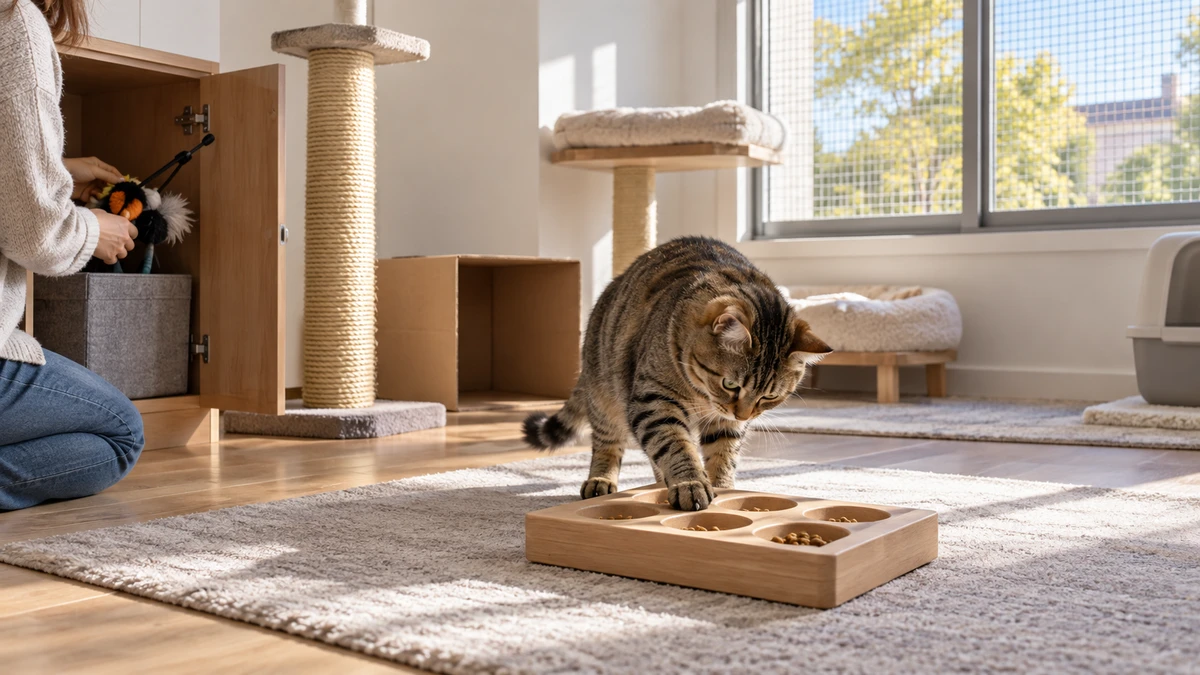
- Choose only safe unsupervised enrichment. Leave familiar sturdy scratchers, resting places, boxes, and tested food puzzles; reserve wand and string play for a person who is present.
- Plan for other animals. Separate animals when there is any history of guarding, chasing, unsafe feeding, or conflict, and give each safe zone complete resources.
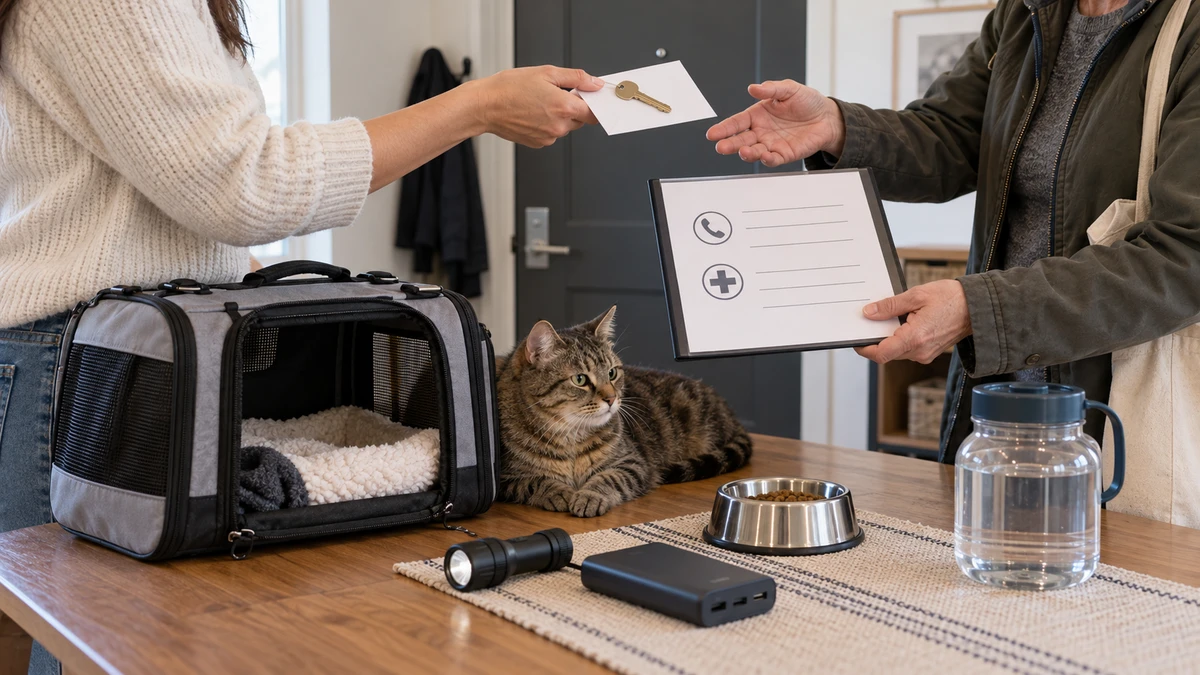
- Test the sitter’s real access. Provide working keys, alarm instructions, building permission, and a backup entry route that complies with local rules.
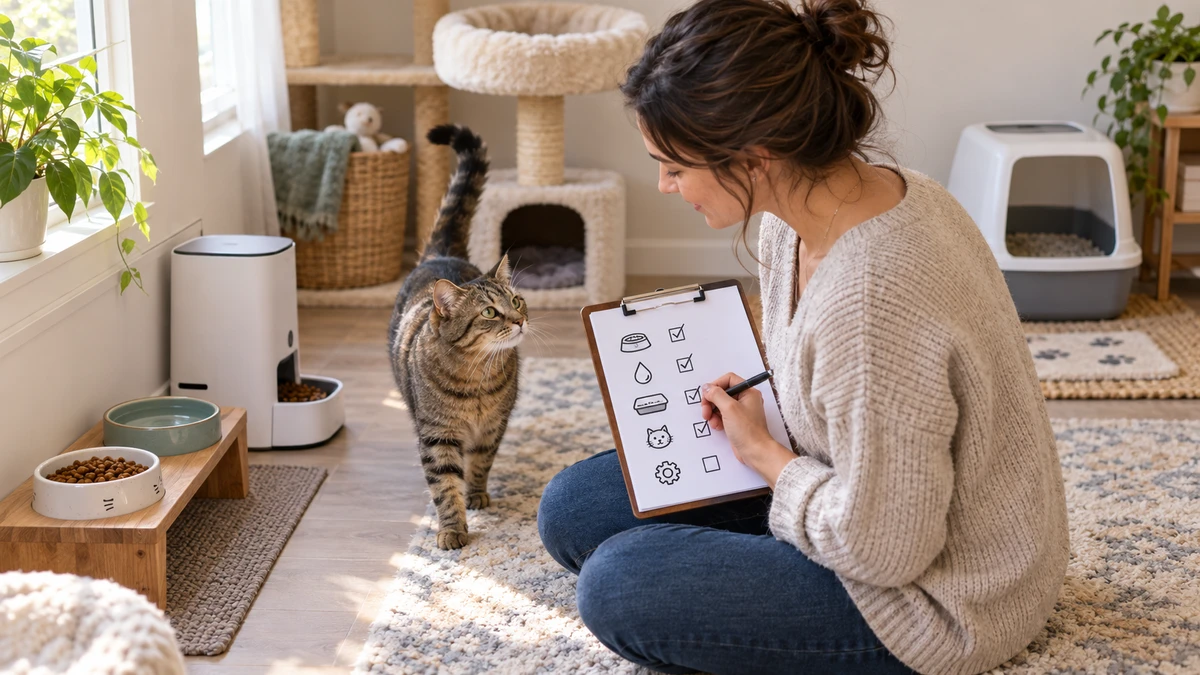
- Write the daily care and observation plan. Include food, water, litter, behavior, equipment, contact, and emergency record fields rather than relying on memory.
- Share veterinary and emergency authority. Tell the clinic who is caring for the cat, what that person may authorize, how expenses will be handled, and whom to call if you cannot be reached.
- Create a return-delay plan. Name a second local person, leave adequate supplies, and decide who takes over if transport, weather, illness, or a power outage delays you.
For a room-by-room hazard pass, use our cat-proofing home checklist. If you are pre-portioning meals, also review safe storage after opening cat food.
Food and water: build redundancy, not a tower of devices
Food must remain safe for the form of diet and the room conditions. A timed feeder can portion dry food or a compatible chilled product only if its manufacturer’s instructions support that use. It does not make perishable food shelf-stable. Do not transfer every meal into a new gadget on departure day; test the exact food, portion shape, batteries, lid, and cat behavior first.
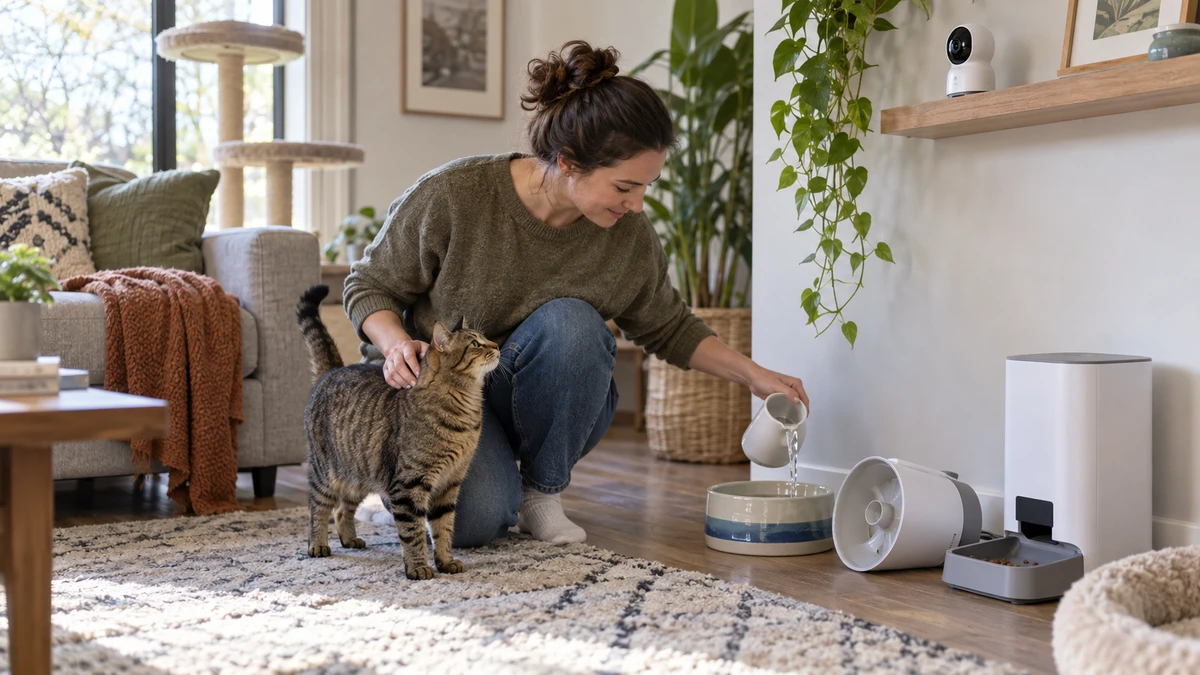
Water deserves independent backups. A fountain may stop after a power interruption, run dry, clog, or become inaccessible. Keep clean bowls in separate safe locations. Place them where a tipped vessel will not wet electrical equipment and where one animal cannot guard them all. The FelineVMA environmental guidelines support multiple, separated key resources—including food, water, toileting, rest, scratching, and play—so the cat can access needs without conflict.
A full bowl at departure is not proof of drinking. The sitter should compare water level, refill with clean water, wash soiled bowls, and note a meaningful change from the cat’s usual pattern. Sudden increased or decreased drinking belongs in the observation record and may need veterinary advice.
Litter, safe routes, and a stable indoor environment
Clean litter is both a daily need and an information source. The sitter should scoop, observe output without attempting a diagnosis, and report deviations from the written baseline. A camera pointed at the living room cannot show what is buried in a litter box or whether a closed interior door blocked access.
Before leaving, walk the home at cat level. Close escape routes, cover reachable cables, anchor unstable items, and remove loose linear objects. Keep the carrier accessible rather than buried in storage. A familiar open carrier can become a resting place and is ready if the caregiver must transport the cat; our carrier-training guide explains how to keep it from becoming a threat.
Multi-cat homes need more than duplicated bowls
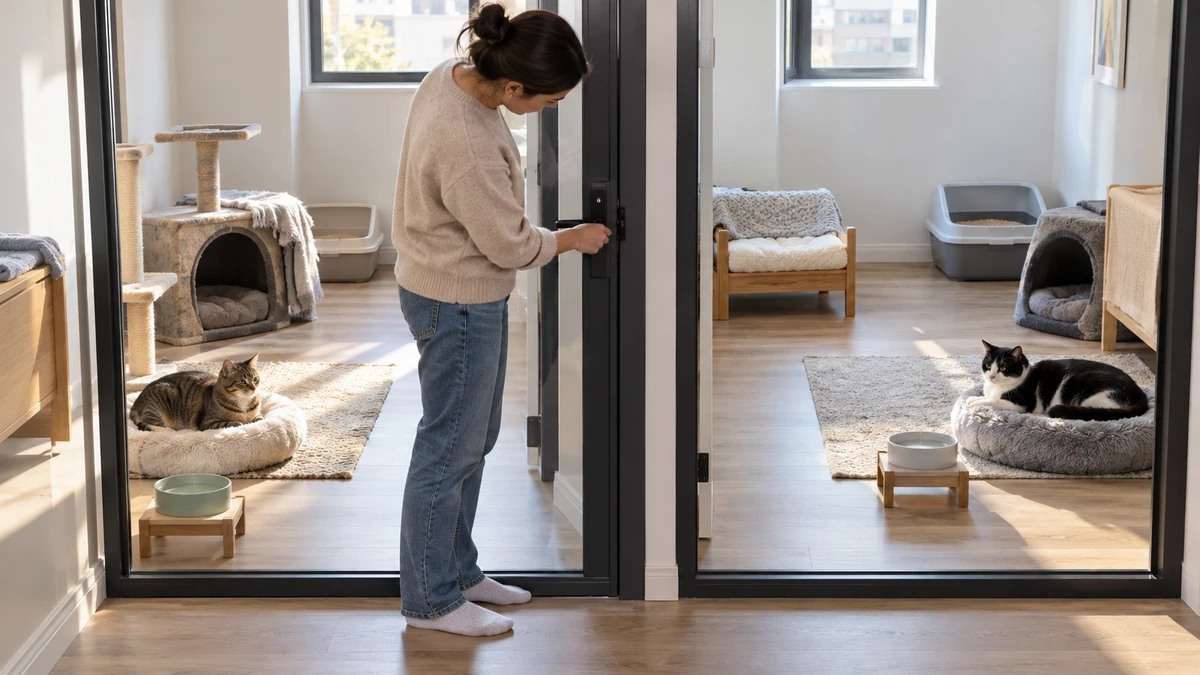
Resources must be both numerous and reachable. Two bowls side by side are one guarded station. Two litter boxes behind the same narrow doorway may also function as one. Spread resources so each cat has a route that does not require squeezing past the other.
If there has been staring, stalking, doorway blocking, chasing, swatting, or feeding conflict, do not assume absence will improve it. Use secure separate zones, each with complete food, water, litter, rest, hiding, scratching, and safe enrichment. Confirm the barrier cannot trap a cat in heat or block the sitter. An individual plan from a veterinarian or qualified feline behavior professional is appropriate when conflict is active or escalating.
What cameras and automatic equipment cannot do
A camera can show a limited field of view. It may help you notice that a cat has not appeared, hear an alarm, or confirm that a sitter arrived. It cannot reliably prove that the unseen cat is healthy, that both cats ate their own portions, that urine output is normal, or that water elsewhere is clean. Video may also stop when power or internet service fails.
An automatic feeder can release food. A fountain can circulate water. A smart sensor can send a notification. None can:
- find a cat behind a closed door or furniture;
- clean a soiled or inaccessible litter box;
- replace spilled water or safely discard spoiled food;
- assess breathing, movement, pain, hydration, an incision, or a sudden behavior change;
- separate animals after conflict;
- respond to smoke, extreme indoor temperature, a leak, or an evacuation order;
- transport the cat for veterinary care.
This conclusion is a practical inference from the limits of the equipment and the tasks welfare and veterinary sources assign to human caregivers. Use automation as one layer, not as permission for multi-day absence without a visitor.
Choose a sitter who can observe, record, and act
The right sitter is not merely someone who likes cats. They must be willing and able to enter on schedule, recognize the cat’s normal baseline, complete every task, and escalate a concern. Meet in the home before departure. Show each cat, hiding place, shut-off or alarm control that matters, carrier, supply, and veterinary document. Let the sitter operate keys and devices rather than just watching you demonstrate.
The ASPCA recommends giving a sitter the regular veterinarian and nearest emergency clinic, a trip itinerary, backup contacts, pet health and diet information, and clear instructions for emergencies. It also advises telling the veterinarian who is authorized to make decisions during your absence. Legal and clinic requirements differ, so verify the form of authorization and payment arrangement with your own clinic and jurisdiction.
Ask for a time-stamped visit note with these eight fields:
| Record field | What to write |
|---|---|
| 1. Feeding | Food offered, food remaining, and which cat was seen eating |
| 2. Water | Bowls or fountain checked, refilled, cleaned, and any unusual change |
| 3. Elimination | Litter boxes scooped and observed urine or stool change, without diagnosing |
| 4. Behavior | Where each cat was seen and whether movement, posture, vocalizing, or interaction differed from baseline |
| 5. Equipment and home | Feeder, fountain, camera, climate, doors, windows, leaks, alarms, and power status |
| 6. Care completed | Cleaning, safe play, grooming, or prescribed care actually performed |
| 7. Contact and escalation | Owner or backup person contacted, when, and what response was received |
| 8. Emergency action | Clinic called, authorization used, transport arranged, and next handoff |
“Cat seems fine” is not enough. A useful note distinguishes “saw both cats walk and eat” from “food disappeared,” especially in a multi-cat home. A photo or short video can support the note but should not replace the visit tasks.
Make failure recoverable before you go
A safe plan assumes that something small will fail and makes that failure manageable. Give a trusted local person a tested key. Keep your itinerary and accommodation contact available. Name a second caregiver. Leave the carrier, supplies, and written plan where the sitter can find them. Tell them how to reach the regular veterinarian and local emergency clinic.
The ASPCA’s broader pet-planning guidance recommends an accessible emergency contact sheet and a portfolio covering habits, food, health, medication, veterinary information, and behavior around people and animals. Adapt that idea to this trip. Do not put sensitive information in public view; share it securely with the people who need it.
Power and network failures need non-digital options: ordinary water bowls, a manual meal plan, a physical key where lawful, printed contacts, and a phone tree. If the home could become unsafe because of heat, cold, smoke, flood, or another local hazard, the plan must say who can relocate the cat and where. Follow current local official alerts; emergency rules and facility availability are location-specific and can change.
When you return: check the cat, not just the devices
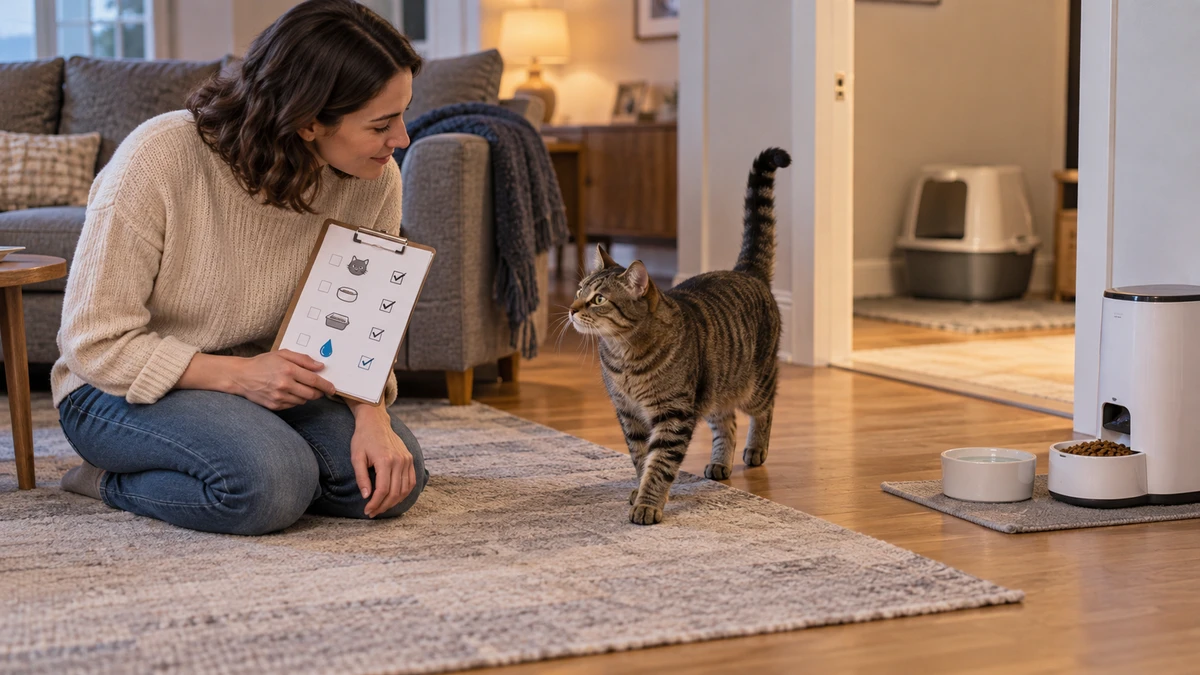
See every cat in person. Compare food and water with the sitter’s notes; scoop and inspect litter; observe walking, breathing, posture, sociability, grooming, and the home environment. Do not provoke a hiding cat to obtain a greeting, but confirm its location and condition safely.
Contact a veterinarian promptly for a significant or sudden appetite, drinking, elimination, breathing, mobility, pain, wound, vomiting, diarrhea, or behavior concern. Our guides to a cat not eating and changes in senior cats can help you organize observations, but they do not diagnose the cause. For urgent signs, use the emergency pathway advised by your local veterinary clinic.
Frequently asked questions
Can a healthy adult cat stay home during my workday?
Many stable adult cats can manage a usual same-day absence when the home is secure and food, water, litter, rest, temperature, and access are reliable. That is not a promise based on a clock. Check how this individual is doing today, prepare backups, and have a local person who can enter if you are delayed.
Is it safe to leave a cat alone overnight?
Do not treat “overnight” as automatically safe. It crosses normal observation and care periods for many households. Arrange an in-person visit schedule based on the cat’s age, health, meals, medication, elimination, social needs, and veterinary plan. Kittens, seniors, recovering cats, and cats with recent changes often need more.
Can an automatic feeder and camera replace a cat sitter?
No. They can deliver a meal or show part of a room, but they cannot correct most failures, examine the cat, clean litter, verify which animal ate, or transport the cat. Keep non-electric food and water options and a trusted person with real access.
Should my cat stay home or go to a boarding facility?
Many cats prefer familiar territory, which can make competent in-home care a good option. Boarding may be safer when the home cannot be accessed reliably, complex care is required, conflict cannot be separated, or a professional setting better fits the veterinary plan. Inspect the service, discuss health and behavior needs, and confirm emergency procedures before choosing.
What if my cat hides from the sitter?
Plan for that before travel. Give the sitter the cat’s usual hiding locations and baseline, keep necessary routes open, and use non-threatening observation rather than dragging the cat out. If the sitter cannot confirm the cat’s location and condition, or notices changed appetite, elimination, movement, or behavior, the written escalation plan should start.
The safest answer is therefore not a universal number. It is a prepared home, an individual care schedule, redundant essentials, a person who can enter and act, and a clear decision for what happens when the ordinary plan stops being ordinary.