How to Introduce a Cat and Dog Safely: 7 Gradual Stages
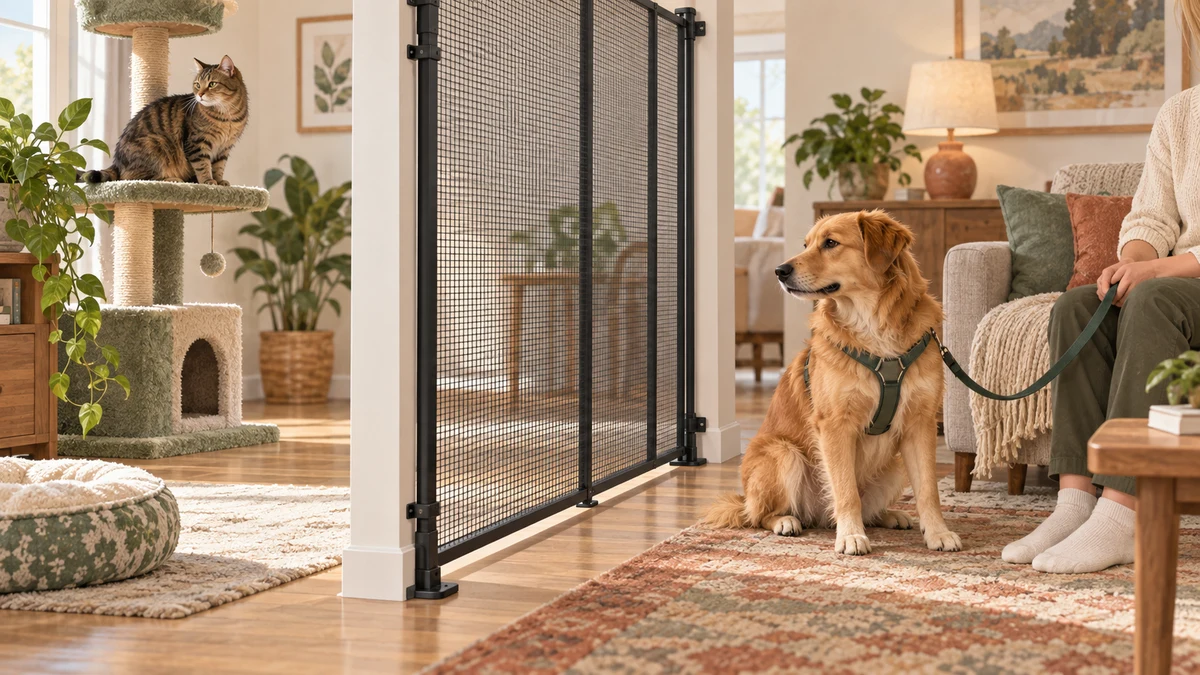
The safest way to introduce a cat and dog is to prevent an immediate greeting and move through small, reversible stages: complete separation, scent exchange, separate exploration of each other’s spaces, visual contact through a secure barrier, and controlled time in one room. The dog stays on a loose leash at first, while the cat remains free to retreat indoors. Advance only when both animals can notice each other and then eat, play, explore, rest, or look away normally. If either animal freezes, fixates, chases, lunges, hides, stops eating, or cannot disengage, add distance and return to the last comfortable stage. There is no universal number of days.
Define success before the first meeting
A successful household does not require the cat and dog to cuddle, play, or sleep together. Calm indifference can be an excellent outcome. The practical goal is safe, predictable coexistence: the cat can reach food, water, litter, resting places, hiding places, and high routes without being followed or blocked; the dog can rest, eat, play, and move through the home without being swatted, crowded, or continually aroused.
This plan is different from a cat-to-cat introduction. The broad principle—reduce intensity and protect choice—is similar, but a dog’s speed, size, barking, and tendency to follow or chase can make one brief mistake physically dangerous. Management must prevent rehearsal of chasing, not merely interrupt it after it begins.
Calendar time is therefore a poor graduation test. One pair may move smoothly; another may need much longer or may always require separated zones. Judge the current distance and setup by behavior, not by a deadline.
Before starting: assess health and behavior risk
Arrange routine veterinary care appropriate to each animal, and discuss any new health or behavior concern before adding social pressure. Pain, illness, impaired sight or hearing, poor mobility, appetite change, or an abrupt behavior change can alter how an animal copes. This article cannot diagnose those causes; a veterinarian who has examined the animal is the right person to evaluate them.
Review the dog’s history and current behavior around cats or other fast-moving animals. Important questions include:
- Has the dog ever chased, pinned, grabbed, injured, or persistently stalked a cat?
- Does the dog become silent and rigid, lean forward, track every movement, or ignore familiar cues when a cat appears?
- Can the dog relax on a mat, turn back to an adult, and move away on a loose leash at a generous distance?
- Does the dog guard food, toys, beds, doorways, or a person?
- Can an adult physically manage the dog without relying on pain, fear, or a constantly tight leash?
Also consider the cat’s vulnerability and options. A kitten is small and may dash unpredictably. A senior cat or a cat with limited mobility may not reach a high shelf quickly. A very fearful cat may remain hidden even without overt pursuit. Previous peaceful experience with the other species can help, but it does not guarantee that this particular pair is safe.
If the dog has a history of catching or injuring cats, shows intense stalking or chase behavior, or cannot disengage even at a distance, keep the animals fully separated and seek help from a veterinarian or a qualified, reward-based behavior professional experienced with both species before visual or same-room contact. Some pairings require permanent management rather than direct access.
Build the safety system first
Set up the home before either animal sees the other. At minimum, provide all of the following:
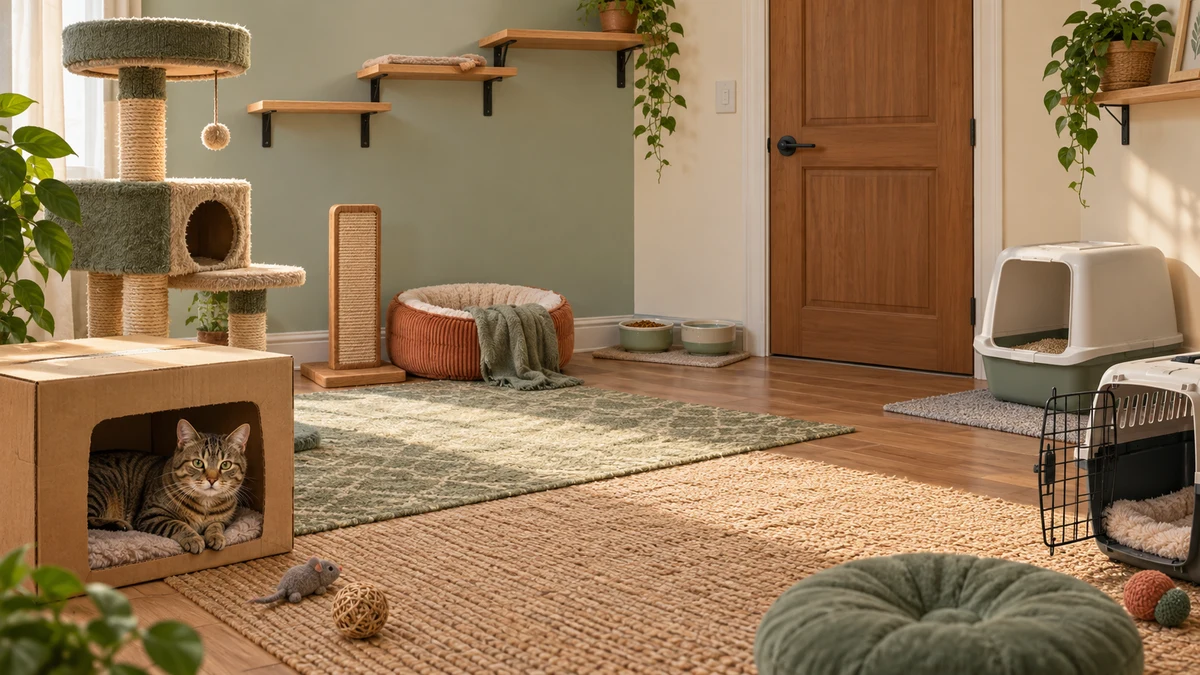
- A cat-only safe room with a solid door. It needs the cat’s food, water, litter, bed, scratcher, hiding place, toys, and comfortable human contact.
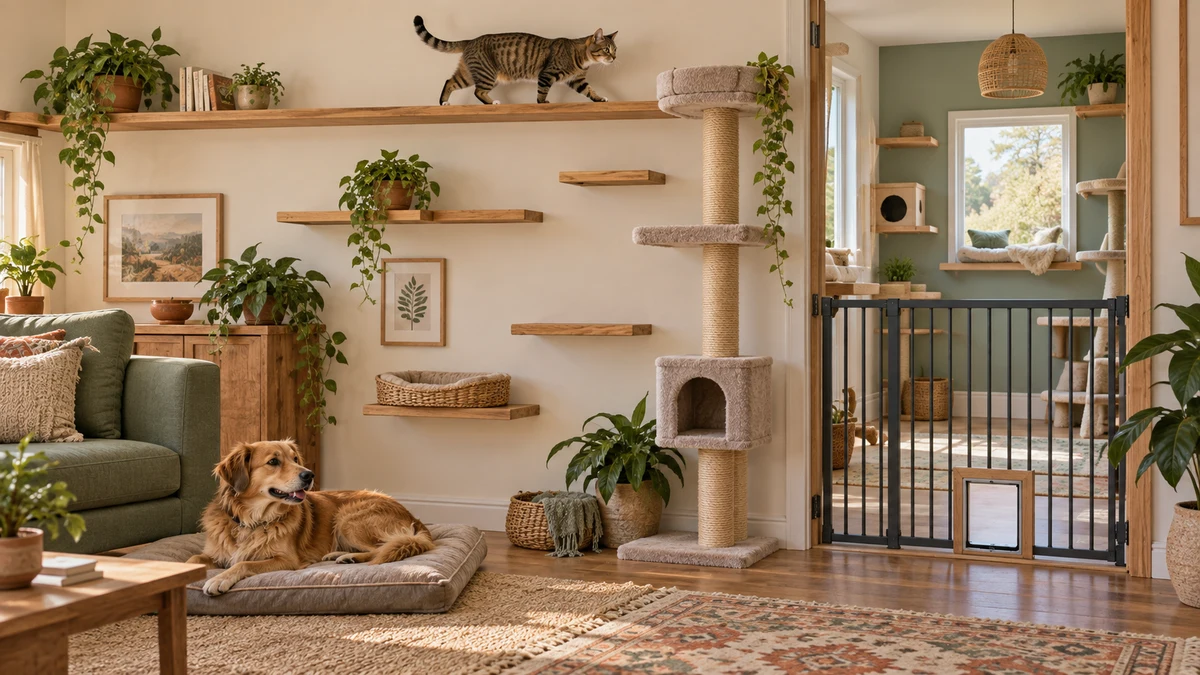
- A secure buffer outside that room. A second closed door, hall, tall anchored gate, or exercise pen prevents paws and noses meeting through a gap and stops the dog from camping directly at the door.
- More than one cat escape route. Use stable furniture, broad shelves, or cat trees that do not end in a dead corner. Add steps for a kitten, senior, or mobility-limited cat.
- Dog-free high resting places. Height must be reachable without passing beside the dog and strong enough for the cat to pause, not merely jump through.
- Separate food stations. Feed in different zones so neither animal can steal, stare at, or guard the other’s meal.
- Separate water access. Each animal should be able to drink without entering the other’s resting or feeding zone.
- A dog-inaccessible litter area. The cat must be able to enter, turn, dig, and leave without the dog watching, following, or reaching the tray.
- Separate beds, toys, and high-value items. Put chews and favorite toys away during early sessions; competition is unnecessary difficulty.
- A tested physical barrier. Check the height, wall anchors, latch, gaps, and floor stability. A cat may jump or squeeze through; a dog may push or climb.
- A two-zone plan for unsupervised time. Everyone in the home should know which doors close and where each animal goes before a delivery, visitor, or departure.
Cat-proof the room as well: secure exterior exits, cords, unstable shelves, and household hazards. A frightened cat should not be able to bolt outdoors, and a barrier should not collapse when bumped.
Learn the “green light” and “step back” signals
Read the whole animal and the pattern across the session. One tail movement or one yawn is not a diagnosis. What matters is whether the animal remains loose, can disengage, and returns to ordinary behavior.
| Animal | Signs the current setup may be manageable | Signs to increase distance or end the session |
|---|---|---|
| Dog | Loose muscles; curved rather than forward-driving movement; normal breathing; soft face; can respond to a familiar cue; glances and looks away; sniffs the floor; takes food gently; settles on a mat | Hard stare; closed mouth with a rigid body; weight pitched forward; stalking or following; repeated whining or barking; pawing the barrier; leash pulling; lunging; chasing; snapping; guarding a route or resource |
| Cat | Moves at a normal pace; ears and tail near their usual position; explores; plays; eats; grooms; rests; approaches or leaves by choice; looks at the dog and then disengages | Freezing or crouching; flattened ears; puffed or thrashing tail; sustained staring; repeated hissing or growling; swatting; frantic flight; prolonged hiding; refusing normal food; litter changes; being unable to reach a route or resource |
Panting can reflect exertion, heat, or arousal in a dog; hiding can be a normal short-term coping choice for a cat. Treat a change from that individual’s normal pattern as information. A log of distance, setup, activity, body language, appetite, elimination, and recovery after each session is more useful than “they seemed fine.” For more feline details, see signs of stress in cats.
The seven-stage introduction plan
| Stage | What changes | Advance only when | Step back when |
|---|---|---|---|
| 1. Prepare and separate | Build two secure zones; no sight or contact | Both use their zones and essential resources normally | Health concerns, door guarding, or barrier failure appears |
| 2. Settle behind a closed door | Establish calm routines with complete separation | Both can rest, eat, play, and move normally away from the door | Either fixates on the door or normal routines deteriorate |
| 3. Exchange scent | Add low-intensity odor, still without sight | Both can investigate or ignore scent and recover promptly | Avoidance, pacing, vocalizing, or persistent tension appears |
| 4. Rotate spaces | Explore the other’s area at different times | Both explore and settle after returning to their own zone | Frantic searching, marking, door rushing, or shutdown appears |
| 5. See through a barrier | Add sight at a generous distance | Both can look away and do another calm activity | Staring, rigidity, barking, lunging, hiding, or escape attempts appear |
| 6. Share a room under control | Remove barrier; dog on loose leash, cat free to retreat | Both move naturally and disengage across repeated sessions | Following, cornering, chase attempts, swatting, or restraint is needed |
| 7. Extend managed coexistence | Increase time and normal household activity gradually | Routines remain normal without pursuit or blocked access | Tension appears as duration, movement, or resources change |
Stage 1: prepare and keep complete separation
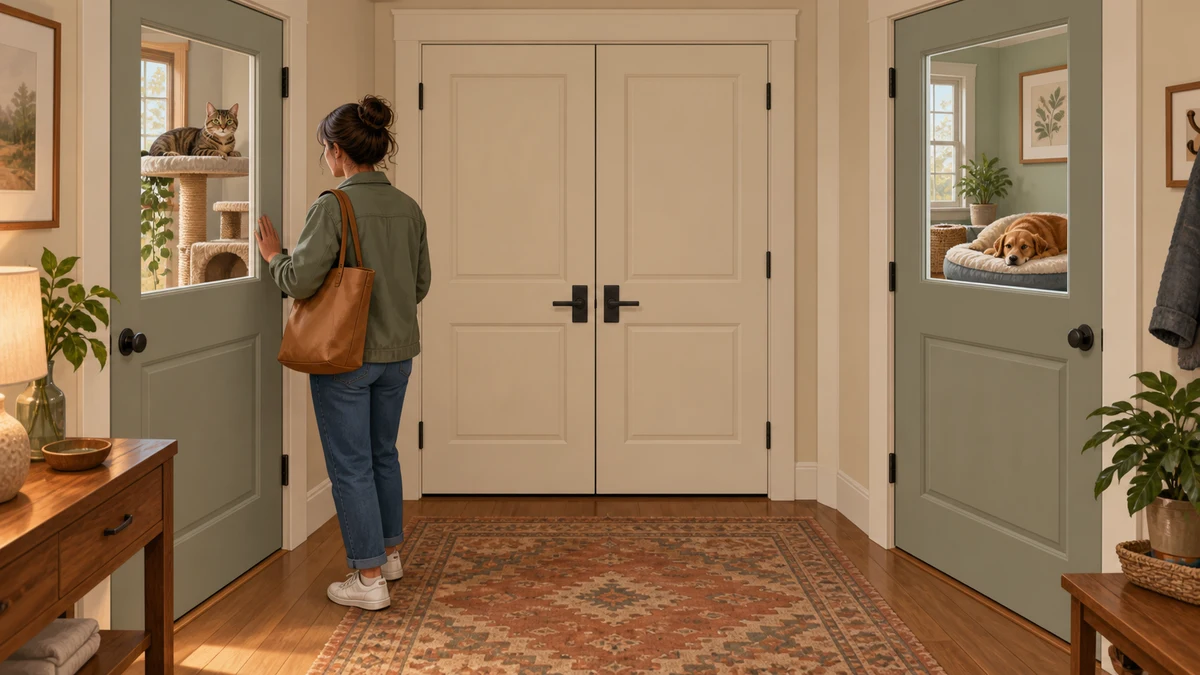
What to do: Bring the newcomer directly into their prepared zone without a hallway greeting. Use a covered carrier for a cat and a separate route or room for a dog. Close and check the solid door before releasing either animal. Keep familiar routines, bedding, walks, play, and quiet time as consistent as practical. Positive carrier preparation can make the cat’s arrival less overwhelming.
Ready to advance: Both animals eat, drink, eliminate, rest, and engage with familiar people in their separate areas. They can move away from the shared door instead of monitoring it continually.
Pause or go back: The dog scratches, barks, stares under the door, or cannot settle nearby; the cat remains frozen, stops using resources, or will not leave hiding; either animal has a health concern. Add a buffer zone and obtain veterinary guidance for health changes.
Stage 2: establish calm routines behind the closed door
What to do: Let each animal learn when meals, walks, play, sleep, and human attention happen without needing to meet. Practice the dog’s already-taught reward-based skills—settling on a mat, responding to their name, turning toward an adult, and moving away—far from the cat’s room. The goal is not perfect obedience; it is an easy, voluntary response before the cat becomes part of the picture.
Do not let the dog rehearse waiting outside the cat’s door. Use the buffer, activities, and distance to make another location more worthwhile. Let the cat investigate the room and high routes without being pulled from hiding.
Ready to advance: The dog can relax and follow familiar cues without orienting constantly to the door. The cat uses the full safe room and maintains normal behavior for that individual.
Pause or go back: Either animal becomes more vigilant as routines proceed, stops taking rewards they normally value, guards the door, or cannot settle after hearing the other. Reduce intensity; do not use hunger to force participation.
Stage 3: exchange scent without showing the animals
What to do: Swap bedding, or wipe each animal gently with a separate clean cloth only if that handling is already comfortable. Put the scented item in open floor space where the other animal can approach, pass, or avoid it. Keep it away from food, water, litter, beds, and exits so avoidance does not cost access to something essential. Pair calm investigation with an activity each animal already enjoys.
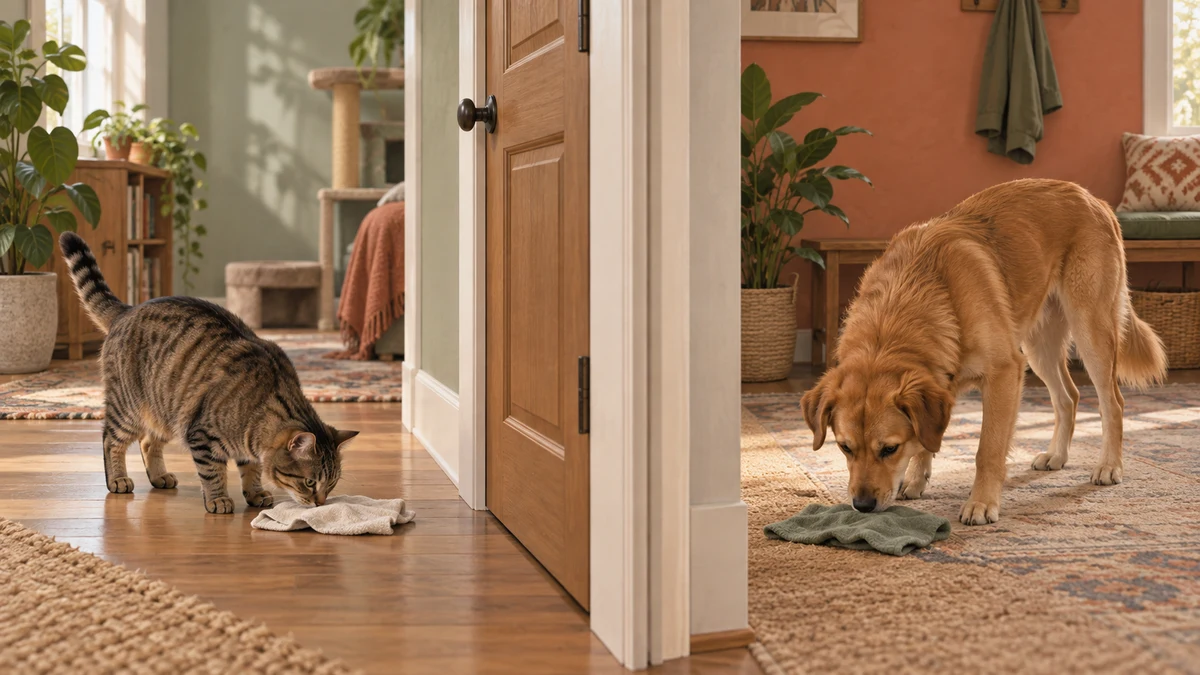
Ready to advance: Both animals repeatedly sniff and move on, ignore the item, play, eat, or rest after noticing it. Curiosity is optional; relaxed indifference is enough.
Pause or go back: An animal avoids the whole area, stiffens, paces, vocalizes repeatedly, guards the item, or remains unsettled after it is removed. Use a less intense item and greater distance later.
Stage 4: let them explore each other’s spaces at different times
What to do: Secure the cat in the safe room with desired resources while the dog briefly explores a shared area containing the cat’s household scent. Later, place the dog comfortably in its own closed zone and allow the cat to inspect part of the dog’s area. Move only one animal at a time and verify every door before opening another. Never carry the cat past the dog.
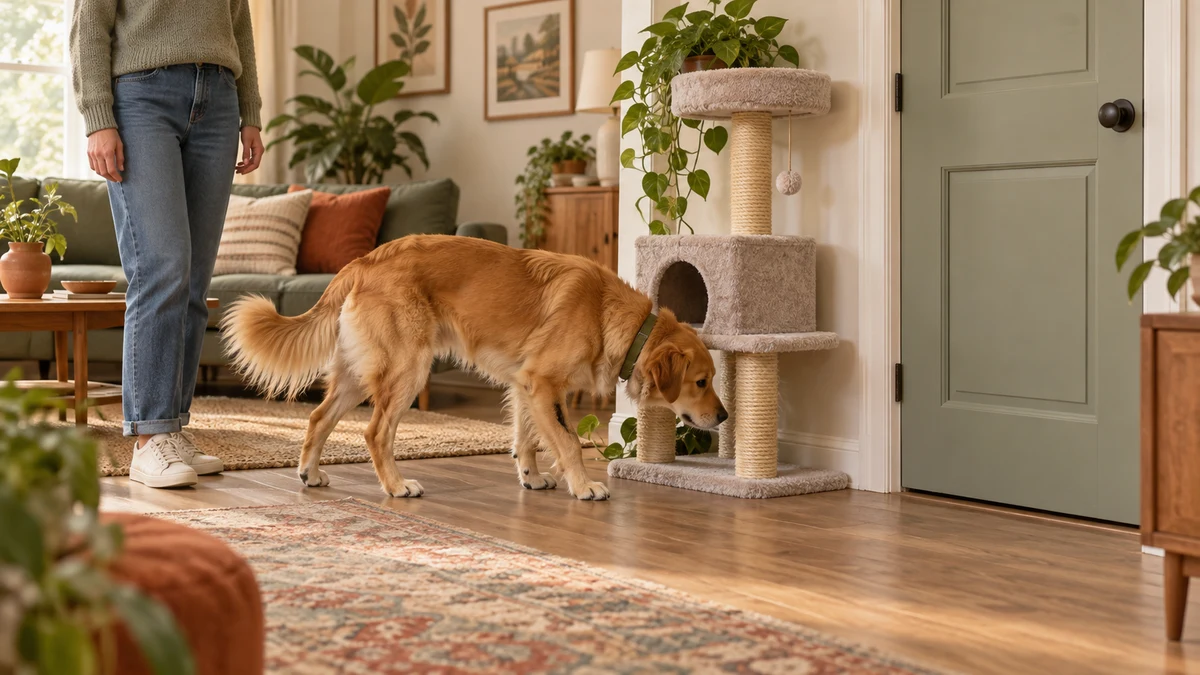
Ready to advance: Each animal sniffs, explores, plays, or accepts a normal reward and settles after returning to their own zone. They do not have to ignore every odor.
Pause or go back: Frantic searching, scratching at the other’s door, urine marking, resource guarding, flattened movement along walls, or prolonged hiding appears. Shorten the area or return to scent-only work.
Stage 5: add visual contact through a secure barrier
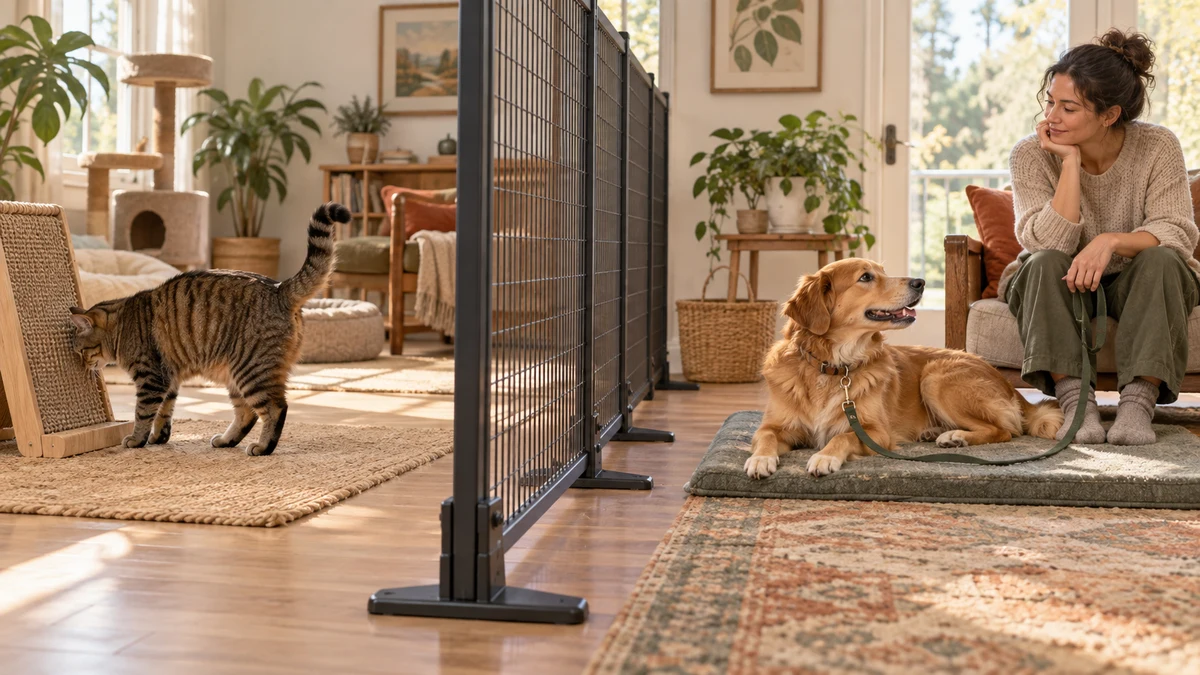
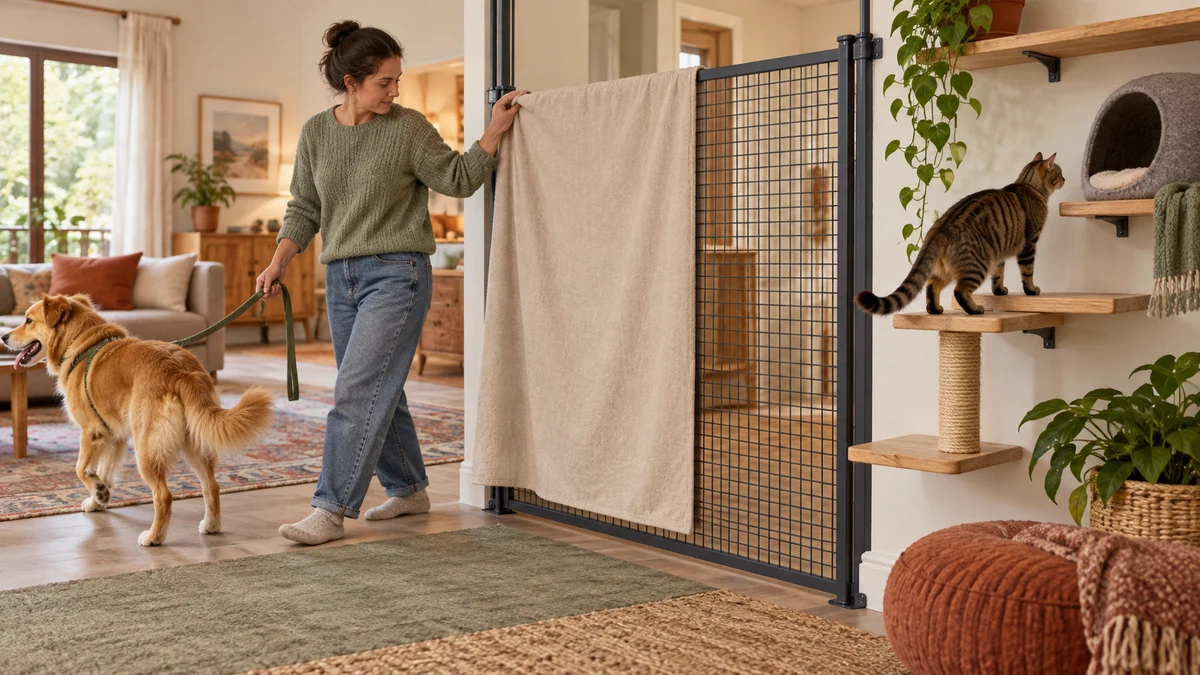
What to do: Use a tall, anchored mesh gate, double gate, or see-through divider that prevents all contact. Start with the animals far apart or part of the barrier covered. The dog wears a comfortable harness and loose leash as backup; the cat stays unrestrained in the secured indoor area with an open retreat route. If two adults are available, one watches each animal. Offer separate calm activities away from the barrier and end while both remain comfortable.
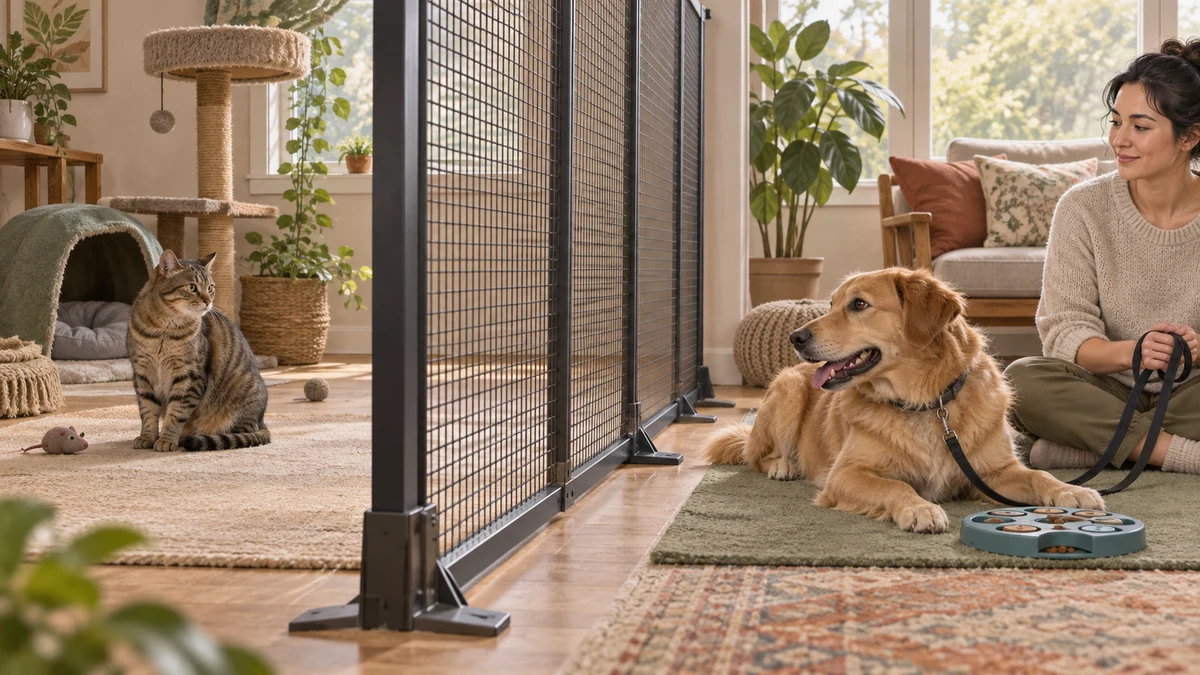
Ready to advance: Across repeated sessions, both animals can glance and turn away, eat gently, sniff, play, lie down, or leave. The dog’s leash stays slack because management is preventing approach, not physically battling it.
Pause or go back: The dog stares, stalks, whines, barks, paws, pulls, lunges, or cannot respond to the adult; the cat freezes, puffs up, hisses repeatedly, bolts, hides, or cannot access an exit. Cover the view, increase distance, and calmly return both animals to separate zones. If the leash must stay tight to prevent contact, the session is too difficult.
Stage 6: hold a short controlled session in one room
What to do: Remove the barrier only after a strong pattern of calm barrier sessions. Choose a large indoor room with more than one cat route and no dead-end corner. The dog remains in a comfortable harness on a slack leash held by an attentive adult. The cat is not held, tethered, placed in a carrier, or brought closer; it may stay high, cross the room, or leave. Start at the same generous distance that worked through the barrier.
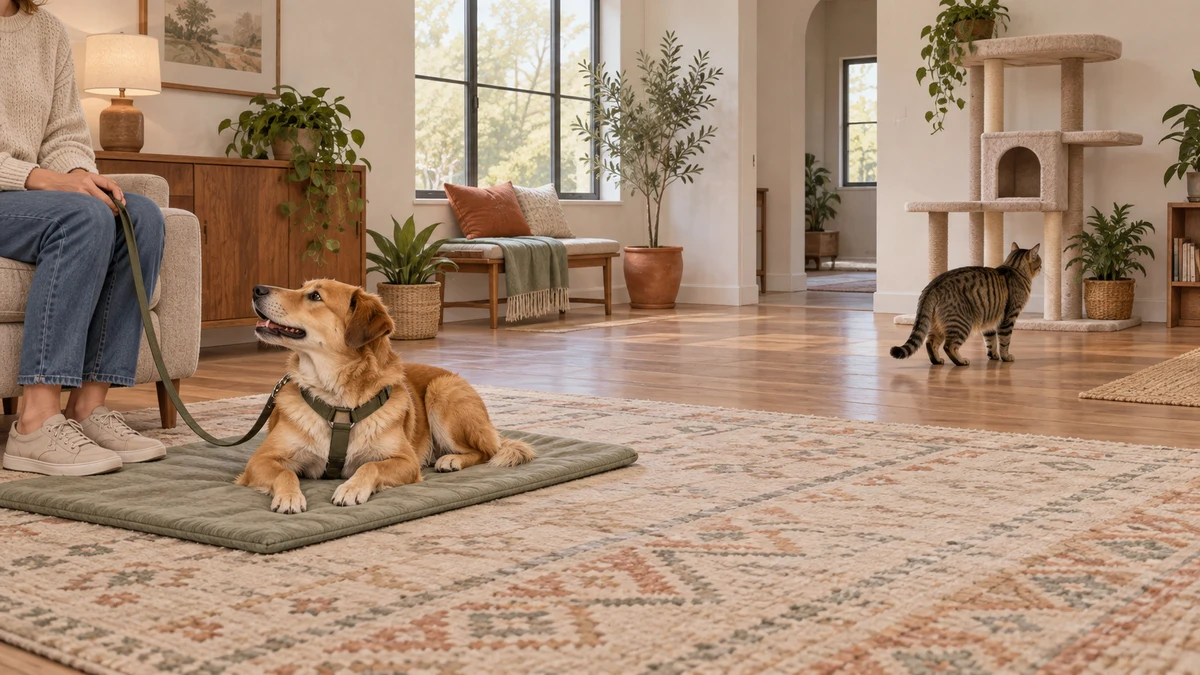
Ready to advance: Both animals can move naturally, look away, respond to familiar activities, and choose distance. The dog does not follow when the cat moves, and the cat does not have to sprint to stay safe. Repeat calm sessions before changing duration, distance, or the dog’s freedom.
Pause or go back: The dog follows, blocks, stiffens, accelerates, chases, or needs leash pressure; the cat crouches, flees, swats, becomes trapped, or abandons normal routines afterward. Restore the barrier. A chase attempt is not a near-success—it means the current setup allowed too much intensity.
Stage 7: extend supervised coexistence, one variable at a time
What to do: Increase only one challenge at once: a little more time, a little more movement, or a different room. Keep cat-only zones, high routes, separate feeding, dog-inaccessible litter, and individual attention. Continue supervising. A light indoor houseline may be appropriate for some dogs only when a qualified professional has shown the household how to use it safely; it must not snag, tighten, or replace active supervision.
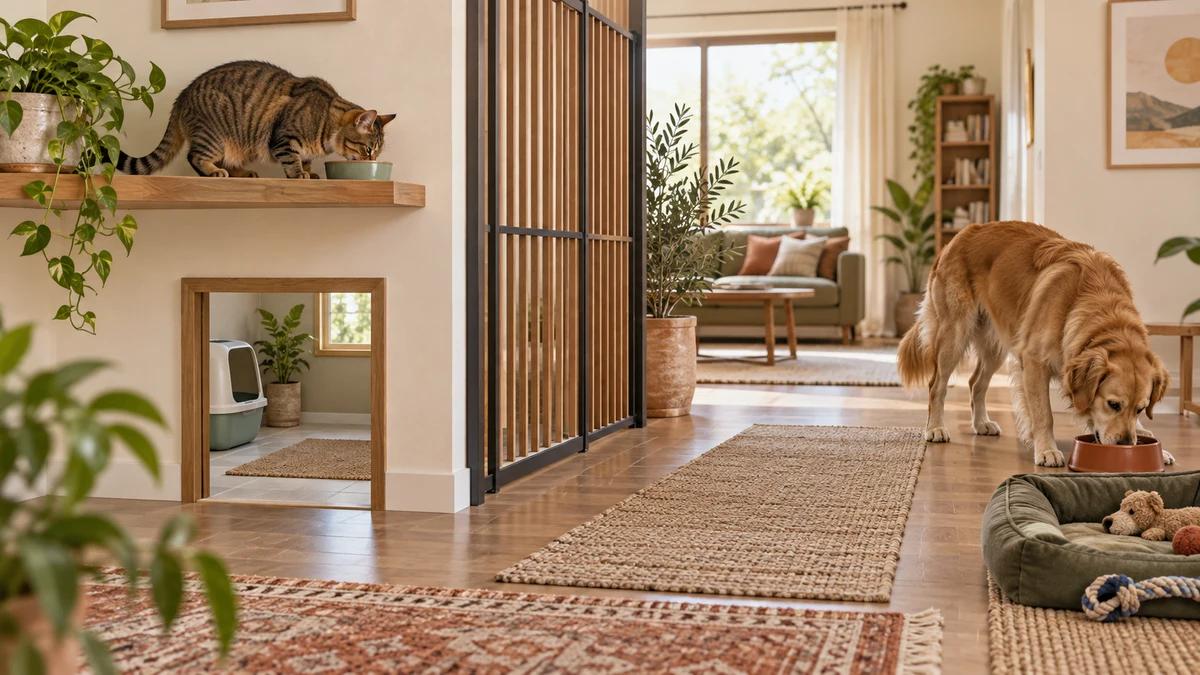
Ready to advance: Both animals preserve normal appetite, elimination, sleep, play, grooming, and movement as shared time grows. The dog can see the cat move without following; the cat uses floor and high routes by choice, not only to escape. Calm ignoring counts.
Pause or go back: Tension appears around meals, toys, a person, doorways, active times, or longer sessions. Return to separate zones whenever nobody can actively supervise. Unsupervised access is a late risk decision, not an automatic final step; some homes should continue permanent separation when people are absent.
Five shortcuts that make introductions less safe
- Do not hold the cat up for the dog to sniff. Restraint removes the cat’s escape and puts human hands near frightened animals.
- Do not force nose-to-nose contact. Proximity is not familiarity; choice and the ability to disengage are part of the safety mechanism.
- Do not let them “fight it out” or permit a chase. A cat can be injured, and one intense event can make later work harder.
- Do not punish hissing, growling, barking, or other warnings. Warnings report that the setup is too difficult. Punishment may add fear and suppress useful communication without making the situation safe. AVSAB’s current humane-training position favors reward-based methods and rejects aversive training. Why hitting or frightening an animal is the wrong lesson explains the same principle from the cat’s side.
- Do not leave them together because one session looked calm. Safety needs a repeated pattern across movement, resources, surprises, and ordinary routines.
If a session escalates
Do not step between the animals, grab the cat, or reach for collars beside their mouths. If a leash is already attached and can be handled without approaching the cat, the adult can guide the dog away while another person closes a solid door. A large rigid object, gate, or visual panel can block the sightline while leaving retreat routes open. The goal is distance and two secure rooms, not a confrontation.
Check both animals for injury after any contact. Seek veterinary care promptly for a wound or possible bite, and for any immediate health concern. Keep the pair separated while deciding what support is needed.
When to stop the introduction and get help
Stop direct sessions and maintain physical separation when:
- the dog shows intense stalking, repeated lunging, chase attempts, grabbing, or cannot disengage at a workable distance;
- either animal is injured or physical contact may have caused a wound;
- the cat persistently cannot eat, drink, rest, or use the litter normally, or the dog cannot maintain normal eating, rest, or elimination;
- fear, hiding, barking, guarding, or arousal continues outside sessions;
- the barrier, leash plan, doors, or household routine cannot reliably prevent contact; or
- careful reductions in distance and intensity do not restore relaxed behavior.
A veterinarian can assess health factors and may refer to a veterinary behaviorist or another appropriately qualified behavior professional. Ask about the professional’s education, cross-species experience, safety plan, and use of reward-based methods; credentials and regulated titles differ by country. Do not give medication or supplements based on a generic article. Any medical plan belongs to the veterinarian who has assessed the individual animal.
The responsible outcome may be a slower reintroduction, lifelong separated zones, or a different living arrangement. Protecting welfare is more important than making the animals share space.
FAQ
How long does it take to introduce a cat and dog? There is no reliable fixed duration. Advance when both animals repeatedly remain loose, can look away, engage in normal activities, and recover easily at the current stage. Go slower whenever one animal cannot do those things.
Should the dog be on a leash for the first meeting? Yes, for initial visual and same-room sessions, reputable welfare guides recommend a comfortable harness and loose leash as a safety backup. If the lead is tight because the dog is trying to reach the cat, end the session and increase distance; do not use leash pressure to force endurance.
Can the cat stay in a carrier while the dog approaches? Not as the ordinary introduction method. A confined cat cannot leave, climb, or choose distance. Use a secure room divider while both animals remain free within their own protected zones, then keep the dog leashed when the barrier is eventually removed.
What if my dog only wants to play? Friendly intent does not make chasing safe. A dog’s size, speed, or persistent following can frighten or injure a cat. Reward the dog for settling and disengaging, provide species-appropriate activity away from the cat, and prevent pursuit.
Do they need to become friends before they can live together? No. Peaceful distance is a valid success if both animals can meet their needs, move freely, rest, and disengage without fear, pursuit, or blocked access. Some pairs should remain separated when unsupervised, and some should not share space at all.