How to Socialize a Kitten Without Forcing Them
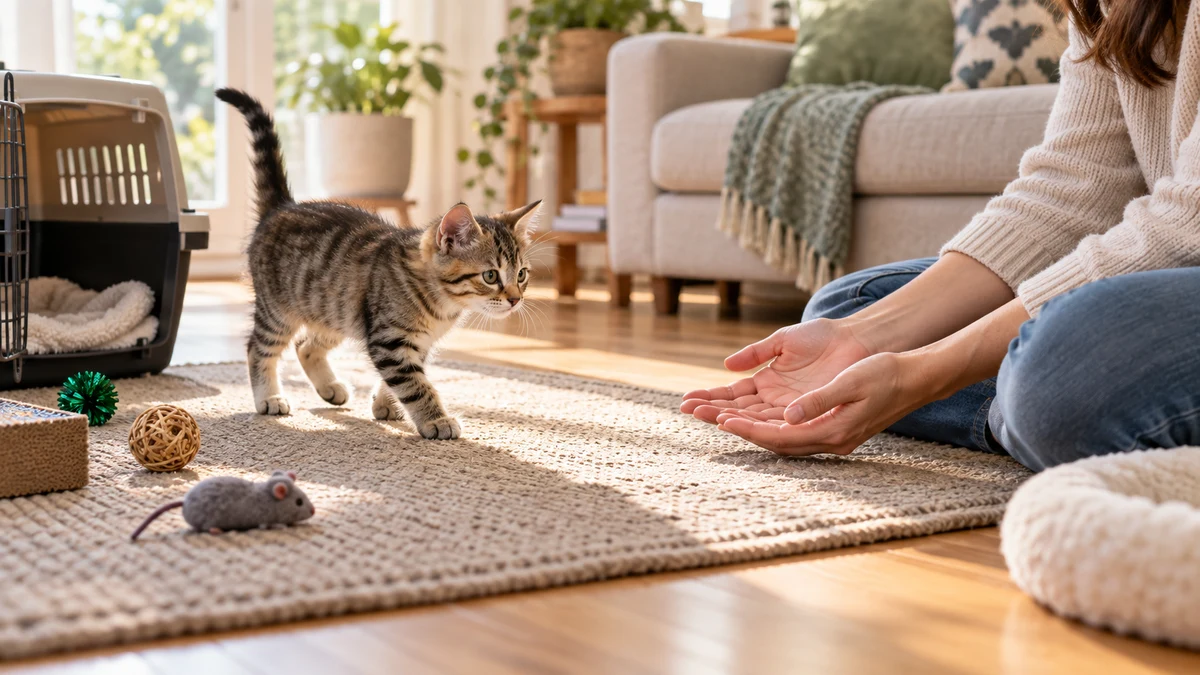
Kitten socialization works best when the kitten controls the distance and every new experience is brief, mild, and paired with something safe. Let the kitten approach, keep an escape route open, introduce one small change at a time, and stop before curiosity becomes sustained fear. People, household sounds, carriers, grooming, paw and ear checks, short lifts, surfaces, toys, and controlled environmental changes can all be practised this way. Do not pin down, chase, corner, flood, or pass a kitten around. The goal is not maximum exposure; it is a history of recoverable, positive experiences.
Socialization is quality, not a checklist race
Socialization usually means learning that living beings such as people and other animals can be safe. Habituation means learning that non-living parts of daily life—sounds, surfaces, objects, rooms, and movement—do not require a defensive response. At home, the two overlap, so this guide uses “socialization” as a practical umbrella while keeping the distinction in mind.
Reliable sources describe the early sensitive period with slightly different boundaries. Cats Protection uses about two to seven weeks. The Feline Veterinary Medical Association describes roughly two to nine weeks. The 2021 AAHA/AAFP Feline Life Stage Guidelines say it can begin at two to three weeks and may be closing by nine to ten weeks. Those ranges are not competing countdown clocks. The AAHA/AAFP guidance explicitly calls the period fluid and says its timing varies between individuals; the quality of each experience matters.
Early experience can influence later reactions, but it does not guarantee a fearless adult. Genetics, maternal experience, health, previous frightening events, and the environment also matter. Equally, an older kitten or adult cat is not “too late” to learn. Training may need smaller steps and more time, but well-timed positive reinforcement remains useful beyond the early window.
Many people first bring a kitten home after much of the earliest period has passed. Ask the shelter, foster carer, or breeder what the kitten has already met and how the kitten responded. Then start from the behavior you see today, not from an assumed age-based level. A quiet first room, predictable resources, and time to settle can be more helpful than greeting every visitor on day one.
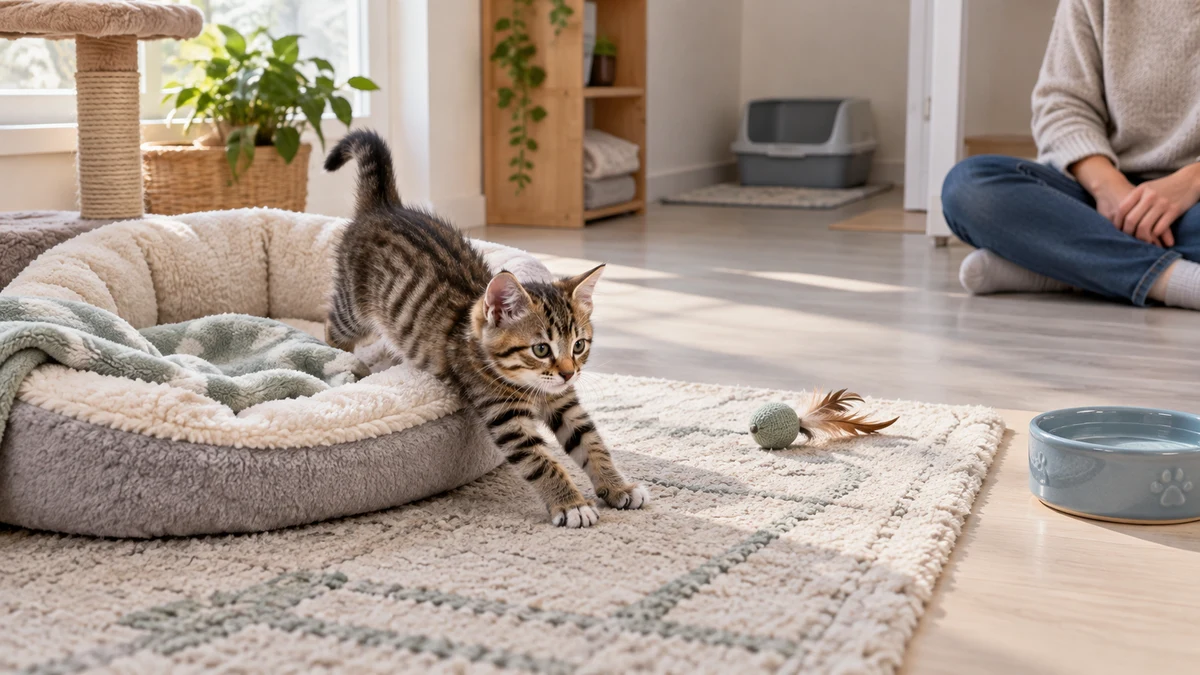
The four rules for every session
- Choice: The kitten can approach, pause, or leave. Nobody blocks the route to a familiar bed, hide, perch, or open carrier.
- Low intensity: Start farther away, quieter, slower, shorter, or with less touch than you think will be needed.
- One small change: Change volume, distance, duration, movement, person, or location—not all of them together.
- Recovery decides the next step: Repeat or advance only when the kitten stays near their normal behavior and settles quickly afterward.
Food can be a useful pairing, but it is not the only reward. A short toy chase, access to a resting place, gentle social contact the kitten seeks, or simply the end of the exercise may be valuable. Use tiny portions from the normal daily allowance when appropriate. Never delay necessary meals to make a kitten comply, and ask a veterinarian about rewards if appetite, digestion, a prescribed diet, or another health concern is involved.
The reward should follow or accompany a voluntary choice. Luring a kitten into a carrier and then suddenly shutting the door teaches a very different lesson. Most easy approaches should remain easy, with no surprise restraint afterward.
Read the kitten, not the schedule
Body language is contextual. Pupils change with light; a kitten may decline food because they just ate; one tail flick is not a diagnosis. Look for a cluster of changes from that kitten’s baseline and for the direction of change during the session.
| Usually safe to continue or repeat | Lower the intensity, pause, or end |
|---|---|
| Approaches again by choice after moving away | Avoids the setup, hides, or keeps increasing distance |
| Sniffs, looks around, and explores with fluid movement | Freezes, crawls, crouches flat, or becomes rigid |
| Eats a normally valued reward without snatching and fleeing | Refuses a normally valued reward together with other tension signs |
| Plays normally and can disengage from the toy | Stops normal play, scans constantly, or fixates on escape |
| Ears and whiskers look neutral, muscles stay soft, breathing stays ordinary | Ears flatten or rotate back, tail tucks or lashes, breathing accelerates |
| Grooms, rests, or returns to another ordinary activity soon afterward | Hisses, growls, cries persistently, swats defensively, or tries frantically to escape |
AAHA/AAFP guidance emphasizes respecting early signals because ignored tension can escalate. A kitten does not have to hiss or scratch before earning a break. If posture changes, exploration stops, or recovery takes longer than usual, make the next repetition easier. The cat stress-sign guide gives more context for interpreting combinations rather than isolated gestures.
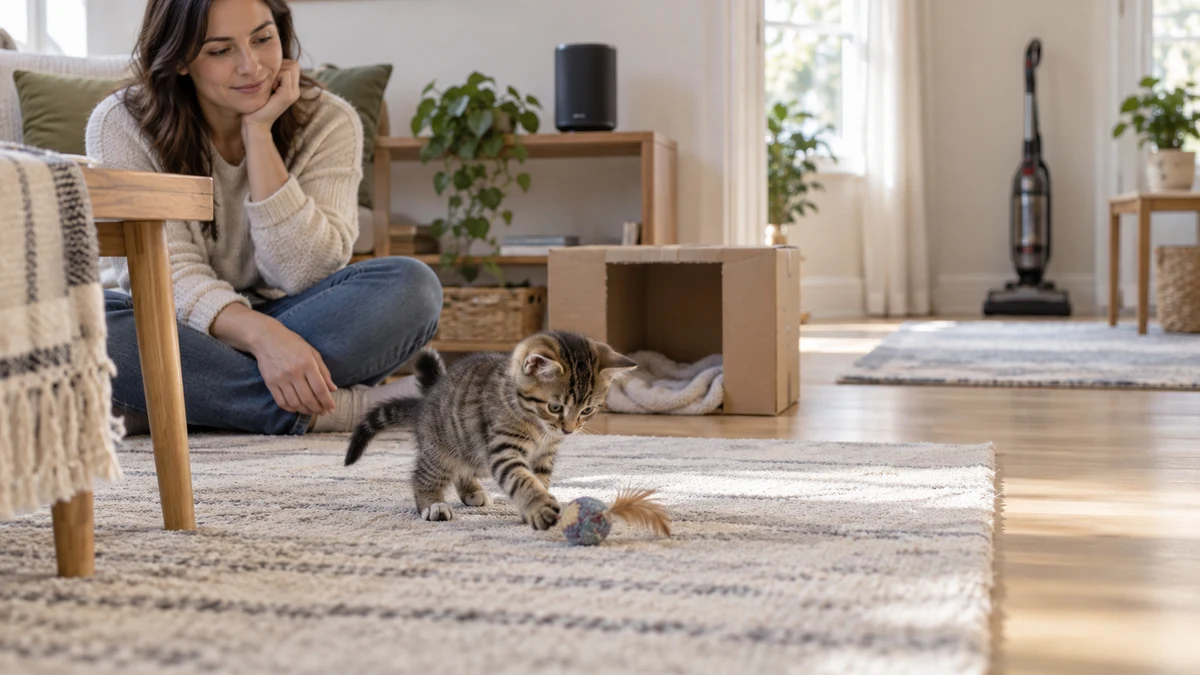
A six-step practice loop
Use the same small loop for a visitor, a brush, a recorded sound, a carrier, or a new mat.
- Choose the baseline. Practise after the kitten has eaten, toileted, rested, and chosen to be active. Do not wake a sleeping kitten for a session.
- Set up retreat before exposure. Open the door to the safe room, uncover the hide, or position the person so the kitten is never trapped between a body and a wall.
- Present the easiest version. A visitor sits sideways across the room; the brush lies still; the sound is barely audible; one finger briefly touches the shoulder rather than lifting the kitten.
- Pair and observe. Add a tiny treat, one toy movement, calm attention, or another known positive. Watch the whole body and whether normal behavior continues.
- Finish early. One or two relaxed repetitions can be enough. End while the kitten could comfortably do more, then allow uninterrupted rest.
- Record the variable. Note distance, duration, volume, movement, touch location, and recovery. Next time, alter only one of them.
“Short” cannot be reduced to one universal number. For a first touch, one second may be plenty. For a very low sound while the kitten plays normally, a longer exposure may be easy. The useful endpoint is behavioral: stop before the kitten needs to escalate.
Build a balanced experience menu
The menu below covers more than eight common categories. It is not a requirement to complete every row in one week. Choose only experiences likely to matter in that kitten’s future home, and keep familiar easy sessions between new ones.
| Experience | Easiest useful version | Increase only when the kitten remains comfortable |
|---|---|---|
| People with different appearances and voices | One quiet adult sits sideways and ignores the kitten at first | Change one feature: voice, hat, glasses, mobility aid, height, or movement |
| Closely supervised children | A seated child rolls a toy while an adult stays within reach | Add brief gentle touch only when both child and kitten can remain calm |
| Household sounds | Play a recording barely audibly or show an appliance while it is off | Raise volume a small amount; keep distance and an open hide |
| Carrier and transport preparation | Leave a stable carrier open with familiar bedding | Practise entry, door movement, lifting, parked car, and driving as separate stages |
| Paw, ear, and mouth observation | One brief touch near the shoulder, cheek, or leg, then reward and release | Move gradually toward paw, ear flap, lip lift, and very short examination |
| Grooming and nail-care tools | Place the brush or clipper at a distance; reward looking or sniffing | Add one brush stroke or a brief paw hold; clipping is a later skill |
| Short lifting and holding | Hands touch chest and hindquarters without lifting | Lift a centimetre, support the body, set down immediately, and release |
| Safe surfaces and objects | Put one stable towel, flat cardboard sheet, or nonslip mat on the floor | Change one texture or object while preserving an easy route around it |
| Toys and play styles | Move a safe wand toy slowly at ground level | Vary speed, direction, and room; hands and feet never become prey toys |
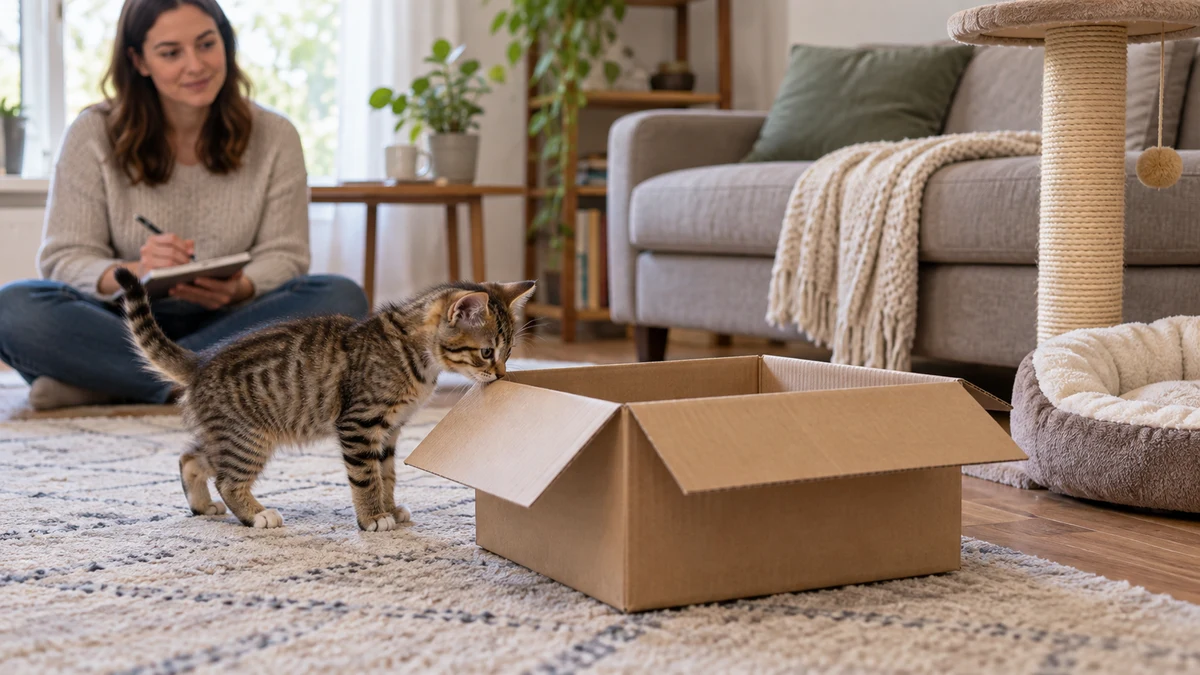
| Controlled room changes | Move one small item or open one familiar adjoining space | Add one sight, smell, or location only after the previous version is ordinary |
| Known healthy animals | Start with scent or a barrier under a planned introduction | Proceed only after veterinary risk advice and only while both animals stay safe |
This is preparation, not proof that the kitten must enjoy every person or procedure. A successful outcome may be calmly tolerating a necessary ear look, choosing to rest in a carrier, or recovering quickly when the doorbell rings. Preference and personality remain.
Introduce people without passing the kitten around
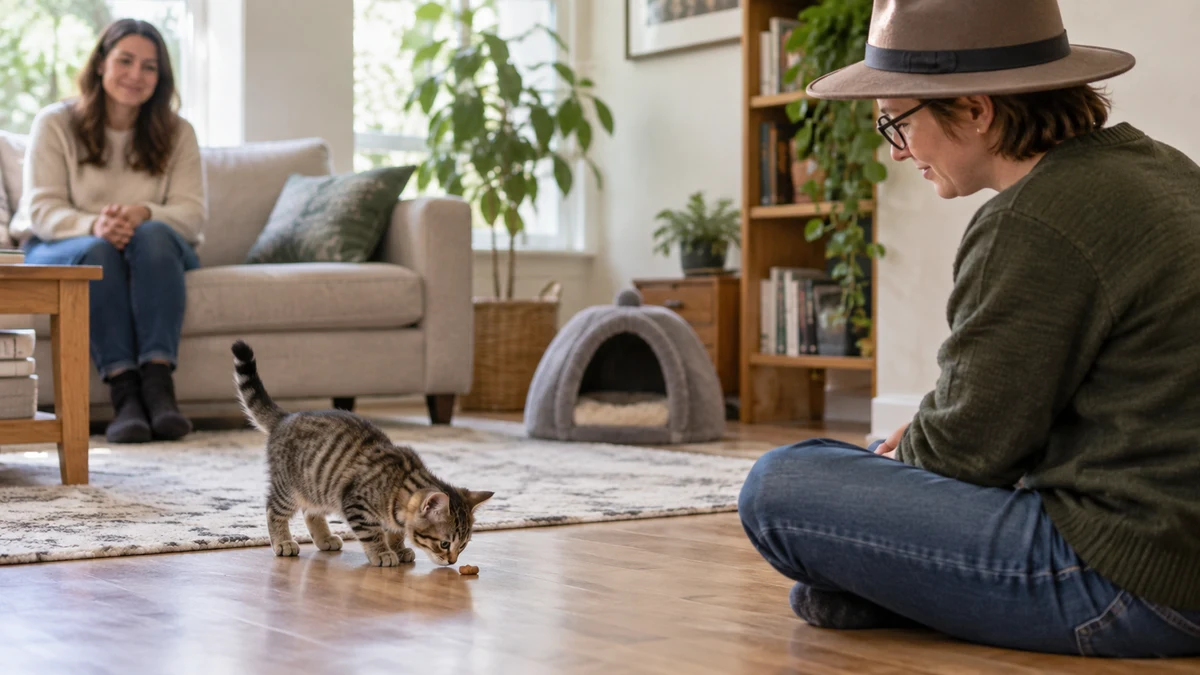
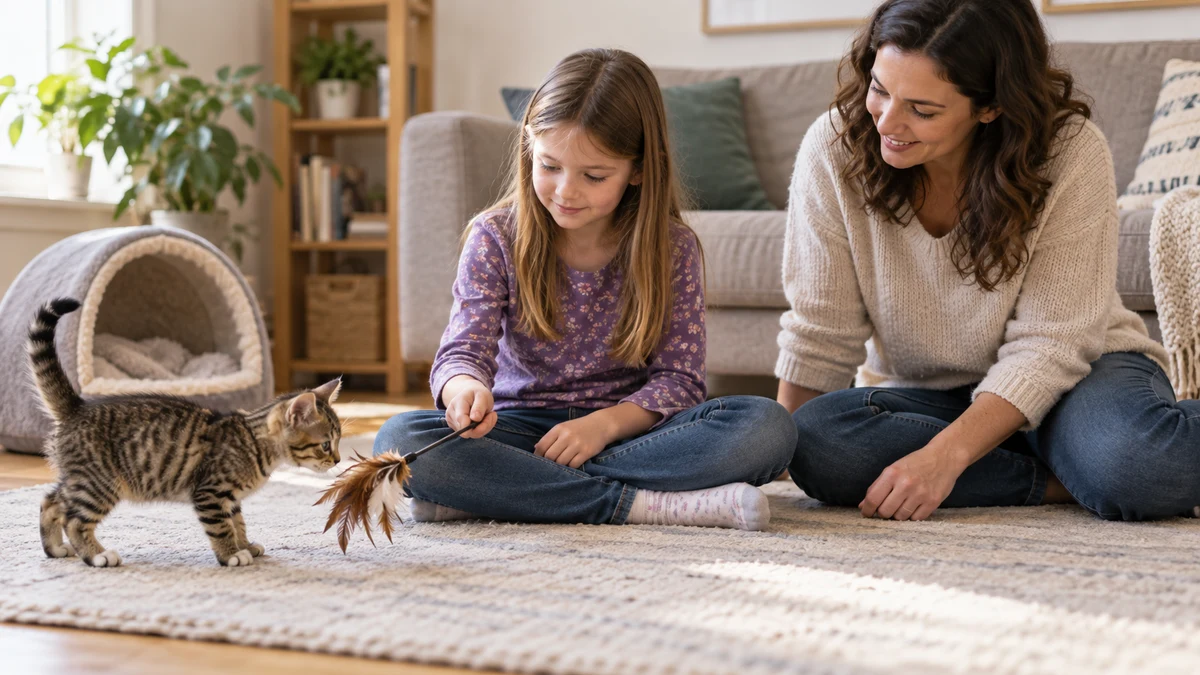
Ask one visitor to sit low or sideways, speak quietly, and let the kitten make the first move. Direct staring, leaning over, reaching from above, and following a retreating kitten add pressure. The person can toss a tiny treat away from their body or move a wand toy at a comfortable distance. Touch comes later, only if the kitten repeatedly returns and solicits contact.
Vary people gradually: different builds, voices, clothing, facial hair, hats, glasses, and mobility aids may look or sound different to a kitten. Change one feature at a time rather than inviting a crowd in costume. Cats Protection recommends one-at-a-time introductions for cautious cats and preserving an escape route or hiding place.
Children always need close adult supervision. A child can sit still, roll a toy, or toss a treat before any handling is considered. Do not allow chasing, lifting without support, squeezing, waking the kitten, disturbing eating or toileting, or reaching into a hide. The adult ends the interaction at the first loss of calm; responsibility for safety does not belong to the child or kitten.
Start sounds below the reaction threshold
Do not switch on a vacuum beside a kitten to “get it over with.” Start with the appliance stationary at a distance or use a realistic recording at a barely audible level. Test the volume before the kitten enters. While the sound plays, let the kitten eat, play, explore, or leave. If behavior changes adversely, stop and try a lower volume or greater distance on another day.
Separate variables that adults tend to combine. A vacuum has a shape, smell, motor sound, air movement, and motion across the floor. First seeing it while off is different from hearing it far away; hearing it is different from watching it move. The same logic applies to doorbells, hair dryers, kitchen appliances, traffic, thunder recordings, and visitors’ voices.
Never increase volume simply because the kitten stayed in the room. Check whether normal play, eating, posture, and recovery also remained intact. Remaining still can be freezing, not confidence.
Teach cooperative care one touch at a time
Future care may involve ear and mouth checks, brushing, paw handling, nail trims, being picked up, and examination on a mat. AAHA/AAFP recommends gentle, respectful handling and positive reinforcement while avoiding aversive handling and punishment. The lesson should be “brief touch predicts something safe and I can move away,” not “hands remove my control.”
Start where the kitten already enjoys or accepts touch. Touch a shoulder for one second, release, then reward. On later easy sessions, slide slightly down the leg. Only after repeated comfort should a finger briefly contact a paw. Ear practice may begin with touching the cheek, then the base of the ear, then lifting the outer ear flap for an instant. Mouth preparation may begin with a brief cheek touch; forcing the mouth open is not a beginner socialization exercise.
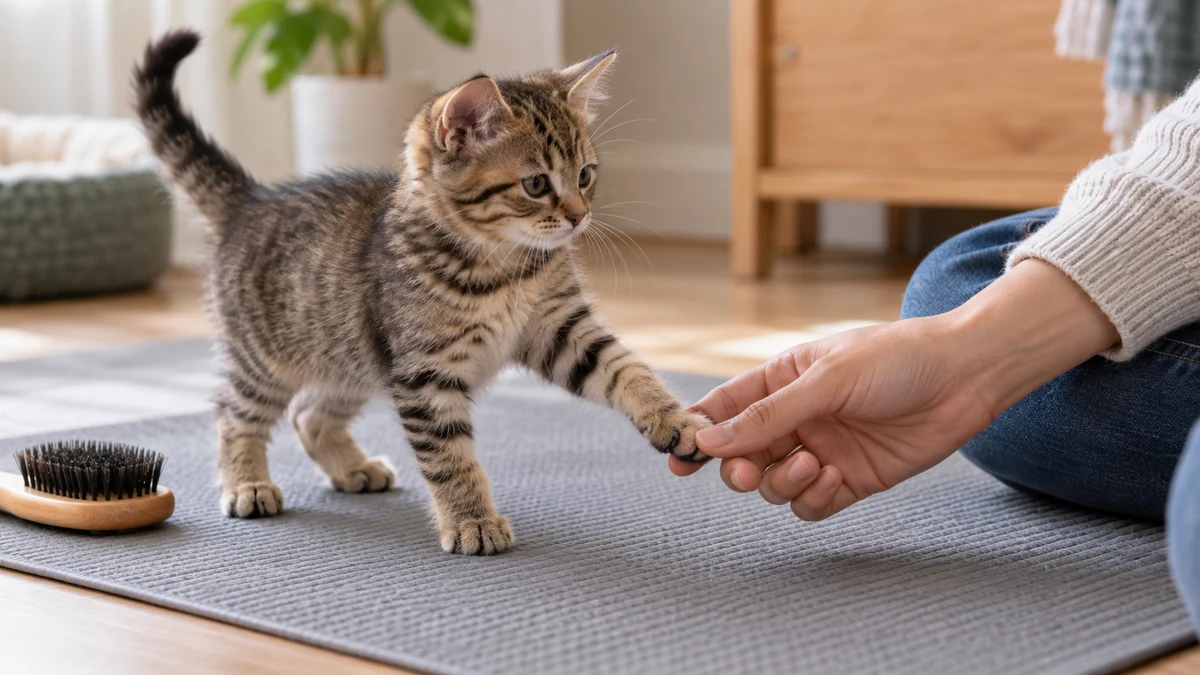
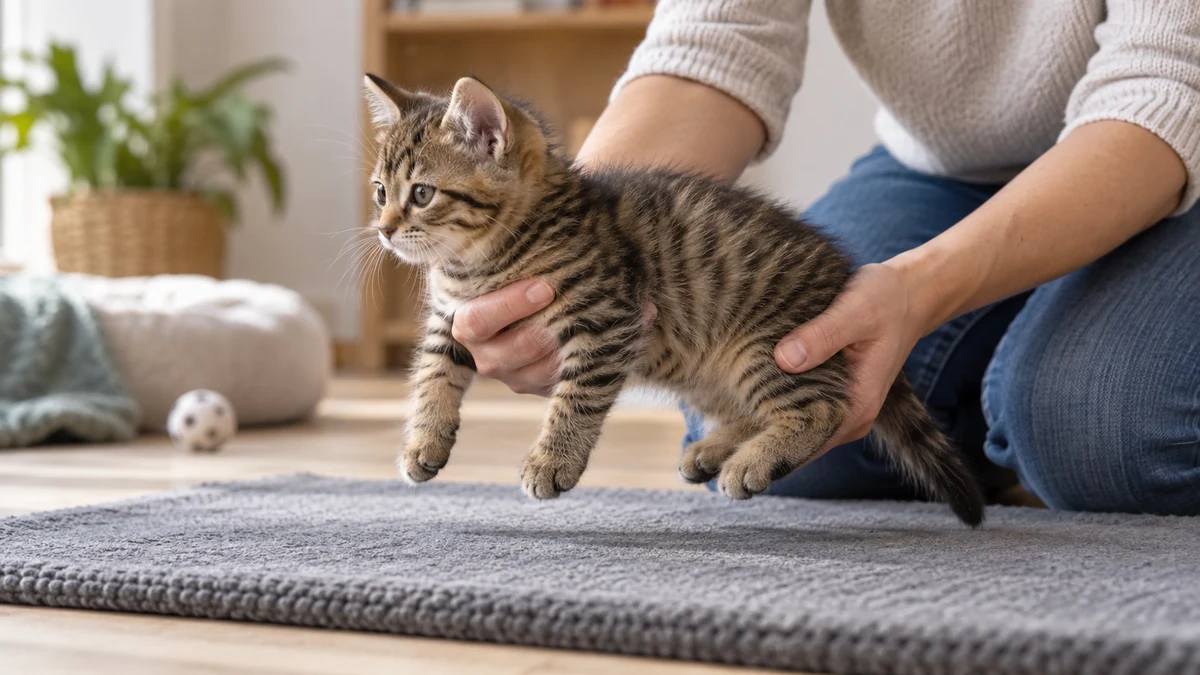
For lifting, place one hand under the chest and the other under the hindquarters, add the slightest upward support, and set down before struggling. Gradually build duration only if the kitten remains loose and voluntarily returns. Never lift by the scruff, limbs, or front of the body alone. A kitten that avoids touch, cries, limps, or suddenly resists previously comfortable handling needs veterinary assessment rather than more force.
The related guides to cooperative nail-trim preparation and low-pressure brushing break those skills into smaller stages.
Make carriers, surfaces, play, and change ordinary
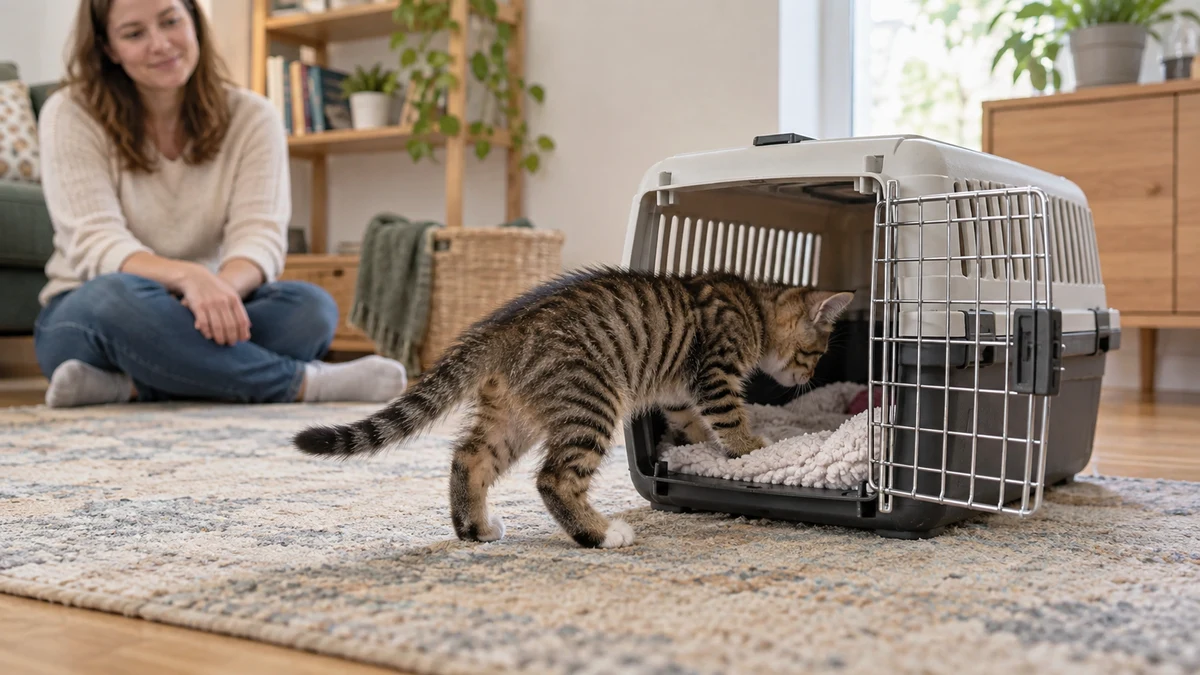
Keep the carrier open in a room the kitten uses, secure the door so it cannot swing, and add familiar bedding. Reward looking, approaching, and partial entry without closing the door. Entry, door movement, confinement, lifting, walking, car sounds, and road motion are separate lessons. The complete carrier-training plan shows how to keep those steps distinct.
Offer safe, stable surfaces at floor level: a folded towel, flat cardboard, a nonslip mat, or a shallow empty tray. Let the kitten go around them. Do not use unstable boards, high platforms, sticky surfaces, or startling material underfoot. The lesson is flexible exploration, not completing an obstacle course.
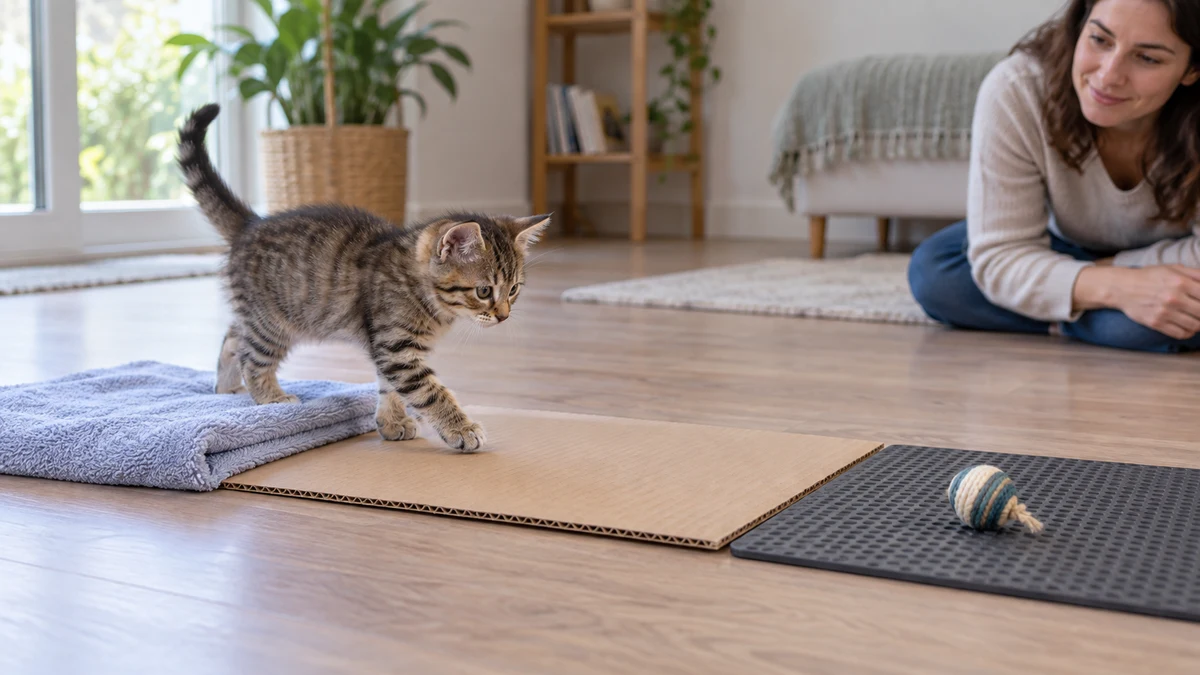
Play is also social learning. Use intact wand toys, balls too large to swallow, and other supervised toys that direct pouncing away from hands and feet. Allow catching and a natural pause instead of keeping the kitten in constant frustration. Put string-like toys away after supervision. The interactive-play guide covers pacing and toy safety.
For environmental changes, start with one moved chair, one new box, or one newly opened familiar room. Maintain food, water, litter, scratching, sleep, and hiding options. Before adding objects or access, use the home cat-proofing checklist to remove ingestion, fall, entrapment, electrical, and escape hazards.
Protect health while socializing
Early learning and infection control have to be planned together. A kitten’s vaccination series, parasite risks, health status, household animals, travel, and local disease exposure differ. As of September 2026, the 2021 AAHA/AAFP guidelines cited here frame prevention around veterinary evaluation and lifestyle risk rather than one universal “safe outing age.”
Before contact with unfamiliar animals, shared pet floors, group classes, shops, communal gardens, or outdoor locations, ask the kitten’s veterinarian what is appropriate for that individual and location. Do not use sick animals as socialization partners. Use basic hygiene, avoid shared bowls and litter, and keep interactions controlled. If the veterinarian recommends delaying a particular environment, practise its components safely at home—people at a distance, recorded sounds, carriers, surfaces, and handling—rather than abandoning socialization altogether.
Introductions to resident pets also need a staged plan and safe separation. Socialization is not placing animals together and hoping they “work it out.” Use scent, distance, and barriers, and monitor both animals. See the separate guides for introducing cats and introducing a cat to a dog.
What not to do
- Do not hold a kitten through struggling to “show nothing bad happens.” Prolonged forced exposure is flooding, even when the person intends reassurance.
- Do not corner, chase, scruff, pin, wrap, or recruit someone to block the exit.
- Do not raise sound volume rapidly, carry the kitten toward a running appliance, or prevent hiding.
- Do not let children handle or play with a kitten without close adult supervision.
- Do not introduce unfamiliar animals or public environments without veterinary risk advice.
- Do not punish hiding, hissing, swatting, biting, or vocalizing. Create distance and reassess the setup.
- Do not stack every challenge into one event. A new person wearing a hat while running a vacuum and picking up the kitten teaches overwhelm, not adaptability.
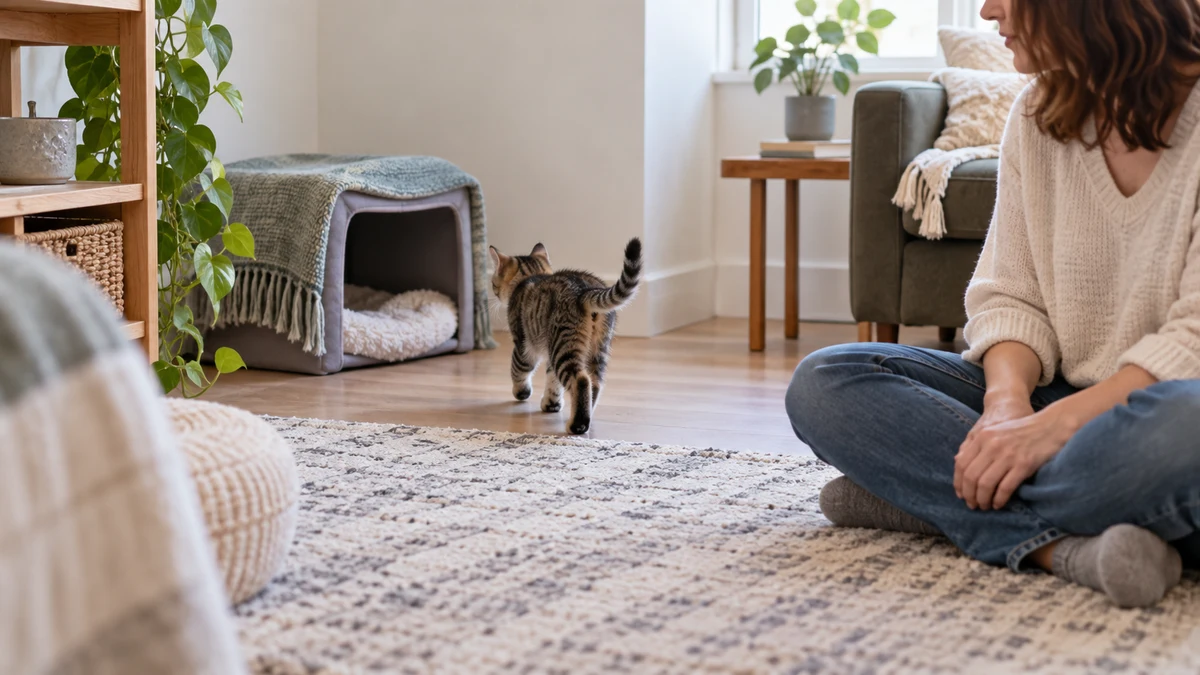
If an experience goes badly, stop, restore safety, and let the kitten recover. Do not immediately repeat the same challenge to erase the memory. At a later session, begin far below the failed intensity: more distance, less movement, shorter duration, no touch, or a familiar person. Persistent fear, inability to recover, sudden behavior change, pain on handling, appetite change, or abnormal breathing calls for veterinary advice. A qualified feline behavior professional can help after medical causes and immediate safety have been addressed.
If the early period has passed
Do not compensate with a socialization marathon. Begin with predictable routine and a protected base, then identify one practical goal: accepting one household member, walking into a carrier, tolerating a brush nearby, or remaining comfortable when a door closes. Break that goal down until the cat can choose and recover.
Progress may look quiet. The cat stays in the room instead of hiding, eats after a sound, approaches within two metres, sniffs a new mat, or returns to play sooner. Those changes matter even if the cat never wants to greet visitors or be carried. Compare the cat with their own previous baseline, not with an exceptionally outgoing kitten online.
Learning remains possible, but a cat’s welfare matters more than completing a human checklist. Respecting “no” is part of building trust. The guide to signs of feline trust can help you notice voluntary proximity and comfortable disengagement without expecting constant affection.
Frequently asked questions
What age is best for kitten socialization?
Sources place the early sensitive period roughly between two weeks and nine or ten weeks, with some using the narrower two-to-seven-week range. It is fluid, differs between kittens, and does not guarantee an outcome. Begin appropriate positive experiences early with the mother and health needs protected, then continue choice-based learning throughout life.
How long should a socialization session be?
There is no universal duration. Start with one tiny exposure or one or two easy repetitions, and finish while the kitten still shows ordinary exploration, play, eating, posture, and quick recovery. A first handling step may last one second. Behavior, not a timer, determines whether the dose was easy.
Should I keep holding a kitten that cries or struggles?
No. Set the kitten down safely before distress escalates, give space, and make the next practice easier. Sustained vocalizing, freezing, escape attempts, flattened ears, a tucked or lashing tail, refusal of a normally valued reward, or slow recovery all justify reducing intensity or ending the session.
Can an older kitten still be socialized?
Yes, older kittens and adult cats can learn through well-timed positive reinforcement. They may need more distance, smaller steps, and longer recovery, especially after limited or frightening early experience. The aim is improved comfort and safe participation, not changing every personality into an outgoing one.
Can my kitten meet other pets before every vaccine is finished?
Do not use a universal internet rule. Ask your veterinarian to assess the kitten’s health, vaccine progress, parasite control, the other animal’s health, local disease conditions, and the proposed environment. Controlled exposure to a known healthy household animal is different from contact with unknown animals or shared public surfaces.